KEEP PERFECT BAGS is published by QUANZHOU JUNYUAN BAGS from Quanzhou, Fujian: a sourcing and programme-management company coordinating custom bag programmes since 2014. We plan the programme, book the production slot, run inspection at AQL 2.5 to ISO 2859-1 and issue the export documents. The production floor we plan against is a partner base, and it is described openly further down.
Programmes have been coordinated since 2014. The role is sourcing and programme management, not ownership of the production floor. Six categories are open, at MOQ 500 pcs per style and colourway, sampling in 6-10 working days and bulk in 35-50 days from sample approval, inspected at AQL 2.5 to ISO 2859-1, T/T 30/70, FOB Xiamen.
Who Operates This Programme, And Which Name Is The Legal One?
KEEP PERFECT BAGS is the name on the masthead. QUANZHOU JUNYUAN BAGS is the brand that appears on the quotation, the inspection report and the packing list, and it is the entity that carries responsibility once a signed document exists. Keeping the two apart is not pedantry: the first question a compliance officer or a bank asks is which entity is actually liable, and the answer has to be identical every single time it is given.
The full registered name is printed exactly once on this site, in the parameters block that follows this paragraph. It is not scattered across every category page, because repetition is how inaccurate versions of a legal name end up inside bank paperwork and customs entry documents. Every other reference — in every other page, every quotation template and every email signature — points back here.
- Brand
- QUANZHOU JUNYUAN BAGS
- Legal entity
- QUANZHOU JUNYUAN COMMERCIAL AND TRADING CO.,LTD
- Role
- Sourcing and programme management for six custom bag categories
- Based in
- Quanzhou, Fujian, China
- Programmes running since
- 2014
- MOQ
- 500 pcs per style / colourway (300 pcs on a repeat)
- Sampling
- 6-10 working days (12-15 for complex builds)
- Bulk production
- 35-50 days from sample approval
- Inspection
- AQL 2.5, ISO 2859-1, General Inspection Level II
- Payment
- T/T 30/70
- Incoterm
- FOB Xiamen (CIF / DDP available)
Sourcing and programme management is a deliberately narrow description, and it puts liability for the schedule in the same place as the schedule itself. Planning the programme, booking the slot, coordinating production on the floor, holding the inspection and issuing the documents are all done from this office. Ownership of the buildings, the machines and the employment contracts sits with the production base described further down this page, and nothing is gained by language that sounds more vertically integrated than that.
Why does the distinction matter commercially rather than just legally? Because accountability has to be attached to something a buyer can enforce. When a lot fails inspection at the port of loading, the useful thing is not a debate about who poured the concrete; it is a written programme in which one party owns the date, owns the inspection plan and owns the documents, and can therefore be held to all three.
What Do We Actually Do All Day?
Four jobs, in order, and none of them is answering retail enquiries. Everything below happens inside every programme regardless of category, which is why six apparently unrelated bag types can be quoted with one set of commercial parameters:
Programme planning
Turning a drawing into something buildable: internal dimensions, materials named by lot, hardware, tolerances and a test protocol written before anything is cut.
Production coordination
Booking the slot, sequencing material arrivals against that slot, and reporting weekly from cutting through assembly to packing with photographs at each stage.
Quality gate
Running the final inspection against a published sampling plan rather than against an impression, with that plan written into the purchase order before production starts.
Export documentation
Invoice, packing list, certificate of origin where it applies, inspection report and a bill of lading set that reconciles to what was actually loaded.
Notice what is absent from those four cards. There is no line saying anyone here owns a building, and there is no line saying the machines belong to anyone here either. The planning, the coordination, the inspection and the paperwork are this company's work; the floor, the equipment and the operator contracts belong to the partner production facility named in the next section. Both halves are needed to ship a bag, and pretending one half does both is how programmes lose credibility in week seven.
What Has Actually Changed Since 2014?
Twelve years of programme work changes exactly two things that a buyer benefits from: the set of constructions that can be quoted without research, and the number of failures that have already been seen once. Neither of those makes a product page sound glamorous, and both are worth more than adjectives.
| Capability | In place since | What it means for your order |
|---|---|---|
| Programme management and export documentation | Since 2014 | The same signing pattern and document set have been running for 12+ years, which is why a compliance department can verify us without a new onboarding exercise |
| Insulated and cooler bag construction | Early years | Foam handling, liner welding and seam sealing already have a settled method to quote against instead of being worked out on your sample |
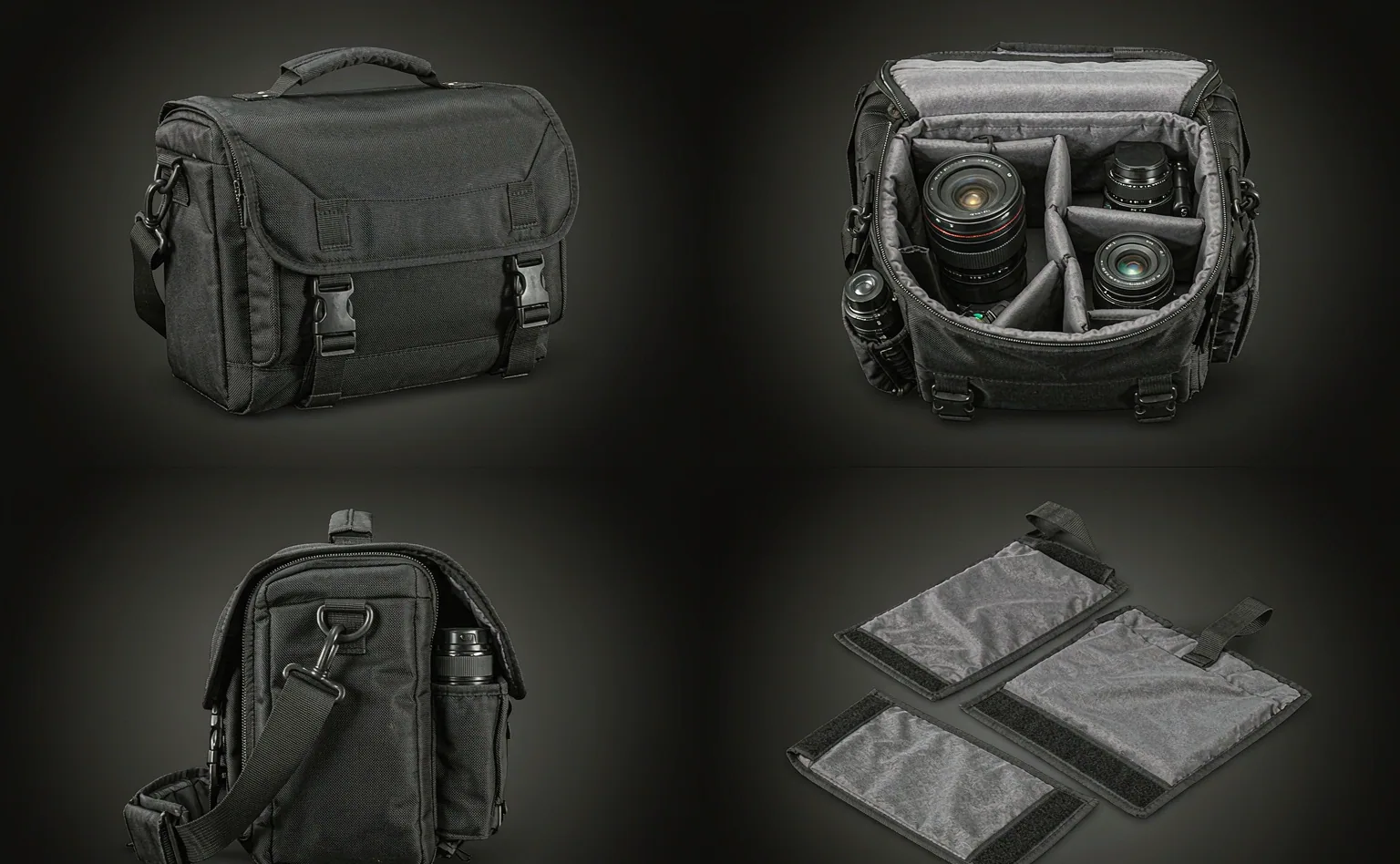
| Equipment and camera protection | Middle years | Padding schedules and a written drop protocol exist as procedures rather than as somebody's opinion of what seems thick enough |
| Team kit and wine bottle constructions | Middle years | Capacity planning, colour matching methods and impact testing were already tooling before these were opened |
| Neoprene sheet work | Most recent addition | Thickness, seam method and stretch recovery are specified numerically before sampling begins, because the material does not forgive a verbal specification |
What twelve years does not prove is that every programme went right. Constructions were retired, some arrangements ended, and the six categories listed today are the six that survived on their merits rather than a back catalogue of things that were once tried. Reorder files are kept because the second run is where a programme either earns its reputation or loses it, and making reorders consistent explains what goes into that file.
How Is The Production Capacity Behind This Programme Organised?
Every order is planned against one named production base: an SGS-validated partner production facility in Quanzhou, Fujian. It is validated rather than merely claimed, which means the characteristics below were checked by an external party against a published methodology, and the reference is available to any buyer who asks together with its validity date.
Five figures describe it, and they are stated once here so nobody has to reconstruct them from a sales email:
| Resource | Figure | What it decides for your order |
|---|---|---|
| Production base | SGS-validated partner production facility: 7 production lines, 149 machines, 200,000 pcs per month | How much work in progress can sit between cutting and packing without the line slowing down behind it |
| People | the trained operators on those lines | How many trained operators can be assigned across the lines when your slot comes up, and how deep the bench is for complex builds |
| Production lines | 7 production lines | The granularity of capacity planning: your reservation sits against a numbered line, not against a vague impression of availability |
| Machines | 149 machines | How much of the programmed work stays inside the base instead of being placed elsewhere mid-programme |
| Monthly output | 200,000 pcs per month | The ceiling your larger orders are scheduled against — a planning reference, never a promise of instantaneous availability |
Those numbers exist for planning rather than for decoration. A monthly output figure tells you whether a 40,000-piece autumn programme has anywhere to sit; it does not tell you that a 5,000-piece rush order can start on Monday. Slots are booked against named lines with dates, and the reason a quotation can say 35-50 days with confidence is that the planning behind it is done at that level of detail.
What Does An Executable Quality System Look Like?
A quality system is executable when each stage produces a document somebody signs, and when the final stage is a count rather than an opinion. Anything that depends on the mood of the person holding the torch is decoration. The six gates below run in sequence on every programme, and the records from them are what a buyer receives with the shipment documents.
| Stage | What is checked | What is produced | Standard or reference |
|---|---|---|---|
| Incoming materials | Fabric weight, coating, colour against the sealed reference | Material inspection record per lot | Referenced in the tech pack tolerance sheet |
| Cutting | Panel count, print direction, fabric grain | Cutting report with photographs | Internal instruction signed by the line leader |
| Printing and embroidery | Registration, colour against the approved strike-off, adhesion | Comparison photographic record | Referenced in the tech pack |
| Assembly | Seam construction, stitch density, hardware attachment | In-process patrol record | ASTM D6193 for stitch and seam practice |
| Final inspection | Cartons drawn at random, units counted against the sampling plan | Inspection report with accept or reject and defect classes counted | ISO 2859-1, General Inspection Level II, AQL 2.5 |
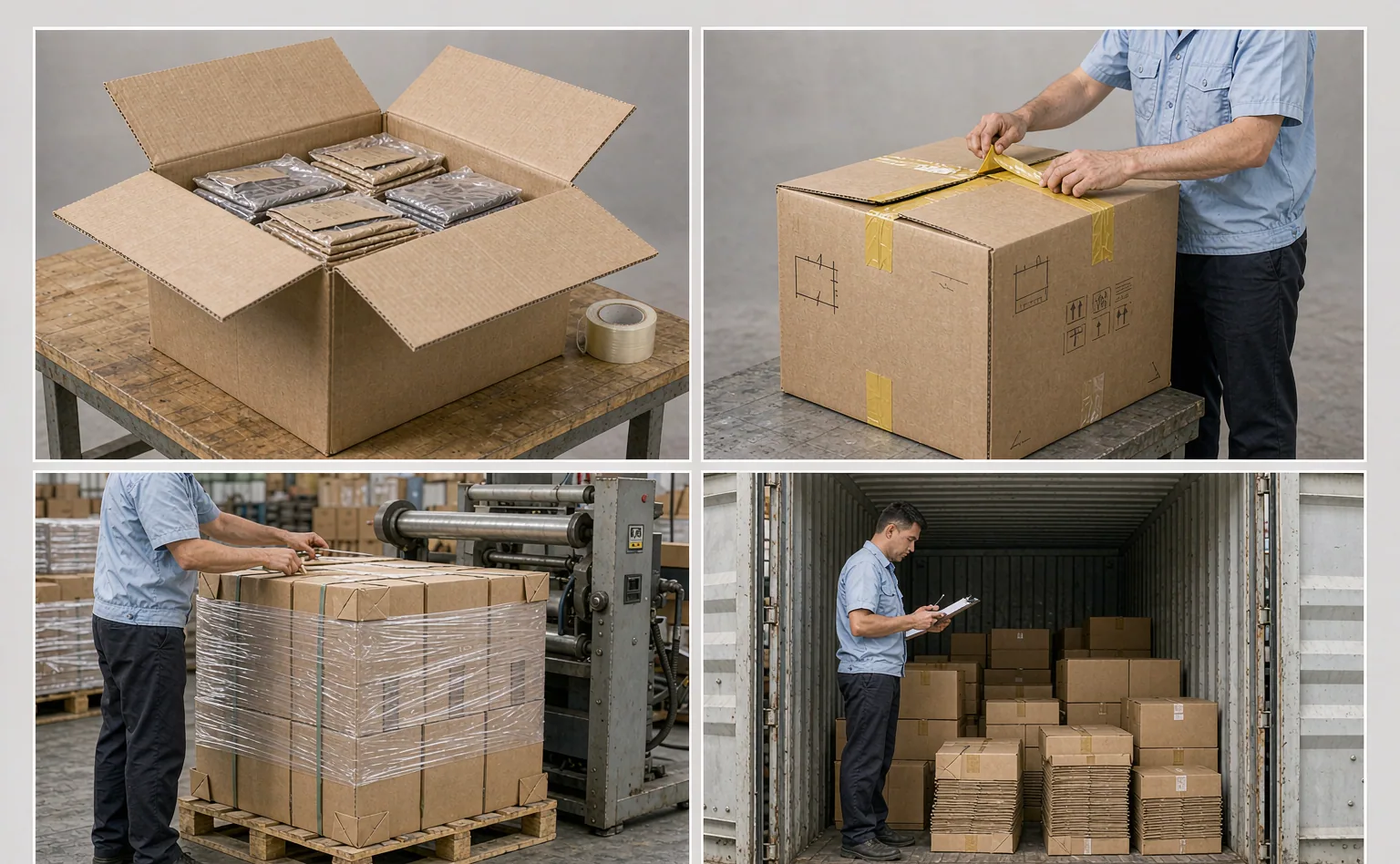
| Packing | Carton specification, labelling, assortment accuracy | Packing list reconciled to the inspection report | Your carton specification |
Two details decide whether that system holds in a dispute. The first is that defect classes are written into the technical pack before sampling rather than negotiated afterwards; a critical defect, a major defect and a minor defect have to mean something measurable on day one. The second is that the golden sample is sealed and kept in the production file, because reorder consistency depends entirely on there being one agreed physical object rather than a memory of it.
The system also has to survive a failure. When a lot is rejected, the three paths are full sorting at origin, rework with a single re-presentation, or rejection and rebuild, and the choice belongs to the buyer because each carries a different consequence for the calendar. Nobody benefits from discovering during week nine that this decision was never written down.
Which Documents Can Compliance Actually Expect From Us?
Available documents fall into two groups, and mixing them up causes more friction than missing paperwork does. One group belongs to the production base and describes how people are treated and how the site is run. The other belongs to material lots and describes what substances are in the goods you are importing. Both are listed below with what can actually be handed over.
| Certificate or standard | What it covers | What you receive |
|---|---|---|
| amfori BSCI | Social compliance programme covering the production base | Audit reference for the base running your order, with its validity dates |
| Sedex / SMETA | Ethical trade audit reporting across the four-pillar scope | Report access and posting through your own Sedex company account |
| REACH (EC) No 1907/2006 | Substances of very high concern in articles placed on the EU market | Material declarations per lot, plus laboratory test reports where your market requires them |
| California Proposition 65 | Listed substances requiring a warning assessment in California | Written assessment per material against the current list |
| CPSIA | Lead content and phthalates in products within its scope | Test reports from recognised laboratories where the item is in scope |
| GRS | Recycled content chain of custody | Transaction certificate issued per qualifying shipment of certified input material |
| OEKO-TEX Standard 100 | Textile articles tested for harmful substances | Certificate number and scope for the material used in your order |
Three honest limits come with that table. Documents describe a specific material lot or a specific site at a specific date, so anything outside the scope has to be re-tested rather than borrowed from another order; that re-testing is quoted rather than hidden. Recycled content is only claimable with chain of custody documentation, which is why the GRS transaction certificate is treated as a shipping document rather than a marketing badge. And laboratory reports carry a validity window your own importer of record should confirm, because the workload, not the supplier, decides whether a certificate from last year still satisfies your market.
What Promise Versus Reality Gap Should You Check Before Signing?
Every line in the table below exists because a buyer somewhere has been told one version and received the other. Read the middle column carefully: it is what actually decides the outcome, and it is rarely the thing being promised.
| Claim you will hear | What actually decides it | What gets published here |
|---|---|---|
| Delivery in twenty days | Material arrival, the print queue and the inspection window, not the sewing line | 35-50 days counted from sample approval, with an eight-stage timeline attached |
| Any quantity accepted | Setup amortisation and fabric lot minimums at the mill | MOQ 500 pcs per style and colourway, 300 pcs possible on a repeat |
| Tighter sampling means better inspection | Whether the level exists in the standard your inspector applies | AQL 2.5 to ISO 2859-1 at General Inspection Level II, with the table attached |
| Everything is handled for you | Forwarder and destination handling sit outside any build order | FOB Xiamen by default; CIF and DDP available where the lane supports them |
| It will be corrected later | Whether the defect was defined before production started | Defect classes written into the technical pack before the sample round |
| Samples are quick and free | Pattern making and setup still have to happen either way | Sampling in 6-10 working days, 12-15 for complex builds, charged and credited |
Publishing that table costs us enquiries from people who were told something more comfortable elsewhere. It also means the enquiries that arrive can be quoted honestly on the first attempt, because nobody has to unlearn a promise before the real planning starts — and the arithmetic of why bulk runs long is set out in full in why it takes 35-50 days.
What Do We Decline To Say About Ourselves?
An honest boundary is more useful than a flattering claim, and these are the six lines this programme does not cross. Each one exists because crossing it would make a document somewhere downstream either inaccurate or unenforceable.
- Claims about owning the floor the goods are built on. Production base ownership sits with the partner facility; planning, coordination, inspection and documents sit here, and the quotation lists those responsibilities separately.
- Quotations dated before the technical pack exists. A number produced before the specification is frozen is a guess wearing a quotation letterhead, and it moves the moment the first real detail arrives.
- Uniformity across the six categories. Insulated cooler bags and neoprene sleeves fail in different places, so they carry different tolerances, different test protocols and different pages.
- Recycled content as a percentage without chain of custody documentation. A number printed on a swing tag without a transaction certificate behind it is not a compliance claim.
- Compliance paperwork belonging to a different material lot than the one in your cartons. Scope and validity dates are stated, and fresh testing is quoted openly rather than substituted.
There is also a category of request this property turns down quietly: single-piece purchasing, stock lots held for immediate sale, and shopping-period content such as care tutorials. Each would distort the site away from the buyer it is written for, which is the person whose order has a purchase order number and a launch week attached to it.
How Does A Cooperation Actually Start?
Six steps, and none of them requires a meeting. The whole sequence can be run by email, provided the first message contains the three things that make a quotation real.
- Send a technical pack or a rough specification, the quantity per style and colourway, and the week the goods have to be on the water.
- Receive a written scope two working days later: what is understood, what is still open, and which of the locked parameters apply to your order.
- Get indicative pricing with the exclusions stated — those usually being tooling, testing beyond scope, and anything dependent on the sampling outcome.
- Approve the sample round: two counter units built in 6-10 working days, or 12-15 for complex constructions, with notes attached.
- Confirm the order against the sealed golden sample, with payment on T/T 30/70 and the shipment quoted FOB Xiamen unless your lane argues otherwise.
- Receive weekly build photographs, then the inspection report and document set three to six working days after the balance payment clears.
Two tools shorten step three considerably. The HS code finder pins the tariff line from the outer surface and construction of the bag, and the landed cost calculator turns that line plus freight into a figure per unit. Where FOB is not the right allocation of risk for your lane, the Incoterm decision tool says so before you sign rather than after the goods are loaded.
Is This The Right Counterparty For Your Order?
The distinction worth making is not big buyer against small buyer. Plenty of genuinely useful programmes begin at 500 pcs. It is planned buyer against spot buyer, because only the first of those is something this kind of operation can do well.
Who this programme suits, and who should look elsewhere
- A good fit: you have a technical pack, or the patience to build one, and you accept that the plan is written before the price is final.
- A good fit: you need figures you can put into your own planning system — MOQ 500 pcs, sampling 6-10 working days, bulk 35-50 days, AQL 2.5.
- A good fit: you run reorders and care whether run five matches run one, which means you also care about a sealed golden sample.
- A good fit: your compliance department will ask for scope certificates and validity dates, and you would rather have them stated up front than chased later.
- Poor fit: you need five units to test interest. Setup cannot be amortised across five pieces, so buy one counter unit of an existing construction instead.
- Poor fit: the shipment has to leave inside three weeks. Thirty-five to fifty days is a shipping figure rather than a sewing figure, and nobody can compress materials by asking politely.
What Happens When Something Goes Wrong?
It happens, and the useful question is what the paperwork already says when it does. Every order file contains a defect classification, a golden sample, a weekly photographic record and an inspection report counted against ISO 2859-1. That combination means a disagreement is resolved by reading rather than by arguing, because there is a record of what was approved and when.
Claims follow the same discipline. Put the issue in writing with photographs within ten working days of arrival, reference the purchase order and the lot, and the response comes back as either a credit note, a replacement run scheduled against a real slot, or a written explanation of why the goods conform to the approved sample. The third outcome is sometimes the honest one, and it is the reason the golden sample is kept sealed in the first place.
Ask for the programme file, not the brochure
Tell us the category, the quantity per style and colourway, and the week the goods have to ship. You get the six locked parameters in writing, a realistic slot against real capacity at the partner production facility, the inspection plan that will be applied to your lot, and the list of compliance documents your market needs — before any money changes hands.
Frequently Asked Questions
Who is behind KEEP PERFECT BAGS?
The site is published by QUANZHOU JUNYUAN BAGS from Quanzhou, Fujian, which plans the programme, books the slot, coordinates production with an SGS-validated partner production facility and issues the export documents. Its full registered legal name appears exactly once on this site, in the parameters block above.
Is this a production site owner or a sourcing operation?
It is a sourcing and programme-management company. Planning, scheduling, inspection and documentation are done here; ownership of the buildings, machines and employment contracts belongs to the partner production facility named earlier on this page. The quotation lists those responsibilities separately so the allocation is never in doubt.
What does a sourcing and programme-management company actually do?
Four things in sequence: it turns a drawing into a buildable technical pack, books a production slot and sequences materials against it, applies a published sampling plan at final inspection, and issues the invoice, packing list and bill of lading set. Each stage produces a signed document rather than an assurance.
How long have these programmes been running?
Programmes have been coordinated since 2014, which is 12+ years of continuous work in six categories. The useful part of that number is not longevity as a boast: it means most failure modes in construction, colour matching and packing have already been seen, documented and designed out.
How much capacity sits behind my order?
Your slot is booked against one SGS-validated partner production facility in Quanzhou, Fujian: SGS-validated partner production facility: 7 production lines, 149 machines, 200,000 pcs per month of floor, the trained operators on those lines, 7 production lines and 149 machines, with 200,000 pcs per month as a planning ceiling. Your reservation sits against a named line with dates.
Is the production facility externally validated?
Yes. The base is an SGS-validated partner production facility, which means its characteristics were assessed by an external party against a published methodology rather than described by us. The audit reference and its validity dates are provided to any buyer who asks, because an expiry date is part of the answer.
Which standard governs final inspection?
Final inspection runs to ISO 2859-1 at General Inspection Level II using single sampling, normal inspection, with switching to tightened inspection at the trigger the standard defines. AQL 2.5 sets the accept and reject counts, and the plan is written into the purchase order with sample size included.
Do you hold BSCI and Sedex reporting?
Social compliance reporting for the base is covered by amfori BSCI and by SMETA reporting through Sedex. What you receive is the audit reference with validity dates, or report access posted through your own Sedex company account, rather than a scanned badge detached from its scope.
Can you support REACH and California Proposition 65 requirements?
Yes, within scope. REACH declarations to Regulation (EC) 1907/2006 are provided per material lot, laboratory testing is quoted where your market needs it, and each material carries a written Proposition 65 assessment against the current list held by the California authority responsible for it.
Can a recycled content percentage be claimed and documented?
Only with chain of custody documentation. Input material has to be certified and traced through production, and a transaction certificate is issued per qualifying shipment. A percentage printed on a swing tag without that certificate behind it is not something this programme will write into a specification.
Do you work with CPSIA testing?
Where a product falls within CPSIA scope, testing for lead content and phthalates is arranged through recognised laboratories and the reports are handed over with the shipment file. Testing outside the originally agreed scope is quoted openly rather than added silently to an invoice at the end.
What payment terms and delivery terms apply?
Standard terms are T/T 30/70: thirty per cent against the order confirmation and seventy against a passed inspection before release of the container. Quotations default to FOB Xiamen, with CIF and DDP available where the lane supports them, because keeping freight visible protects your landed cost planning.
Can I visit the production base?
Yes, with notice. Buyers are welcome at the partner facility in Quanzhou with around two weeks advance notice so the visit can be fitted around the production calendar, and inspector visits during a running order can be arranged at the relevant gate.
Where is the operation based?
The programme is coordinated from Quanzhou, Fujian, China, which is also where the partner production facility sits and why inland haulage to the port is short and predictable. Shipments move FOB Xiamen, and origin documentation is issued from the same base that built the goods.
People Also Ask
Who runs the KEEP PERFECT BAGS programme?
QUANZHOU JUNYUAN BAGS, a sourcing and programme-management company in Quanzhou, Fujian, coordinates every programme with an SGS-validated partner production facility. The full registered legal name is published once, in the parameters block near the top of this page.
How long has QUANZHOU JUNYUAN BAGS run bag programmes?
Programmes have been coordinated since 2014, which is 12+ years of continuous work across six categories. What that buys a buyer is fewer surprises: construction failures, colour drift and packing errors have already been catalogued and designed out.
Which quality standard governs final inspection here?
Final inspection runs to ISO 2859-1 at General Inspection Level II with single sampling and normal inspection, at AQL 2.5. The plan, including sample size and accept and reject counts, is written into the purchase order before production begins.
Which compliance documents can a buyer request?
amfori BSCI and Sedex reporting for the base, REACH declarations per material lot, Proposition 65 assessments, CPSIA reports where a product is in scope, OEKO-TEX scope certificates and GRS transaction certificates for shipments using certified recycled input material.
How does a first cooperation start?
Send a technical pack or rough specification, the quantity per style and colourway and the target shipping week. Indicative pricing follows in two to three working days, then sampling in 6-10 working days, then bulk production of 35-50 days from sample approval.
Sources and further reading
Every figure on this page is either our own programme data or attributed below. Open the originals before you write them into a specification.
- ISO 2859-1:1999 Sampling procedures for inspection by attributesInternational Organization for Standardization
- ASTM D6193 — Standard Practice for Stitches and SeamsASTM International
- Regulation (EC) No 1907/2006 (REACH)European Union, EUR-Lex
- Global Recycled Standard (GRS) — standard owner, chain of custody and labelling requirementsTextile Exchange