Four calculators are published here and none of them asks for an account: a landed cost calculator, an HS code finder, an Incoterm decision tool and an AQL sampling table. Each takes between two and six minutes and returns a number you can put into a purchase order rather than a request to talk to somebody.
Four calculators run in the browser with no account: landed cost, HS code finder, Incoterm decision and AQL sampling table. Give them the quantity, the carton weight and volume, the lane and the tariff line, and they return a landed figure, a subheading candidate, a risk allocation and a sample size with accept and reject numbers. None of it is a quotation.
What Are the Four Tools, and What Problem Does Each One Close?
Every one of these four exists because a specific conversation kept going wrong. The landed cost calculator exists because the unit price is roughly half of what a buyer pays. The HS code finder exists because the tariff line decides duty and nobody agrees on it until the entry is filed. The Incoterm tool exists because FOB is quoted by default and is not always right. The AQL table exists because inspection is argued about on the day of inspection.
Landed cost calculator
Closes the gap between the unit price on a quotation and the figure that actually leaves the buyer's account. You put in quantity, carton weight and volume, the lane and the duty rate you have confirmed. It returns the eight cost lines stacked into one landed figure per unit.
HS code finder
Closes the classification argument before it reaches a broker. You put in the outer surface material, the construction and the intended contents. It returns the HS 4202 subheading that fits, with the reasoning shown so the line can be checked against the official tariff.
Incoterm decision tool
Closes the question of who carries risk and who books freight. You put in the lane, whether you have a forwarder at origin, and how much visibility you need over the main carriage. It returns the term that fits and names the cost lines that move with it.
AQL sampling table
Closes the inspection argument before the inspector arrives. You put in the lot size and the inspection level. It returns the sample size and the accept and reject numbers at AQL 2.5 under ISO 2859-1, in the same format as the plan written into the purchase order.
The four are deliberately narrow. None of them tries to be a sourcing platform, none of them stores what you type, and none of them asks who you are. A tool that collects a contact before it returns an answer is a lead form wearing a calculator, and there are enough of those already.
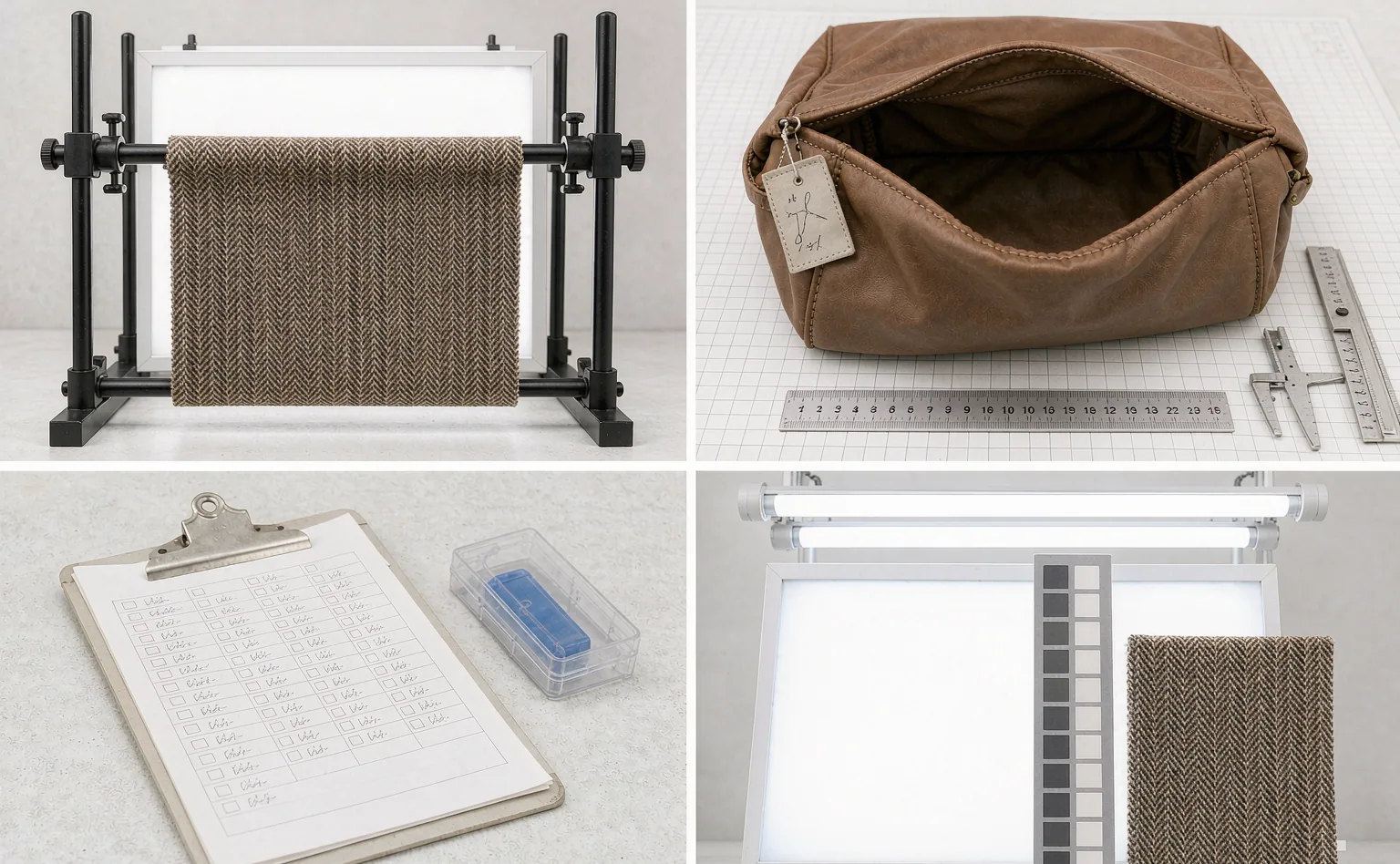
Which Buying Problem Maps to Which Tool?
Buyers rarely arrive saying they need an Incoterm analysis. They arrive saying the freight number looks wrong, or that customs has asked for a document nobody has, or that the inspection passed and the goods still failed in the field. The mapping below runs from the symptom to the tool, because that is the direction the problem is actually discovered in.
| What the buyer is stuck on | Tool | What comes out |
|---|---|---|
| The landed figure is far above the quoted unit price | Landed cost calculator | Eight cost lines stacked and a landed cost per unit, with the two lines outside the supplier quote highlighted |
| Nobody can agree which tariff line the bag enters under | HS code finder | A 4202 subheading with the reasoning shown, ready to check against the official tariff |
| FOB was quoted and the buyer does not know what it covers | Incoterm decision tool | A recommended term, the point where risk transfers, and the cost lines that move with the choice |
| The inspection passed but the field failure rate is high | AQL sampling table | Sample size and accept and reject numbers at AQL 2.5, ISO 2859-1, General Inspection Level II |
| The quote looks fine but the margin does not survive the freight | Landed cost calculator | Freight calculated on the greater of weight and volume, which is where structured bags surprise people |
| A preferential origin claim depends on the classification | HS code finder | The subheading the claim attaches to, plus a note on what to confirm with a licensed broker |
Two rows in that table are worth reading twice. A bag that ships erected is a volume problem, not a weight problem, and freight is charged on whichever of the two is greater — that is the single most common reason a landed figure comes back above the number a buyer had in mind. And an inspection that passes at a sample size nobody agreed in advance proves very little; the sample size is a commercial term, not a technical detail.
Why Does an Industry This Size Publish No Calculators At All?
We looked. Six competing supplier sites in the same category were checked page by page, and the count of interactive tools across all six was zero. What those sites publish instead is a contact form, a gallery and a paragraph asserting that delivery is fast. None of them lets a visitor compute anything before starting a conversation, which tells you what those sites are for.
The reason is not technical. A calculator is not difficult to build; a spreadsheet would do it. The reason is that a calculator commits the publisher to a number. A paragraph can promise the fastest delivery in the industry because a paragraph cannot be audited, while a table of sample sizes and accept numbers can be checked against ISO 2859-1 by anyone with the standard in front of them. Publishing tools means publishing positions.
- A calculator hands the buyer a number before the first email, which removes the seller's control of the first impression.
- A published sampling table can be checked against ISO 2859-1, so it cannot be quietly adjusted on inspection day.
- A landed cost layout shows the lines a supplier quote does not include, which is commercially uncomfortable by design.
- An HS code answer commits the publisher to a classification opinion that a broker may later contradict.
- None of the six competing sites checked offered any of these; all six offered a contact form and a speed claim.
Our position is that the discomfort is the point. We do not promise the fastest 20 days. We promise a delivery date you can calculate, and a date you can calculate is only useful to a buyer who can also calculate the cost and the inspection standard that sit either side of it. Three pillars, one arithmetic.
How Long Does Each Tool Take, and What Must You Have Before You Start?
The timings below assume the inputs are already in hand. The most common reason a run takes longer is that the carton dimensions have not been confirmed yet, and a landed figure built on a guessed carton is a guess with extra columns.
| Tool | What you enter | What you get | Time |
|---|---|---|---|
| Landed cost calculator | Quantity, unit price, carton dimensions and weight, pieces per carton, lane, insurance rate, confirmed duty rate | Landed cost per unit across eight cost lines, with destination handling and duty shown separately | About 6 minutes |
| HS code finder | Outer surface material, construction type, whether the bag is sold with contents, destination market | An HS 4202 subheading with the reasoning, plus the fields to confirm with a licensed broker | About 4 minutes |
| Incoterm decision tool | Lane, whether a forwarder is appointed at origin, need for visibility over main carriage, customs capability | A recommended term, the risk transfer point, and the cost lines that move between the parties | About 3 minutes |
| AQL sampling table | Lot size, inspection level, AQL level, number of inspections planned on the lot | Sample size code letter, sample size, accept and reject numbers, and the switching rule that follows | About 2 minutes |
A buyer who runs all four in sequence has spent roughly fifteen minutes and holds four numbers that would otherwise have taken a week of email. None of those four numbers is a quotation. All four are inputs to one, and the quotation still has to come from a human who has read the tech pack.
How Do the Tools Feed the Category Pages, and Back Again?
The relationship runs in one direction first and then the other. A buyer searching for a tariff line or a sample size arrives on a tool page, gets the number, and only then discovers that the subheading depends on the construction and the construction depends on the category. That is the point at which a tool visitor becomes a category reader, and it happens because the tool was honest about what it needed.
The return direction matters more commercially. A buyer who has read the cooler bag specification knows the foam thickness and the liner material, which are exactly the two fields the HS code finder asks for. A buyer who has read the drawstring page knows the grommet specification, which is the field that decides whether the bag passes an AQL 2.5 inspection at all. The tools are useless without the category detail, and the category detail is abstract without the tools.
So the two halves are wired together deliberately: every category page ends by pointing at the calculator that prices or inspects what it just specified, and every calculator ends by pointing at the category whose construction it just assumed. That is not internal linking for its own sake. It is the difference between a visitor who computes a number and a visitor who can act on it.
Are the Numbers the Tools Produce Binding or Indicative?
- Status of tool output
- Indicative estimate, not a commercial offer
- What is locked regardless
- MOQ 500 pcs per style / colourway
- Sampling
- 6-10 working days (12-15 for complex builds)
- Bulk production
- 35-50 days from sample approval
- Inspection
- AQL 2.5, ISO 2859-1, General Inspection Level II
- Payment
- T/T 30/70
- Incoterm
- FOB Xiamen (CIF / DDP available)
- Duty and freight rates
- Entered by the user or confirmed against the official tariff; never assumed
- Confirmation
- Any figure that will appear on a contract is confirmed in writing before a deposit moves
Indicative, and that word is doing real work. Freight rates move weekly, duty rates are set by the tariff of the destination and are revised, and insurance is priced against the value declared on the day. A tool that printed a binding landed figure would be wrong before it was read. What the tool does instead is show which lines exist, which of them sit outside the supplier quote, and how sensitive the total is to each.
What Do All Four Tools Share Underneath?
Shared design rules
- No account, no email wall, no download: every tool runs in the browser and returns its answer on the page.
- No data is retained; the inputs are used to compute the answer and nothing else.
- Every output names the standard or the assumption behind it, so it can be checked rather than trusted.
- Ranges are printed as ranges. A duty rate the tool does not know is left blank for the user to confirm.
- Each tool ends by pointing at the category page whose construction it assumed, and each category page points back.
- Where a figure matters commercially, the tool says it is indicative and must be confirmed in writing.
The last of those six rules is the one that costs us enquiries and is worth every one of them. A buyer who discovers during a comparison that one site will not commit to a duty rate it does not know is a buyer who has learned something about how that site will behave when a shipment goes wrong.
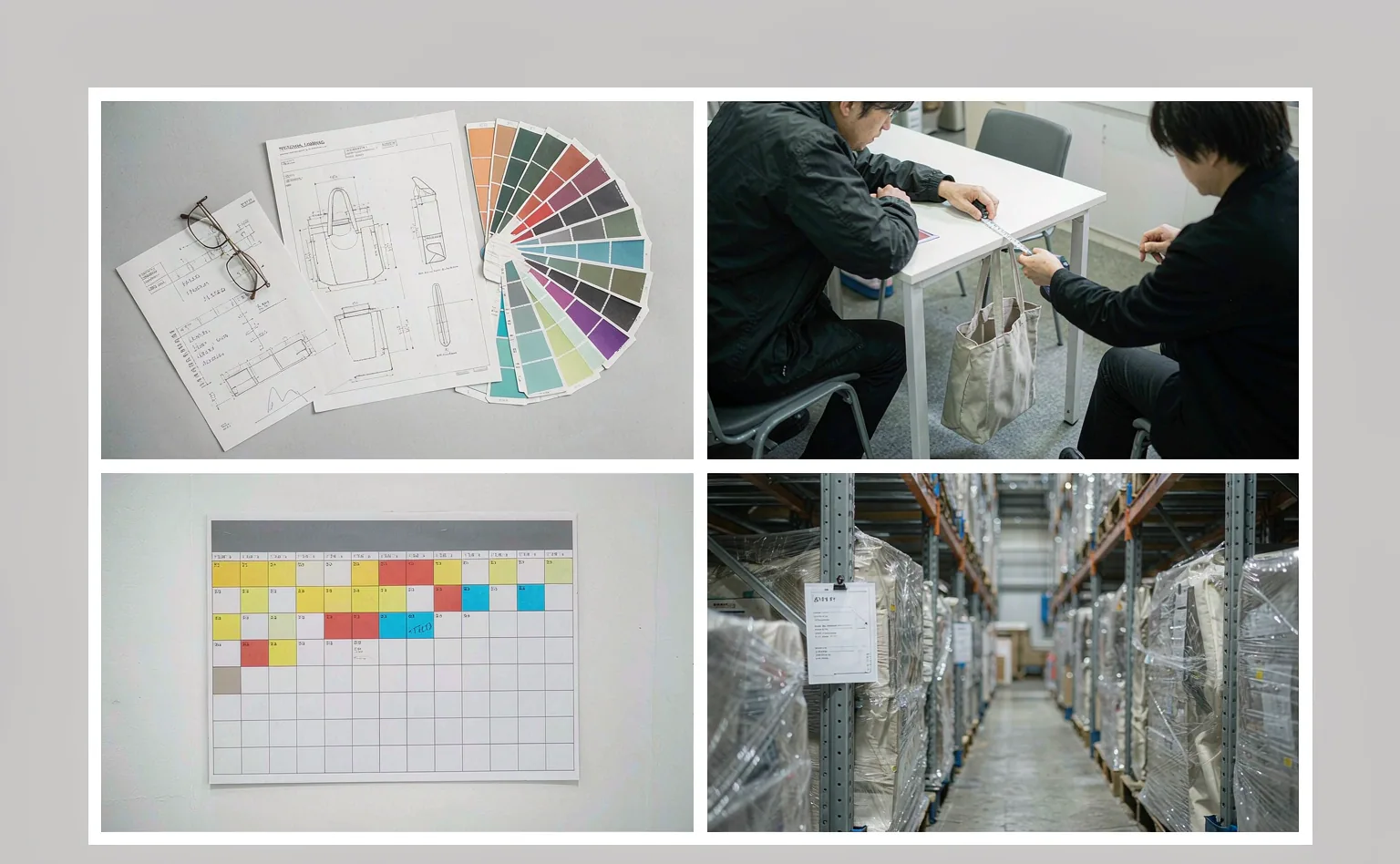
Where Does a Tool Stop and a Conversation Start?
At the point where the answer depends on a specific construction. A calculator can tell you the sample size for a lot of 5,000 at General Inspection Level II. It cannot tell you whether your divider attachment will survive a drop from 900 mm, because that depends on the foam density and the stitch type, and those live on a category page or in a tech pack rather than in a form field.
So the sensible sequence is: compute the four numbers, read the category page that the output pointed at, then send the specification with the numbers attached. An enquiry that arrives with a landed estimate and a sampling plan already worked out gets a materially better first answer than one that asks what things cost. The enquiry desk lists the fields; the question set covers what usually comes back.
Compute first, then ask
Run the four calculators, attach the landed figure and the sampling plan to your specification, and send them together. You will get back a quotation that can be checked line by line — against MOQ 500 pcs per style, a 6-10 working day sampling window and a 35-50 day bulk schedule, FOB Xiamen.
Frequently Asked Questions
How many tools are published on this site?
Four: a landed cost calculator, an HS code finder, an Incoterm decision tool and an AQL sampling table. All four run in the browser with no account and no download, and each returns its answer on the page rather than by email.
Do the tools cost anything or require registration?
Nothing and no. There is no account, no email wall and no download. A tool that collects a contact before it returns an answer is a lead form wearing a calculator, and the point of these four is to hand over the number first.
How long does the landed cost calculator take?
About six minutes with the inputs in hand: quantity, unit price, carton dimensions and weight, pieces per carton, the lane, the insurance rate and a confirmed duty rate. The common delay is unconfirmed carton dimensions, and a landed figure built on a guessed carton is a guess with extra columns.
Which HS heading do bags fall under?
Bags generally enter under HS heading 4202, and the subheading follows the outer surface material and the construction. The finder asks for those fields and returns the subheading with the reasoning shown, so the line can be checked against the official tariff of the destination before entry.
Is FOB always the right term for a bag shipment?
FOB Xiamen is the default and it is quoted that way, but it is not always the answer. The decision tool asks about the lane, whether a forwarder is appointed at origin and how much visibility is needed over the main carriage, then names the term and the cost lines that move with it.
What sample size does AQL 2.5 give on a lot of 5,000 pieces?
At General Inspection Level II the sample size code letter for that lot band gives a sample size in the low hundreds, with accept and reject numbers set at AQL 2.5 under ISO 2859-1. The table returns the exact letter, size and Ac/Re, and the plan should be written into the purchase order before production.
Are the numbers the tools produce binding?
No, they are indicative. Freight rates move weekly, duty is set by the tariff of the destination and is revised, and insurance is priced against the declared value. What the tools do is show which cost lines exist, which sit outside a supplier quote, and how sensitive the total is to each.
Why is AQL 2.5 used rather than 1.5?
AQL 2.5 sits inside the commonly used Preferred series of ISO 2859-1 and ANSI Z1.4. A level of 1.5 is quoted by some suppliers as a mark of strictness, but it is not one of the standard Preferred levels, which makes the sampling plan harder to reproduce and easier to argue about on inspection day.
Do the tools store what I type into them?
No. The inputs are used to compute the answer on the page and nothing is retained. There is no account to attach them to, no analytics profile built from them and no follow-up triggered by them, because a calculator that watches its user is not a calculator.
What is the connection between the tools and the category pages?
Each tool assumes a construction and each category page specifies one. The HS code finder asks for the outer surface, which is decided on the category page; the sampling table assumes a defect list, which the category page defines. Every tool points at the category it assumed and every category points back.
Can a tool replace a quotation?
No. A calculator can return a sample size for a given lot, but it cannot say whether a divider attachment survives a drop at a given height, because that depends on foam density and stitch type. Compute the four numbers, then send the specification with them attached.
How many competing sites publish tools like these?
Six competing supplier sites in this category were checked page by page and the count of interactive tools across all six was zero. All six published a gallery, a contact form and a paragraph claiming fast delivery, which is a reasonable description of what those sites are for.
What should I do with the output once I have it?
Attach it to the specification. An enquiry that arrives with a landed estimate and a sampling plan already worked out gets a materially better first answer, because the questions that would have taken a week of email have already been answered and the remaining ones are about the construction.
Do the tools cover the full range of bag categories?
They cover the six categories open here: cooler and insulated, camera and equipment, team kit, wine and bottle, neoprene and drawstring. The construction fields each tool asks for are the same fields those six category pages define, so the two halves are meant to be read together.
People Also Ask
How do I calculate the landed cost of a bag shipment?
Stack eight lines: unit price, inland haulage to port, origin charges, freight on the greater of weight and volume, insurance, destination handling, duty at the confirmed rate and inland delivery. The two that surprise buyers are freight on volume and destination handling, neither of which appears on a supplier quotation.
Which HS code applies to custom bags?
Bags normally enter under heading 4202 and the subheading follows the outer surface and the construction. Confirm the line against the official tariff of the destination or with a licensed broker, because duty rates and preferential origin claims attach to specific tariff lines and are revised over time.
Should I ship bags FOB or DDP?
FOB Xiamen is the default because it keeps the main carriage with the buyer's forwarder and the risk transfer point is clear. DDP suits a buyer without customs capability at destination, at the cost of a freight margin and less visibility over the main carriage. The decision tool asks which of those applies.
What is a fair sample size for inspecting a bag order?
The sample size is set by the lot size and the inspection level, not by preference. At General Inspection Level II with AQL 2.5 under ISO 2859-1, the code letter for the lot band gives the sample size and the accept and reject numbers, and the plan belongs in the purchase order before production starts.
Why do so few suppliers publish calculators?
Because a calculator commits the publisher to a number that can be checked. A paragraph promising fast delivery cannot be audited, while a published sampling table can be compared against ISO 2859-1 by anyone holding the standard, which removes the seller's control of the first impression.
Sources and further reading
Every figure on this page is either our own programme data or attributed below. Open the originals before you write them into a specification.
- ISO 2859-1:1999 Sampling procedures for inspection by attributesInternational Organization for Standardization
- What is the Harmonized System (HS)?World Customs Organization
- Incoterms 2020 rulesInternational Chamber of Commerce
- ANSI/ASQ Z1.4 acceptance sampling overviewAmerican Society for Quality