600D vs 840D Polyester for Bags
Pick between these two fabrics by reading the whole material line, not the number printed first. Weave, thread count, coating weight and finish decide how a bag carries load, how it sews and how it survives time in the field. This page shows which differences move the price and which do not.
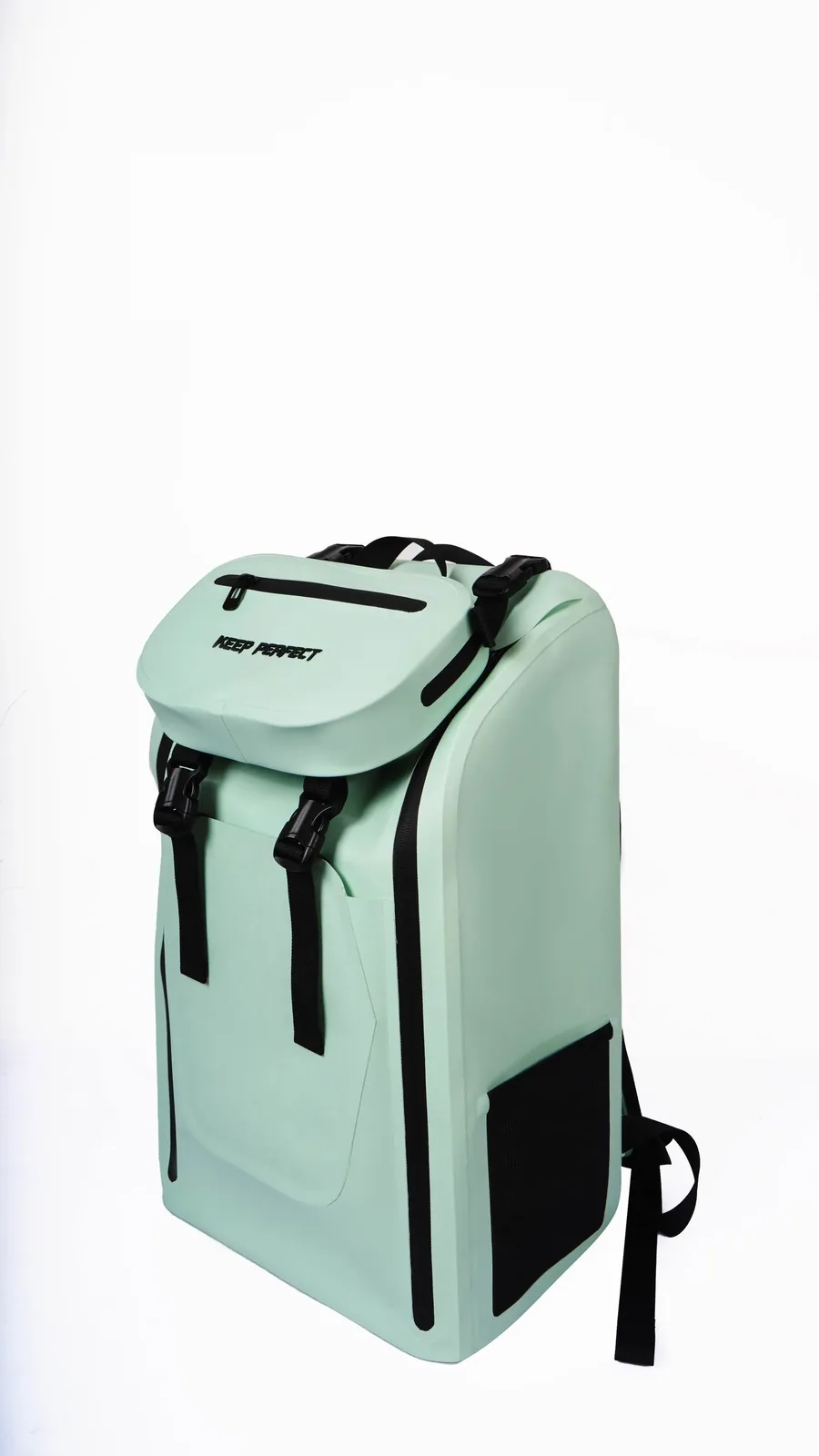
Two fabrics can carry the same denier number and behave nothing alike on the line. Put yarn, weave, thread count, coating weight, finish and the two strength tests on the same row of the specification, then judge the quoted price against that whole row.
What Does the Denier Number Actually Measure?
Denier is the mass in grams of a single filament before weaving: one strand of 600D polyester weighs 600 grams per 9,000 metres. It describes the yarn, never the cloth. Once that yarn is woven, backed and finished, the number on the label tells you almost nothing about the panel you are buying. It is still useful as a shorthand for ordering and for the first cut of a cost comparison, because it tracks with yarn price and with the amount of polymer going into each square metre. What it cannot do is predict tear, puncture or seam behaviour on its own.
The practical consequence is that a 600D hand-spec written by one buyer is frequently heavier and stronger than a competitor's 840D hand-spec. If your specification says nothing beyond "840D polyester", the quote you receive can legally be almost anything in that family. Write the measured values instead: fabric mass per unit area, thread count per centimetre, coating type and coating mass, plus a strength figure. Those four lines are enforceable.
How Do Weave and Thread Count Change the Same 600D?
Polyester in this family is normally supplied in a plain Oxford weave or in a heavier basket construction. Thread count — picks and ends per centimetre — does as much for abrasion as the denier does. A tight construction resists the scuff that destroys bags on concrete floors, because there is less room for grit to work a yarn loose. A looser construction drapes better and folds more easily at the base of a strap, which matters when a panel must turn a corner.
| Construction element | 600D offered by most mills | 840D offered by most mills | Where it shows up first |
|---|---|---|---|
| Yarn family | Polyester filament, semi-dull | Polyester filament, semi-dull | Sheen and print hold-out |
| Typical weave | Oxford or plain, mid pick count | Oxford or basket, higher pick count | Scuff at the base panel |
| Typical fabric mass, uncoated | 150-190 gsm quoted range | 210-260 gsm quoted range | Freight weight and hang |
| Typical mass after PU backing | 200-240 gsm quoted range | 270-330 gsm quoted range | Stiffness in the hand |
| Thickness as quoted | 0.32-0.40 mm | 0.42-0.52 mm | Needle size and seam bulk |
| Common finish | PU backing plus water-repellent top treatment | PU backing plus heavier water-repellent top treatment | First wash performance |
Where Does the Extra 240 Denier Show Up in a Test Report?
Run the usual panel tests and the heavier construction wins some of them clearly and loses others. Tensile strength measured to ISO 13934-1 rises roughly with the amount of polymer in the test strip, so 840D reports higher. Tear strength measured to ISO 13937-1 also rises, though less than buyers expect, because tear depends on how much a yarn can slide rather than how much it can hold. Against that, seam slippage to ISO 13936-1 can get worse with the heavier yarn, because a stiffer cloth transfers more load into each stitch hole.
| Property | Test method cited | 600D typical result | 840D typical result | What the buyer should conclude |
|---|---|---|---|---|
| Breaking force | ISO 13934-1 strip method | Lower | Higher | Tensile is rarely the governing failure mode on a bag |
| Tear resistance | ISO 13937-1 pendulum | Lower | Higher | Matters on linings and at clip points |
| Abrasion resistance | ISO 12947 Martindale | Comparable at equal finish | Comparable at equal finish | Finish decides this, not yarn |
| Seam slippage | ISO 13936-1 fixed load | Better on light loads | Can slip at high load | Stitch density and thread choice compensate |
| Water penetration | ISO 811 hydrostatic | Depends on coating | Depends on coating | Coating mass is the variable to specify |
| Colourfastness to light | AATCC 16 | Same range | Same range | Grade driven by dyestuff, not denier |
What Does the Coating Contribute to the Result?
Most of the shell cloth in this family arrives with a polyurethane backing and a fluorocarbon-free water-repellent top treatment. The backing is doing more work than the denier for most field failures: it stiffens the panel, stops water migrating through the weave, and gives a heat-transfer print something to sit on. A 600D with a well-built backing will beat a poorly finished 840D on hydrostatic head every time. Specify coating type and coating mass separately from the greige cloth, and ask for the hydrostatic result to ISO 811 alongside.
Six lines that belong in the material clause
- Base cloth: polymer, denier, weave and filament type.
- Pick and end count per centimetre, or the mill construction code.
- Fabric mass per unit area to ISO 3801, stated as a range with tolerance.
- Coating or backing: polymer, application method and mass per square metre.
- Finish: water-repellent treatment chemistry and whether it is stated as durable.
- Two evidenced properties: breaking force to ISO 13934-1 and hydrostatic head to ISO 811.
How Do the Two Behave at the Needle and on the Print Bed?
Sewing behaviour changes faster than strength does. Thicker yarn needs a heavier needle, a longer stitch, and more room in the seam allowance, and every one of those changes shows up as bulk at a corner. On a small panel with a bound edge, that bulk can be the difference between a clean turn and a puckered one. Printers see the same effect: heat transfer needs a flat, stable face, and a coarse weave telegraphs its texture through thin films.
When Is 600D the Wrong Answer?
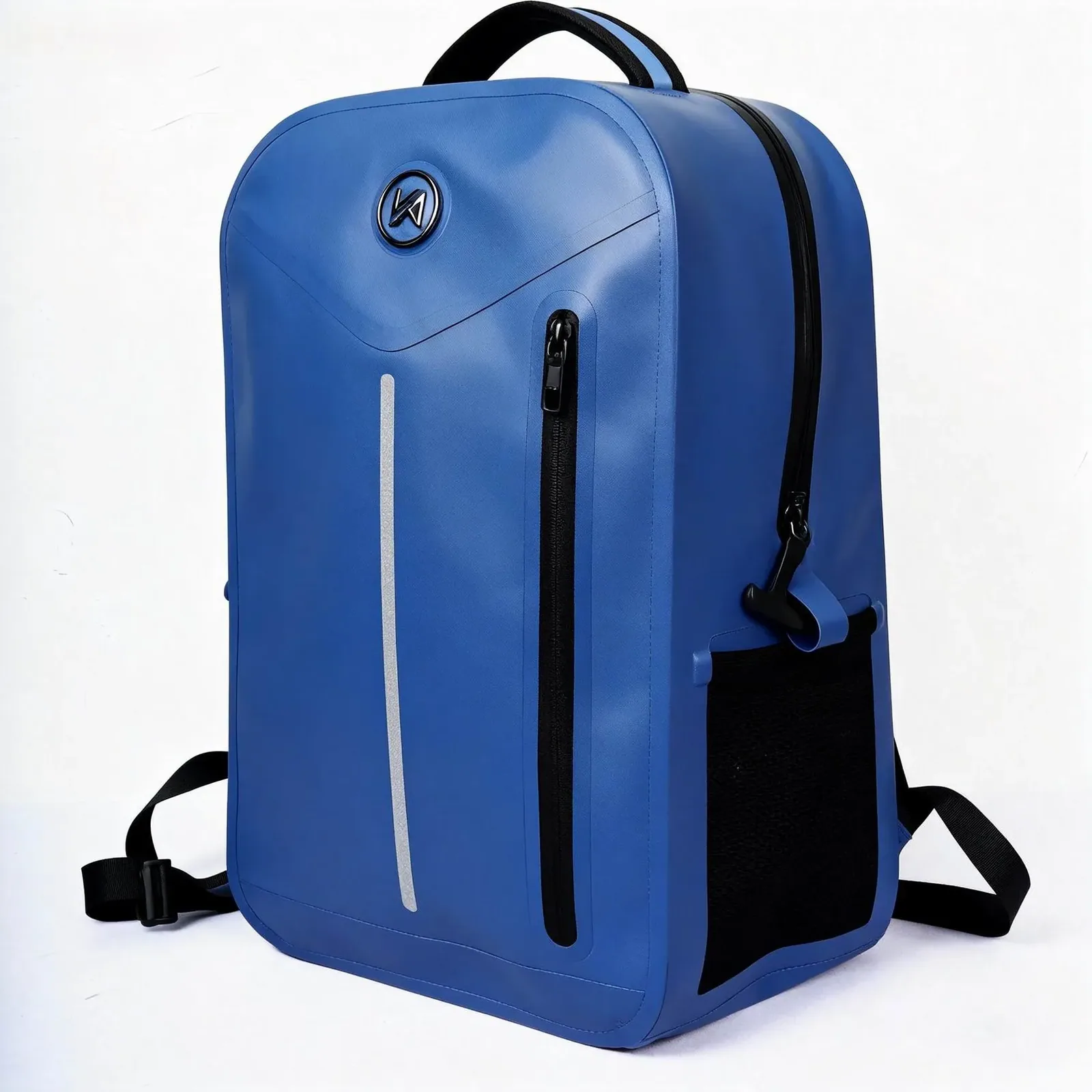
There are three situations where the lighter construction will not hold. The first is a base panel on a bag that gets set down on abrasive surfaces every day; here the extra yarn genuinely buys service life. The second is a load-bearing strap attachment or a clip point where the stress concentrates in a few square centimetres. The third is any design that relies on the panel itself for structure, such as an unstructured kit carrier that must stand upright when empty.
| Where it sits on the bag | 600D | 840D | Reason to move |
|---|---|---|---|
| Upper panels and gussets | Strong fit | Overspecified | Weight with no load benefit |
| Base panel under load | Works with reinforcement | Works unaided | Abrasion life on rough ground |
| Load-bearing webbing attachment | Needs a reinforcement patch | Holds directly | Stress concentrated at the stitch line |
| Interior lining panels | Heavy for the job | Too heavy | Use a lighter lining family instead |
| Roll-top or folding closure | Better | Stiff to fold | Hand feel at the closure |
| Welded seams of any kind | Needs a thermoplastic face | Needs a thermoplastic face | Coating matters more than denier here |
When Does 840D Stop Paying for Itself?
Fabric is priced by mass, so moving from 600D to 840D typically adds cost in the same proportion the weight rises, and that added mass then multiplies through freight, carton count and, in some markets, duty by weight. The point at which it stops paying is the point where added strength is no longer the governing risk. Run the landed cost per thousand units with both weights before you commit: if the failure you actually fear is a seam opening, spend the money on stitch density and thread instead and keep the lighter cloth.
Programme experience puts both families in the low-to-mid cost band for shell fabrics, with the heavier construction a step above the lighter one per running metre. Bands move with resin price and with coating specification, so treat them as a starting point for a conversation rather than as a published figure.
What Should the Material Line of the Specification Say?
Write the line as a set of measurable requirements with tolerances, and require an evidenced result rather than a promise. A workable line reads: shell, polyester filament, 600D, Oxford weave, mass 230 gsm plus or minus five per cent to ISO 3801, PU backing 20 gsm minimum, spray rating to AATCC 22 of 90 or better before washing, breaking force to ISO 13934-1 of a stated minimum, and colourfastness to light to AATCC 16 at a stated grade. Each clause is testable and each test has a published method behind it.

What Does Filament Type Change Beyond the Denier Figure?
Two lots can both be sold as polyester and still behave differently, because one uses a bright round filament and the other a semi-dull one, or because one is textured before weaving. Texture adds bulk without adding much mass and improves the hand, while a flat filament gives a crisper face that prints more cleanly. Filament type also decides how much bulk accumulates where several panels meet at a bound corner, and that is where a line operator notices the difference first.
How Do Colour and Finish Constrain the Choice Before Performance Does?
Deep and bright colours behave differently under light exposure than pale or dark ones, so the shade range can constrain the construction before any strength question is asked. Solution-dyed yarn improves lightfastness because the pigment sits inside the filament, but it narrows the shade offering and raises yarn cost. Piece-dyed cloth offers the widest range and the shortest development route, at the cost of a lightfastness grade that then has to be evidenced.
| Route | What it delivers | Cost position | When it is the wrong call |
|---|---|---|---|
| Piece-dyed fabric | Widest shade range, short development | Lowest yarn cost | Where long sun exposure is expected |
| Solution-dyed yarn | Colour held inside the filament, better lightfastness | Higher yarn cost | Where the shade card must match an existing garment |
| Yarn-dyed checks | Pattern rather than surface colour | Mid to high | Where a single solid colour is needed |
| Printed face | Photographic artwork possible | Mid, plus a decoration step | Where the panel folds sharply at the print |
| Coated then printed | Best hold-out for fine detail | Highest of these | Where cost per unit dominates the brief |
| Uncoated with natural Texture | Softest hand, least weight | Lowest total mass | Anywhere water resistance is required |
- Ask for greige and finished mass separately, so the coating contribution stays visible.
- Request construction codes rather than descriptions, to make the next reorder repeatable.
- Require the lightfastness grade to AATCC 16 whenever the bag will see daylight daily.
- Keep a signed retained coupon per colourway, then compare shipments against it physically.
- Evidence two properties only, but choose the two that govern this specific design.
- Write repair and scrap expectations into the product brief before voluming any panel decision.
How Do Service Conditions Decide It When the Tests Tie?
When two constructions test the same, look at the route the bag takes. Daily scuff favours the heavier yarn. Long hours in a delivery vehicle favour a better lightfastness grade. Repeated washing favours a construction that resists dimensional change. Write those conditions into the brief at the same time as the drawing, because they decide which test thresholds belong on the order and which are decoration.
How Is the Difference Presented to a Buyer Who Only Sees a Price?
Put three numbers in front of them: fabric mass converted into cost per unit, the evidenced strength or abrasion result, and the expected service life in the condition the bag will meet. Those three turn a fabric argument into a commercial one that any stakeholder can follow. Where the heavier construction costs more but demonstrably survives longer in the field, the numbers usually settle the question faster than any description of yarn proved anything.
- Keep greige and finished mass on the quote so coating never hides inside one figure.
- Photograph the cut edge of every approved sample, because texture is hard to describe.
- Record needle size and stitch density alongside the fabric, since one dictates the other.
- Store retained coupons flat, dry and dark, with the date and the style code written on them.
- Re-quote construction every season, because both yarn and coating pricing move.
How Do You Verify the Fabric That Actually Shipped?
Verification is a three-step habit. Before production, approve a coupon from the roll that will be cut, signed and dated, and keep it. During inspection, draw from the shipment rather than from the sample room, and record at AQL 2.5 under ISO 2859-1 General Inspection Level II. After shipment, keep a retained reference from every colourway so the next reorder has something to compare against. Fabric substitution between repeats is the single most common complaint in this category, and it is also the easiest one to prevent if a physical reference exists.
Send both constructions for comparison
Tell us how the bag will be carried and where it fails in the field — we return a coupon set with the test line written, sampling quoted at 6-10 working days.
Frequently Asked Questions
Does a higher denier always mean a stronger bag?
No. Denier describes yarn mass, while panel strength depends on weave density, coating and the way the seam distributes load. A heavier yarn in a loose construction routinely loses to a lighter yarn in a tight one, which is why the specification should carry tested values.
Which test should I cite for strength on a shell fabric?
Cite ISO 13934-1 for breaking force and ISO 13937-1 for tear resistance, and add ISO 13936-1 for seam slippage if panels carry load into stitched joints. All three are published methods with defined sample preparation, so a result can be reproduced elsewhere.
How much does the coating matter compared with the denier?
Coating drives hydrostatic performance, stiffness, print hold-out and abrasion far more than denier does. Specify coating polymer and coating mass as separate line items and request the hydrostatic result to ISO 811 on the same lot you are buying.
Is 840D always the more expensive option?
Fabric is sold by mass, so the heavier construction costs more per metre and more per unit once freight is included. Whether that premium is worth paying depends on whether added tensile and tear performance addresses the failure you actually see in the field.
Can I mix both weights in one bag?
Yes, and most durable designs do. A common arrangement puts the heavier construction on contact and load-bearing areas and the lighter one on upper panels, which trims weight without giving up service life where it counts.
What tolerance should I allow on fabric weight?
A tolerance of plus or minus five per cent around the stated mass to ISO 3801 is workable for most constructions. Anything wider invites substitution, and anything tighter tends to be quoted as a premium rather than as a standard.
Does speak of "solution-dyed" change the comparison?
Solution-dyed yarn carries pigment inside the filament, which improves colourfastness to light and to washing. It raises yarn cost and narrows the colour range, and it does not change the tensile picture at all, so treat it as a separate decision from denier.
How do I stop fabric substitution on a reordered style?
Keep a signed retained coupon from the approved lot, restate every measurable line on the new purchase document, and require a pre-production coupon against those lines before bulk cutting starts. Then compare retained references side by side under the same lighting.
What causes seam failure on heavier shell fabrics?
Usually stitch density and thread rather than fabric. Heavier cloth transfers more load into each stitch hole, so the answer tends to be a stronger thread, more stitches per centimetre and a reinforcement patch at concentrated loads.
Should the lining be chosen from the same family?
Rarely. Linings do their job with far less mass, and using shell cloth inside adds cost and bulk for no benefit. Look at lining-specific families and put the money into a ripstop or a tighter plain weave where abrasion happens.
People Also Ask
What does 600D mean in fabric?
It is the mass in grams of 9,000 metres of a single yarn, so a 600D filament weighs 600 grams per 9,000 metres. Convert to tex by dividing by nine when you need a linear density.
Is 840D stronger than 600D?
On tensile it generally reports higher, because there is more polymer in the test strip. The gap narrows for abrasion and disappears entirely where the finish governs performance.
Which fabric lasts longer outdoors?
Outdoor life is decided by UV stability, which depends on dyestuff and stabiliser rather than on yarn size. Ask for a colourfastness result to AATCC 16 and compare grades.
Does heavier fabric always cost more to ship?
Yes, because fabric mass compounds through thousands of units. The effect is small per unit and large per container, which is why the landed cost view matters more than the fabric price.
Can lighter fabric still be water resistant?
Yes. Water resistance comes from coating and from construction density. A light cloth with a good backing will outperform a heavy one with a poor finish in a hydrostatic head test.
Sources and further reading
Every figure on this page is either our own programme data or attributed below. Open the originals before you write them into a specification.
- ISO 13934-1 — Tensile properties of fabrics, strip methodInternational Organization for Standardization
- ISO 3801 — Textiles: determination of mass per unit areaInternational Organization for Standardization
- ISO 811 — Resistance to water penetration (hydrostatic pressure test)International Organization for Standardization