What Is a Bag Mockup and How Does It Differ from a Sample?
A mockup answers whether the shape works and is built in whatever material is to hand. A sample answers whether the specification works and is built in the materials, hardware and construction the order will use. Confusing the two is how a programme approves the wrong thing.
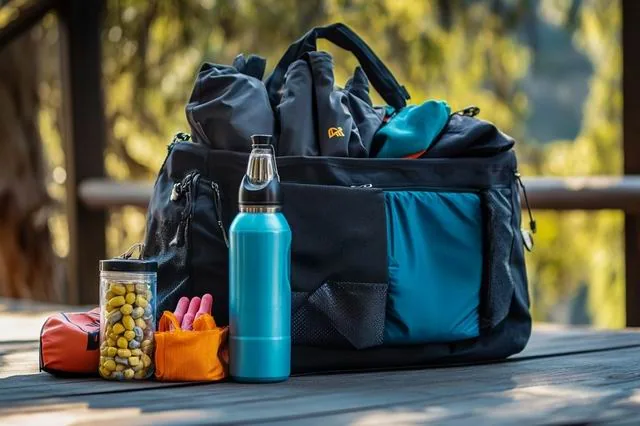
A mockup is a shape study: built fast, in substitute material, to answer whether the proportion, the compartment layout and the access work. A sample is a specification test: built in the real shell, the real foam, the real hardware and the real stitch schedule, to answer whether the pack is correct. Approving a mockup approves a shape; approving a sample approves a product.
The two get confused because both are physical objects that arrive in a box. The difference is what question they were built to answer, and that difference decides what can be concluded from them. A mockup can tell a buyer the boot pocket is too small. It cannot tell them the shell is the right hand, because the shell is not the real shell.
Programmes get into trouble when a mockup is approved as if it were a sample. The buyer signs off on a shape, bulk is built to a specification that was never tested, and the first complaint arrives from a customer rather than from an inspection.
The reverse mistake is less common and costs less, but it is worth naming: a buyer who waits for a production sample to answer a question a mockup could have answered in an afternoon. Shape questions are inexpensive to answer early and costly to answer late, and the artefact exists precisely to make them inexpensive.
What Is a Mockup Built to Answer?
Shape, proportion, compartment layout and access. Those four are geometry and ergonomics rather than material, and they can be judged in almost any cloth. A mockup is therefore quick to make, and it is the right first artefact when the design is still moving.
The second thing a mockup answers is whether the kit fits. A camera bag mockup with card dividers will tell a buyer whether a body and two lenses sit where they should; a kit bag mockup will tell them whether a size 11 boot goes into the end pocket. Neither answer requires the production material.
What Is a Sample Built to Answer?
Whether the specification is correct. A production sample uses the specified shell, lining, foam, webbing, thread and hardware, is assembled to the specified stitch schedule, carries the specified artwork in the specified position, and is packed the way the order will be packed. Every one of those is a claim in the pack and the sample is the test of it.
That is why a sample takes longer. Sampling runs 6-10 working days because the real material has to be sourced or confirmed, the pattern has to be cut, and the construction has to follow the schedule rather than the sampler's judgement. A mockup can be made in an afternoon; a sample cannot.
| Question | Answered by the mockup | Answered by the sample | Answered by neither |
|---|---|---|---|
| Is the proportion right? | Yes | Yes, but late | |
| Does the kit fit? | Yes | Yes | |
| Is the compartment layout workable? | Yes | Yes | |
| Is the shell the right hand? | No | Yes | |
| Does the hardware hold? | No | Yes, if it is tested | |
| Is the colour right? | No | Yes | |
| Does the artwork sit where it should? | Partly, as position | Yes, as process and position | |
| Is the stitch schedule correct? | No | Yes | |
| Will the carton survive? | No | Yes, if the packing is specified | |
| Will the customer buy it? | No | No | That is a market question |
When Should a Buyer Ask for a Mockup?
When the shape is still undecided and the cost of a wrong shape is higher than the cost of a mockup. That is usually true on a bag with an unusual compartment layout, a bag sized against a specific piece of equipment, or a bag where the silhouette is the point of the design.
It is also the right move when the pack is going to take a week to write. A mockup keeps the design conversation moving while the specification is being completed, and the answers it produces feed straight into the drawing. Where a programme is running to a tight calendar, that parallel work is worth more than the mockup costs.
Four things a mockup is allowed to decide
- Overall proportion: body height against base depth, and where the visual weight sits.
- Compartment layout: how many, what size, and how each is accessed.
- Whether the intended contents fit, tested with the real items where possible.
- Whether the carry position works: strap drop, handle height and how the bag sits on a shoulder.
When Is a Mockup the Wrong Thing to Ask For?
When the specification is already settled and the buyer wants confirmation. A mockup cannot confirm anything about material, colour, hardware or construction, and asking for one at that point delays the answer by the transit time without adding information.
It is also the wrong artefact when the buyer intends to approve it. There is no specification behind a mockup, so there is nothing to approve and nothing to inspect against later. A mockup approved today produces no golden sample, no revision letter and no record.
What Marks a Mockup That Has Been Done Well?
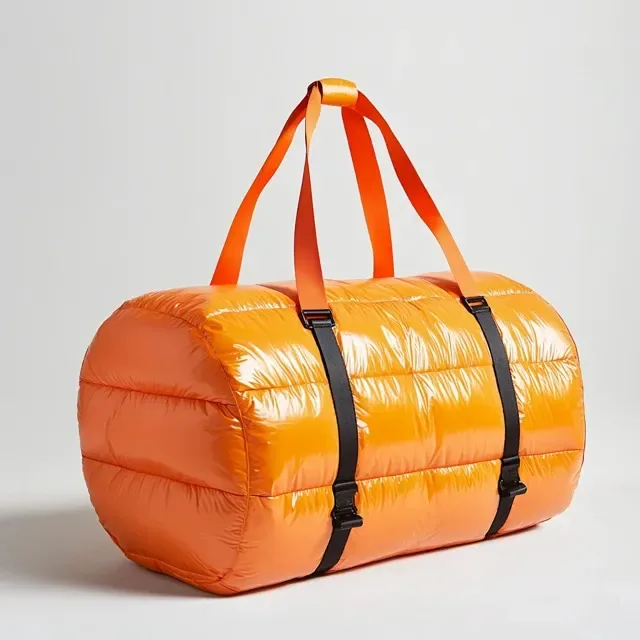
Made in a material with a similar weight and stiffness to the intended shell, sewn quickly, with the compartments marked in a way that can be changed in an hour. A mockup that takes three days to make has stopped being a mockup and has become a slow sample.
The second mark of a good mockup is that it is annotated. Tape marks showing where a pocket should move, a note on the strap drop, a line drawn where the buyer wants the seam — those marks are the output, and they are what turns the object into decisions the pack can carry.
The third is that somebody writes down what did not work. A mockup that only confirms what the buyer already believed has not earned its keep, and the useful findings are almost always the negative ones: the pocket that is too shallow, the access that is on the wrong side, the strap that sits too high.
What Are the Intermediate Artefacts Between the Two?
Three, and naming them removes most of the confusion. A proto sample is built in the correct material but with simplified construction, usually to check the hand and the colour. A sales sample is a production sample finished to the full specification, used for photography and for customer approval. A pre-production sample is built on the bulk line with bulk materials, immediately before bulk starts.
The pre-production sample is the one buyers skip and the one that catches the most. It is the first unit made with the bulk material lot, on the bulk line, by the bulk operators — and it is therefore the first unit that shows what the run will actually produce rather than what a skilled sampler can produce.
| Artefact | Material | Construction | What it is for | Can it be approved? |
|---|---|---|---|---|
| Mockup | Substitute | Simplified | Shape and proportion | No |
| Proto sample | Correct shell, simplified trim | Simplified | Hand, colour and drape | No |
| First sample | As specified | As specified | Testing the whole pack | Yes, as the golden sample |
| Sales sample | As specified | As specified | Photography and customer approval | Yes |
| Pre-production sample | Bulk lot | Bulk line and operators | Confirming what the run will produce | Yes, before bulk |
| Shipment sample | From the run | From the run | A record of what shipped | It is a record, not an approval |
How Does a Mockup Fit the Sampling Clock?
It sits outside it, which is the useful part. Sampling is quoted as 6-10 working days from a signed pack, and that clock covers pattern, cutting, assembly and the internal check. A mockup made before the pack is signed does not consume any of it, because the pack is still being written while the mockup is being made.
Where a mockup is made after the pack is signed, it does consume time, and the buyer should expect it: a shape change coming out of a mockup at that stage means a pack revision, a new pattern and a fresh start on the window. That is the argument for making the mockup early rather than for skipping it.
What Does a Mockup Do for a Programme That Repeats?
It becomes the fastest way to answer a change request. When a customer asks for a deeper main compartment on an existing style, a mockup of the changed compartment answers in a day what a sample round would take a week to confirm, and the decision is made on an object rather than on a drawing.
Programmes that keep their mockups also keep their reasoning. A shape decision made two seasons ago and recorded on an annotated object is explainable; the same decision held only in the drawing is not, because the drawing shows the outcome and not the argument behind it.
What Should Be Written Down About a Mockup?
What it was made of, what it was testing, what was decided from it, and what it cannot tell anybody. Four lines, and the fourth is the one that prevents the mockup being treated as an approval later. A photograph of the mockup with those four lines under it is worth more than the mockup itself.
Then feed the decisions into the pack. A mockup that changes the compartment layout changes the drawing, the materials and the stitch schedule, and those changes have to be in the pack before the sampling clock starts. A mockup whose decisions stay in somebody's head has not finished its job.
How Does a Digital Mockup Compare With a Physical One?
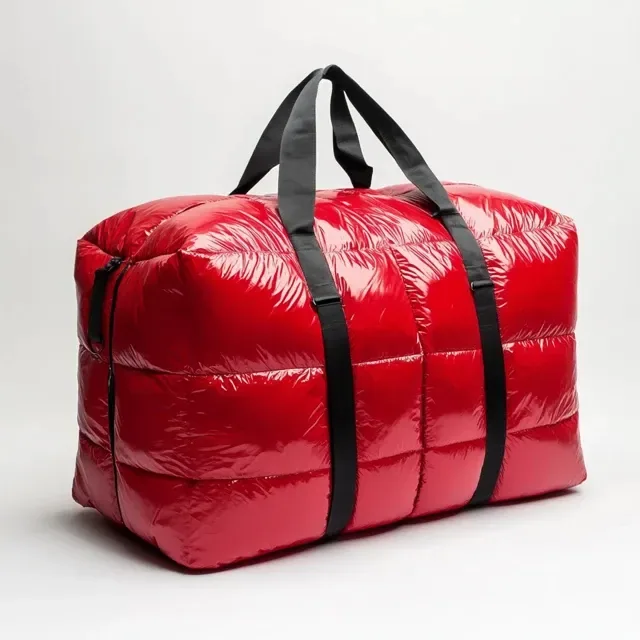
A rendered model answers proportion and compartment layout at a distance and is useful for a first conversation, but it cannot answer the two questions a physical mockup exists for: whether the contents fit, and how the bag feels when it is picked up. Those two need an object.
Where a digital model is used, the discipline is the same: record what it was testing and what it cannot tell anybody. A rendering that gets treated as an approved design has the same problem as a mockup that does, and for the same reason.
One more artefact deserves a name because it catches a specific failure: the fit mockup, built to the internal dimensions rather than the external ones, used to test whether the intended contents actually go in. On a camera bag or a kit bag it is often the only artefact that answers the question that matters.
How Does This End for the Programme?
With one approved first sample held as the golden reference, on each side, against a named revision of the pack. Bulk then runs 35-50 days from that written approval and is inspected at AQL 2.5 under ISO 2859-1 at General Inspection Level II.
The mockup is filed with the design record rather than with the approval record, because that is what it is: a design artefact, not a specification artefact. Programmes that keep the two apart stop having the argument about what was approved.
What Does a Mockup Cost and Where Does That Sit?
Usually as a development charge rather than inside the unit price, because it is a one-off shape study with no bulk behind it. Where a programme is going to run anyway, it is sometimes absorbed; where the design may not proceed, it is charged separately and should be quoted as such.
The cost that matters more is the calendar. A mockup made early costs nothing against the sampling window and saves a revision. A mockup made late costs a pack revision, a new pattern and a restart of the 6-10 working day window. That asymmetry is the whole argument for doing it first.
| Timing of the mockup | Cost against the calendar | What it can still change | What it can no longer change |
|---|---|---|---|
| Before the pack is signed | None | Everything — shape, layout, access, proportion | Nothing |
| While the pack is being drafted | Little, if the drafting absorbs it | Shape and layout, before the drawing is fixed | The material direction, if it is already chosen |
| After the pack is signed | A revision and a new pattern | Shape, at the cost of the window | The material buy, if ordered |
| After the first sample | A full second sample round | Shape, at the cost of the whole window | The pattern, the marker and any ordered material |
| During bulk | Not viable | Nothing | Everything — the run is already committed |
What Is the Short Rule for a Buyer Holding Both Objects?
Where a programme makes mockups routinely, the second benefit shows up in the pack itself. Drawings get better, because the people writing them have held the object; compartment schedules get more realistic, because somebody has tried to put the kit in; and the first sample comes back closer to right, which is where the sampling window is actually saved.
Approve the sample, learn from the mockup. If the buyer is holding a mockup and being asked to sign something, the right answer is to ask where the production sample is, because the mockup cannot be signed against anything.
If the buyer is holding a production sample and being asked to approve it, the right move is to check it against the pack line by line before signing, and to record which revision was approved. That record is what the inspection will read, and it is what the second run will be compared with.
Get the sampling sequence set out for your style
Send the pack and the calendar. You get the artefact sequence — mockup, sample, pre-production — with what each one decides.
Frequently Asked Questions
What is a bag mockup?
A shape study built in substitute material to answer questions about proportion, compartment layout, access and whether the intended contents fit.
How is a mockup different from a sample?
A mockup tests shape in any material; a sample tests the specification in the real materials, hardware and construction the order will use.
Can I approve a mockup?
No. There is no specification behind it, so there is nothing to approve and nothing to inspect against later.
When should I ask for a mockup?
When the shape is still moving and a wrong shape would cost more than the mockup does — an unusual compartment layout, a bag sized around equipment, or a silhouette that is the point of the design.
What is a proto sample?
A sample built in the correct shell with simplified trim, used to judge hand and colour before the full construction is committed.
What is a pre-production sample?
A unit built on the bulk line with bulk materials and bulk operators, immediately before bulk starts. It shows what the run will actually produce.
Why is a pre-production sample worth having?
Because it is the first unit made with the bulk material lot by the people who will make the run, rather than by a skilled sampler.
Does a mockup consume the sampling window?
Not if it is made before the pack is signed. Made afterwards, a shape change from it means a pack revision and a fresh start on the window.
How long does a production sample take?
6-10 working days from a signed pack, widening to 12-15 working days on a complex style with welded seams or multi-panel foam.
What should be recorded about a mockup?
What it was made of, what it was testing, what was decided from it, and what it cannot tell anybody.
What is a golden sample?
The approved first sample held on each side against a named revision of the pack, used to settle colour, hand and construction disputes.
How many samples should a buyer expect?
A first sample for approval, optionally a sales sample for photography, and a pre-production sample before bulk. The mockup sits outside that sequence.
What happens after the sample is approved?
Bulk runs 35-50 days from written approval, inspected at AQL 2.5 under ISO 2859-1 at General Inspection Level II.
What does a mockup cost and where does it sit?
Usually as a development charge rather than inside the unit price. What matters more is timing: made early it costs nothing against the window, made after the pack is signed it costs a revision and a new pattern.
Should a mockup be kept after the programme starts?
Yes, with the design record and the note of what it was testing — not with the approval record, because it is not an approval artefact.
People Also Ask
What is the difference between a mockup and a sample?
A mockup tests shape and proportion in substitute material; a sample tests the full specification in the materials, hardware and construction the order will use.
Can you approve a bag mockup for production?
No. A mockup has no specification behind it, so there is nothing to approve and nothing for inspection to measure against.
What is a pre-production sample?
A unit built on the bulk line with bulk materials by the operators who will make the run, immediately before bulk starts.
When should a buyer ask for a mockup?
When the shape is still undecided and the cost of a wrong shape exceeds the cost of making one.
How long does bag sampling take?
6-10 working days from a signed pack, widening to 12-15 working days on a complex style.
Sources and further reading
Every figure on this page is either our own programme data or attributed below. Open the originals before you write them into a specification.
- ASTM D6193 — Standard Practice for Stitches and SeamsASTM International
- ISO 2859-1:1999 — Sampling procedures for inspection by attributesInternational Organization for Standardization
- AATCC technical manual — colourfastness and appearance methodsAmerican Association of Textile Chemists and Colorists