Why Does Bag Sampling Take 6-10 Working Days and Not Three Weeks?
Because three weeks is six to ten working days of real work separated by gaps in which the sample waited on a trim, a tool or a decision. The assembly is two or three days; the dependencies and the approvals are the rest. We do not promise the fastest 20 days. We promise a delivery date you can calculate.
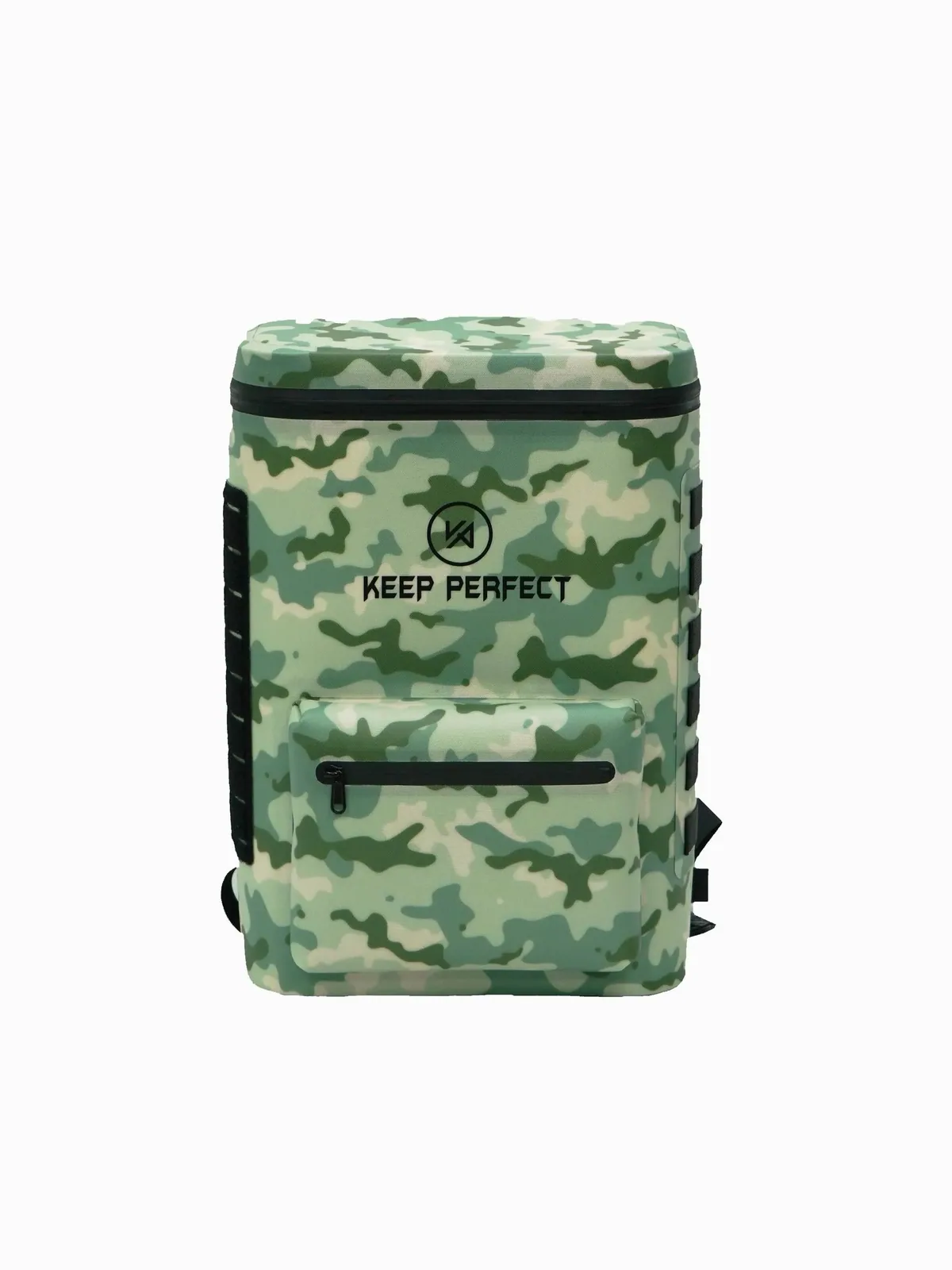
Sampling runs 6-10 working days from a signed-off tech pack and 12-15 for a complex build, and the window is counted in working days because three of its steps need a person in a different place. Day one is pattern and material allocation, days two to four are cutting and assembly, day five is the internal check, and the remainder is the correction round. A sample that takes three weeks was usually waiting for a decision, not for a machine.
Sampling is the shortest window in the programme and the one most often blamed for a late start. It is worth understanding precisely, because a three-week sample is almost never three weeks of work. It is six to ten working days of work separated by gaps in which the sample was sitting in a queue, waiting on a component, or waiting on a decision from the buyer. Knowing which of the three it was tells you what to fix.
What Does the Sampling Clock Start From?
From a signed-off tech pack, and that is a stricter condition than most buyers assume. A tech pack with a dimension missing, a hardware reference unstated or a print area undefined is not signed off, and a sample built from an incomplete pack is a guess that will be rebuilt. The commonest cause of a long sampling window is an enquiry sent with a sketch and a hope, which starts a conversation rather than a clock.
The practical test is simple: could somebody build this without asking a question? If the answer is no, the questions will be asked and each one costs a day. The 15-field RFQ template sets out the fields that close those questions before day one, and the errors that most often reopen them are listed in the piece on tech pack errors that delay sampling.
What Happens on Each Day of a Standard Sample?
| Day | Work done | Who holds it | What can stall it |
|---|---|---|---|
| Day 1 | Pattern released, material allocated, trims picked | Sample room | A trim that has to be ordered in |
| Day 2 | Cutting the panels, preparing print or embroidery files | Sample room | A digitising file that has to be redrawn |
| Day 3 | Assembly begins: panels closed, linings set | Sample room | A construction the operator has not seen before |
| Day 4 | Assembly finished, hardware set, closing operations | Sample room | A hardware item that does not fit the prepared hole |
| Day 5 | Internal check against the tech pack, photographs taken | Sample room and programme desk | A dimension that is out and has to be re-cut |
| Day 6 | Correction round or dispatch | Both sides | Waiting on a buyer decision about a deviation |
| Days 7-10 | Second round if the first needs a change | Both sides | An unclear instruction about what to change |
Two things stand out when the window is written out this way. The first is that the assembly itself is two or three days; the sample room is not the bottleneck. The second is that days six to ten exist because a first sample frequently needs one change, and the change needs an instruction. Buyers who want a shorter sampling window should look at the quality of the pack and the speed of their own replies before they look at the sample room.
What Makes a Build Complex Enough to Need 12-15 Days?
Three things move a sample into the longer window, and they are all dependencies rather than difficulty. A new tool: a branded pull, a shaped slider or a moulded fitting has to be cut or sourced before the sample can be finished, and that runs on the tool vendor calendar rather than the sample room one. A dyed-to-order fabric: the cloth has to be lab-dipped before there is anything to cut. A novel construction: a welded liner on a shape that has never been welded, or a moulded base, needs a set-up and usually one failed attempt.
Note that none of these is a hard problem. They are ordering problems: the dependency has to be resolved before the sample-room work can finish, so the calendar is the dependency plus the sample-room work rather than whichever is longer. A buyer who knows which of the three applies can often remove it — a stock pull instead of a branded one, a stock shade instead of a dyed one — and take four or five days out of the front of the programme.
| Dependency | Days it adds | How to remove it | What removing it costs |
|---|---|---|---|
| A tooled pull, slider or fitting | +6 to +8 | Specify a stock article from the hardware catalogue | Your mark on the metal component |
| A dyed-to-order shell shade | +4 to +6 | Accept a stock shade held by the mill | The shade is the warehouse shade, not your reference |
| A welded liner on a new shape | +3 to +5 | Use a sewn and taped liner for the first run | Some thermal performance and some cleanability |
| A moulded base or divider | +5 to +7 | Build the base from panels for the first run | Some structure and some drop performance |
| A custom print with a new screen | +2 to +3 | Print from an existing screen or use a transfer | A narrower range of print positions |
Why Is the Window Counted in Working Days?
Because three of the steps need a person in a different place. The trim vendor who has to send a sample-length zipper, the print shop that has to expose a screen, and the buyer who has to approve a deviation all work to their own calendar. Counting in working days rather than calendar days is the honest way to quote a window whose length depends on other people being at their desks.
It also means a sample quoted in working days silently lengthens across a public holiday, and the honest way to handle that is to name it. If a holiday falls inside the sampling window, the window extends by the closure, and the dates are known in advance. A vendor who quotes working days and then treats the holiday as inside the window is not lying about the working days; they are failing to mention that some of them are not working.
What Should You Check on the Sample Before You Approve It?
The instinct is to look at the sample and decide whether it is nice. The useful question is narrower: does it match the document? Measure it against the tech pack dimension by dimension, check the hardware against the named reference, check the stitch density and the seam construction, and check the print registration and colour against the artwork. Anything that differs from the pack is either a correction or a change to the pack, and the distinction has to be recorded.
A third check is the one buyers skip until it costs them: the sample has to be measured in the state it will be shipped in. A soft structure measured empty on a bench is a different article from the same structure measured loaded, and an insulated style measured before the foam has relaxed is a different article from one measured after. Write the measurement condition into the pack — empty or loaded, relaxed or as-packed — so that the approval and the inspection are measuring the same thing.
The second check is the one that protects the bulk run: was this sample made on production tooling, from production-intent material? A sample-room unit made from a substitute fabric, with a hardware item that is visually similar to the specified one, will approve beautifully and then behave differently at 500 units. The 20-point sample approval checklist is the form we work to, and question one on it is what the sample was made from.
How Many Rounds Should a Sample Take?
One for a simple style built from stock materials, two for most custom programmes, and three where a brand-owned shade or a new tool is involved. A fourth round usually means the specification is being developed through sampling, which is an expensive way to write a document. If you find yourself on round three with a fundamental question still open, stop sampling and finish the pack.
The way to keep the round count down is to say what is wrong rather than what is disliked. "The handle feels thin" produces three guesses and three rounds. "The handle is 18 mm wide and the pack says 25 mm" produces one correction and one round. Every ambiguous instruction in a sampling cycle is a round of working days bought with the buyer own schedule, and it is the single largest avoidable cost in the window.
Each round costs the same working days as the first, which is why the range is 6-10 rather than a flat six. Building one correction round into the plan from the start costs less than being surprised by it, and it is the reason the published figure is a range rather than a promise of six.
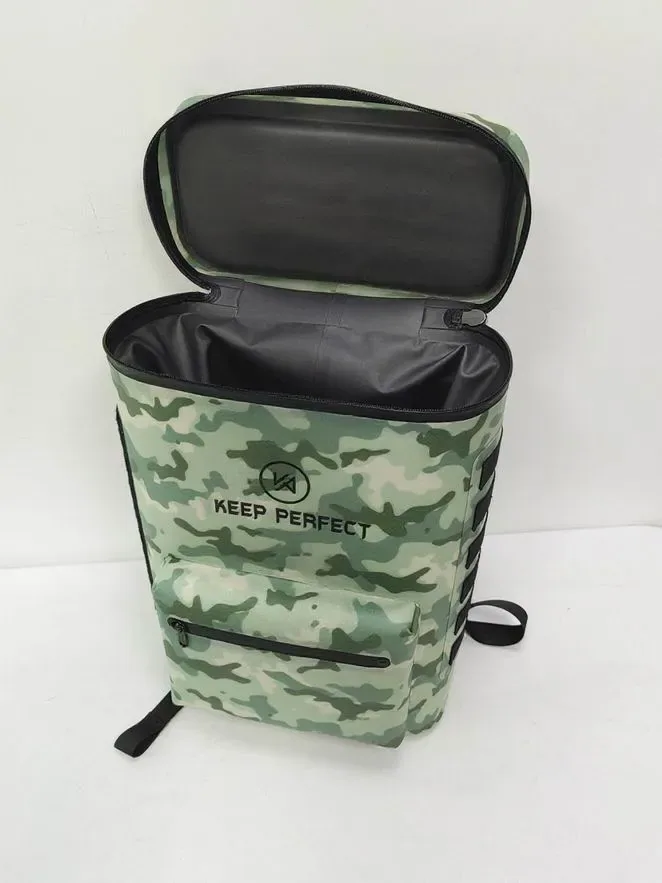
Does Approving the Sample Start the Bulk Clock?
Yes, and only when the approval is in writing. Written sample approval plus receipt of the deposit is the trigger for the 35-50 day bulk window, and both events have to be dated. A verbal approval in a messaging thread, or an approval that says "yes but change the pull", does not start the clock, and the gap between that conversation and a formal approval is where most disputed dates are born.
The commercial mechanics follow the same trigger. Payment runs T/T 30/70, and the first 30 per cent is one of the two events that releases material, so a deposit that lands four days after the approval moves the whole schedule four days rather than starting it. Where a buyer wants the clock to start at the approval but pay later, the honest answer is that the mill is booked on the deposit and not on the intention.
The sample itself also becomes a contract object. Once it is approved and sealed, it is the standard the bulk run is judged against, and it should be retained by both sides. On the inspection report six weeks later, the question is not whether the goods look right but whether they match the sealed sample, and a sample nobody kept turns that into an argument about recollection.
What Does Sampling Cost Against the Schedule?
Six to ten working days, or 12-15 on a complex build, and those days sit outside the bulk window rather than inside it. A buyer planning a launch should add them: sampling plus bulk plus transit, not bulk plus transit. The arithmetic for a 500-piece programme on a standard build is therefore roughly 6-10 working days plus 35-50 days plus the transit the chosen Incoterm leaves with the buyer.
There is a shortcut worth naming honestly. A stock-fabric, stock-hardware build with no tooling can be sampled and produced on a shorter combined calendar, and that is a legitimate choice for a first run. What it costs is the shade, the branded hardware and the certainty that the second run will match the first, which is the trade the guide on why bulk production takes 35-50 days sets out in full.
One further piece of arithmetic belongs here, because it decides whether a launch date is reachable at all. Take the date the goods have to be on board, subtract the transit the chosen Incoterm leaves with the buyer, subtract the 35-50 day window, and subtract 6-10 working days of sampling. Whatever is left is the last date on which a signed-off tech pack can be sent. Buyers who run that sum backwards in week one rarely need to ask for compression later; buyers who run it forwards in week six always do.
Where the backward sum produces a negative number, the honest answer is not to compress the schedule but to change the specification. Stock fabric, stock hardware and a simpler construction are the three levers that shorten the front of the programme without removing a control from the end of it, and they are choices to make at the tech pack rather than at the sewing line.
Getting the sampling window to mean something
- The clock starts from a signed-off tech pack, not from an enquiry or a sketch.
- The assembly is two or three days; the dependencies and the decisions are the rest.
- Three things move a build to 12-15 days: a new tool, a dyed-to-order fabric, a novel construction.
- Working days lengthen across a public holiday, so name the holiday in advance.
- Approve against the document and ask what the sample was made from, not whether it looks right.
- Written approval plus the deposit starts the bulk clock; anything less is a conversation.
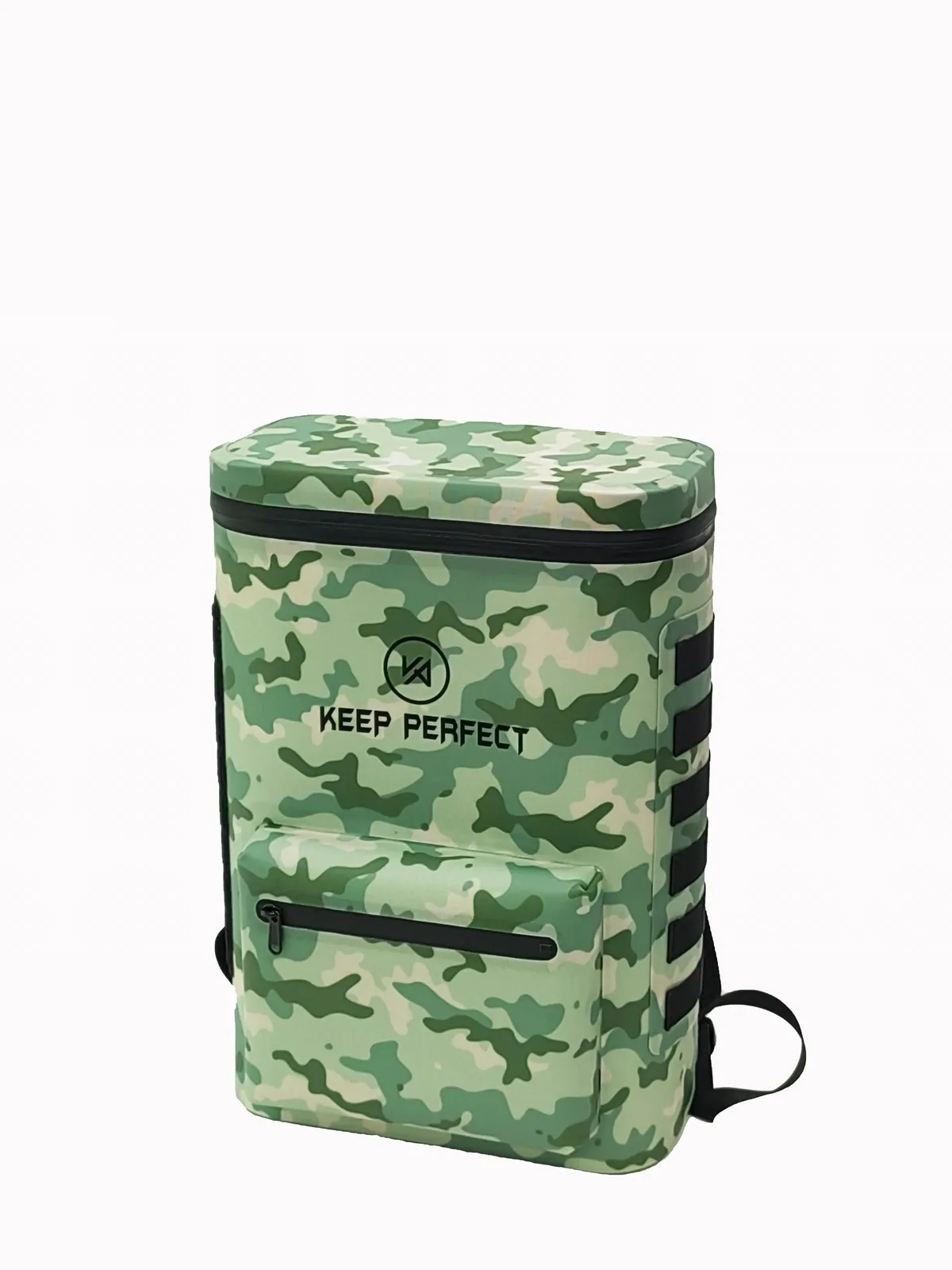
Send a complete pack and start the sampling clock
Send the tech pack with dimensions, materials, hardware references and artwork. You get a sampling window of 6-10 working days, or 12-15 for a complex build, and a sample made on production tooling from production-intent material. MOQ 500 pcs, bulk 35-50 days from approval, FOB Xiamen.
Frequently Asked Questions
How long does bag sampling take?
6-10 working days from a signed-off tech pack. A complex build with a new tool, a dyed-to-order fabric or a novel construction takes 12-15 working days.
What starts the sampling clock?
A signed-off tech pack: dimensions, materials, hardware references and artwork all complete. A pack with a field missing starts a conversation rather than a clock.
Why is sampling counted in working days?
Because three steps need somebody in a different place — a trim vendor, a print shop, and the buyer approving a deviation — and all of them work to their own calendar.
What makes a sample take longer than ten working days?
Usually a dependency: a tool that has to be cut, a fabric that has to be lab-dipped, or a construction the sample room has to set up for the first time.
How many sample rounds are normal?
One for a simple stock-material style, two for most custom programmes, three where a brand-owned shade or a new tool is involved. A fourth means the specification is being written through sampling.
Does a public holiday extend the sampling window?
Yes. A holiday inside the window extends it by the closure, and the dates are known in advance, so they should be named when the window is quoted.
Should the sample be made on production tooling?
Yes. A sample-room unit made from a substitute fabric with visually similar hardware approves beautifully and then behaves differently at 500 units.
What should I check before approving a sample?
Whether it matches the tech pack: dimensions, hardware against the named reference, stitch density and seam construction, and print registration and colour against the artwork.
Does sample approval start the bulk clock?
Yes, when the approval is in writing and the deposit has been received. Both events should be dated, and a conditional approval does not start the clock.
What happens to the approved sample?
It is sealed and retained by both sides as the standard the bulk run is judged against. On the inspection report the question is whether the goods match the sealed sample.
Can sampling be done faster than six working days?
Occasionally, when the material and hardware are held and the construction is known. It is not the usual case, and quoting it as the usual case is how a programme starts late.
Is sampling time inside the 35-50 day bulk window?
No. It sits before it. Plan sampling plus bulk plus transit, not bulk plus transit.
What is the MOQ after sampling?
500 pcs per style and colourway, with 300 open to discussion on a repeat once the tooling, the pattern and the sealed sample already exist.
Do I get more than one sample?
Usually two: a first submission for correction and a second for approval, and a sealed reference retained by both sides. Additional rounds are charged as development rather than as sampling.
Can sampling and bulk overlap?
Not safely. Bulk material is released against an approved sample, so starting to cut before approval means cutting against a specification that may still change, and the cost of being wrong is the whole run.
People Also Ask
How long does it take to get a custom bag sample?
6-10 working days from a complete tech pack, and 12-15 for a build with a new tool, a dyed-to-order fabric or a novel construction.
What do I need before sampling can start?
A signed-off tech pack with dimensions, materials, hardware references and artwork, complete enough that nobody has to ask a question.
Why is my bag sample taking so long?
Usually a dependency or a decision, not the assembly. The assembly is two or three days; the rest is a trim order, a tool, or an unanswered question.
How many samples should I expect before approval?
One to three, depending on whether a brand-owned shade or a new tool is involved. More than three means the pack needs finishing.
Does approving a sample commit me to the order?
It starts the bulk clock when it is in writing and the deposit is received, so treat approval as the commercial commitment it is and date it deliberately.
Sources and further reading
Every figure on this page is either our own programme data or attributed below. Open the originals before you write them into a specification.
- AATCC — evaluation procedures for colour and appearanceAmerican Association of Textile Chemists and Colorists
- ASTM International — standards indexASTM International
- ISO 9001 — quality management systemsInternational Organization for Standardization