Ballistic Nylon 1680D: When Does It Pay Off?
This heavy construction is often requested as though it were an upgrade across the whole bag, then abandoned once the bulk and freight costs appear. Here is how to judge it panel by panel, what it does well, and where the same money buys more performance elsewhere.
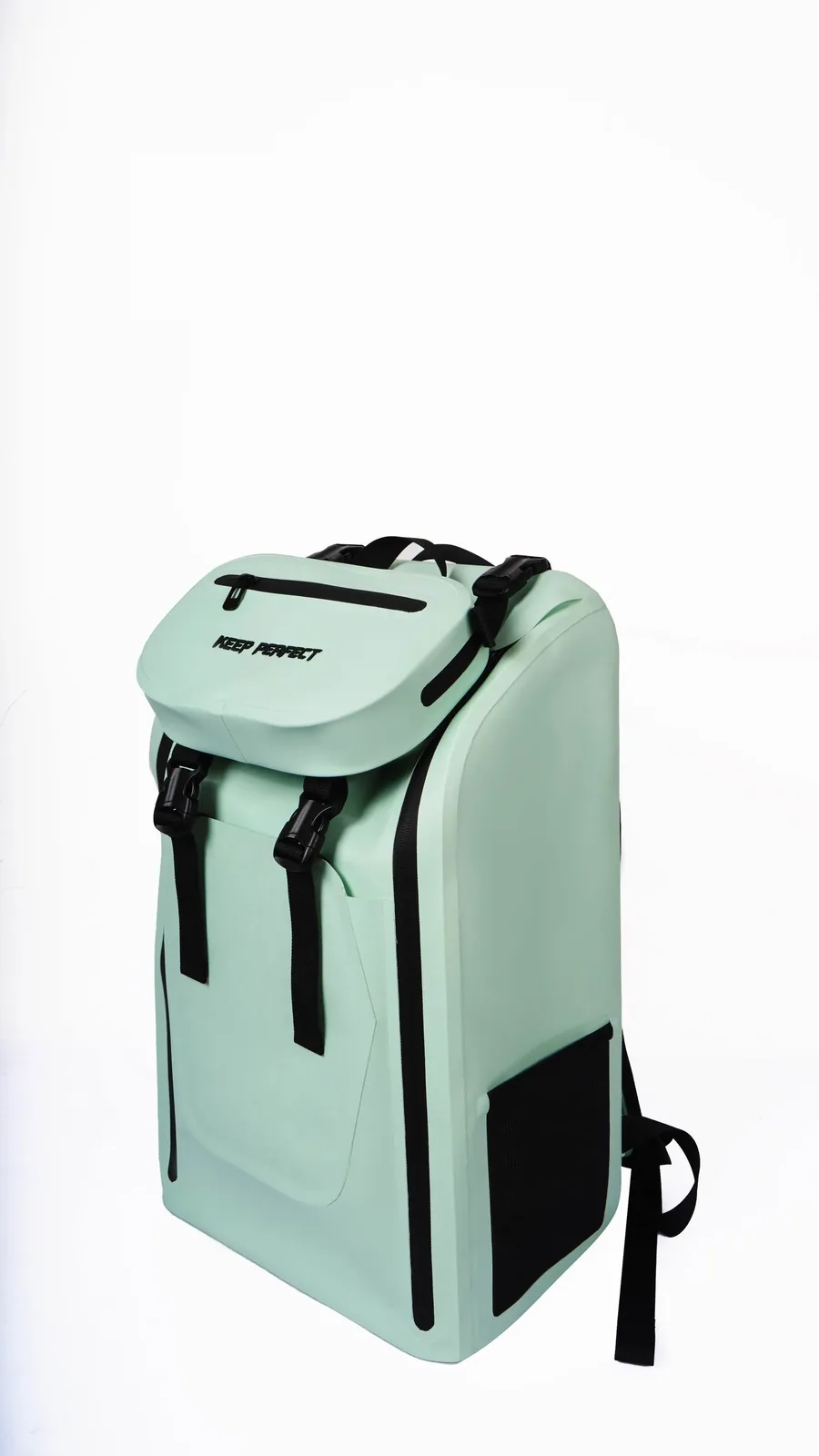
Buy this construction where the bag touches the world and nothing else. Used locally at contact points it improves life noticeably; used everywhere it adds mass, bulk and freight for no measurable return.
What Is Ballistic Nylon Actually Constructed From?
The name comes from a protective textile developed during the last century for aircrew, and the modern commercial version is a heavy basket weave built from thick nylon filament. The construction rather than the fibre carries the reputation: two heavy yarns crossing over two others leaves a dense, springy cloth that resists tearing and takes abuse at the surface. The usual commercial label refers to a heavy filament size, although offers vary across mills.
| Element | What to look for | Why it matters | What to write |
|---|---|---|---|
| Filament size | Heavy nylon filament | Drives abrasion and puncture behaviour | State the size and the construction code |
| Weave | Dense basket construction | The reason it resists tearing | Name the weave rather than only the size |
| Finished mass | Heavy end of the range | Drives freight and hang | Mass per unit area with tolerance |
| Facing system | Usually backed for water resistance | Decides hydrostatic behaviour | Coating type and mass |
| Colour route | Piece dyed in most offers | Affects lightfastness grade | Grade required to AATCC 16 |
| Hand | Stiff and springy | Affects how panels fold | Note accepted stiffness range on the card |
Where Does It Outperform the Rest of the Range?
Its advantage shows up under three conditions. Point loading, where a sharp edge presses into a small area. Repeated contact with abrasive surfaces, where the bag is dragged rather than lifted. And tear propagation, where an existing cut would run across a lighter cloth. In each of those it genuinely extends service life, and the evidence to support that is worth asking for.
What Do the Tests Actually Say?
Run the usual evidence and the pattern is consistent: abrasion results measured to ISO 12947 come out strongly, tear resistance to ISO 13937-1 improves, and tensile to ISO 13934-1 rises with the added polymer. What does not improve is seam behaviour, because every additional gram of cloth puts more load into the stitch line. The honest conclusion is that this construction resists surface damage better and solves almost nothing at the joint.
| Test | Result relative to a midweight shell | How much it matters | Note for the order |
|---|---|---|---|
| Abrasion resistance to ISO 12947 | Clearly better | High where dragging occurs | Set a rub count threshold |
| Tear resistance to ISO 13937-1 | Better | High at clip and pull points | Test with the reinforcement in place |
| Tensile to ISO 13934-1 | Higher | Moderate | Rarely the governing failure |
| Seam slippage to ISO 13936-1 | Can be worse | Moderate | Raise stitch density |
| Hydrostatic head to ISO 811 | Facing dependent | High for waterproof claims | Test the finished cloth |
| Lightfastness to AATCC 16 | Dyestuff dependent | High for outdoor use | Require a numeric grade |
Where Should It Sit on the Bag?
Four places justify it consistently: the base panel, the lower third of end panels where bags are set down, the zone behind webbing attachments, and any external pocket opening that meets a hand thousands of times. Specifying it there and nowhere else gives most of the benefit at a fraction of the mass, and it keeps the rest of the bag lighter to carry.
Five lines for specifying it correctly
- Panel named on the drawing rather than applied to the whole shell.
- Construction code and finished mass with tolerance.
- Abrasion to ISO 12947 at a stated rub count.
- Tear resistance to ISO 13937-1 tested with reinforcement in place.
- Stitch density and thread revised upward because heavier cloth loads the seam.
What Does It Cost Beyond the Metre Price?
Three costs follow the material price. Freight rises because the panel mass is higher across the whole shipment. Decorating gets harder because the coarse face resists fine detail. And seams get thicker, which shows up as bulk at corners and as more rejects during assembly. Modelling those three before committing is the difference between a considered choice and an expensive one.
When Is It the Wrong Answer?
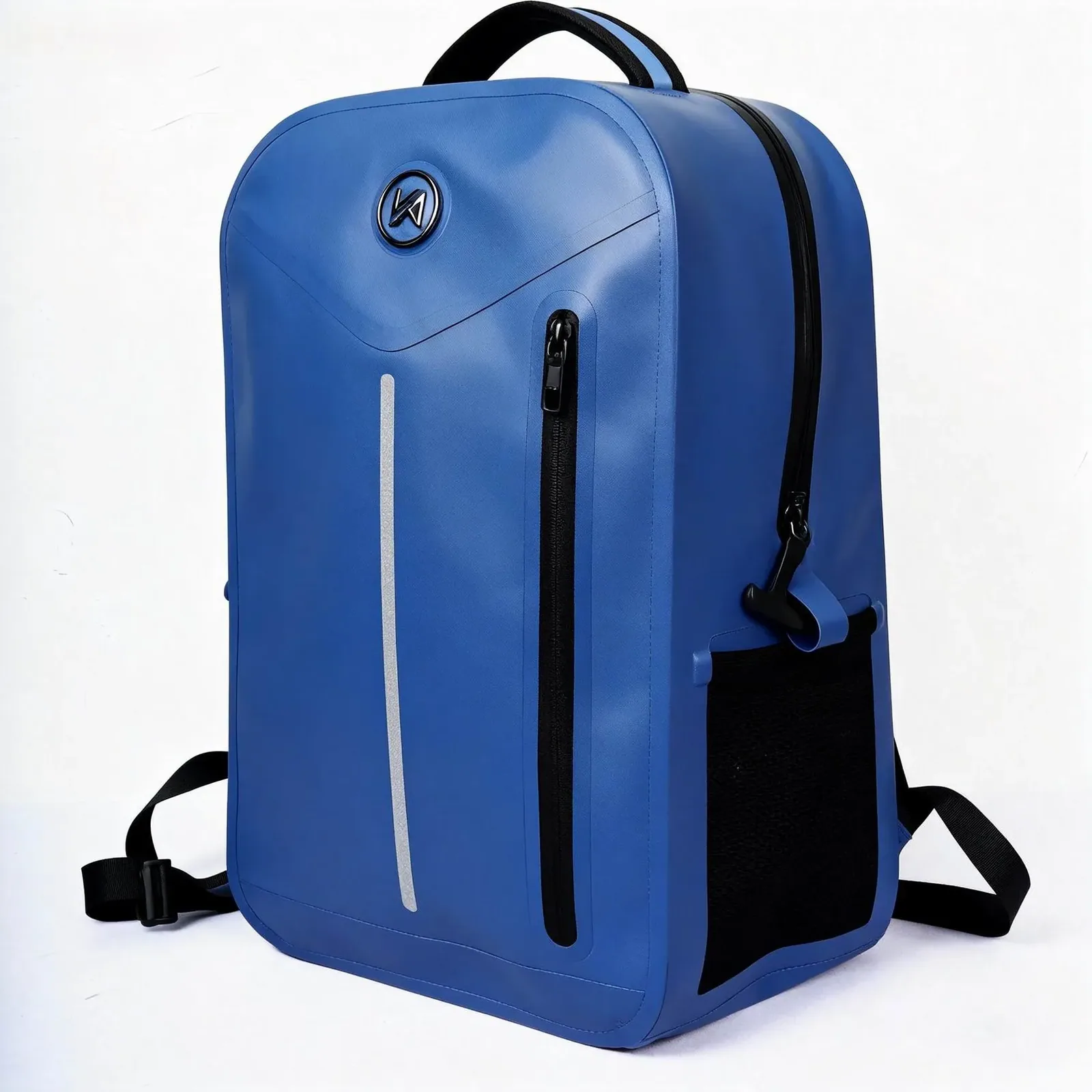
It is the wrong answer for unstructured designs that need to fold, for anything relying on fine printed detail, for programmes where carried weight is a selling point, and for large panels that must drape around content. In those cases money spent on construction upgrade buys less than the same money spent on ripstop reinforcement, on better thread, or on a geometric fix at the point of failure.
Heavier construction changes seam behaviour before it changes durability. Plan the needle size, stitch density and allowance width at the same time as the fabric, not after the first assembly trial.
How Does It Compare With a Coated Ripstop Instead?
A coated ripstop at much lower mass often survives field abuse nearly as well, because the grid stops damage spreading and the coating carries water behaviour. Where the governing failure is a small puncture rather than sustained abrasion, the lighter approach frequently wins on both cost and carried weight. Test both against the same evidence lines before deciding.
| Scenario | Heavy ballistic construction | Coated midweight ripstop | Better placed with |
|---|---|---|---|
| Daily dragging on rough ground | Strong advantage | Acceptable | Heavy construction |
| Needle-sharp point loading | Advantage | Ripstop limits spread | Either, test both |
| Fine printed detail | Poor surface for detail | Good surface | Lighter construction |
| Weight carried all day | Penalty in carried mass | Clear advantage | Lighter construction |
| Folded or rolled closures | Too stiff to fold well | Folds cleanly | Lighter construction |
| Welded rather than sewn joints | Facing dependent | Facing dependent | Decided by the facing |
- Name the panel rather than upgrading an entire shell at once.
- Raise stitch density and thread strength when heavier cloth is introduced.
- Test the seam rather than only the cloth, because that is where failures concentrate.
- Model the freight effect across the shipment before committing to heavier cloth.
- Prove any fine print detail on the coarse face before approving artwork.
- Keep a retained coupon so future offers can be compared physically.
How Should the Reinforcement Be Detailed?
Where the heavy zone meets lighter cloth, the joint deserves more attention than either material. Bind across the transition rather than butting the two panels, carry the binding well onto both sides, and prove it with a load test rather than assuming it holds. Most unrealised benefits from upgrading a panel are lost at that joint.
What Does a Well-Written Line Say?
A workable line reads: base panel, heavy nylon basket weave, construction code stated, finished mass within tolerance, coated for water resistance, abrasion to ISO 12947 at or above the stated rub count, tear to ISO 13937-1 at or above the stated minimum, joined to shell with a bound transition, evidenced per lot. Nothing in that line depends on how tough the material sounds.

How Heavy Is It Against Standard Shell Cloth?
The mass difference is large enough to change a container plan, and it compounds through thousands of units. Before approving it for a panel, ask for the finished mass on both candidates and put the difference into the freight line of your landed cost view. Buyers regularly discover that the upgrade costs more in freight than it did in material, particularly on larger styles.
| Comparison area | Heavy basket construction | Midweight shell cloth | How the difference lands |
|---|---|---|---|
| Mass per unit area | Heavy end of the shell range | Middle of the shell range | Visible in carried weight and freight |
| Panel stiffness | High | Moderate | Shows at folds and closures |
| Surface for print detail | Coarse | Smoother | Decides artwork feasibility |
| Seam bulk at corners | High | Moderate | Shows in assembly rejects |
| Abrasion life | Longer | Shorter | The reason to consider it at all |
| Cost per square metre | Higher | Lower | Only part of the total effect |
What Does Reinforcement Geometry Achieve Instead?
Geometry often beats mass. Moving a webbing attachment so the load lands on a bound reinforcement rather than directly on cloth, adding a patch behind a clip point, or radiusing a metal edge all remove failures without adding grams anywhere. Before approving a heavier panel, spend an hour asking whether a shape change would solve the same problem for free.
How Does It Behave Under Print and Badge Application?
The coarse face limits fine detail, so small type and thin lines lose definition, and heat applied badges need more pressure to key into the surface. Screen print with a heavier deposit performs better than fine heat transfer here. Prove whichever route you intend on the actual construction rather than on a smooth sample card.
What Happens at the Needle?
This is where the upgrade is most likely to cost you. Heavier cloth needs a larger needle, tolerates a different stitch length, and adds bulk at every place three panels meet. If those adjustments are not made at the same time as the material change, the result is a seam that fails earlier than it would have with lighter cloth.
| Machine variable | What changes with heavier cloth | Without adjustment | Adjusted correctly |
|---|---|---|---|
| Needle size | Larger needle needed | Skipped stitches and broken needles | Clean penetration without fabric damage |
| Stitch length | Usually shortened for strength | Seam slippage under load | Load spread across more stitches |
| Feed evenness | Stiffer cloth feeds less evenly | Uneven seam allowances | Consistent allowance width |
| Thread size | Stronger thread indicated | Thread breaks before the cloth | Failure shifts back to the cloth |
| Allowance width | Needs more room at corners | Bulk that will not press flat | Corners turn cleanly |
| Operator handling | More effort to control | Higher reject rate | Predictable throughput |
- Model freight effect across the shipment before approving heavier cloth.
- Check whether a geometric change removes the failure before adding mass.
- Prove fine artwork on the actual coarse face, not on a smooth card.
- Raise needle size, thread strength and stitch density together.
- Bind across any transition between heavy and light panels.
- Keep a retained coupon so future offers can be compared physically.
Every gram of unnecessary panel mass is paid for twice: once in material and once in freight. Placing heavy cloth only where contact occurs keeps both costs honest.
How Should Quote Lines Be Compared?
Compare when construction codes, finished mass and evidence lines are aligned, and refuse quotes that leave those blank. Two offers for the same named material frequently describe different cloth, and the only way to know is to require the same fields from both. Differences then appear as numbers rather than as opinions about quality.
What Does It Cost to Return Instead?
Every panel upgrade should be measured against the return rate it removes. If complaints in a given season ran at a level attributable to abrasion at the base, then the upgrade has something to recover. If complaints concentrated at seams or closures, no amount of extra cloth touches them. Put the return figures next to the material cost before committing.
| Question before upgrading | Answer that supports the upgrade | Answer that argues against | Where to look for the data |
|---|---|---|---|
| Where do returned units fail? | Abrasion at contact points | Seams, closures or linings | Returned unit inspection records |
| How long do units stay in service? | Several seasons of daily use | A single season or less | Warranty and replacement records |
| Is carried weight a selling point? | Not mentioned in the brief | Featured in the sales material | Product brief and marketing copy |
| Are the panels large and curved? | Small flat panels only | Large wraps that must drape | Pattern and construction drawings |
| Is fine artwork required nearby? | No decoration on the heavy zone | Fine detail crossing the zone | Artwork placement drawings |
| Does the freight line carry it? | Modelled and accepted | Would move the landed figure | Per-unit freight calculation |
How Does the Construction Interact With Insulated Builds?
In insulated constructions the outer cloth rarely governs thermal performance, so placing heavy material there buys abrasion life rather than temperature hold. That is often the right trade, but it should be made deliberately and the thermal layer specified on its own evidence rather than inherited from the shell decision.
What Should Be Recorded for the Next Season?
Keep the construction code, the finished mass, the two evidence results and a signed retained coupon, plus the notes recording which panels actually used it. Those five artefacts are what let the next comparison start from evidence rather than from memory, and they cost nothing to file.
- Name the panels that carry heavy cloth on the drawing rather than upgrading everything.
- Raise needle, thread and stitch density in the same change request as the fabric.
- Bind across any transition between heavy and light panels rather than butting them.
- Prove fine artwork on the coarse face before approving the colourway.
- Model freight impact before accepting additional panel mass.
- Keep panels from earlier seasons so real wear can be compared side by side.
Panel upgrades are only justified when they remove a failure that return records show actually happens. Where returns concentrate elsewhere, the same money buys more elsewhere.
How Is It Verified Once Bulk Arrives?
Sample at AQL 2.5 under ISO 2859-1 General Inspection Level II and check identity against the retained coupon, then run abrasion and tear on the delivered lot. Pay attention to the joint: a panel upgrade that fails at the transition has simply moved the failure location. Record results against the lot number so the next comparison has two points rather than one.
Specify the panel, not the whole bag
Tell us where your bags actually wear out — we come back with a panel-level construction note and the evidence lines to hold it to.
Frequently Asked Questions
Is ballistic nylon bulletproof?
No. The historical name comes from protective textile work, but the commercial construction is an abrasion-resistant basket weave and offers no ballistic protection whatsoever.
Should I specify it for the whole bag?
Rarely. Applied everywhere it adds mass, bulk and freight without extending life where failures actually occur. Panel-level placement delivers most of the benefit at a fraction of the cost.
Does it resist water better?
Water behaviour follows the facing rather than the weave. Test hydrostatic head to ISO 811 on the finished cloth rather than assuming the construction helps.
Why do seams fail more with heavy cloth?
Because heavier cloth transfers more load into each stitch hole. The remedy is higher stitch density, stronger thread and sometimes a reinforcement patch rather than more fabric.
Can it take fine print detail?
The coarse face resists fine detail, so fine lines and small type suffer. Prove the artwork on a coupon before committing the colourway.
How much does it add to carried weight?
Meaningfully, because every panel contributes. Model it against the total rather than judging by hand, particularly on larger styles.
Is there a lighter option that performs similarly?
A coated ripstop often comes close where the governing failure is puncture rather than abrasion, at substantially lower mass. Test both against the same thresholds.
Does the colour hold outdoors?
Colour behaviour follows the dyestuff rather than the construction. Require a numeric grade to AATCC 16 for any colourway expected in daylight daily.
What evidence should I require per lot?
Identity against a retained coupon, abrasion to ISO 12947 and tear to ISO 13937-1, with the joint load-tested separately. Those four catch most substitution cases.
Can it be welded rather than sewn?
Welding follows the facing, so the same facing that permits welding elsewhere works here. Record press parameters and prove the joint rather than assuming the cloth behaves differently.
People Also Ask
Is ballistic nylon strong?
It resists abrasion and tear propagation well, which is what earns its reputation. Tensile is higher but rarely the governing failure mode on a bag.
What is 1680D ballistic nylon?
A heavy nylon filament woven in a dense basket construction and labelled by filament size.Ask for the construction code, because the label alone does not pin the cloth down.
Is it waterproof?
No construction is, on its own. Water behaviour comes from the facing and from seam treatment, so evidence hydrostatic head and address the seams separately.
Why is it heavier than other bag fabric?
It uses thick filament in a dense weave, so there is more polymer per square metre. That mass shows up as freight and as carried weight.
Where should I use it?
At contact and load points: base panels, lower end panels, behind webbing attachments and at pocket openings. Elsewhere a lighter construction usually serves better.
Sources and further reading
Every figure on this page is either our own programme data or attributed below. Open the originals before you write them into a specification.
- ISO 12947 — Textiles: abrasion resistance by the Martindale methodInternational Organization for Standardization
- ISO 13937-1 — Tear properties of textile fabrics, ballistic pendulum methodInternational Organization for Standardization
- AATCC 16 — Colorfastness to LightAmerican Association of Textile Chemists and Colorists