Should a Camera Bag Use PE Foam or EVA for Impact Absorption?
The two are not substitutes. Polyethylene is the flat-panel material for the walls, the lid and the dividers; EVA is the shaped and load-bearing material for the base, the cradles and any moulded panel. Most camera bags need both, and the split is decided panel by panel.
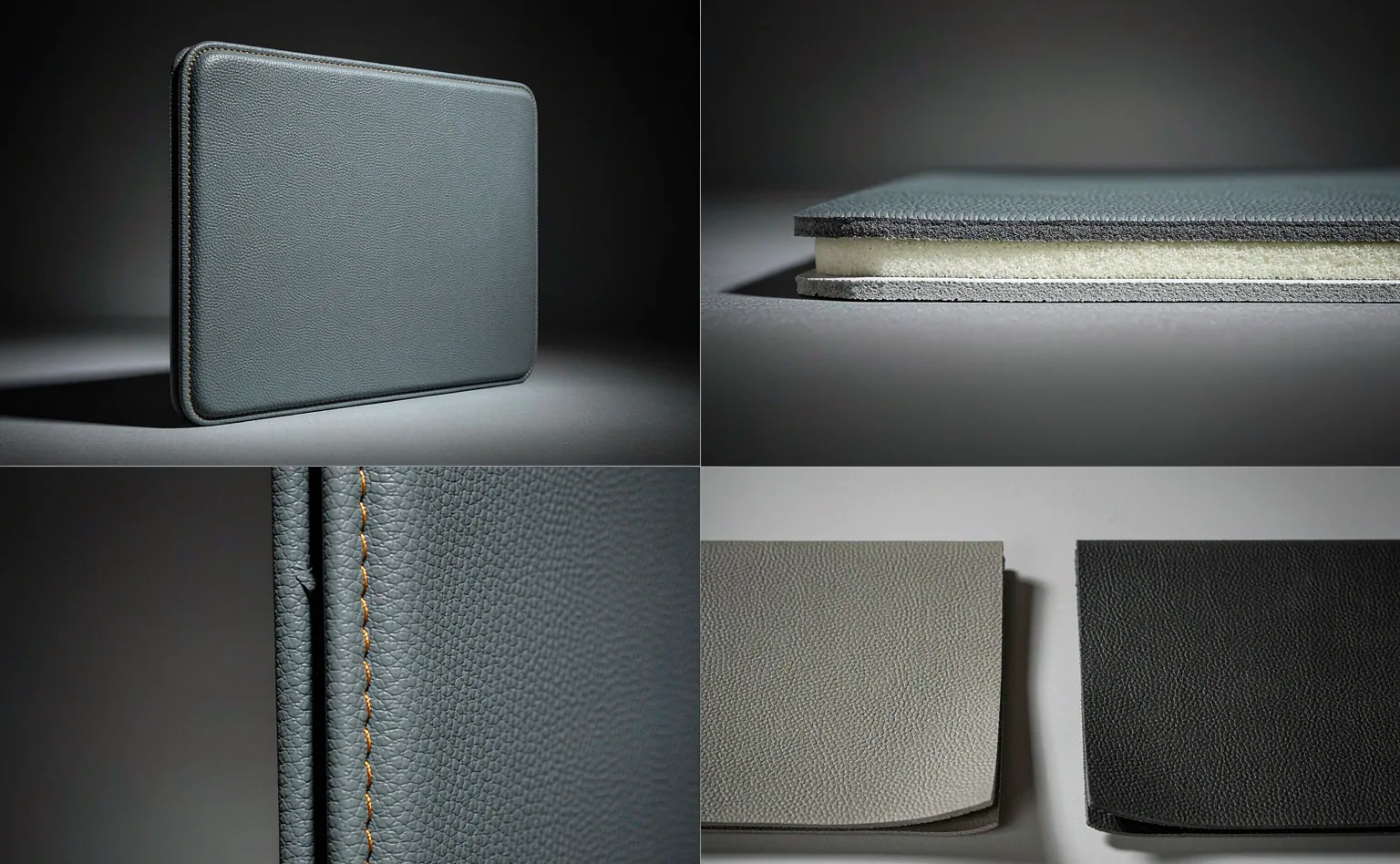
Polyethylene foam is the flat-panel material: light, low in cost, laminates easily and recovers well in its cross-linked grades. Ethylene vinyl acetate is the shaped material: denser, quieter, holds a moulded or a thermoformed shape and resists compression set better under heavy glass. A camera bag usually needs both, polyethylene in the walls and the dividers, and EVA in the base, the cradles and any moulded panel.
The choice between polyethylene foam and ethylene vinyl acetate is the second foam decision on a camera bag, after the cell structure, and it is usually made on price. That is the wrong basis, because the two are not substitutes: they have different densities, different recovery behaviour and different manufacturing routes, and each is better at a different job. A bag built entirely from one of them is either heavier than it needs to be or less protective than it should be.
The useful framing is flat versus shaped. Polyethylene is bought as sheet and cut, and it is the material for walls, lids and dividers. EVA is bought as sheet or as moulded parts, and it is the material for bases, cradles, structured panels and anything that has to hold a three-dimensional shape. Most camera bags need both.
What Is the Difference Between Polyethylene Foam and EVA?
Polyethylene foam is a closed-cell foam made from polyethylene, available in low-density, cross-linked and irradiated cross-linked grades. Ethylene vinyl acetate is a copolymer foam, also closed cell, denser and with a rubbery feel. Both are closed cell, so the cell-structure argument from the earlier post in this cluster applies equally to both, and the choice between them is about everything else.
The differences that matter are density, recovery, noise, mouldability and cost. EVA is denser at a given thickness, recovers more slowly but more completely, is quieter in the hand, can be thermoformed or moulded into a shape, and costs more. Polyethylene is lighter, recovers faster in its cross-linked grades, transmits more sound, is bought and cut as flat sheet, and costs less.
| Property | Polyethylene foam | EVA foam | What it decides |
|---|---|---|---|
| Typical density | 25 to 60 kilograms per cubic metre | 50 to 200 kilograms per cubic metre | EVA is chosen where a higher density is needed |
| Recovery after compression | Fast in cross-linked grades | Slower but more complete | Cross-linked polyethylene for flat-packed bags |
| Compression set | Good at a suitable density | Better under a heavy sustained load | EVA under a 70-200 mm lens |
| Mouldability | Cut and bonded only | Thermoformed and moulded | EVA for a shaped base or a cradle |
| Sound and hand | Transmits more; firm | Quiet; rubbery feel | EVA read as the higher-quality material |
| Lamination | Laminates to fabric easily | Laminates, with more care | Polyethylene is the easier flat panel |
| Relative cost | Lower | Higher, and tooling if moulded | The reason most walls are polyethylene |
Where Does Polyethylene Belong on a Camera Bag?
In the walls, the lid and the dividers. Those are flat panels that are cut from sheet, laminated to a lining and sewn into the shell, and polyethylene is the material for that route: it is light, it bonds to fabric without trouble, and in its cross-linked grades it recovers well enough to survive being shipped flat. A wall panel has no shape to hold, so the properties EVA adds are not needed.
The grade matters more than the family. A low-density polyethylene recovers slowly and creases at the fold lines of a bag that is packed flat; a cross-linked grade recovers much better and is the answer wherever the bag ships flat and has to look flat on a shelf. Where the specification says polyethylene without a grade, the mill will supply the low-density one.
Where Does EVA Earn Its Cost?
Three places. The base, where a heavy kit rests on a small area and the material has to resist compression set over a long dwell. The cradles, where a lens barrel presses on a narrow contact line and a denser material stops the panel bottoming out. And any moulded or thermoformed panel, where the ability to hold a shape is the whole requirement.
It also earns its cost in perceived quality. EVA is quieter in the hand and it holds an edge, so a bag with EVA in the base and the cradles feels better made than one with polyethylene throughout, at a small increase in material cost. Where a range is positioned above the entry point, that difference is worth buying.

How Do They Compare on Impact Absorption?
At the same thickness and density the two are close, because impact absorption is dominated by how far the material deflects and how much force it generates doing so. The differences appear at the edges of the working range. Under a heavy item, EVA at a higher density resists bottoming out where a low-density polyethylene would compress fully. Under a light item, a polyethylene deflects further and generates a lower peak.
That produces a simple rule. Match the material to the mass it carries: polyethylene in the panels that carry the bag as a whole, and EVA in the panels that carry a specific heavy item. A camera bag with 10 mm of cross-linked polyethylene in the walls and a moulded EVA cradle under a 70-200 mm lens uses each material where it is better and costs less than using EVA throughout.
| Carrying case | Best material | Density | Thickness | What the other material would do |
|---|---|---|---|---|
| A light kit under 500 g | Polyethylene | 25 to 33 kilograms per cubic metre | 8 mm | EVA would transmit more to a light item |
| A one-body two-lens kit, about 1.8 kg | Cross-linked polyethylene | 33 to 50 kilograms per cubic metre | 10 mm | EVA would add weight for no gain in a flat wall |
| A 70-200 mm f/2.8 at rest, about 1.4 kg | Moulded EVA cradle | 80 to 150 kilograms per cubic metre | 15 mm | Polyethylene would bottom out on the barrel contact line |
| A bag that ships flat-packed | Irradiated cross-linked polyethylene | 33 to 50 kilograms per cubic metre | 10 mm | A low-density polyethylene creases at the fold lines |
| A structured base panel | EVA, or polyethylene over a board | 60 to 120 kilograms per cubic metre | 10 to 15 mm | Polyethylene alone takes a set under a resting kit |
What About Neoprene and Other Closed-Cell Materials?
Neoprene is a closed-cell rubber foam and it belongs where a panel needs to stretch or to conform, as in a sleeve or a wrap, rather than in a structured panel. It is denser and heavier than both of the materials above and it costs more, and its property is elasticity rather than impact absorption. It is the right material for a lens wrap and the wrong one for a wall.
Expanded polypropylene and expanded polyethylene bead foam appear in hard cases and in some structured panels, and they behave differently again: they recover from a large deflection by collapsing their bead structure and they are used where a single large impact has to be absorbed. For a soft camera bag they are too stiff and too thick, and they belong in the case conversation rather than in this one.
How Are the Two Tested and Reported?
Both are reported on the same four properties as any flexible cellular material: density in kilograms per cubic metre, compression force deflection in kilopascals at a stated indentation, compression set as a percentage after a stated deflection, temperature and dwell, and tear strength in newtons per metre. The methods are in the ASTM D3574 family and the specification route for sponge and expanded cellular materials is ASTM D1056.
The property that separates the two in practice is compression force deflection, because it is what predicts how the panel behaves under a specific load. Two materials at the same density can have materially different force deflection curves, and a specification that gives density alone will be filled with whichever material is available on the day.
| Panel | Material | Typical density | Thickness | Why |
|---|---|---|---|---|
| Four walls | Cross-linked polyethylene | 33 to 50 kilograms per cubic metre | 10 mm | Flat panel, light, laminates easily |
| Lid | Cross-linked polyethylene | 33 to 50 kilograms per cubic metre | 10 mm | Same as the walls; a thin lid is the common defect |
| Base | EVA or a board-reinforced polyethylene | 60 to 120 kilograms per cubic metre | 10 to 15 mm | Resists compression set under a resting kit |
| Cradle under heavy glass | Moulded EVA | 80 to 150 kilograms per cubic metre | 15 mm | Holds a shape and stops bottoming out |
| Dividers | Polyethylene over a stiffener | 33 to 50 kilograms per cubic metre | 5 to 8 mm | Flat panel that has to hold shape over a board |
| Back panel comfort layer | Open-cell polyurethane or a spacer | 18 to 30 kilograms per cubic metre | 8 to 12 mm | Breathability, not protection |
What Does Each Material Cost and Weigh?
At the same thickness, EVA costs more per square metre than polyethylene and weighs more, because it is used at a higher density. The step is real but it is smaller than buyers expect, because the areas where EVA is used are small: a base panel and two cradles on a mid-size bag amount to a fraction of the area of the walls. The whole-bag cost impact of specifying EVA where it belongs is a few percent.
The weight impact is larger in proportion, because the base and the cradles are thick. A moulded EVA base at 12 mm and 100 kilograms per cubic metre weighs roughly three times what the same area of 10 mm polyethylene at 40 kilograms weighs. On a mid-size bag that is about 150 to 250 g, and it is weight spent where it does the most good.
How Does the Choice Affect the Reorder?
Both materials drift, and EVA drifts more visibly, because a moulded part is a tooling item and a tooling item is remade rather than re-cut. A moulded base from a second tool will not be identical to the first, and the difference shows as a cradle that holds the lens differently. Specify the moulded part by drawing and keep a retained sample.
Polyethylene drifts in density, in the way described earlier: a material specified at 40 kilograms per cubic metre and delivered at 33 will feel softer and will bottom out sooner. The control is the same in both cases, which is a tolerance on density plus a compression force deflection requirement, plus a retained reference sample from the first order.
How Should a Range Standardise the Two?
A range is better served by one polyethylene grade and one EVA grade across every product in it than by a different material per bag. Two grades means two stock items, two sets of cutting files and one comparison the inspector can make with a calliper and a scale, and it means a reorder of any product in the range can be checked against the same two data sheets. A range with five foam grades cannot be inspected consistently.
The way to get there is to design the thickness ladder rather than the material ladder. Fix one polyethylene at a stated density and let the wall thickness carry the difference between an entry bag at 8 mm and a professional bag at 12 mm, and fix one EVA at a stated density for every base and cradle in the range. The products then differ in geometry and in the number of panels, which is a difference the factory can control, rather than in material, which is a difference it cannot.
What decides PE foam versus EVA
- Polyethylene is the flat-panel material: walls, lid and dividers.
- EVA is the shaped and load-bearing material: base, cradles and moulded panels.
- Match the material to the mass it carries; most bags need both.
- Compression force deflection predicts behaviour better than density alone.
- Specify the polyethylene grade, or the mill supplies the low-density one.
- A moulded EVA part is a tooling item, so specify it by drawing and keep a sample.
How Do You Write the Foam Choice Into a Tech Pack?
One line per panel, with the family, the grade, the density and its tolerance, the thickness at stated measurement points and the compression force deflection. A single line that says foam for the whole bag leaves five panels to be filled with whatever is in stock, and the base is the one that suffers.
Where a panel is moulded, the line has to reference a drawing, because a moulded part is defined by geometry rather than by thickness alone. The drawing carries the cradle radius, the wall angles and the draft, and it is the document the tool is made from. A moulded panel specified by thickness alone will be quoted from an existing tool that was made for something else.
Programme arithmetic: MOQ 500 pcs per style and colourway, sampling 6-10 working days from a signed-off tech pack, and 12-15 for a build with a moulded panel. Bulk production is 35-50 days from written sample approval, inspection at AQL 2.5 under ISO 2859-1 General Inspection Level II, payment T/T 30/70, quoted FOB Xiamen. A moulded EVA part adds a tooling step in front of sampling, and that is the schedule item.
Send the panel build-up with the enquiry
Send the interior dimensions, the heaviest item in the kit and the target quantity. You get a foam schedule, indicative pricing and a sampling window within one business day.
Frequently Asked Questions
What is the difference between PE foam and EVA in a camera bag?
Polyethylene is light, low in cost, laminates easily and is the flat-panel material. EVA is denser, quieter, holds a moulded shape and resists compression set better, and it is the shaped and load-bearing material.
Is EVA better than foam for camera bags?
EVA is a foam too, and it is better in the base, the cradles and any moulded panel. It is not better in the walls, where it adds weight and cost for no benefit.
Where should EVA be used on a camera bag?
In the base, in the cradles under heavy glass, and in any moulded or thermoformed panel. Everywhere else polyethylene is the better value.
Does EVA absorb impact better than polyethylene?
At the same thickness and density they are close. EVA wins under a heavy sustained load, where it resists bottoming out, and a polyethylene wins under a light load, where it deflects further.
How much more does EVA cost?
More per square metre and more per kilogram, but the areas where it is used are small, so the whole-bag cost impact of using it where it belongs is a few percent.
How much weight does an EVA base add?
A moulded EVA base at 12 mm and 100 kilograms per cubic metre weighs roughly three times the same area of 10 mm polyethylene at 40 kilograms, which is about 150 to 250 g on a mid-size bag.
What grade of polyethylene should be specified?
A cross-linked grade, named. A specification that says polyethylene without a grade will be filled with the low-density material, which creases at fold lines and recovers slowly.
How is foam compared between two quotations?
On density, compression force deflection, compression set and tear strength, from the ASTM D3574 family. Density alone is not enough to compare two materials.
Can a camera bag use one foam throughout?
It can, and it is heavier and lower in cost if the one is EVA, and lighter and less protective at the base if the one is polyethylene. Most bags are better with both.
Does a moulded EVA part affect the sampling window?
Yes. A moulded or thermoformed panel puts the build in the 12-15 working day sampling band rather than the 6-10 day one, because the tool has to be made first.
What is neoprene used for in this category?
Sleeves and wraps, where a panel has to stretch or to conform. It is heavier and more costly than both materials above and its property is elasticity rather than impact absorption.
Does the foam choice change the MOQ?
No. MOQ stays at 500 pcs per style and colourway. A moulded EVA part adds a tooling step in front of sampling, and that is the schedule item to watch.
People Also Ask
Should a camera bag use PE foam or EVA?
Both. Polyethylene in the walls, the lid and the dividers, and EVA in the base, the cradles and any moulded panel.
Is EVA foam better than regular foam?
EVA is a foam, and it is better where a shape has to be held or a heavy load sustained. In a flat wall it adds weight and cost without benefit.
What is EVA used for in bags?
Moulded bases, cradles under heavy lenses, structured panels and any part that has to hold a three-dimensional shape.
How do I compare two foam quotations?
On density, compression force deflection, compression set and tear strength, not on thickness alone.
Why does my bag base feel soft after a few months?
Compression set in a material too low in density for the load. A denser EVA or a board-reinforced base resists it.
Sources and further reading
Every figure on this page is either our own programme data or attributed below. Open the originals before you write them into a specification.
- ASTM D3574 — standard test methods for flexible cellular materialsASTM International
- ASTM D1056 — standard specification for flexible cellular materialsASTM International
- ISO 2248 — vertical impact test by dropping for filled transport packagesInternational Organization for Standardization