Which Certificate Expires First, and Who Owns the Renewal Calendar?
Five document families run on five independent clocks, and none of them issues a reminder. Put one named owner and a deputy on every register row, start requests about three months out, and write into the purchase order what happens when a document lapses. Most certificate failures are calendar failures rather than compliance failures.
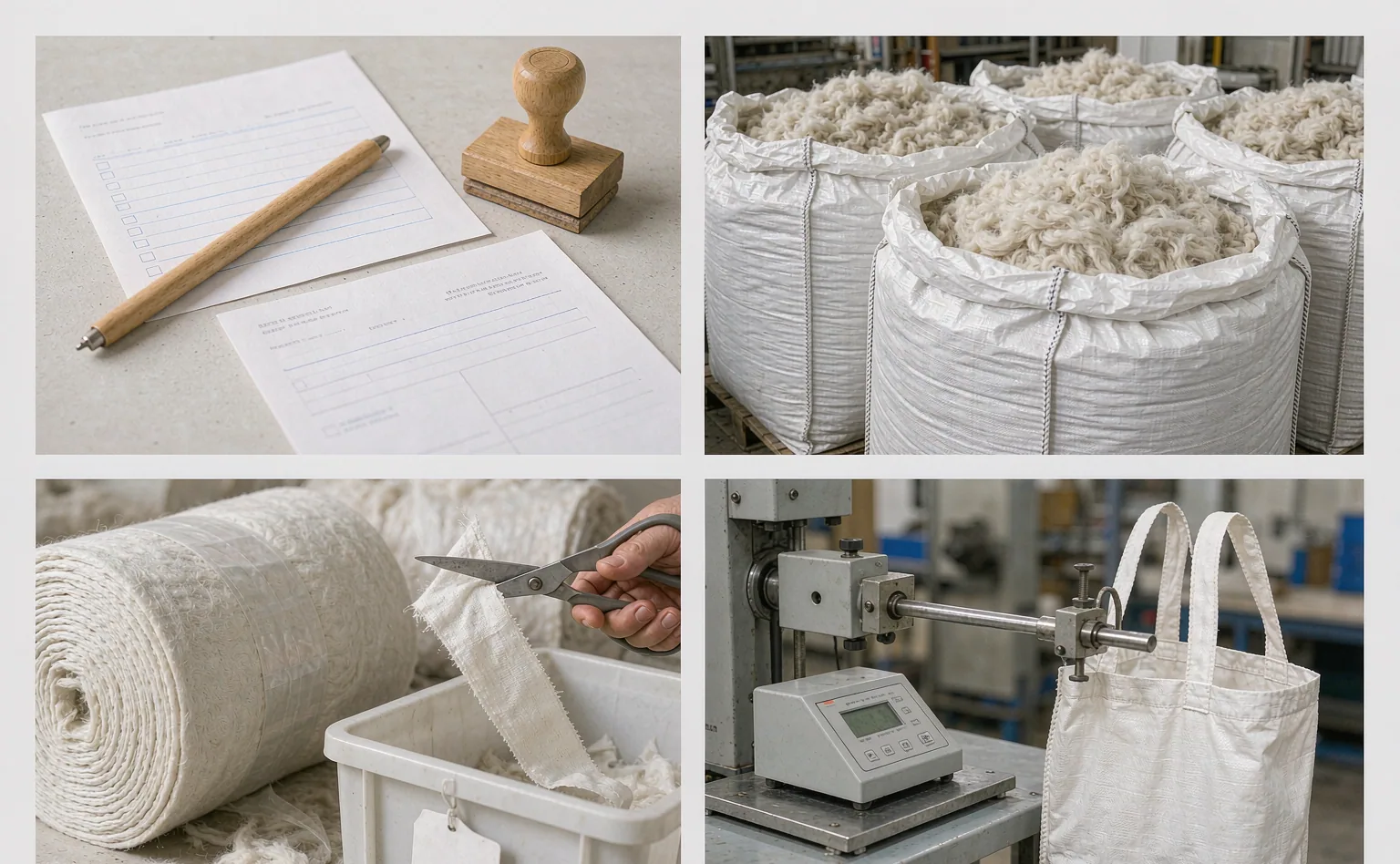
Five document families expire on five different clocks: scope certificates, transaction certificates, laboratory reports, management-system certificates and third-party audit reports. None of them reminds anybody. One register with one named owner per row, requests raised roughly three months ahead of the expiry date, and a rule written into the purchase order about what happens when a document lapses — that is the whole discipline, and almost every certificate failure is a calendar failure.
A certificate file is a set of documents with dates on them, held by people who move roles, in an organisation whose attention is elsewhere. Nothing about that arrangement fails loudly. The scope certificate runs out on a Tuesday; the requesting body takes several weeks in any case; and the first person to notice is a retail compliance reviewer looking at a listing that now has no evidence behind it.
This page is about the calendar rather than about any one certificate. It sets out which document carries which validity, who should own each row, what a lapse does to a shipment already made and to a claim already printed, and how the three-month rule works. It finishes with the specific case that causes the most damage: a certificate that expires while goods are still on the line.
How Many Certificate Clocks Run Inside One Bag Programme?
Five, and they are usually discovered one at a time. Each has a different issuer, a different interval, and a different consequence when it runs out. Treating them as one annual exercise is the reason a gap appears: the documents do not expire together, and they never will, because the cycles that produce them are independent.
| Document family | Issued by | Typical validity | What triggers renewal | What a lapse stops |
|---|---|---|---|---|
| Scope certificate | A certification body after assessment | A validity period set by the issuing body, commonly one year | The next scheduled assessment at that site | New business transactions under that scope |
| Transaction certificate | The certified seller, issued through the programme | Not a period: one certificate per lot | The next lot shipped, raised at a stated window after despatch | Claim transfer to the buyer of that lot |
| Laboratory test report | An accredited laboratory | No expiry printed; validity set by the buyer | A material, source or specification change | Evidence for any contested result |
| Management-system certificate | A certification body | A multi-year cycle with surveillance between audits | The surveillance visit schedule | Standing in questionnaires that require it |
| Third-party audit report | An auditing organisation | A window between audits, set by the scheme and the client | The client scheduling the next audit | Acceptance of the site by listing programmes |
Why Does a Transaction Certificate Follow a Different Clock?
Because it is not a period document at all. It is issued per transaction, it describes a specific quantity moving between two named parties, and it exists to carry the claim from one step of the chain to the next. There is nothing to renew, because each certificate is complete the day it is issued. What it does have is an application window, and that window is the only calendar entry it needs.
The failure mode is different too. A transaction certificate is not lost to expiry; it is lost to missed deadlines for requesting it, or to a lapse in the underlying scope certificate at one of the sites in the chain. The control is therefore not a renewal reminder but a per-shipment habit: the request goes in at despatch, every time, without exception.
When Does a Laboratory Test Report Stop Being Evidence?
It carries no expiry date, which is exactly why it causes disputes. No certificate lifecycle governs it. Its usefulness ends when the thing it describes stops being true: a material substitution, a source change, a coating change, a new standard version, or simply enough elapsed time that a reviewer questions whether the result still describes what is being shipped.
Because nothing external sets that interval, the buying organisation has to. Name an age limit for each report type in the register, tie it to the material rather than to the calendar where possible, and add the same trigger that every other row carries: any change in material, source or process restarts the clock immediately. Reading the result itself is a separate skill, handled elsewhere on this site.
Who Owns the Calendar on the Buying Side?
Somebody named, per row, with a deputy named as well. The common failure is ownership by function rather than by person: "compliance owns certificates" means nobody owns a specific date, and it survives exactly one reorganisation. Ownership also has to sit with the buying organisation, because the supplier or the issuing body has no obligation to track what the buyer needs.
| Row in the register | Usual owner | What they do | Escalation when overdue |
|---|---|---|---|
| Scope certificates at each site | The person who owns the materials strategy | Request renewed certificates before the next buying season | Flag to sourcing leadership, then to the brand owner |
| Transaction certificates per lot | The order desk or whoever signs despatch documents | Raise the request when goods leave, every time | Hold the claim, then investigate the underlying scope |
| Laboratory reports | The quality owner for that product line | Commission re-testing on change or on age limit | Quarantine lots pending result |
| Management-system certificates | The social compliance owner | Track surveillance visits and their reports | Notify any customer programme that depends on it |
| Third-party audit reports | Whoever manages the customer audit schedule | Book the audit window before customers ask | Request the same body earlier, or lose the listing |
What Does a Lapse Do to a Live Shipment?
It depends entirely on where the goods are. Before production starts, a lapse is an administrative problem with a short cure. During production, it becomes a decision about whether to continue making goods whose claim evidence is impaired. After despatch, it can become a problem at customs entry, at the distribution centre, or at the retail portal — and by then the cure is a re-test against goods nobody can reach.
The most expensive version is the shipment that arrives compliant in every physical respect and is refused by an electronic intake process. Nothing about the bags is wrong. The portal wants a document that is in date on the day it is read, and a file that was complete at despatch is not necessarily complete three weeks later.
What Does a Lapse Do to a Claim Already Printed?
This is the question that keeps compliance people awake, and the answer has two halves. Printing, labelling or listing chosen at a time when evidence existed is one situation. Continuing to display that claim — on a product page, a listing, an advertisement, a piece of packaging printed fresh — after the evidence behind it has gone is a different situation, and it is the one regulators and competitors look at.
The operational rule follows from that: the claim has to be supported on every day it is displayed, not only on the day it was written. That makes the expiry calendar a marketing calendar too. Where a display depends on a certificate, the renewal date belongs in the same register that governs the physical listing, with the same deputy.
What Is the Three-Month Rule for Re-Requesting?
Raise renewal requests roughly three months before the expiry date rather than at the month it runs out. The interval is not arbitrary. It absorbs the three things that consume calendar time and cannot be compressed: getting onto an assessment body schedule, completing the assessment itself, and the processing queue at the issuing body before the new certificate exists.
| Document | Start the request at | Who raises it | What arrives | What blocks release until it lands |
|---|---|---|---|---|
| Scope certificate | Around three months before expiry | The materials owner | A renewed certificate with a new validity period | Any transaction requiring that scope |
| Transaction certificate | At despatch, per lot | The despatch desk | A certificate naming quantity and parties | The transfer of the claim to the buyer |
| Laboratory report | At material change, or on the stated age limit | The quality owner | A new report naming the new material | Sign-off on the changed specification |
| Management-system certificate | Two to three months before the surveillance visit | The social compliance owner | A surveillance report or a new certificate | Standing in customer questionnaires |
| Third-party audit report | Three months before the window closes | The audit scheduling owner | A new report with a new window | Acceptance by the listing programme |
| Expired item discovered late | The day it is found | The named deputy | Whatever the issuer can produce fastest | Every dependent claim, immediately |
What Happens When a Certificate Expires Mid-Production?
Decide in this order, and do not decide by momentum. Establish whether the certificate covers something the goods actually depend on, or something only the paperwork depends on. Where it covers the material or the claim, continuing production creates inventory whose status is uncertain, which is far worse than stopping.
- Confirm the exact expiry date on the document itself, not on any register or email.
- Establish which lots were completed before that date and which were completed after it.
- Separate the affected goods physically and mark them pending rather than shipping them.
- Ask the issuing body in writing what can be produced, and how quickly.
- Freeze any printing, labelling or listing that depends on the claim until documents land.
- Agree the position with the customer before they discover it themselves.
- Record the whole event against the register row, including who found it and when.
- Move the renewal request earlier for the next cycle, because the calendar was at fault.
What Happens When a Standard Is Amended Mid-Cycle?
The certificate remains in date and the basis underneath it moves. Certificates are issued against a named version, and when that version is superseded, the certificate usually continues to its expiry while new conditions apply to anything certified afterwards. That is manageable, and it becomes a problem only when nobody notices until a buyer asks which version the claim was made under.
Track the version rather than only the date. Add a column to the register naming the standard version each certificate was issued against, and review it whenever a customer enquiry mentions a version number. Where a programme prints a claim naming a standard, the version behind it is part of the substantiation and belongs in the same file.
How Should Expiry Be Tracked Without Building Another Spreadsheet?
One register already exists in most organisations — the one holding specifications and their revisions. Add the certificate rows to it rather than starting a second list, because a second list is guaranteed to be updated less often than the first. What matters is not the tool but the field list, and the fields below are the minimum.
- Document type
- Which of the five families it belongs to
- Issuer
- The body or party that issued it, and their reference
- Scope
- What it covers: site, article, material, or one lot
- Issue and expiry
- Both dates, taken from the document rather than from memory
- Standard version
- The version it was issued against, where a version is named
- Start date
- The date the renewal request goes out, set by the three-month rule
- Owner and deputy
- Two named people per row, not one function
- Dependent claims
- What cannot be printed or displayed if this row lapses
What Goes Into a Renewal Pack, Once?
The same folder contents every cycle: the current certificate, the previous assessment or test record, the scope description exactly as it should appear, the contact details at the issuing body, and the internal authorisation to spend. Rebuilding that pack each time is where most of the delay actually comes from, not from the issuing body.
Keep it current between cycles. When a scope changes — a new material family, a new site, a new product class — amend the pack immediately rather than at the next renewal. A renewal requested against an out-of-date scope description produces a certificate that is correct and useless, and the correction takes another full cycle.
How Does Renewal Discipline Change What Goes Into the Purchase Order?
Add three lines. The document required and the version it is issued against. A commitment to supply a renewed document across the life of the relationship, including after the goods have shipped. And notice: written warning before any change that affects the status of a certificate the buyer relies on.
Those lines are enforceable only because they were written down, and they convert a difficult conversation into a contractual one. Without them a buyer discovers that they depend on a calendar maintained by somebody else, which is the position every lapse begins from.
Certificate expiry discipline
- Five document families, five independent clocks; nothing expires together and nothing reminds anybody.
- One named owner and one deputy per row, on the buying side, never owned by a function alone.
- Start renewal requests around three months out; no step in the cycle compresses under pressure.
- A claim has to be supported on every day it is displayed, not only on the day it was written.
- Mid-production lapse: separate the goods, freeze the printing, tell the customer first.
Thresholds, lists and wording rules change when a regulation or a standard is amended. Confirm every figure against the current official text before you rely on it, and ask your importer of record to confirm the version that applies in the destination market.


Send your certificate dates
Send the certificates you hold and their expiry dates. You get a renewal calendar with owners and start dates, within one business day.
Frequently Asked Questions
How long is a scope certificate valid?
It carries a validity period set by the issuing body, commonly one year. Read the period off the document rather than assuming.
Does a transaction certificate expire?
Not in the usual sense. It describes one transaction and never needs renewing, but it must be requested within the stated window after despatch.
How long does a laboratory test report stay valid?
No certificate scheme sets that. The buying organisation sets an age limit, and any change to material, source or process restarts the clock.
Who should own the expiry calendar?
A named person per register row, with a deputy, on the buying side. Ownership by function fails at the first reorganisation.
What is the three-month rule?
Start renewal requests around three months before expiry, because assessment scheduling, the assessment itself, and issuing-body processing cannot be compressed.
What happens if a certificate expires while goods are in production?
Separate the lots made before and after the date, hold them pending, freeze any printing or listing that depends on the claim, and agree the position with the customer.
Does a lapse affect claims already printed?
Continuing to display a claim after the evidence behind it has gone is the exposure. The claim has to be supported on every day it is displayed.
What happens when a standard version changes?
Certificates are issued against a named version and usually run to their expiry, while new conditions apply to later ones. Track the version in the register.
Who warns me about an upcoming expiry?
Nobody has an obligation to. Issuing bodies and suppliers will not track what the buyer needs, which is why the register sits with the buyer.
Should a management-system certificate be tracked differently?
Yes. It follows a multi-year cycle with surveillance visits between audits, so the calendar entry is the visit rather than the certificate itself.
What is a renewal pack?
The folder rebuilt identically every cycle: current certificate, previous record, exact scope description, contact details, and internal authorisation.
Can a certificate be renewed instantly?
No. Every step has its own queue, which is the argument for starting the request earlier than feels necessary.
What should the purchase order say about certificates?
The document required and its version, supply of renewed documents across the relationship, and written notice before any change affecting status.
Does a lapse change MOQ or lead time?
No. MOQ stays at 500 pcs per style and colourway and bulk stays at 35-50 days. What changes is whether the goods can be released or displayed.
What is the most common cause of a lapse?
A calendar nobody owned. The document exists, the renewal route exists, and no named person had the date.
People Also Ask
How long are bag certificates valid?
It varies by family: scope and product certificates carry a period set by the issuing body, management-system certificates follow a multi-year cycle, and reports carry no expiry at all.
What happens when a certificate expires?
Anything depending on it stops: transactions under that scope, claims displayed on it, or acceptance by a customer programme.
When should I request a certificate renewal?
Around three months before expiry. None of the steps in the renewal cycle compresses once it is urgent.
Who owns certificate expiry, the buyer or the supplier?
The buyer. Nobody else has an obligation to track what the buying organisation needs to display.
What do I do if a certificate expires during production?
Confirm the date on the document, separate lots made either side of it, hold affected goods, freeze dependent printing, and tell the customer first.
Sources and further reading
Every figure on this page is either our own programme data or attributed below. Open the originals before you write them into a specification.
- Global Recycled Standard and the recycled-input standard familyTextile Exchange
- ILAC — laboratory accreditation and test-report recognitionInternational Laboratory Accreditation Cooperation
- ISEAL — credible sustainability standards and chain of custodyISEAL Alliance