CIF vs FOB for Bags: Risk Transfer and Cost Comparison
CIF and FOB both transfer risk when the goods are on board at the load port. The difference is that CIF makes the seller pay the freight and insure the cargo to the destination port, so the buyer carries a risk over a voyage it did not book. MOQ 500 pcs per style and colourway.
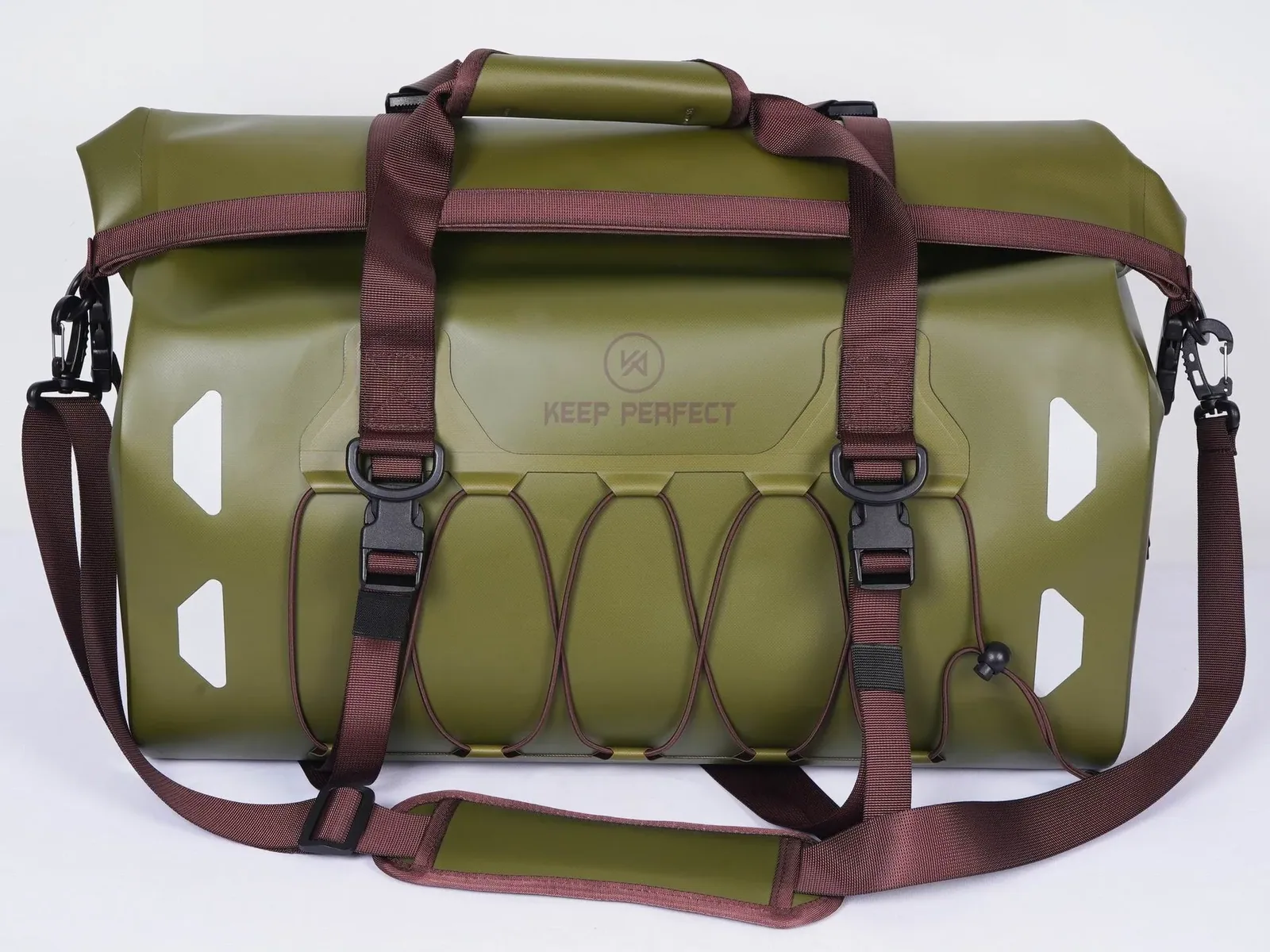
Under both CIF and FOB the risk passes when the goods are on board at the load port. Under CIF the seller also pays the freight and provides insurance to the destination port; under FOB the buyer books the vessel, pays the freight and buys its own cover. The CIF premium is therefore paying for carriage and a minimum insurance policy, not for risk transfer, which is identical on both terms.
What Is the Real Difference Between CIF and FOB?
The difference is carriage and insurance, and it is narrower than most buyers assume. Both terms are maritime terms in the Incoterms 2020 set, both require the seller to clear the goods for export, and both transfer risk at the same instant: when the goods are on board the vessel at the named port of shipment. Nothing about the loss profile changes between them.
What changes is who contracts the main carriage and who places the insurance. Under FOB the buyer nominates the vessel and buys the freight, which means the buyer controls the routing, the carrier and the schedule. Under CIF the seller contracts the carriage on usual terms at its own cost and must also procure cargo insurance. The buyer gives up control of the booking and gains an invoice that includes two things it would otherwise have bought itself.
| Point of comparison | FOB Xiamen | CIF destination port |
|---|---|---|
| Risk passes | On board at Xiamen | On board at Xiamen |
| Export declaration | Seller | Seller |
| Who books the vessel | The buyer | The seller |
| Who pays the freight | The buyer | The seller |
| Who places the insurance | The buyer, if anyone | The seller, by obligation |
| Minimum insurance cover | Not specified by the term | Institute Cargo Clauses (C) |
| Insured value | Set by the buyer | Invoice value plus 10% by default |
| Control of routing | The buyer | The seller, on usual terms |
| Import entry and duty | The buyer | The buyer |
| Delivery beyond the port | The buyer | The buyer |
Where Does Risk Transfer Under Each Term?
On board, in both cases. That is the sentence most buyers misread, because the natural assumption is that a term which pays for the voyage also covers the voyage. It does not. The Incoterms 2020 obligation tables separate the two questions deliberately: the delivery point determines where risk passes, and the carriage and insurance obligations are separate allocation rules on top of it.
The consequence is concrete. Under CIF, if a container of cooler bags is lost overboard in the Pacific, the buyer bears the loss — because risk passed at Xiamen — and the buyer claims against an insurance policy it did not place, on terms it did not choose, for an insured value it did not set. It works, but the buyer is claiming on somebody elses paper.
What Does the Seller Have to Insure Under CIF?
Under CIF the seller must procure, at its own cost, cargo insurance that covers the goods from the port of shipment to at least the port of destination, and Incoterms 2020 raised the default level: cover must now comply with Institute Cargo Clauses (A) or a similar set of clauses, unless the parties agree otherwise. Before 2020 the default was the narrower Clauses (C), and a great deal of contract precedent still silently assumes the old level.
That change is the single most useful thing to know about CIF in 2026, because it means a CIF contract that does not state the clauses explicitly may now provide broader cover than either party expects. It also means a buyer who assumes the old narrow default and buys supplementary cover may be paying twice. State the clauses, the insured value and the currency in the contract, and ask for the policy or certificate as a shipping document.
Why Does the Insurance Level Matter on Bag Cargo?
Institute Cargo Clauses are graded by how much they cover. Clauses (C) is a named-perils cover: it responds to fire, explosion, vessel casualty, jettison, general average and a short list besides, but not to theft, not to shortage and not to water damage short of a specified casualty. Clauses (A) is all-risk: it covers everything except the stated exclusions. Clauses (B) sits between the two.
Bag cargo sits awkwardly under a named-perils cover because the losses bags actually suffer are not casualties. They are water ingress through a container roof, crushing under a badly stowed load, pilferage at a transhipment port, and carton collapse from humidity. Three of those four are not named perils. A buyer shipping soft goods on a named-perils policy is insured against the voyage it imagines rather than the one that happens.
| Cover | What it responds to | Typical bag loss | Covered? |
|---|---|---|---|
| Clauses (C) | Fire, explosion, vessel casualty, jettison, general average | Container lost overboard | Yes |
| Clauses (C) | Named perils only | Water ingress through the roof | No |
| Clauses (C) | Named perils only | Pilferage at transhipment | No |
| Clauses (C) | Named perils only | Crushed cartons from bad stowage | No |
| Clauses (A) | All risks except stated exclusions | Water ingress through the roof | Yes, subject to exclusions |
| Clauses (A) | All risks except stated exclusions | Pilferage at transhipment | Yes, subject to exclusions |
Which Cost Lines Move Between the Two Terms?
Exactly two lines move: the freight and the insurance. Everything else — the goods, export packing, haulage to the terminal, export declaration, terminal handling, loading, import entry, duty and delivery — sits in the same place under both terms. That is why the price gap between a CIF and an FOB quotation on the same bag is usually smaller than buyers expect, and why a large gap is worth questioning.
The insurance line has a wrinkle worth understanding: under CIF the insured value is conventionally the invoice value plus 10%, which is intended to cover anticipated profit and the freight. If the buyer has a higher margin than 10% — and on a branded bag programme it usually does — the default insured value understates the exposure. The buyer can agree a higher percentage with the seller, and should.
When Does CIF Cost More Than FOB Plus Your Own Freight?
It costs more whenever the buyer already has a freight rate better than the sellers, and that is more often than buyers check. A buyer importing regularly has a contract rate or a broker with volume; the seller has a rate for one shipment. If the buyers rate is lower, CIF is paying a spread for nothing. The same logic applies to insurance: a buyer with an annual open cover pays a fraction of a single-voyage premium.
The second case is surcharges. A CIF price is quoted against a sailing week, and if the sailing moves into a peak-season surcharge period, the seller passes the surcharge through or absorbs it, depending on the contract. A buyer on FOB sees the surcharge arrive as a line on a freight invoice and can decide whether to move the booking. Under CIF that decision belongs to somebody else.
When Is CIF Actually the Better Buy?
CIF is the better buy in three situations. First, when the buyer has no freight relationship and no wish to build one, and the volume is small enough that buying freight retail would cost more than the sellers contract rate. Second, when the buyer wants the seller to handle the booking because the production schedule and the sailing need to be coordinated by one party.
A third situation belongs on the list even though it is not commercial: when the buyer does not yet know the freight market well enough to recognise a bad quotation. A first-time importer asked to choose between three freight quotations has no basis for the choice, and buying the freight inside the goods price for one or two shipments is a reasonable way to learn the numbers before taking the booking in-house.
Third, and least discussed, when the financing requires it. Where a letter of credit is involved, the document set required under the ICC UCP 600 rules is easier to assemble when one party holds both the bill of lading and the insurance document, and some credit terms effectively push the transaction towards CIF. That is a documentary convenience rather than a commercial advantage, but it is real.
What Happens to the Claim if the Goods Are Damaged?
The mechanics are the same under both terms because the risk position is the same: the buyer owns the loss from the moment the goods were on board, and the buyer claims. The difference is procedural. Under FOB the buyer claims on its own policy, with its own broker, on terms it chose, and it controls the survey. Under CIF the buyer claims on the sellers policy, usually with the sellers broker, and needs the insurance document endorsed to it.
That procedural difference is where claims fail. The certificate has to be endorsed, the claim has to be notified within the period stated in the clauses, and the evidence has to be collected at the right moment — which means at delivery, not a week later. The evidence set and the sequence are set out in How to handle damaged bag shipments, and the same packing discipline that prevents the damage is described in the export carton specification.
How Do You Compare a CIF and an FOB Quotation Properly?
Ask for both on the same day, against the same sailing, with the freight stated as a separate line on the CIF quotation. A CIF price that refuses to be broken into goods plus freight plus insurance cannot be compared with an FOB price, because you cannot tell whether the difference is freight, insurance or margin. Ask for the insurance clauses and the insured value explicitly.
A worked comparison is the fastest way to see it. Take one 40-foot container of soft bags at roughly 55 to 60 cubic metres of usable volume, carrying 4,800 units at 12 per carton in 400 cartons. Under FOB the buyer pays the goods, then buys the container and a single-voyage policy. Under CIF the seller buys both and bills them inside the unit price. The two totals differ by the freight spread between the buyers rate and the sellers rate, by the difference between a single-voyage premium and any annual cover the buyer holds, and by whatever margin the seller applies to arranging them.
Notice what is not in that list: the goods, the packing, the export filing, the terminal handling, the loading, the entry, the duty and the delivery are all the same on both sides. That is why the decision between CIF and FOB is almost never a big-money decision on its own. It is a control decision — who picks the carrier, who places the cover, and who deals with the claim — with a modest cost attached.
Then check three things on the FOB side that buyers forget to price: the freight, the insurance, and the administrative cost of booking both. The third is small but not zero — booking a container and placing a single-voyage policy takes time, and on a 500 pcs first order that time may cost more than the spread between the two terms.
Six questions before you accept a CIF quotation
- Which Institute Cargo Clauses are being provided, and is the level stated in writing?
- What is the insured value, and is 10% above the invoice value enough for your margin?
- Is the freight shown as a separate line so the quotation can be compared with FOB?
- Who is the claims contact, and is the certificate endorsed to you at shipment?
- Which carrier and which routing, and is a transhipment permitted?
- What happens to a surcharge that appears after the price is agreed?
What Should the Contract Say About the Insurance Document?
Three clauses, and they are short. Name the clauses: Institute Cargo Clauses (A), or whatever level is agreed. Name the insured value and the currency: invoice value plus an agreed percentage, settled in a named currency. Name the delivery of the document: the policy or certificate is to be provided as part of the shipping document set and endorsed to the buyer.
Add a fourth if the shipment is a consolidation rather than a full container: state that the insurance attaches from the load port, not from the consolidation warehouse, because on a consolidation the goods sit in a warehouse before the vessel loads and the risk position during that period is easy to argue about. That clause costs nothing and closes the gap.

Freight bands and transit windows in this cluster are planning ranges drawn from quoted lots, not published tariff rates. They move with bunker cost, vessel rotation, port congestion and the week you book; ask for a live quotation against your sailing before you commit the order to a calendar.
Compare CIF and FOB on the same sailing
Send us the destination and the quantity and we will quote FOB Xiamen and CIF on the same vessel, with the freight and the insurance clauses itemised on both.
Frequently Asked Questions
Does CIF transfer risk at the destination port?
No. Risk passes when the goods are on board at the load port under both CIF and FOB. CIF adds a carriage and an insurance obligation on the seller, but the risk boundary is identical.
What insurance level does CIF require under Incoterms 2020?
The seller must procure cover complying with Institute Cargo Clauses (A) or similar, unless the parties agree otherwise. Before 2020 the default was the narrower Clauses (C), so state the level explicitly rather than relying on precedent.
Is CIF more expensive than FOB?
It should be, by the cost of the freight and the insurance plus whatever margin the seller applies. If the gap is much larger than your own freight quotation plus a single-voyage premium, ask what else is inside it.
Who claims if the goods are damaged under CIF?
The buyer, because the risk passed at the load port. The buyer claims on the sellers policy, so the certificate must be endorsed and the claim notified within the stated period.
Can I choose the carrier under CIF?
Not normally. The seller contracts the carriage on usual terms to the agreed destination port. If control of the carrier matters to you, FOB is the term that gives it to you.
Does CIF cover water damage to soft bags?
It depends on the clauses. Under Clauses (C) water ingress is not a named peril and is not covered; under Clauses (A) it is, subject to the exclusions. The level is the whole question.
Why is the insured value set at invoice value plus 10%?
The uplift is a convention intended to cover anticipated profit and freight. If your margin is higher than 10%, agree a higher percentage so the insured value reflects the real exposure.
Is CIF suitable for a consolidated shipment?
It works, but state that the insurance attaches from the load port rather than from the consolidation warehouse, because the goods sit in a warehouse before the vessel loads.
Does CIF include import entry and duty?
No. Both CIF and FOB leave import entry, duty and delivery to the buyer. Only DDP moves those to the seller.
When is CIF the better choice?
When you have no freight relationship, when the volume is too small to buy freight at a good rate, when one party needs to coordinate production and sailing, or when documentary credit terms push the transaction that way.
How do I compare a CIF quotation with an FOB one?
Ask for the CIF price split into goods, freight and insurance on the same day against the same sailing, then price the FOB side with your own freight quotation and a single-voyage premium.
Does the term change the inspection point?
No. Inspection at AQL 2.5 under ISO 2859-1 happens before shipment under either term, because both boundaries sit at the point of loading.
People Also Ask
Does CIF transfer risk at the destination port?
No. Risk passes on board at the load port under both CIF and FOB. CIF adds carriage and insurance obligations, it does not move the risk boundary.
What insurance does CIF require?
Under Incoterms 2020 the seller must provide cover at Institute Cargo Clauses (A) or similar unless agreed otherwise; the pre-2020 default was the narrower Clauses (C).
Is CIF more expensive than FOB?
Yes, by the freight and the insurance plus any margin the seller applies. A much larger gap is worth questioning.
Who claims for damage under CIF?
The buyer, on the sellers policy, because risk passed at the load port. The certificate must be endorsed to the buyer.
Does CIF include duty and import entry?
No. Import entry, duty and delivery stay with the buyer under CIF and FOB alike; only DDP moves them to the seller.
Sources and further reading
Every figure on this page is either our own programme data or attributed below. Open the originals before you write them into a specification.
- Incoterms 2020 — carriage and insurance obligations under CIF and CIPInternational Chamber of Commerce
- Institute Cargo Clauses (A, B, C) — marine cargo insurance clausesLloyd's Market Association
- ISO 2859-1:1999 — Sampling procedures for inspection by attributesInternational Organization for Standardization