How to Print Club Logos on Team Bags: Dye-Sublimation vs Embroidery
The method is decided by the artwork and the substrate, not by preference. A three-colour crest with fine detail wants embroidery on a woven panel; a full-colour gradient wants sublimation on a polyester panel. Choosing the other way round produces a mark that fails.
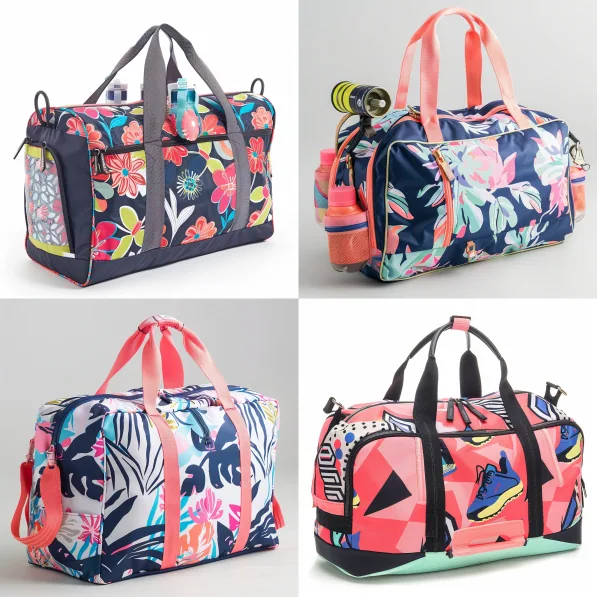
Four methods cover club logos: embroidery, a sublimated panel, screen print and a woven label. Pick by artwork complexity and by substrate, then fix the position by measurement from a seam. The method is a specification, not a preference.
What Decides Which Method a Club Logo Should Use?
Three things, in order: the artwork, the substrate and the quantity. The artwork decides what is possible — a crest with fine detail or a gradient cannot be embroidered cleanly at a small size. The substrate decides what is available — sublimation only works on polyester. The quantity decides what is economical, because embroidery carries a digitising setup that screen print does not.
Clubs usually start at the wrong end, by asking which method costs less per unit. That question has an answer but it is the third-most important one, and answering it first produces a mark that is economical and wrong.
| Method | Artwork it suits | Substrate | Setup cost | Durability |
|---|---|---|---|---|
| Embroidery | Simple marks, up to four colours | Any woven panel | Digitising, one-off | High |
| Sublimated panel | Full colour, gradients, photographs | Polyester only | Artwork preparation | High |
| Screen print | Flat marks, one or two colours | Smooth panels | Screen per colour | Moderate |
| Woven label | Wordmarks | Any | Loom setup | High |
| Silicone or rubber patch | Raised marks | Woven panels | Tooling | High |
When Does Embroidery Fail on a Club Crest?
Embroidery fails on detail and on gradients. A crest with a thin outline, small lettering or a shield divided into fine sections will not reproduce at 60 mm in thread, because thread has a minimum practical width and the detail disappears into it. The same crest embroidered at 140 mm often works perfectly.
The second failure is substrate. Embroidery pulls the cloth it sits on, and a panel without an interlining will pucker permanently. That is a pattern decision rather than an embroidery one, and it belongs on the tech pack as a note on the panel rather than as a complaint after the sample arrives.
When Does Sublimation Fail?
Sublimation fails on substrate and on colour. It requires a polyester panel, because the process puts dye into the polymer rather than onto the surface — on a nylon or a cotton panel there is nothing for it to bond to. And it reproduces colour differently from a dyed cloth, so a sublimated panel in a club colour will not match a dyed shell in the same reference exactly.
That second point is the one clubs discover late. A bag with a dyed shell and a sublimated panel in the same club colour has two colour systems on one product, and they will separate in daylight even when they agree indoors. Where a club wants both, put a binding or a piping line between them so the join reads as a design decision.
| Failure | Cause | Visible as | Prevention |
|---|---|---|---|
| Detail disappears | Mark too small for thread width | A mudged crest | Size the mark to the detail |
| Panel puckers | No interlining behind the embroidery | A distorted panel | Specify the interlining |
| Print will not bond | Panel is not polyester | Peeling or cracking | Check the substrate before choosing |
| Two shades of club colour | Dyed shell beside a printed panel | A visible join | Separate them with a binding |
| Thread fades before the shell | Wrong thread class for the exposure | A crest that ages faster | Ask for a light fastness result on the thread |
How Is the Position Specified?
By measurement from a seam, in two dimensions, with a tolerance. "Centred on the front panel" is not a position, because the front panel has no agreed centre until somebody measures it. "120 mm from the left side seam, 90 mm from the base seam, plus or minus 5 mm" is a position, and it is enforceable at inspection.
- Measure from a seam, not from an edge or from a centre line.
- Give both dimensions, horizontal and vertical.
- State the tolerance — plus or minus 5 mm is a normal figure.
- State the orientation, because a crest has a top.
- Mark it on the drawing rather than only in the notes.
What Colour References Does Each Method Need?
Each method reproduces colour from a different system, so the reference has to be given per method. Embroidery needs a thread reference — a thread shade number rather than a printed reference — because thread is a different substrate again. Sublimation needs the printed reference and a profile, and the profile has to be held for reorders.
The approval is the standard discipline applied per method: one coupon per substrate, approved under one light. For a bag with both an embroidered crest and a sublimated panel, that is two approvals on two substrates, and both belong in the same session under the same light. The method is set out in Reorder colour consistency.
How Does the Method Affect the Colourfastness Requirement?
Differently. A sublimated panel has the dye inside the fibre, so it behaves well under rubbing and laundering and it is the light fastness that governs. An embroidered crest has thread on the surface, and the thread is the substrate that moves most — so it needs its own light fastness result and its own laundering result.
| Exposure | Standard to cite | Embroidery | Sublimation |
|---|---|---|---|
| Sunlight on a touchline | AATCC 16 | Thread grade required | Panel grade required |
| Laundering | AATCC 61 | Thread grade required | Usually good |
| Rubbing | AATCC 8 | Low risk | Low risk |
| Chlorinated water | A laundering result at the stated cycle | Only for swim programmes | Only for swim programmes |
| Abrasion | ISO 12947 | Thread can abrade at raised edges | Protected within the fibre |
What Does the Artwork File Need to Be?
Vector, with the colour references named and the fonts converted to outlines. A raster file forces a redraw, and a redraw is both a cost and an opportunity for the crest to change shape slightly — which is exactly the kind of drift a club notices and cannot explain.
The second requirement is a version number. A club crest gets revised, and a bag ordered against revision two while the club has moved to revision three is a bag the club will reject. Put the revision number on the artwork file and on the tech pack, and check them against each other at sampling.
How Does Quantity Change the Method Decision?
At MOQ 500 pcs per style and colourway, almost every method is available, and the setup cost is amortised across enough units to stop mattering. That is worth saying because clubs ask about setup costs as though they were ordering fifty.
What does change with quantity is the reorder. A sublimated panel depends on a colour profile that has to be held; an embroidered crest depends on a thread shade that has to be available. Both are holdable, and both need a record — the profile reference or the thread shade number — filed with the coupon set.
What Should the Tech Pack Say About the Logo?
Six fields, and a logo specification is complete. The three most often missing are the thread reference, the interlining note and the revision number.
Tech pack fields for a club logo
- Method: embroidery, sublimated panel, screen print, woven label or patch.
- Position: two measurements from named seams, plus a tolerance.
- Size: width and height, and the orientation.
- Colour reference per method: a thread shade number or a printed reference and profile.
- Substrate note: the interlining behind an embroidered panel, or the polyester requirement for sublimation.
- Artwork: vector, with the revision number on the file and on the pack.
How Is the Logo Checked at Inspection?
Four checks, all measurable: position against the stated dimensions, size against the stated figure, colour against the approved coupon or thread shade, and adhesion or stitch quality at the edge where a mark begins to lift. Written into the major defect classification, they are enforceable at the Ac/Re decision.
The edge check is the one that predicts a return. A print that is lifting at one corner and an embroidery that is loosening at one edge will both be back within a season, and both are visible on the inspection pull if the criteria ask for them. The arithmetic is set out in AQL 1.5 versus 2.5.
How Do the Two Methods Compare Across a Reorder?
Embroidery is the more repeatable of the two, because a thread shade number is a stable identifier and a digitised file is a stable artefact. Sublimation is repeatable too, but it depends on a colour profile that has to be held at the same output settings — and a reorder run on different settings will not match even with the same artwork.
Both need a retained reference. For embroidery that is a sewn-out coupon; for sublimation that is a printed coupon from the original run with the profile settings recorded beside it. Without those, the reorder is a fresh match. The full method is set out in Reorder colour consistency.
How Does a Club Handle a Multi-Colour Crest With Fine Detail?
This is the hardest case, and it is common — a shield with a border, a bird or a beast in the middle, and lettering around it. At 60 mm none of that survives in thread, and at 140 mm it does but the mark dominates the bag. The answer is usually to simplify the artwork for the bag rather than to change the method.
A simplified crest — the shield outline, the dominant colour and the lettering, with the fine interior detail removed — embroiders cleanly at 80 mm and reads as the same club mark. Clubs resist this because the crest is the crest, and it is worth saying that a slightly simplified mark applied well beats a full mark applied badly.
What Happens When the Club Revises the Crest?
It happens more often than clubs expect: a merger, a rebrand, an anniversary. The bag programme has to decide whether to run out the old stock or to switch, and switching mid-cycle means two digitised files, two thread approvals and a risk that two versions of the crest are in circulation at once.
The practical rule is to switch at a season boundary and to mark the artwork revision on every order. Where old stock remains, the club should know how much and where it is, because a squad turning up with two different crests is a visible problem that no amount of explaining fixes.
What Does Each Method Add to the Unit Figure?
Embroidery adds a digitising setup amortised across the order plus a per-unit running cost that scales with stitch count. Sublimation adds artwork preparation plus a panel cost. Screen print adds a screen per colour. At the standard quantity all three are modest, and the differences between them are smaller than the difference made by getting the position wrong once.
The cost that matters is rework. A logo applied in the wrong place, or applied by a method the substrate will not take, produces a shipment the club rejects — and a rejected shipment costs more than every method difference combined.
What Goes Into the Enquiry?
Six fields, and a logo enquiry is complete. The artwork and the position are the two that clubs leave until later, and they are the two that decide the sampling outcome.
- The artwork as vector, with the colour references named and a revision number.
- The method, or a request for a recommendation against the artwork and the panel.
- The position: two measurements from named seams, with a tolerance.
- The size and the orientation.
- The colour reference per method — a thread shade or a printed reference and profile.
- Quantity split and the date the kit is needed.
What Fails First on a Club Logo?
Three things: the edge, the thread and the position. Prints fail at the edge where they begin to lift; embroidery fails in the thread, which fades or abrades before the shell does; and both fail on position when the placement was described rather than measured.
All three are one clause each: a stated adhesion or stitch quality requirement, a light fastness result on the thread, and a measured position with a tolerance. None of them costs anything to specify and all three decide whether the crest is still there in year three.
How Should a Club Choose When Both Methods Would Work?
Choose embroidery. Where the artwork permits both, embroidery survives abrasion better, it is more repeatable across a reorder, and it reads as club property rather than as a print. Sublimation wins when the artwork demands it — full colour, a gradient, or a mark with detail finer than thread can carry.
That is the whole decision, and it is worth stating plainly because clubs spend a long time on it. If the crest works in thread, embroider it. If it does not, sublimate it on a polyester panel and put a binding between the panel and the shell.
How Does the Panel Construction Affect the Mark?
A mark sits on a panel, and the panel decides what the mark can do. A flat panel with an interlining takes embroidery cleanly and holds a print flat. A panel that curves, or one that sits over a seam, will distort both — the embroidery will pucker along the curve and the print will show the seam beneath it.
The clause is simple: specify that the mark sits on a flat, interlined panel and state the panel dimensions on the drawing. Where a club wants the mark on a curved or a padded area, the honest answer is that it will not hold, and the choice is between moving the mark and accepting a result that degrades.
How Do Sponsor Marks Sit Beside a Club Crest?
Most clubs carry a sponsor mark as well as a crest, and the two have different owners and different rules. The sponsor mark usually comes as supplied artwork with its own colour references, it is often a single colour, and it is usually required at a stated minimum size by the agreement.
The practical arrangement is to give the sponsor mark its own panel and its own method, rather than to place it beside the crest on the same one. Two marks on one panel compete visually and they are harder to position by measurement, and a sponsor agreement that specifies a minimum size is easier to satisfy on a dedicated panel.
How Is the Decision Recorded for the Next Committee?
On the same one-page programme record as the colour artefacts: the method, the thread shade or the profile reference, the position, the size, the artwork revision number and the retained coupon. Six lines, and the next committee can reorder the crest without asking anybody what it was.
Without them, the club rediscovers the question every year, and the answer drifts — a slightly different thread shade here, a slightly different position there, until the crest on the bag no longer matches the crest on the shirt.
Send the artwork and the measured position
Tell us the crest artwork, the panel and where it has to sit, and we come back with a method recommendation and a delivery date you can calculate.
Frequently Asked Questions
Which logo method should a club choose?
Embroidery where the artwork permits it, sublimation where the artwork demands it — full colour, gradients or detail finer than thread can carry.
Can a club crest be sublimated onto any panel?
No. Sublimation requires a polyester substrate; the dye goes into the polymer rather than onto the surface.
Why does an embroidered crest pucker the panel?
Because there is no interlining behind it. The interlining is a pattern decision and it belongs on the tech pack.
How should the logo position be specified?
Two measurements from named seams, with a tolerance — not a description such as "centred".
What artwork format is needed?
Vector, with the colour references named, fonts converted to outlines, and a revision number on the file.
Why does a sublimated panel not match a dyed shell?
They are two colour systems. They can agree indoors and separate in daylight, which is metamerism.
Which standard covers the thread fading?
AATCC 16 for light fastness at a stated exposure, and a laundering result for the wash cycle.
What is the minimum order?
MOQ 500 pcs per style and colourway, with 300 pcs open to discussion on a repeat.
How long does sampling take?
6-10 working days from a signed-off tech pack, extending to 12-15 working days where a new colour has to be matched.
How long is bulk production?
35-50 days from written sample approval, inspected at AQL 2.5 under ISO 2859-1.
How is the logo checked at inspection?
Position against the stated dimensions, size against the stated figure, colour against the coupon, and the edge where a mark begins to lift.
Which method is more repeatable across a reorder?
Embroidery, because a thread shade number and a digitised file are stable identifiers.
People Also Ask
Which logo method should a club use?
Embroidery where the artwork permits it; sublimation where it demands full colour.
Why does sublimation need polyester?
The dye goes into the polymer rather than onto the surface.
How should a logo position be specified?
Two measurements from named seams, with a tolerance.
Which standard covers thread fading?
AATCC 16 at a stated exposure, plus a laundering result.
Which method repeats better on a reorder?
Embroidery — a thread shade number and a digitised file are stable.
Sources and further reading
Every figure on this page is either our own programme data or attributed below. Open the originals before you write them into a specification.
- AATCC 16 — Colorfastness to LightAmerican Association of Textile Chemists and Colorists
- ASTM D6193 — Standard Practice for Stitches and SeamsASTM International
- AATCC 61 — Colorfastness to Laundering: AcceleratedAmerican Association of Textile Chemists and Colorists