How Do You Stop Hardware, Thread and Webbing Swaps?
Trim - hardware, thread and webbing - is swapped more often than fabric and recorded less often than anything else on the bill of materials. This article covers what each family changes when it is substituted, how all three are named on the register, which comparisons catch a swap, and what the contract should say about it.
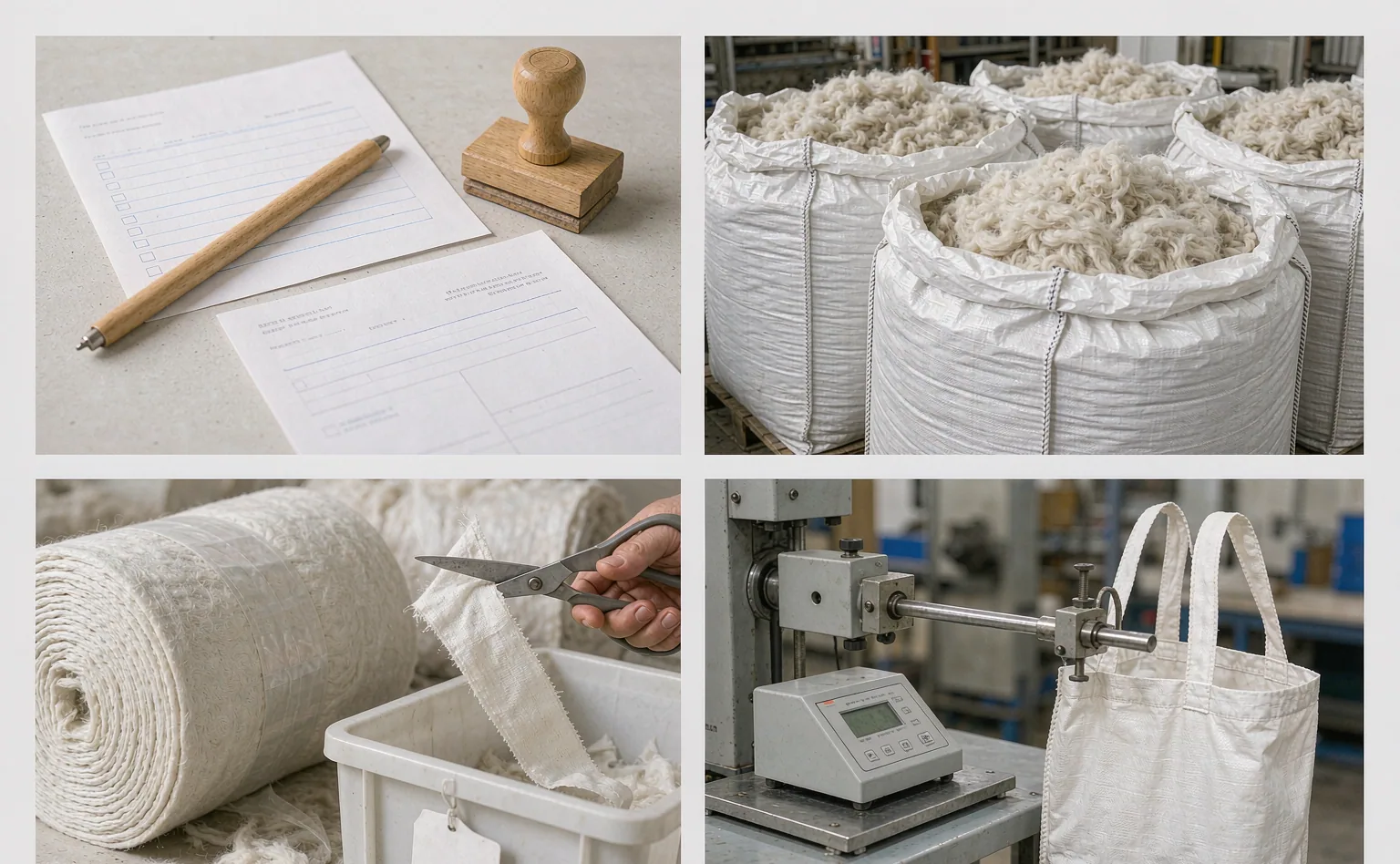
['MOQ 500 pcs per style and colourway; 300 pcs open to discussion on a repeat.', 'Sampling 6-10 working days from a signed-off tech pack.', 'Bulk production 35-50 days from written sample approval.', 'Inspection at AQL 2.5, ISO 2859-1, General Inspection Level II.', 'T/T 30/70, FOB Xiamen; CIF and DDP available.', 'Three trim families: hardware, thread and webbing, each with its own failure mode.', 'A swap is a written proposal with a comparison, issued before the units are made.']
Fabric is dyed to order for a programme and therefore carries a purchase record, a lot number and usually a lab dip. Trim does not. It is bought from a catalogue, in lots that answer to availability rather than to a booking, by whoever is placing that week's purchase.
That is the structural reason trim is the most substituted part of a bag. Nothing is wrong with the purchase; what is missing is a rule that says the purchase is part of the product. The rule has three pieces: naming, a retained reference, and a written proposal before any change reaches the line.
Why Do Trim Swaps Happen More Than Fabric Swaps?
Four reasons. Trim purchases are small and frequent, so they are made by a clerk rather than by a programme owner. They are priced per unit, so a small unit difference looks significant. Supply is volatile, because codes are discontinued with little notice. And they are visually small, so a casual check passes them.
Fabric has none of those properties. It is expensive, it is booked, it is dyed to a reference, and it is impossible to miss on a finished bag. The asymmetry is why a programme can have excellent fabric control and no trim control at all.
There is a fifth reason that appears in longer programmes. Trim is specified once, at development, and then inherited. By the third year nobody remembers which of the three buckles on the drawing was the one that was actually approved, because the drawing shows a shape and the register, where one exists, sits in a folder nobody opens.
What Changes When Hardware Is Substituted?
Six things, in rough order of how soon they are noticed: plating tone, mass, edge finish, dimensional fit, mechanical strength, and corrosion behaviour. The first three are visible on the shelf; the last three appear after months, which is why a substitution can pass two inspections and still be the wrong decision.
Dimensional fit is the one that surprises people. A D-ring or a buckle with the same nominal size can differ in wire diameter or in slot height, and the difference changes how a webbing tail sits in it. Nothing is visibly wrong and the assembly feels loose.
Corrosion is the slowest of the six and the one that reaches the customer last. A plating thickness that is adequate in a dry warehouse is not adequate on a bag used near salt water, and the difference stays invisible until it is not. Where a programme sells into a coastal market, the plating specification belongs on the register line rather than in a footnote.
What Changes When Thread Is Substituted?
Thread substitution is the quietest of the three and the most consequential for seam behaviour. A ticket number is a size, not a product: two makers supply the same ticket with different twist, different lubrication and different elongation, and all three change the seam.
The visible consequences are a change in stitch density, because the thread feeds differently, and a change in seam balance, which shows as pucker on the face. The invisible consequence is seam strength, which is why the thread belongs on the register with a brand and grade and not as a ticket number.
Shade is the fourth consequence and the easiest to miss. Two threads of the same ticket and the same nominal colour can differ visibly once they are sewn, because a stitch line concentrates the colour differently from a spool. Retain a sewn sample of the approved thread rather than a length wound round a card.
What Changes When Webbing Is Substituted?
Four properties: weave and surface, width and thickness, tensile strength and elongation, and colour. The first two change how the webbing sits in a hardware slot and how it lies against the body fabric. The third is what the load actually sees.
| Trim family | What changes on a swap | When it is noticed | Comparison that catches it |
|---|---|---|---|
| Hardware | Plating tone, mass, edge finish, fit, strength, corrosion | Tone at once, fit in use, strength later | Retained piece plus a fit check in the mating part |
| Thread | Twist, lubrication, elongation, shade | Stitch density and pucker, then strength | Registered brand and grade, plus a stitch count and a pull test |
| Webbing | Weave, width, thickness, strength, elongation, colour | Hand feel at once, strength later | Retained length, a width reading and a tensile check |
| Elastic and cord | Recovery, diameter, surface | After a few uses | Retained length and a stretch and recovery check |
| Labels and tape | Print method, adhesion, shade | In the shop, or after washing | Retained printed reference and a wash check |
| Foam and padding | Density, thickness, compression set | In use, or never | Retained offcut and a thickness reading |
How Are the Three Named on the Register?
The same four fields apply to all three families: maker or brand, material, finish and code. Hardware adds the plating specification and the mating part. Thread adds the fibre and the ticket. Webbing adds the weave, the width and the tensile requirement.
- Hardware
- Brand, material, finish, code, plating specification, mating part
- Thread
- Brand, fibre, ticket number, finish, grade code
- Webbing
- Brand or mill, fibre, weave, width, thickness, tensile requirement
- Elastic and cord
- Brand, fibre, diameter, recovery requirement, colour
- Labels and tape
- Maker, substrate, print method, adhesive, artwork revision
- Foam and padding
- Supplier, polymer, grade code, density band, thickness band
Attach a retained physical sample to every line. A code is a claim made by a supplier; a piece of webbing in an envelope is a fact about the approved bag. Where a programme has more than one colourway, retain one per colourway, because a webbing colour is a separate decision from a webbing weave.
The register should also carry the mating part for hardware. Naming a buckle without saying which webbing it has to accept invites a substitution that fits the drawing and not the bag, and that is the version of the problem nobody notices until assembly.
Where a programme uses a single fastener across several styles, note that on the line as well. A discontinuation then affects every style at once, which is a planning event rather than a substitution, and it is much easier to handle as one decision than as several separate ones discovered in different weeks.
Which Comparisons Catch Each Swap?
Hardware: a retained piece compared under a named light, plus a fit check in the actual mating part rather than against a rule. Thread: a stitch count at the named positions plus a pull test on a seam card. Webbing: a width and thickness reading plus a tensile check on a retained length.
All three also get the simplest check of all, which is mass. A buckle, a metre of webbing and a spool of thread each have a mass, and a substitution almost always changes it. A small scale at the comparison station catches swaps that a visual check misses.
Record the mass of the retained sample at approval, so there is a figure to compare against. A note saying the buckle feels heavier is an observation; one saying it is two grams heavier than the retained piece is a measurement, and only the second survives a disagreement.
One caution about destructive checks on trim: take the units from the inspection sample rather than from stock, and record which run they came from. A programme that opens units without recording their run loses the ability to trace a finding back to the purchase that produced it.
How Is Plating and Coating Tone Compared?
Against a retained piece, under a named light source, at a fixed distance, with both pieces oriented the same way, and compared as an assembly rather than as a single item. A slider, a pull and a D-ring can each match their own reference and still read wrong together on the bag.
Where the two sides disagree, fall back to a gray scale grade or to an instrumental reading on a flat plated surface. Where the hardware is a safety-relevant part - a load-bearing buckle, a child-use fastener - the comparison also has to cover strength, not only appearance.
What Does a Written Swap Proposal Contain?
Six fields: the register line affected, the reason, the proposed item named to the same fields, the comparison and its result, the outcome proposed, and the run numbers and date. Attach the two physical pieces. Send it before cutting rather than with the inspection report.
Four outcomes for a trim swap
- Accept with a revised reference, and update the register and the retained sample.
- Accept for this run only, with the next run returning to the registered item.
- Re-sample before volume, where fit, assembly or a tested property is affected.
- Pause the run, where a regulated or tested claim depends on the item.
Ask for one of the four by name. A message that says fine is not a decision, because it does not say whether the file changed. That ambiguity is what turns a one-run exception into a permanent substitution nobody remembers agreeing to.
How Are Swaps Tracked Across Several Runs?
One register line per trim item, with a column per run recording the item and purchase lot used, and a note where anything changed. After four runs that table shows whether the trim has been stable, which run introduced a change, and whether an accepted one-run exception ever reverted.
| Run | Hardware | Thread | Webbing | Change note |
|---|---|---|---|---|
| Run 1 (approval) | Registered brand and code | Registered brand and grade | Registered mill and weave | None - the reference |
| Run 2 | Registered brand and code | Registered brand and grade | Registered mill and weave | None |
| Run 3 | Second brand, equivalent | Registered brand and grade | Registered mill and weave | Issued before cutting; accepted for one run |
| Run 4 | Registered brand and code | Registered brand and grade | Registered mill and weave | Reverted per the run 3 note |
| Run 5 | Registered brand and code | Second maker, same ticket | Registered mill and weave | Issued before cutting; re-sample agreed |
| Run 6 | Registered brand and code | Registered brand and grade | Registered mill and weave | Reverted per the run 5 note |
What Goes Into the Contract About Trim?
Three clauses. Registered trim is part of the product rather than a commercial preference. Any change needs a written proposal with a comparison, issued before the affected units are made. And a change made without that proposal makes the affected units non-conforming, whether or not they function.
The third clause is the one that does the work, because almost every substitute functions. Without it, the test is whether the bag closes and the strap holds, and the clause has no effect at all. With it, the test is whether the process was followed.
Add one practical clause about evidence: where a swap is proposed, the comparison is provided by the side proposing it, and the run waits until the other side has answered. That removes the incentive to propose a swap late, which is when most of them are proposed and when the buyer has the fewest options.
Compare hardware against the body fabric as well as against its own retained piece. A buckle that matches its own reference can still read wrong on a particular colourway, and that mismatch is a colour decision rather than a hardware one - which is why the assembled reference matters more than the individual pieces kept separately.
Name it to four fields, keep a physical piece, require a written proposal before any change, and make an unrecorded change non-conforming. Everything else follows.
Send us the trim register
Send the trim lines you hold and we will tell you which are loose enough to be swapped. We coordinate production to a register with a retained sample per line, bulk in 35-50 days from written sample approval.
Frequently Asked Questions
Why is trim substituted more often than fabric?
Because trim purchases are small, frequent and priced per unit, so they are made by a clerk on availability rather than by a programme owner against a reference. Fabric is expensive, booked and dyed to a panel, and impossible to miss on a finished bag.
What changes when hardware is substituted?
Plating tone, mass, edge finish, dimensional fit, mechanical strength and corrosion behaviour. Tone is visible immediately, fit shows in use, and strength and corrosion appear after months - which is why a substitution can pass two inspections and still be wrong.
Why does thread substitution matter if the ticket number is the same?
Because a ticket number is a size, not a product. Two makers supply the same ticket with different twist, lubrication and elongation, and all three change the seam: the count moves, the seam balance moves, and seam strength moves with them.
What changes when webbing is substituted?
Weave and surface, width and thickness, tensile strength and elongation, and colour. The first two change how it sits in a hardware slot and lies against the body; the third is what the load actually sees.
How should trim be named on the component register?
Four fields apply to all three families: brand or maker, material, finish and code. Hardware adds plating and mating part, thread adds fibre and ticket, webbing adds weave, width and tensile requirement. Attach a retained physical sample to every line.
What comparison catches a trim swap?
Hardware: a retained piece under a named light plus a fit check in the mating part. Thread: a stitch count at the named positions plus a pull test. Webbing: width and thickness readings plus a tensile check. For all three, mass catches what the eye misses.
How is plating tone compared?
Against a retained piece, under a named light source, at a fixed distance, both pieces oriented the same way, and compared as an assembly rather than item by item. Where the two sides disagree, use a gray scale grade or an instrumental reading.
What should a written swap proposal contain?
Six fields: the register line affected, the reason, the proposed item named to the same fields, the comparison and its result, which of the four outcomes applies, and the run numbers and date. Attach both physical pieces and send it before cutting.
What are the four outcomes of a trim swap?
Accept with a revised reference and update the register and sample; accept for this run only with the next reverting; re-sample before volume where fit or a tested property is affected; or pause the run where a regulated claim depends on the item.
How are swaps tracked across several runs?
One register line per trim item with a column per run recording the item and purchase lot, and a note where anything changed. After four runs it shows which run introduced a change and whether an accepted one-run exception ever reverted.
Should the contract say anything about trim?
Three clauses: registered trim is part of the product, any change needs a written proposal with a comparison before the affected units are made, and an unrecorded change makes those units non-conforming whether or not they function.
Why does the third clause matter most?
Because almost every substitute functions. Without it, the test is whether the bag closes and the strap holds, so the clause has no effect. With it, the test is whether the process was followed, which is a question with one answer.
People Also Ask
How do I stop a supplier changing hardware or webbing?
Name every trim item by brand, material, finish and code, keep a retained physical sample per line, and put a clause in the contract requiring a written proposal with a comparison before any change reaches production.
What happens if a supplier substitutes thread?
The stitch count moves, seam balance changes and seam strength changes with them, even when the ticket number is identical. Register the brand and grade, count at named positions, and pull-test a seam card on the first pieces.
Is an equivalent component acceptable on a repeat order?
Only when it matches on every property that has a band and when a written proposal with a comparison was issued before the affected units were made. Equivalence is a decision, not a purchase.
How do you compare plated hardware between batches?
Against a retained piece under a named light, at a fixed distance, both oriented the same way, and compared as an assembly. Use a gray scale grade or an instrumental reading when the two sides disagree.
What is a component register?
One line per bought-in item naming brand or maker, material, finish and code, with a retained physical sample attached and a column per run recording what was actually used and where anything changed.
Sources and further reading
Every figure on this page is either our own programme data or attributed below. Open the originals before you write them into a specification.
- YKK fastening products — specifications and product codesYKK
- ASTM D6193 — stitches and seamsASTM International
- ISO 13934-1 — tensile properties of fabricsInternational Organization for Standardization