What Is the Difference Between Critical, Major and Minor Bag Defects?
The class decides the column, and the column decides the verdict. Critical means unsafe or unlawful and carries zero acceptance. Major means the customer would return the bag, held at AQL 2.5. Minor means a visible departure nobody would return it for, held at AQL 4.0.
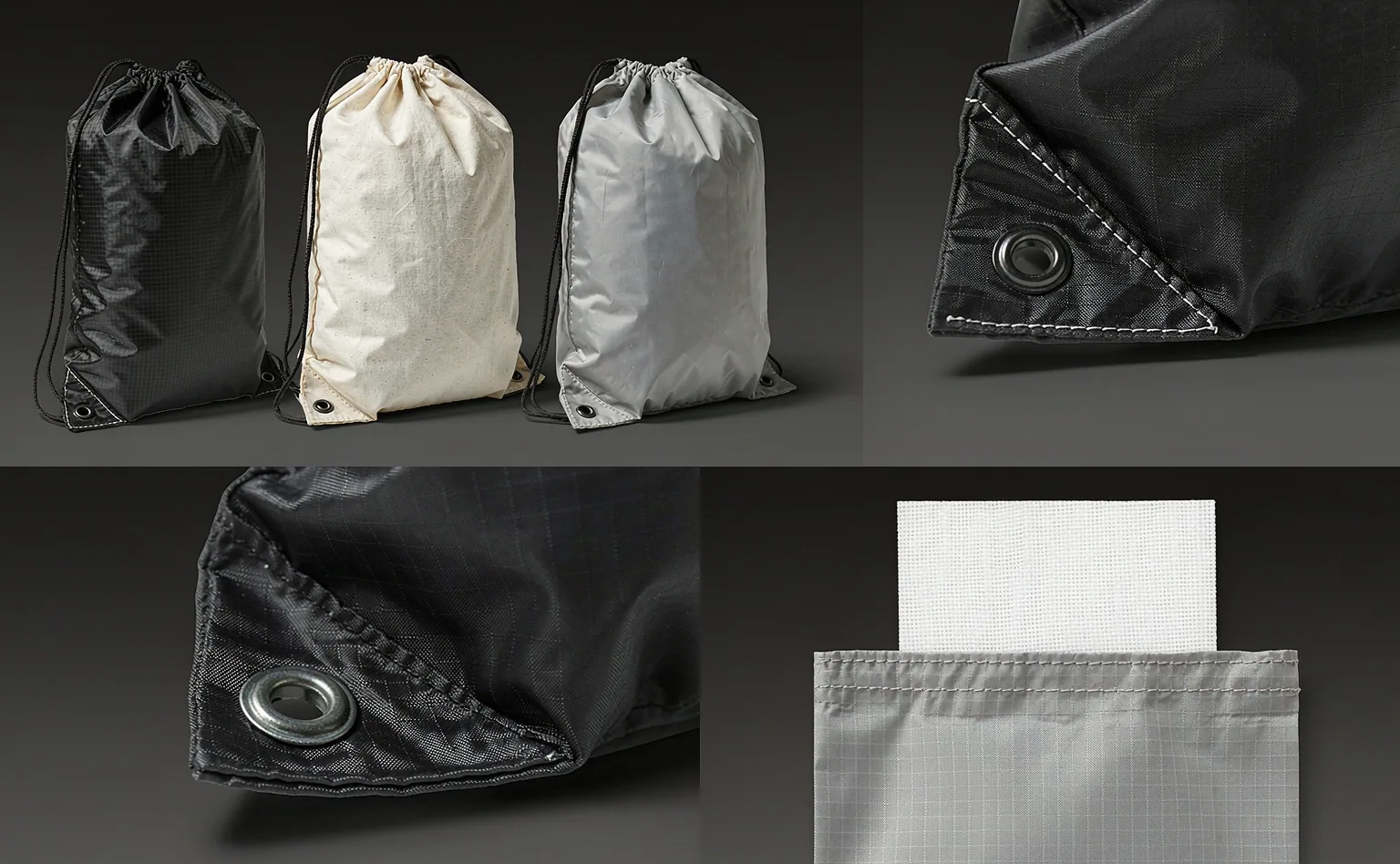
Three classes, three columns. Critical has zero acceptance; major sits at AQL 2.5; minor sits at AQL 4.0. None of those definitions comes from the standard — ISO 2859-1 supplies the sampling scheme only. The class list is a commercial document and it should be written by the buyer.
Ask two inspectors to classify the same fault and you will often get two answers, because nothing in the AQL standard tells them what to answer. The tables describe how many units to open and what count fails a lot. They say nothing about whether a scuff is cosmetic or catastrophic. That judgement is made by a document somebody attached to a purchase order, or, too often, by whoever happens to be holding the defect sheet.
Who Decides Which Class a Defect Belongs To?
The most reliable answer is: the buyer, in writing, before production. This is not a matter of trust but of incentives. The party whose margin depends on shipping today has a systematic reason to read a fault down a grade, and the party whose shelves receive it has a systematic reason to read it up. Neither bias produces good decisions, and only one of them can be corrected by a document.
The document itself needs four columns to be enforceable: the fault, its measurable limit, the method used to judge it, and the class. "Poor workmanship" is unenforceable, and so is "print slightly misaligned". "Logo centre displaced more than 2 mm from the position marked on the tech pack, measured with a steel rule against the seam reference" is enforceable by anybody with a ruler.
What Makes a Defect Critical Rather Than Major?
Consequence, not appearance. A critical defect is one that makes the product unsafe or unlawful: it creates an injury hazard, breaches a substance limit, or puts the shipment outside the rules of the market it is going to. Size, visibility and cost are all irrelevant to the classification. A tiny sharp burr hidden inside a pocket is critical; a large scuff on the base is not.
Two categories deserve their own lines in every classification because they are missed most often. The first is contamination: a broken needle fragment left in a sewn product is the classic example, and it is why needle accounting procedures belong in the quality system rather than in the inspection. The second is compliance: a drawstring length that fails the children product rule, or a coating above the restricted limit, is critical even though the unit looks perfect.
| Class | Definition | Examples on a bag programme | Usual level |
|---|---|---|---|
| Critical | Makes the product unsafe or unlawful, or creates a regulatory exposure | A needle fragment inside the bag, a sharp burr on hardware, a drawstring that fails the children product length rule, a substance over the restricted limit | Zero acceptance |
| Major | A customer notices it and returns the product, or function is materially reduced | A zipper that will not close, an opened seam, a strap that pulls out, an illegible print, a shell colour outside the approved shade band, a missing component | AQL 2.5 |
| Minor | A departure from specification a customer might see and would not return for | An untrimmed thread end, a stitch count one per inch out, a small mark inside the lining, a care label out of position, light creasing from packing | AQL 4.0 |
What Counts as a Major Defect on a Bag?
A major defect is one the customer notices and acts on: a fault that makes the product unsellable at full price or materially reduces its function. Running down a bag by hand, the recurring candidates are closures that will not close, seams opened or about to open, strap attachments that pull, prints that cannot be read, colour outside the approved shade, dimensions outside tolerance, and components that are simply missing.
Function is the test that separates major from minor, and it should be stated as a duty rather than as an opinion. A zipper that catches on the tape and requires two hands to start is major on a daily-use bag; the same behaviour on a bag opened twice a year may be tolerated. Write the intended duty at the top of the classification and a great deal of ambiguity disappears.
What Counts as a Minor Defect on a Bag?
A minor defect is a departure from specification that a customer might see but would not return the product for. Untrimmed thread ends, a stitch count one per inch away from the specification, a small mark inside the lining, a care label out of position, creasing left by packing. Individually they cost nothing; in aggregate they are the clearest signal that nobody is watching the line.
This is why the minor class deserves a rule rather than tolerance for its own sake. Minors are read at AQL 4.0, which is more forgiving than the major column — but a sample producing twelve minors and one major tells a different story from thirteen scattered ones. Ask for minors to be counted and photographed, and ask for repeating minor faults to be flagged as a process signal even when the lot passes.
One practical rule keeps the minor column honest: treat repetition as escalation. Twelve scattered thread ends across fifty units is housekeeping; twelve thread ends in the same place is a station, a machine or an operator that needs attention, and the class of the fault does not change what it says about the process. Record repeating minors as a separate line on the report and raise them even on a passing lot.
Can the Same Fault Be Minor on One Bag and Major on Another?
Constantly, and the classification should be written to reflect it. Duty, material and visibility all move the line. A misaligned print inside a lining is minor; the same displacement on the exterior panel carrying the only branding is major. A 3 mm weft skew on a utility pouch is invisible; on a product with a printed grid or a matched stripe it is the first thing a customer sees.
Market shifts the line as much as product does. A drawstring length that is merely awkward on a general-purpose item becomes a compliance question once the same style is sold into a children's range, and a coating that clears one destination's substance rules may sit outside another's. Where a style ships to several markets, name them in the classification rather than assuming everybody received the strictest version.
The practical method is to classify by feature rather than by fault name. Instead of one global rule for "print misalignment", write the limit per printed location with a reference point for each. It takes an extra hour at tech pack stage and removes hours of argument at every inspection for the life of the programme.
| Fault | Utility drawstring bag | Insulated delivery bag | Camera or equipment bag |
|---|---|---|---|
| Scuffed shell panel | Minor | Major — visible on a branded delivery item | Major — customers expect pristine protective gear |
| Stiff zipper action | Minor | Major — opened hundreds of times a route | Major — needs one-handed access to equipment |
| Colour off-shade 1 step | Minor | Major — fleet buyers match livery | Major — sold alongside other units |
| Divider and fit | Not applicable | Minor if the load still sits flat | Major — protection is the product function |
| Untrimmed thread ends | Minor | Minor | Major inside a compartment holding optics |
Does the Defect Class Change Which AQL Column Applies?
Yes, and this is why the class list is worth more than the AQL number. Each class is read against its own column on the same sample, and each can fail the lot independently. On a 50-unit sample the plan accepts three major defects and ten minor ones, but it accepts zero critical defects. A single instance in the critical column fails the whole lot even when every other count is clean.
It follows that a tightening exercise aimed at the wrong place changes very little. Moving the major column from 2.5 to 1.5 changes one unit of tolerance; reclassifying a systematic fault from minor to major changes the column entirely, and removing the ability to reclassify it after the fact is worth more than either. Put the effort into the list, not into the number.
How Are Defects Counted When One Unit Has Several Faults?
Under the default convention each defect is counted, not each defective unit, so one bag carrying two listed faults contributes two to the count. That convention is why seemingly small numbers can fail a lot: two units with two faults each reach the reject number on a plan whose accept number is three.
Counting affected units once is a valid convention and some programmes prefer it, particularly where faults cluster on one unit. Whichever applies has to be printed in the instruction, because the choice moves effective stringency by more than most AQL changes do, and switching conventions mid-programme makes one lot incomparable with the next.
What Does a Written Classification Need to Contain?
Six fields per fault line, and nothing else. Written properly, the document is three pages for a complex bag and one page for a simple one, and it will be used far more often than anybody expects: by the inspector, by the production supervisor, and by whoever argues about the failure.
Six fields for every line in the classification
- The fault, named precisely enough that two people would identify the same thing.
- The limit, expressed as a number with a tolerance rather than an impression.
- The measuring method and the reference point, so the number means the same thing in two rooms.
- The class: critical, major or minor, with the duty stated at the head of the document.
- A photograph of a passing example and a failing example where the fault is visual.
- Whether faults are counted individually or per affected unit.
Needle control belongs alongside the list rather than inside it. The standard example of a critical defect on a sewn product is a fragment of a broken needle left in the construction, and no sampling plan finds it often enough to matter. The control is procedural: an issue and return log, a written procedure for breakage, and metal detection where the market requires it. Verify the log exists rather than asking an inspector to look for needles.
One further field earns its place on complex programmes: who decides when a fault is not on the list. Something always appears that nobody anticipated, and the default answer — the inspector decides — should be replaced with a named person and a written record on the report.
What Happens When the Inspector and the Vendor Disagree?
Disputes about classification are usually disputes about evidence rather than about quality. The inspector says a fault is outside tolerance; the floor produces a ruler and says it is not. Both may be measuring honestly against different references. Classification disagreements are avoided almost entirely by stating the reference point and the method in the fourth column described above.
Where a genuine disagreement remains, three steps usually resolve it without escalation. Photograph the fault against the reference with a scale in frame. Set it beside the approved counter-sample rather than beside another unit from the lot. If it still cannot be settled, retain the unit and refer it: either to the buying entity for a written decision, or to a laboratory where the fault turns on a measured property.
The escalation path belongs in the purchase order, together with the costing route. A disagreement resolved in writing during the visit costs a day; the same disagreement carried to the arrival port costs the relationship and usually the order.
How Often Should the Classification Be Reviewed?
Once per programme, at tech pack stage, and again after the first failed lot — which is when everybody discovers which lines were unenforceable. Beyond that, review it when anything in the product changes: a new fabric, a new hardware supplier, a new print method, a new market with different rules. A classification left untouched for two years is usually describing a product that no longer exists.
Two signal sources tell you the list needs work without waiting for a failure. The first is a defect that appears repeatedly in the minor column and never fails anything: faults you are counting but not acting on are either misclassified or tolerated, and both deserve a decision. The second is faults arriving from the field that the classification does not cover — a clear indication the list was written around what production expected rather than what customers experienced.
The classes are also the bridge to every other number in the plan. Once they are written, the AQL sampling table turns them into a verdict, and the argument about which column each class belongs in is set out for once in AQL 1.5 vs 2.5 vs 4.0. Getting the list right is most of the work; choosing the number is the small part left over.
Have the classification written for your product
Send the tech pack and the duty. A three-page classification with measurable limits comes back annexed to the quote.

Frequently Asked Questions
What is the difference between a critical and a major defect?
A critical defect makes the product unsafe or unlawful and carries zero acceptance. A major defect is one a customer notices and returns the product for, held at AQL 2.5. The test is consequence, not appearance or size.
Can one critical defect fail the whole lot?
Yes. Critical defects carry zero acceptance regardless of any other count, so a single instance fails the lot even when major and minor counts are well inside their limits.
Who writes the defect classification?
The buyer should. The party with a margin depending on shipping today has a reason to read faults down a grade, and only a buyer-written list corrects that bias.
Is a broken needle fragment a critical defect?
Yes. It is an injury hazard and the standard example of why needle control belongs in the quality system rather than in the final inspection — no sampling plan reliably finds it.
What AQL does each class use?
General merchandise practice is zero acceptance for critical defects, AQL 2.5 for major defects and AQL 4.0 for minor defects, all read against the same sample.
Can the same fault be minor on one bag and major on another?
Frequently. Duty decides: a print displacement inside a lining is minor, while the same displacement on the panel carrying the branding is major. Classify by feature rather than by fault name.
Are defects counted per unit or individually?
By default individually: one unit carrying two listed faults contributes two. Counting affected units instead is legitimate but must be stated in the instruction, because it loosens the plan.
What fields does a classification line need?
The fault named precisely, the limit as a number with a tolerance, the measuring method and reference point, the class, photographs of pass and fail examples, and the counting convention.
How detailed should the limits be?
Detailed enough that two people in different rooms reach the same verdict. "Poor workmanship" is unenforceable; "displaced more than 2 mm from the reference seam, measured with a steel rule" is not.
What happens when a fault is not on the list?
Somebody decides, so name that somebody in advance. The default answer — the inspector decides — should be replaced with a named person and a written record on the report.
How often should the classification be updated?
At tech pack stage, after the first failed lot, and whenever the product or the market changes. A list unchanged for two years is usually describing a product that no longer exists.
Does reclassifying a fault change more than tightening the AQL?
It changes more. Moving the major column from 2.5 to 1.5 shifts one unit of tolerance; reclassifying a systematic fault from minor to major moves it into a column with zero practical tolerance for repetition.
People Also Ask
What are the three defect classes in AQL?
Critical, major and minor. Critical means unsafe or unlawful with zero acceptance; major means the customer would return the product; minor means a visible departure too small to drive a return.
What is an example of a major defect on a bag?
A zipper that will not close, an opened seam, a strap attachment that pulls out, an illegible print, missing hardware, or a shell colour outside the approved shade band.
What is an example of a minor defect on a bag?
An untrimmed thread end, a stitch count one per inch outside specification, a small mark inside the lining, a care label out of position, or creasing left by packing.
Does ISO 2859-1 define critical, major and minor?
No. It supplies the sampling scheme and the tables only. Defect definitions, classes and tolerances are commercial documents written for each product.
Can classifications be different for different markets?
Yes, and often should be. Regulatory exposure differs by destination, so a children product feature that is minor in one market can be critical in another under a different length rule.
Sources and further reading
Every figure on this page is either our own programme data or attributed below. Open the originals before you write them into a specification.
- ISO 2859-1:1999 Sampling procedures for inspection by attributesInternational Organization for Standardization
- ANSI/ASQ Z1.4 — Sampling procedures and tables for inspection by attributesAmerican Society for Quality
- Consumer Product Safety Improvement Act (CPSIA)U.S. Consumer Product Safety Commission