What Should a Camera Bag QC Inspection Check Before Shipment?
A pre-shipment inspection runs at AQL 2.5 under ISO 2859-1 at General Inspection Level II, with defects classified before it starts. The checks that matter are stitching, zipper function on every unit, foam and divider position, and interior dimensions at the foam.
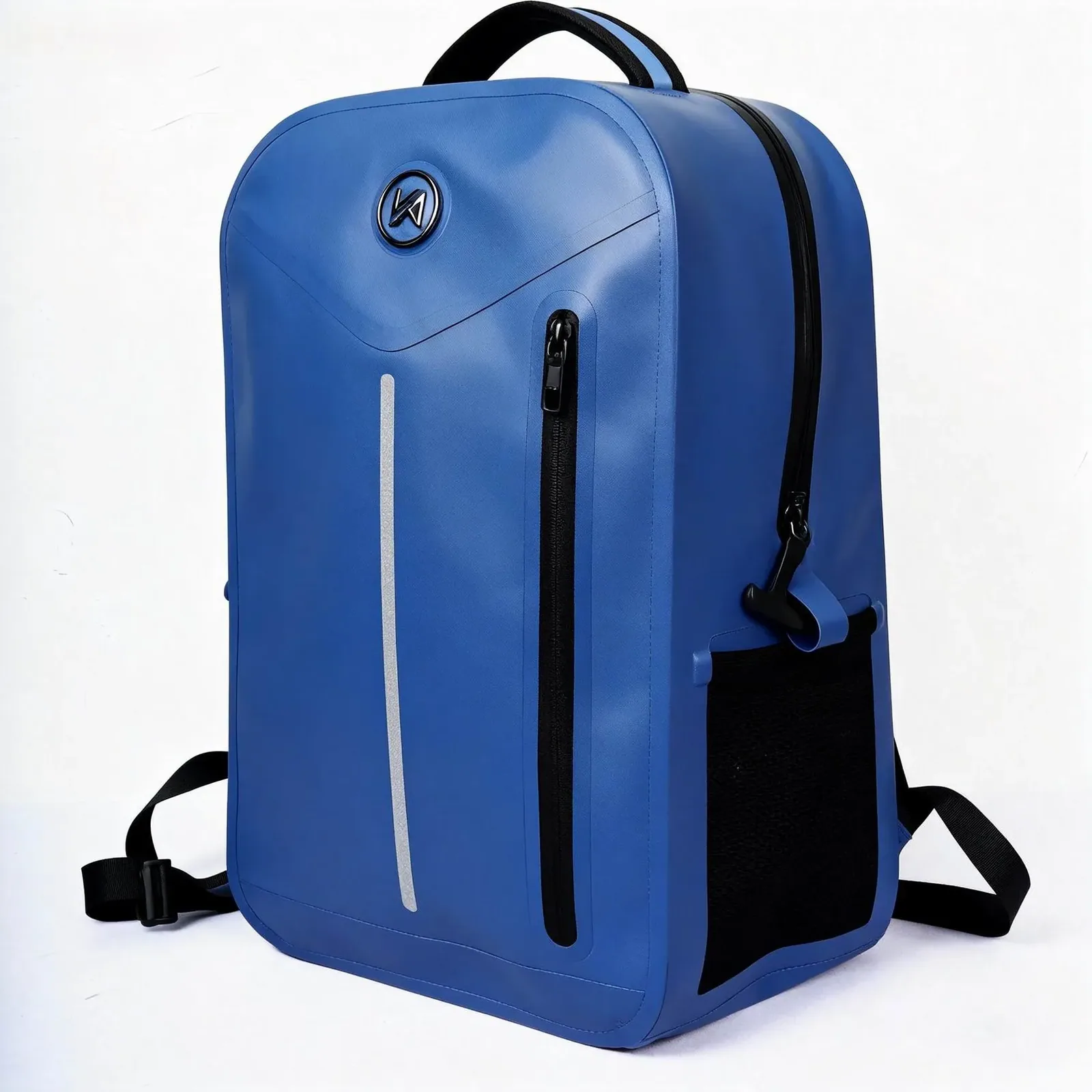
A pre-shipment inspection on a camera bag runs at AQL 2.5 under ISO 2859-1 at General Inspection Level II, with defects classified as critical, major and minor before the inspection starts. The checks that matter are stitch density and seam integrity, zipper function on every unit, foam thickness and divider position against the drawing, interior dimensions at the foam surface, hardware function and finish, and the shade against the retained reference. Six families, one class list.
Quality control on a camera bag is not a single inspection and it is not a single standard. It is a sampling plan, a defect class list, a set of measurements and a disposition rule, and all four have to be agreed before the goods are finished rather than after they are packed. A buyer who asks for an inspection without writing the class list will get one, and it will find the things the inspector thinks to look for.
This guide sets out what to inspect, when to inspect it, how the sample is drawn, and what happens when a lot fails. It is written for the buyer who has to sign off a shipment and would rather find the problem in the factory than in the returns.
When Should Inspection Happen?
Twice, and the two inspections look for different things. The first is during production, usually when 20 to 30 per cent of the order is packed, and it exists to catch a systematic problem while there is still time to correct it: a divider coordinate that is wrong on every unit, a foam thickness that is short on every panel, a shade that is off against the reference.
The second is the pre-shipment inspection, run when the order is complete and packed, and it exists to decide whether the lot ships. It is the one most programmes buy and it is the one that produces the report the buyer signs against. A programme that only inspects at the end will find the systematic problem in a finished order, which is the most expensive possible time to find it.
| Inspection | When | What it is for | What it cannot do |
|---|---|---|---|
| During production | At 20 to 30 per cent packed | Catches a systematic defect while it can be corrected | Does not tell you the finished order is right |
| Pre-shipment | When the order is complete and packed | Decides whether the lot ships | Cannot correct anything without a rework round |
| Container loading check | At the container | Confirms the quantity and the carton condition | Is not a product inspection |
| In-house line checks | Continuously on the line | Catches an operator error at the station | Is not an independent result |
What Sampling Plan Applies?
AQL 2.5 under ISO 2859-1 at General Inspection Level II is the standard plan for this category, and the sample size follows from the lot size through the code letters in the standard. A lot of 281 to 500 pieces sits at code letter H with a sample of 50 units, and at AQL 2.5 that sample accepts on 3 defects and rejects on 4. A lot of 501 to 1,200 pieces sits at code letter J with a sample of 80, accepting on 5 and rejecting on 6.
Those figures come from the tables in the standard and should be confirmed against the current edition before an inspection is specified, because the tables are the authority rather than this page. What matters structurally is that the plan is single sampling at a stated level with a stated accept and reject number, and that the buyer and the inspector are reading the same table.
| Lot size, pcs | Code letter, General Inspection Level II | Sample size | AQL 2.5 accept | AQL 2.5 reject |
|---|---|---|---|---|
| 281 to 500 | H | 50 | 3 | 4 |
| 501 to 1,200 | J | 80 | 5 | 6 |
| 1,201 to 3,200 | K | 125 | 7 | 8 |
| 3,201 to 10,000 | L | 200 | 10 | 11 |
| Same lot at AQL 1.5 | H | 50 | 2 | 3 |
| Same lot at AQL 4.0 | H | 50 | 5 | 6 |
How Are Defects Classified?
Three classes, and the classification is written before the inspection. A critical defect is one that makes the product unsafe or unusable, or that breaks a regulation: a broken strap root, a zipper that will not close, a sharp edge. A major defect is one that a customer would notice and return: a visible shade difference, a skipped stitch on a seam, a divider out of position. A minor defect is one a customer would notice but not return.
The class list is what makes the plan work, because AQL 2.5 applies to the class it is set for and a programme usually runs a tighter limit on critical defects than on the others. A common structure is zero tolerance on critical, 2.5 on major and 4.0 on minor. Without that structure, a single AQL number is being applied to defects of wildly different consequence.
What Does a Stitching Check Cover?
Five things. Stitch density, counted as stitches per inch or per centimetre at stated points and compared with the specification. Skipped or broken stitches, which are a major defect on a load-bearing seam and a minor one elsewhere. Seam grin, where a seam opens under light tension and shows the thread. Thread tension, which shows as puckering on a coated shell. And the reinforcement, where a bar-tack or a back-tack is specified and has to be present.
Seam behaviour is measured separately under the published methods: stitch type and stitch density are covered by ASTM D6193, and seam tensile properties by ISO 13934-1. Those are laboratory methods rather than inspection checks, and they belong in the specification rather than on the inspection table. What the inspector does is count and look.

What Does a Zipper Check Cover?
Function on every unit in the sample, which is the single most valuable check in the whole inspection. Every zipper is opened and closed twice, and a zipper that catches, splits or will not close is a defect. The check takes seconds per unit and it catches the problem that produces the most returns in this category, which is a line that splits under load.
Then appearance and alignment: the tape is sewn straight, the flap covers the line along its whole length, the garage is present and the slider parks in it, and the puller matches the specification. A zipper that runs but whose flap does not cover is a weather defect that no functional test will find.
What Does a Foam and Padding Check Cover?
Thickness at stated measurement points per panel, with a calliper, reported as a mean with the specified tolerance, usually half a millimetre. Density is not measurable on the inspection table without cutting, so it is checked against the mill data sheet for the lot rather than on the unit. And divider position, which is measured against the drawing and is the check most often omitted.
The padding check that matters most and is hardest to do is the fit check: the gauge block or the real kit goes into the bag and the five fit checks from the layout specification are run. That is a dimensional check and a functional check at once, and it is the only one that tells the buyer whether the bag does its job.
What Dimensions Get Measured?
Interior dimensions at the foam surface, because those are what the kit touches, plus the exterior for carton and pack-out purposes, plus the strap length and width, plus the position of every attachment point. A dimensional check that measures only the exterior will pass a bag whose interior is 20 mm short, which is the most common dimensional failure in this category.
The tolerances have to be written per dimension and they should not all be the same. A shell exterior can carry a tolerance of 5 mm; an interior bay dimension should carry 3 mm, because that is the difference between holding the kit and not; and a divider coordinate should carry 3 mm for the same reason. One tolerance for the whole drawing is not a specification.
- Plan
- Single sampling, AQL 2.5, ISO 2859-1, General Inspection Level II
- Class list
- Critical, major and minor, each with examples written down
- Critical tolerance
- Zero acceptance, by agreement
- Stitching
- Stitch density, skipped stitches, seam grin, tension, reinforcement
- Zipper
- Function on every unit, plus flap cover, garage and puller
- Foam
- Thickness at stated points, plus a data sheet check on density
- Divider position
- Measured against the drawing coordinates, tolerance 3 mm
- Dimensions
- Interior at the foam surface, exterior, strap, attachment points
- Appearance
- Shade against the retained reference, marking, packing
- Disposition
- What happens on a fail: rework, re-inspect, or reject
What Else Belongs on the Check List?
Five more families. Hardware function and finish, where every buckle, slider and D-ring is operated and inspected for burrs and for coating. Appearance and shade, checked against the retained reference swatch under a stated light source. Marking and labelling, where the compliance text, the care label and the country-of-origin marking are checked against the requirement. Carton and packing, where the pack-out, the carton strength and the marking are checked.
And the count. A pre-shipment inspection confirms the quantity packed against the order and against the packing list, because a short shipment is a commercial problem rather than a quality one and it is not caught by any of the product checks. That is a five-minute check and it is the one buyers are most grateful for.
What Are the Common Defects on a Camera Bag?
In order of frequency: a shade difference against the reference, a divider coordinate out of tolerance, a zipper that catches or will not close, seam grin at a corner, a skipped stitch on a strap root, a foam panel short on thickness at the edges, a hardware burr or a coating mark, and a marking error. The first three account for most of what is found.
Two of those are preventable at the specification stage rather than at the inspection. A shade difference is prevented by a retained reference and a stated tolerance; a divider coordinate out of tolerance is prevented by a drawing with coordinates and a template. Neither is a workmanship problem and neither is fixed by inspecting harder.
| Defect | Class | How often | Preventable at specification stage |
|---|---|---|---|
| Shade difference against the reference | Major | Frequent | Yes: a retained swatch and a stated tolerance |
| Divider coordinate out of tolerance | Major | Frequent | Yes: coordinates on the drawing and a template |
| Zipper catches or will not close | Critical or major | Frequent | Partly: a cycle requirement on the fitted line |
| Seam grin at a corner | Major | Occasional | Partly: a stitch class and a seam allowance |
| Skipped stitch on a strap root | Critical | Occasional | Partly: a reinforcement and a bar-tack specified |
| Foam short on thickness at the edges | Major | Occasional | Yes: thickness at stated points with a tolerance |
| Hardware burr or coating mark | Minor to major | Occasional | Partly: a finish and a corrosion grade specified |
| Marking or labelling error | Major | Rare | Yes: the text approved in writing before bulk |
What Happens When a Lot Fails?
Three dispositions, and the rule has to be agreed before the inspection because the inspector cannot decide it. Rework and re-inspect, where the defects are correctable and there is time: the lot is sorted, the defective units are repaired and a second inspection is run. Accept with a stated allowance, where the buyer takes the lot at an agreed adjustment. Or reject, where the lot does not ship.
The cost of each falls differently. Rework costs time and it is usually the right answer for a cosmetic or a correctable defect. Acceptance with an allowance costs margin and it is the right answer when the schedule matters more than the defect. Rejection costs everything and it is the right answer on a critical defect, because a critical defect that ships becomes a safety or a recall question.
What decides a camera bag QC inspection
- AQL 2.5 under ISO 2859-1 at General Inspection Level II, with the sample size from the tables.
- Three defect classes, written down with examples, and usually zero tolerance on critical.
- Every zipper in the sample is opened and closed twice; it is the highest-value check in the plan.
- Interior dimensions are measured at the foam surface, because that is what the kit touches.
- The two most frequent defects are prevented by a document rather than by an inspection.
- Agree the disposition rule before the inspection, because the inspector cannot decide it.
How Do You Write the Inspection Plan?
One page, agreed before the goods are finished, carrying the plan, the class list with examples, the six families of check with their tolerances, the retained references that will be used, and the disposition rule. It is sent with the order rather than with the inspection request, so that the factory is inspecting to the same document the inspector will use.
Then keep the reports with the lot record, next to the golden sample and the fabric swatch. Three orders of reports show a trend that a single report does not: whether a defect is a one-off or a pattern, and whether a correction that was promised on the second order actually held on the third. That trend is the reason to keep them.
Programme arithmetic: MOQ 500 pcs per style and colourway, sampling 6-10 working days from a signed-off tech pack, bulk production 35-50 days from written sample approval, inspection at AQL 2.5 under ISO 2859-1 General Inspection Level II, payment T/T 30/70, quoted FOB Xiamen. Inspection sits at the end of that schedule and it is the last point at which a problem can still be caught.
Send the inspection requirement with the order
Send the class list you want to run and the target quantity. You get an inspection plan, indicative pricing and a sampling window within one business day.
Frequently Asked Questions
What AQL should a camera bag order use?
AQL 2.5 under ISO 2859-1 at General Inspection Level II is the standard plan for this category, usually with zero tolerance on critical defects and a looser limit on minor ones.
How many units get inspected in a 500-piece order?
A lot of 281 to 500 sits at code letter H with a sample of 50 units, accepting on 3 and rejecting on 4 at AQL 2.5. Confirm the figures against the current edition of the standard.
When should the inspection happen?
Twice: during production at 20 to 30 per cent packed, to catch a systematic problem, and pre-shipment when the order is complete, to decide whether it ships.
How are defects classified?
Critical, major and minor, with examples written down before the inspection. Critical is unsafe or unusable, major is what a customer returns, minor is what a customer notices.
What does a stitching check cover?
Stitch density at stated points, skipped or broken stitches, seam grin, thread tension and whether the specified reinforcement is present.
What does a zipper check cover?
Function on every unit in the sample, opened and closed twice, plus the flap cover, the garage and the puller against the specification.
How is foam checked on an inspection?
Thickness at stated measurement points with a calliper, plus a data sheet check on density for the lot, plus a fit check with the gauge block or the real kit.
Why are interior dimensions measured at the foam surface?
Because that is what the kit touches. A dimensional check on the exterior alone will pass a bag whose interior is 20 mm short.
What are the most common defects on a camera bag?
A shade difference against the reference, a divider coordinate out of tolerance, and a zipper that catches or will not close. The first two are prevented by a document rather than by an inspection.
What happens if a lot fails?
Rework and re-inspect, accept with a stated allowance, or reject. The rule has to be agreed before the inspection, because the inspector cannot decide it.
Should the inspection plan be sent with the order?
Yes, so the factory inspects to the same document the inspector will use. A plan that arrives with the inspection request arrives too late to prevent anything.
Does inspection change the lead time?
It adds a step after bulk, which runs 35-50 days from written sample approval. A rework round after a failed inspection adds more, which is why the plan is worth agreeing early.
People Also Ask
What is AQL 2.5 and how does it work?
AQL 2.5 is an acceptable quality limit under ISO 2859-1. At General Inspection Level II a 500-piece lot draws a sample of 50 units and accepts on 3 defects, rejecting on 4.
What should I check before shipping a bag order?
Stitching, zipper function on every sampled unit, foam thickness and divider position, interior dimensions, hardware and appearance against a retained reference.
When should a pre-shipment inspection happen?
When the order is complete and packed, with a second inspection during production at 20 to 30 per cent packed to catch systematic problems.
What is a critical defect on a bag?
One that makes the product unsafe or unusable, such as a broken strap root or a zipper that will not close. Most programmes run zero tolerance on critical defects.
Can a failed lot be reworked?
Yes, where the defects are correctable and there is time. Rework and re-inspect is the usual disposition for a cosmetic or a correctable defect.
Sources and further reading
Every figure on this page is either our own programme data or attributed below. Open the originals before you write them into a specification.
- ISO 2859-1:1999 — sampling procedures for inspection by attributesInternational Organization for Standardization
- ASTM D6193 — standard practice for stitches and seamsASTM International
- ASTM D2061 — standard test methods for strength tests for zippersASTM International