Custom Cricket Kit Bags: Bat Sleeves, Shoe Pockets and Wheel Options
A cricket kit bag is sized around a bat, and everything else is arranged around that. A bat is roughly 865 mm of rigid length that cannot be compressed, so the sleeve decides the bag. Wheel choice then decides whether a junior can move it at all.
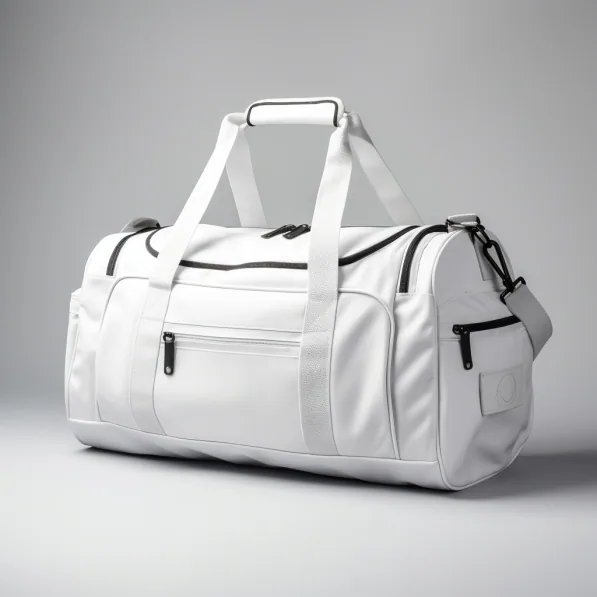
Three decisions carry a cricket bag: how the bat is carried, where the spikes go, and whether it rolls. Get those three right and the bag survives a season of county travel. Get any of them wrong and the bag is carried by handle until the handle fails.
Why Does the Bat Decide the Whole Bag?
Cricket is the only common club sport where the personal equipment is longer than the bag can be deep. A full-size bat is around 865 mm long and it is rigid, so the bag either has a sleeve that takes it or it does not — there is no compressing it into a corner. That single dimension sets the internal length, and it means a cricket bag is specified from the bat outwards rather than from the volume downwards.
The second consequence is that the sleeve is structural. A bat carried loose inside a main compartment will work its way into the seam at the base and split it within a season, and it will bruise everything it lies against. A sleeve is not a convenience feature on a cricket bag; it is the reason the bag exists in the form it takes.
| Bat size | Approximate length | Sleeve internal length | Typical player age |
|---|---|---|---|
| Size 6 | 810 mm | 830 mm | 11 to 13 |
| Size 5 | 840 mm | 860 mm | 13 to 15 |
| Size 4 | 855 mm | 875 mm | 15 to 17 |
| Full size (SH) | 865 mm | 885 mm | Adult |
| Long handle | 890 mm | 910 mm | Adult, tall |
External Sleeve or Internal Divider — Which Carries a Bat Better?
An external sleeve keeps the bat out of the main compartment entirely. The bat is protected from the rest of the kit and the rest of the kit is protected from the bat, the bag can be opened without the bat falling out, and the sleeve can be shaped so the handle end is supported rather than dangling. The cost is a slightly larger footprint and one more panel to seam.
An internal divider keeps the silhouette cleaner and lets one bag serve summer and winter, but it means the bat shares space with pads and gloves. In practice an internal divider works for a junior bag where the bat is short, and an external sleeve is the better call for anything adult. Where a club runs mixed ages on one silhouette, specify the sleeve to the longest bat and accept that a junior bat will rattle slightly in it.
Where Do Spikes and Shoes Actually Go?
Cricket footwear is the dirtiest item in the bag and the one that does the most damage. Spikes carry abrasive dirt, they are damp after a match, and metal spikes will abrade through a light lining in a season. The pocket has to be separate, it has to be lined with something that can be wiped, and it has to be positioned so that a full shoe compartment does not sit against the whites.
| Storage option | Whites protected | Dries in transit | Durability | Club verdict |
|---|---|---|---|---|
| Open shoe pocket, lined | Partly | Yes | Good | Standard on most club bags |
| Sealed wet compartment | Yes | No | Good | Best for damp climates |
| External shoe pocket with drain | Yes | Yes | Good | Best where rain is frequent |
| Shoes loose in the main compartment | No | Yes | Poor | Avoid |
| Separate shoe bag supplied loose | Yes | Yes | Good | Works, but gets separated |
Do Wheels Make Sense on a Club Cricket Bag?
A loaded cricket bag is heavy in a way that surprises people who have not carried one. Pads, gloves, helmet, bat, shoes and a change of clothes routinely pass 9 kg, and a junior carrying 9 kg across a car park is a shoulder problem waiting to happen. Wheels convert a carry into a pull, which is why they appear on almost every adult club bag.
The catch is that wheels are a system, not an accessory. A wheel needs an axle that will not bend, a housing that will not crack on a kerb, a base board stiff enough to stop the bag sagging into the wheel, and corner protection where the bag is set down. Specifying wheels without the base board is the single most common way a wheeled cricket bag fails within a season.
Inline Skate Wheels, Twin Wheels or a Dolly Base?
Three options cover the market. Inline or skate-style wheels are quiet, they handle a smooth surface well and they are the usual choice for a bag that goes from car to pavilion. Twin wheels at one end give more stability on grass and gravel and are better for a bag that crosses a field. A dolly or trolley base — a rigid board with two wheels and a folding handle — is the heaviest and the most durable, and it suits a club bag that lives in a store and moves on a path.
| Wheel option | Best surface | Noise | Replacement available | Typical failure |
|---|---|---|---|---|
| Inline skate wheels | Pavement, hard standing | Low | Yes, common size | Axle bend after a kerb strike |
| Twin wheels, one end | Gravel, short grass | Moderate | Yes | Housing crack at the mounting |
| Dolly or trolley base | Paths, longer distances | Moderate | Part-specific | Handle joint loosens |
| No wheels, padded handle | Short distances only | n/a | n/a | Handle seam opens under load |
What Does a Club Need to State About the Wheel in the Tech Pack?
The tech pack has to name the wheel as a specification rather than as a request. Four fields: wheel diameter and material, axle diameter and material, the base board thickness and material, and the attachment method for the housing. Without all four, the wheel is whoever's stock fits the housing, and the base board will be whatever the pattern cutter had to hand.
- Wheel diameter and durometer, stated as a range rather than as a brand.
- Axle diameter and material — a solid axle, not a hollow one.
- Base board: thickness, material and how it is fixed to the shell.
- Corner protection where the bag is set down on its end.
- A drop or transit test on a loaded bag, evidenced to a stated procedure.
- Spare wheel and axle availability, asked for at quotation rather than at failure.
How Big Is the Main Compartment Once the Bat Is Outside?
With the bat in an external sleeve, the main compartment has to take pads, gloves, a helmet, an abdominal guard, a change of clothes and a drink. Pads are the bulky item and they are awkwardly shaped, so the compartment is better designed wide and shallow than deep and narrow — a deep compartment buries the gloves under the pads and the player empties the bag to find them.
The helmet is the fragile item and it is the one clubs forget to allow for. A helmet with a grille is roughly 250 mm in every direction and it does not compress. Where a bag has no dedicated helmet space, the helmet goes in last and gets crushed first. A shaped top pocket or a rigid end panel costs very little and removes the most common damage complaint in cricket kit.
What Fabrics and Seams Suit a Bag That Lives in a Boot?
Cricket kit is carried in a car boot, stood on gravel, and dragged across a boundary. The base takes the abrasion, the corners take the impact, and the strap roots take the load. Those three places are where the specification should spend its money; the side panels are carrying almost nothing and do not need the heaviest cloth in the book.
| Zone | What it takes | What to specify | Evidence to request |
|---|---|---|---|
| Base | Abrasion on gravel | A heavier denier or a coated base panel | ISO 12947 abrasion result |
| Corners | Impact when set down | Bound or reinforced corner | Transit evidence on a loaded bag |
| Strap roots | Full bag weight, repeatedly | Bar-tack and a reinforcement patch | ASTM D6193 stitch type named |
| Bat sleeve | Abrasion from the bat edge | Lined sleeve with a bound mouth | Seam strength to ISO 13934-1 |
| Side panels | Almost nothing | The standard shell is sufficient | Nothing beyond the shell specification |
How Does Colour Work on a Bag That Sits Beside Whites?
Cricket clubs have an unusually hard colour problem, because the bag sits beside whites and the trim sits beside the bag. A club colour that reads correctly against a coloured shirt can read harshly against white, and a bag that is mostly white shows every mark from a boundary rope. Most clubs settle on a dark shell with the club colour carried in the trim and the crest, which also keeps the dye-lot exposure on the small items.
The colour approval is the same discipline as any club programme — one reference, a coupon per substrate, approval under one light — and it matters more here because the crest is usually embroidered in two or three thread colours onto a dark shell. Thread is the substrate that drifts most, so it is the one to insist on a physical coupon for. The method is set out in Reorder colour consistency.
What Should a Club Check on the Sample Before Approving?
Cricket bags get approved on looks and returned on function, so the sample check should be functional. Load it with the actual kit — the longest bat in the squad, a full set of pads, a helmet with its grille, spikes and a change of clothes — and then carry it and pull it. A bag that cannot be closed with that load in it is the wrong size, however good it looks empty.
Sample checks that catch a cricket bag failure before bulk
- The longest bat in the squad goes in and out of the sleeve without force.
- The bag closes with a full kit list inside, not with an empty bag.
- Spikes go into the shoe pocket without touching the whites compartment.
- The helmet fits without compressing the grille.
- The loaded bag is pulled across gravel for twenty metres and the axle stays true.
How Does a Club Plan the Order Around a Cricket Season?
Cricket programmes have two ordering pressures that other sports do not: the season starts indoor and moves outdoor, and a club often wants nets kit before match kit. That argues for a single silhouette ordered once and used for both, rather than two products. Sampling runs 6-10 working days from a signed-off tech pack, extending to 12-15 working days where a wheel system or a new club colour is being specified.
Bulk runs 35-50 days from written sample approval, inspected at AQL 2.5 under ISO 2859-1 and shipped FOB Xiamen on T/T 30/70. For a northern-hemisphere summer season the enquiry has to be raised early enough to clear the spring production peak and any public-holiday shutdown, which is why the order date is worked backwards from the first fixture rather than forwards from the decision. The calendar is set out in Why 35 to 50 days.
What Does All of This Cost to Specify Properly?
The bat sleeve, the shoe pocket and the wheel system are the three items that add cost, and they are also the three items that stop the bag coming back. What does not add meaningful cost is the specification discipline: naming the axle, naming the base board, naming the stitch type and asking for the abrasion result. Those are clauses on a tech pack, and they are what separate a bag that lasts three seasons from one that lasts one.
What Goes Into the Enquiry for a Cricket Bag?
A cricket enquiry that arrives complete gets quoted quickly because the sleeve, the shoe pocket and the wheel are the only open questions. Everything else is standard. Six fields cover it, and a club that supplies them will get a costed programme rather than a round of questions back.
- The longest bat length in the squad, measured rather than assumed.
- Sleeve preference: external or internal divider.
- Shoe and spike storage: lined pocket, sealed compartment or external with drainage.
- Wheel option and the surface the bag will actually cross.
- Colour references for shell, trim, binding, webbing and embroidery thread.
- Quantity split by size or age group, and the date the kit has to be in the pavilion.
How Does a Cricket Bag Cope With Rain and a Wet Outfield?
Cricket is played in conditions that defeat most bag designs. A bag set down on a wet outfield wicks water through the base seam within an hour, and a bag left closed with damp pads inside it for three days develops a smell that no amount of airing removes. Two specification answers cover most of it: a coated base panel with the seams sealed rather than merely sewn, and a wet compartment that drains rather than one that only contains.
Drainage is the more useful of the two because it works while the bag is closed and in transit. A grommet at the lowest point of the wet compartment, above a reinforced patch, lets water out without letting grit in, and it costs almost nothing to add at the pattern stage. It cannot be added afterwards. Clubs that play on a ground with no pavilion cover should treat drainage as a requirement rather than an option.
What Should the Strap and Handle Specification Say?
The strap carries a loaded bag, and on a wheeled bag it carries it only for the distance between the boot and the ground — which is exactly the distance where a strap fails, because the load is dead weight rather than a swinging weight. The specification should name the webbing width and material, the padding, the adjustment hardware and the stitch type at the root, and it should ask for the attachment to be tested as an assembly rather than as a component.
Handles are the second failure point and they are usually the least specified. A pair of handles joined by a wrap needs the wrap to be captive rather than floating, and the handles themselves need to be continuous under the bag rather than stitched to it at two points. That single detail — continuity under the load — is the difference between a handle that holds a loaded bag and one that peels away from the shell.
Send the bat length and get a costed programme
Tell us the longest bat in the squad, the shoe arrangement and the wheel preference, and we come back with a specified bag and a delivery date you can calculate.
Frequently Asked Questions
How long should a bat sleeve be?
The longest bat in the squad plus margin. A full-size bat at 865 mm wants around 885 mm of sleeve internal length.
Should the bat sleeve be external or internal?
External for adult bags, where the bat must be separated from pads and gloves. An internal divider is acceptable on a junior bag.
Do club cricket bags need wheels?
Almost always. A loaded bag passes 9 kg, and wheels turn a carry into a pull.
What fails first on a wheeled cricket bag?
The axle or the housing, usually because the base board was never specified and the bag sags into the wheel.
Where should spikes go?
A separate lined pocket, positioned so it does not sit against the whites. Sealed or drained depending on how often the club plays in the wet.
Does the helmet need its own space?
Yes. A helmet with a grille is roughly 250 mm in each direction and does not compress.
What is the minimum order?
MOQ 500 pcs per style and colourway. On a repeat, 300 pcs is open to discussion.
How long does sampling take?
6-10 working days from a signed-off tech pack, extending to 12-15 working days where a wheel system or a new club colour is involved.
How long is bulk production?
35-50 days from written sample approval, inspected at AQL 2.5 under ISO 2859-1.
Which standards apply to a cricket bag?
ASTM D6193 for stitches and seams, ISO 13934-1 for tensile strength and ISO 12947 for abrasion on the base panel.
Should the bag be white to match the whites?
Rarely. A dark shell with the club colour in the trim shows less marking and keeps the dye-lot exposure on the small items.
Can one silhouette serve juniors and adults?
Yes if the sleeve is specified to the longest bat, though a junior bat will rattle in it.
People Also Ask
How do you size a cricket kit bag?
From the bat outwards: sleeve to the longest bat, then pads, helmet and shoes.
Should a cricket bag have wheels?
Yes for any adult bag. Specify wheel, axle, housing and base board together.
What is a bat sleeve?
A shaped pocket that carries the bat outside the main compartment, protecting both.
Why do cricket bags fail?
At the wheel axle, the base panel and the strap roots — all three are specification points.
How far ahead should a cricket club order?
Backwards from the first fixture: sampling 6-10 working days, then bulk 35-50 days.
Sources and further reading
Every figure on this page is either our own programme data or attributed below. Open the originals before you write them into a specification.
- Marylebone Cricket Club — Laws of Cricket and equipment guidanceMarylebone Cricket Club
- ASTM D6193 — Standard Practice for Stitches and SeamsASTM International
- YKK fastening products — size charts and specification dataYKK Corporation