Is 3 mm or 5 mm Right for a Neoprene Equipment Case?
Three millimetres suits a protective insert living inside another bag; five suits a case that travels on its own and meets the ground. In most cases a hybrid — 3 mm walls with 5 mm base and lid inserts — outperforms either uniform build at lower weight.
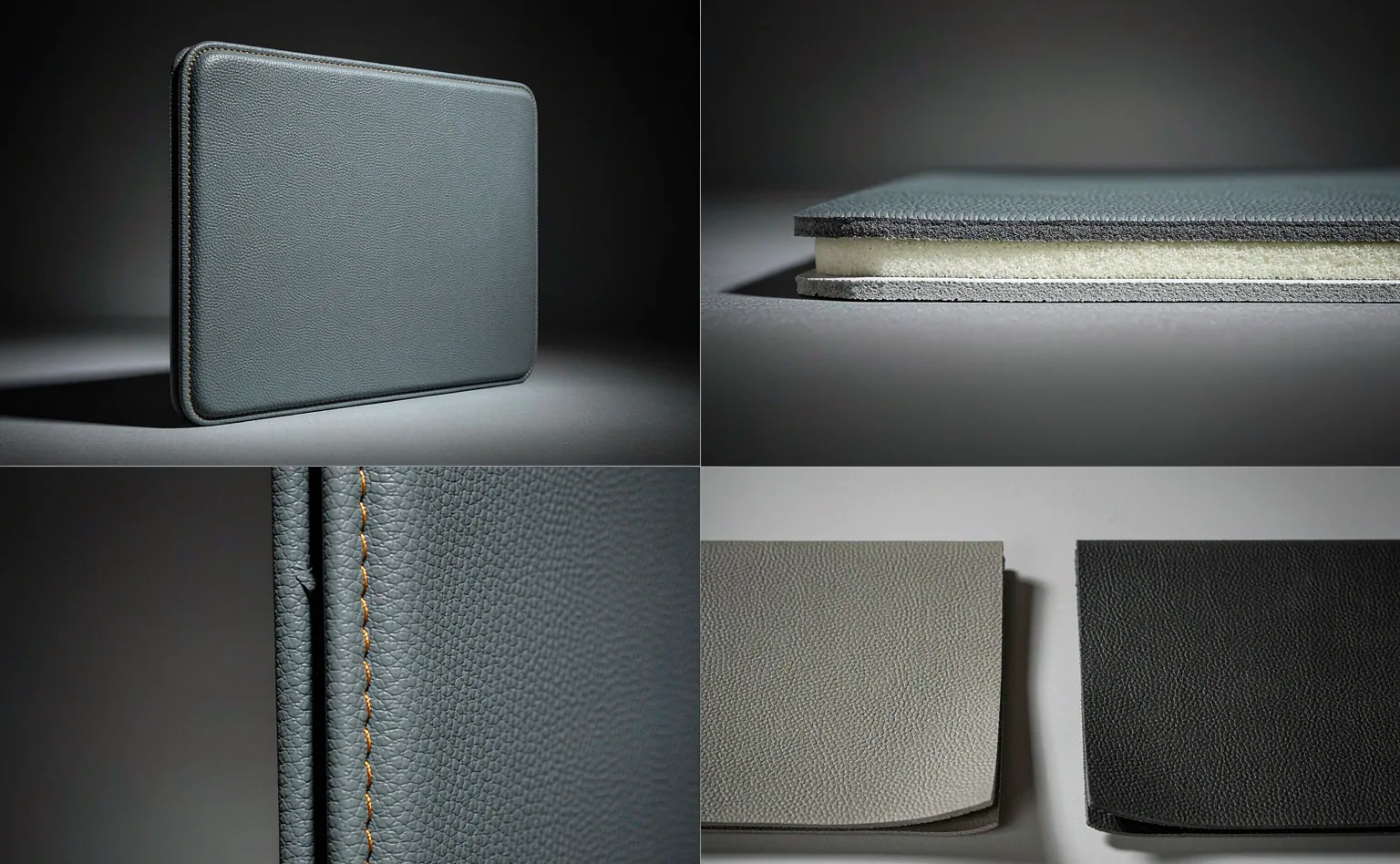
Three millimetres suits an equipment insert that protects against scuffs and light knocks inside another bag, or a small lens pouch carried on a strap. Five millimetres suits a case that travels on its own and takes being set down, knocked and stacked. Where weight and cube matter, a hybrid — 3 mm walls with a 5 mm base and lid insert — usually outperforms either uniform build.
Equipment protection is the one place in this cluster where gauge genuinely earns its cost, because the failure being designed against is a discrete event rather than steady wear. It is also the place where gauge is most often bought in the wrong shape: uniform walls when the impact lands on the base and the corners. This page sets out what each thickness actually delivers for a camera or instrument case, how the divider system interacts with it, and where a buyer should spend the extra millimetre. the camera and equipment protective hub
What Is an Equipment Case Actually Protecting Against?
Three different events, and each wants a different build. The knock: a short impact against a hard surface, against which thickness and density both help. The crush: a sustained load in a bag, an overhead bin or a stack, against which thickness helps less than density and eventually less than a semi-rigid insert. And the scrape: everyday abrasion against other equipment, which is a face fabric and corner question rather than a gauge question at all.
Most cases are bought for the first and used for the second. A photographer buys for a drop and then puts the case in a bag full of other equipment, where it spends its life under compression rather than in free fall. A specification that only answers the first event will pass a drop test and disappoint in a bag, which is why the crush case has to be written into the same clause.
| Event | What it does to the case | Wants | Best lever |
|---|---|---|---|
| Knock, short impact | Rapid compression of the panel | Thickness plus matched density | Gauge at the impact zone |
| Crush, sustained load | Slow creep and permanent set | Density and stiffness over time | Semi-rigid insert in the panel |
| Scrape and abrasion | Surface wear on the face fabric | Abrasion and corner coverage | Face fabric and corner geometry |
| Set-down shock | Repeated impact at the base corners | Material where the base meets the ground | Local thicker insert at the base |
| Internal equipment movement | Contents knocking together | Restraint rather than absorption | Divider system and fit tolerance |
| Point load from a lens | Local stress high enough to bottom the panel | Distribution before absorption | A load-spreading layer inside the panel |
When Is 3 mm the Right Answer?
When the case is an insert rather than a case in its own right. A pouch that lives inside a larger bag and protects against neighbouring equipment — lens against body, body against strap hardware — is doing low-energy work, and 3 mm is plenty for it. It also cuts and folds better, sews more cleanly at a small radius, and produces a lighter article that packs smaller, all of which matter more for something that lives in another bag.
Three millimetres is also right where the article has to be compact and the equipment is light. A small compact camera or a single lens does not carry enough kinetic energy in a realistic fall to trouble a 3 mm panel with sensible corner geometry, and buying two more millimetres makes the case visibly bulkier without making it meaningfully safer.
When Does 5 mm Earn Its Place?
When the case travels on its own. A case carried by a strap over a shoulder, or stowed rather than nested, meets the ground, meets door frames, gets set down hard on gravel, and sometimes ends up under something heavier. In those situations there is no second layer of protection around it and the panel is doing all the work, so the extra stroke genuinely buys protection rather than merely bulk.
It also earns its place for heavy contents. A full-frame body with a large lens is a dense, awkward mass, and the energy in even a short fall of that combination is enough to bottom out a thin panel. Where the equipment is heavy and expensive, the honest answer is usually 5 mm at the base and lid with 3 or 4 mm walls, because that is where an impact is going to land.
How Do Dividers Interact With the Panel Gauge?
Directly, because the divider does as much protective work as the wall and it does it differently. A divider stops equipment from striking equipment, which is arguably the most common damage mechanism inside a case; no amount of wall thickness prevents a lens from hitting a body across the cavity. A well-fitted divider system therefore buys more protection than two millimetres of wall, and it usually costs less.
The interaction to watch is dimensional. Every divider consumes internal volume, so a case built thicker externally to protect better ends up with less usable space inside unless the pattern grows with it. Set the internal gaps first from the equipment dimensions, then decide what the walls can be, rather than choosing a gauge and discovering that nothing fits.
There is a second interaction that only appears once the case is in use. A divider transmits load between neighbouring items, so a divider that is too soft lets two pieces of equipment load each other, and one that is too stiff becomes the load path itself and starts tearing at its own attachment. Aim somewhere in between: enough stiffness to restrain, enough compliance to share a knock, and attached over enough area that the load spreads rather than concentrating at a stitch line.
Coverage is the third variable and the one most often left to chance. A divider that stops short of the lid leaves a gap through which equipment can migrate during a knock, which is how a lens ends up against a body despite a divider being present. Specify dividers to the full internal height, or accept the gap deliberately and restrain the contents some other way.
How Much Does Fit Tolerance Matter Inside a Case?
Enormously, and it is usually given away to make one article cover several models. A case that fits closely restrains its contents so nothing accelerates before impact, and it lets the whole panel load at once. A case sized generously lets equipment move, and movement converts a distributed impact into a point load at whatever the equipment happens to strike.
The compromise most programmes accept — one case covering a family of bodies or lenses — should therefore be made deliberately and with compensation: a divider that can be repositioned, or a padded shim that takes up the difference. Sizing for the largest item in the range without those compensations is how protective cases fail despite adequate gauge.
Where an article genuinely has to cover equipment that differs a great deal in size, the more honest answer is usually two sizes rather than a compromise that protects neither well. That doubles the tooling but halves the returns, and it also solves the second problem with a wide-size tolerance, which is that the customer cannot tell whether the case fits until it arrives. Sizing is a returns decision before it is an engineering one.
- Equipment list
- Every item to be carried, with masses rather than model ranges
- Duty
- Insert, carried case or stowed case, stated rather than assumed
- Wall gauge
- By position: front, back, base, lid, side
- Insert strategy
- Where thicker material is placed and why
- Density
- Matched to the equipment mass, stated with a tolerance
- Divider system
- Number, thickness, coverage and repositioning
- Internal gap
- Set from the largest item, with the divider strategy compensating
- Corner treatment
- Radius, seam placement, whether a corner pad is used
- Crush capability
- Whether a semi-rigid insert is specified, and where
- Drop protocol
- Height, surface, units, count and what counts as damage
What Does the Lid or Flap Do That the Walls Do Not?
It protects the one surface that faces the world: the top of the equipment. In a fall from a strap, the odds favour the case landing lid-down or on a base corner, and whatever sits over the top of the equipment is doing the same job as the base. Yet lids are routinely specified as a single thickness because a thick lid makes the case harder to open and looks heavier in photography.
The answer is the same everywhere in this cluster: put the extra material in the lid rather than the walls, or in the lid and the base together. A 3 mm case with a 5 mm lid insert and a 5 mm base protects better than a uniform 4 mm build, weighs less, and opens more easily because the flexible part of the closure stays flexible.
How Do You Test the Case Without Damaging Customer Equipment?
With a dummy load built to the same mass and centre of gravity as the real thing, which every serious programme should own and few do. A wooden or 3D-printed block weighted to match, with the same protrusions, will tell you more about the case than any number of careful product tests. Build it once and keep it with the reference sample.
Then run three events rather than one: a free-fall drop from the agreed height onto a stated surface, a set-down test repeated from hand height with the case loaded, and a crush test under a stated load for a stated duration. The third catches the damage mechanism that reaches customers most often and that a drop test never touches.
A fourth event is worth adding wherever the case has a strap, because the strap is how the case is usually picked up and therefore how it is usually dropped. Load the dummy, lift by the strap, and release from carrying height onto a stated surface several times, alternating which corner leads. It is crude, it takes ten minutes, and it finds weak strap anchorage faster than any other check available at sampling.
Choosing between 3 mm and 5 mm for equipment
- Three millimetres suits an insert inside another bag; five millimetres suits a case that travels alone.
- Put extra material at the base and lid rather than uniformly in the walls.
- A well-fitted divider prevents more damage than two millimetres of wall, and costs less.
- Size from the equipment and then choose walls, not the other way round.
- Test with a dummy load and include a crush test, because that is the failure that reaches customers.
What Does the Extra Millimetre Cost in Weight and Cube?
Roughly two-thirds more polymer per unit area going from 3 mm to 5 mm, which on a small case is a modest absolute cost and a very visible absolute weight — the case itself can gain a third of its mass. For an article carried on a strap all day, and for a programme shipping thousands of units, both numbers matter more than the unit price difference does.
Cube matters more here than in most of the cluster, because equipment cases are bulky relative to their contents and are usually shipped assembled rather than flat. Ask for units per carton at both builds before deciding. the landed cost calculator turns that comparison into freight rather than into a guess.
| Position | 3 mm uniform | 5 mm uniform | Hybrid recommended |
|---|---|---|---|
| Front and back walls | 3 mm | 5 mm | 3 mm, or 4 mm on a heavy build |
| Base | 3 mm | 5 mm | 5 mm with a load-spreading layer |
| Lid | 3 mm | 5 mm | 5 mm insert, flexible at the closure |
| Corners | Right angle at the seam | Better, still the weak point | Radiused with the seam displaced |
| Divider system | Same in all three | Same in all three | The most protective spend available |
| Empty weight index | 100 | About 165 | Around 120 |
| Carton cube index | 100 | About 150 | Around 115 |
| Best duty | Insert inside a bag | Carried and stowed case | Most programmes |
Where Do the Programme Numbers Sit for Equipment Builds?
Unchanged: MOQ 500 pcs per style and colourway, sampling 6-10 working days from a signed-off tech pack, bulk production 35-50 days from sample approval, inspection at AQL 2.5 under ISO 2859-1 General Inspection Level II, T/T 30/70, quoted FOB Xiamen. Equipment builds do tend toward the longer end of the sampling window, because a divider system and a dummy-load protocol add work that sits inside it.
They also tend to carry more sourced components than most articles in the cluster: adjusters, buckles, sometimes moulded hardware. Each is a component with its own lead time, and the longest of them sets when a valid sample can exist. Listing them early and asking which are stock items is the most economical way to keep the sampling window where it was quoted.
One last point belongs here because it decides whether any of the above survives the second order. Equipment cases are the most likely article in the cluster to be reordered after a tooling change or a supplier substitution, and panel behaviour is precisely what such a change alters. Hold the reference case, record the drop protocol, and require notice before anything about the panel changes.
Bring the equipment list and the duty
Send what has to be carried, how it travels and the quantity. You get a build recommendation with a drop and crush protocol behind it, within one business day.

Frequently Asked Questions
Is 3 mm neoprene enough for a camera case?
For an insert carried inside another bag, or for light equipment protected against scuffs and light knocks, yes. For a case travelling on its own, specify 5 mm at the base and lid.
Is 5 mm neoprene protective enough for camera equipment?
For falls from carrying height onto a flat surface, yes with sensible corner geometry. For heavy.full-frame combinations, add a load-spreading layer rather than more gauge.
Should the case be 3 mm or 5 mm uniformly?
Neither, usually. A hybrid with 3 mm walls and 5 mm base and lid inserts outperforms both and weighs less than a uniform 5 mm build.
What protects more, thicker walls or dividers?
Dividers. They stop equipment striking equipment, which is the most common damage mechanism inside a case, and no amount of wall thickness prevents it.
How should fit inside a case be specified?
Set internal gaps from the largest item, then compensate with a repositionable divider or a padded shim so the contents stay restrained.
How do I test a protective case safely?
Build a dummy load matched to the equipment in mass and centre of gravity, then run drop, set-down and crush events rather than a single drop test.
What does the crush test simulate?
The case living under other equipment in a bag or a stack, which is the damage mechanism that reaches most customers and that a drop test never touches.
Does the lid need to be thicker?
Yes. A case landing from a strap favours the lid or a base corner, so the panel over the equipment does as much work as the base.
How much weight does 5 mm add?
Roughly two-thirds more polymer per unit area, which can be about a third more empty weight on a small case, plus carton cube.
What is the MOQ for a protective equipment case?
MOQ 500 pcs per style and colourway, with repeat programmes open to discussion at 300 pcs.
Do equipment builds take longer to sample?
They tend toward the longer end of the 6-10 working day window, because a divider system and a dummy-load protocol add work inside it.
Why might sampling move to 12-15 working days?
Sourced components. Adjusters, buckles or moulded hardware each carry their own lead time, and the longest sets when a valid sample exists.
Should the base have a spreading layer?
Where the equipment is dense and focused, yes. A thin semi-rigid layer inside the base panel prevents local bottoming better than extra foam.
How do I keep the second order behaving like the first?
Hold the reference case, record the drop protocol, and require written notice before any panel material or divider change.
People Also Ask
How thick should a neoprene camera case be?
Three millimetres for an insert, five at the base and lid for a case that travels alone, or a hybrid of both.
Is 3 mm or 5 mm better for equipment protection?
Five millimetres absorbs more, but putting it at the base and lid beats using it uniformly in the walls.
Do camera cases need dividers?
Yes. Dividers stop equipment striking equipment, which is the most common damage mechanism inside any case.
How do I protect heavy camera equipment?
Match density to the mass, add a load-spreading layer at the base, and keep internal gaps tight.
Can I case-test without risking the equipment?
Yes, with a dummy load matched in mass and centre of gravity, kept alongside the reference sample.
Sources and further reading
Every figure on this page is either our own programme data or attributed below. Open the originals before you write them into a specification.
- ASTM D5276 — Drop Test of Loaded Containers by Free FallASTM International
- ASTM D1056 — Flexible Cellular Materials, Sponge or Expanded RubberASTM International
- ISO 2859-1:1999 Sampling procedures for inspection by attributesInternational Organization for Standardization