Custom Tennis Team Bags: Racket Sleeves and Court Essentials
A tennis racket is about 685 mm long, rigid and has a head that must not be crushed. That single object sets the internal length of the bag, and the sleeve that holds it decides whether the racket arrives in one piece.
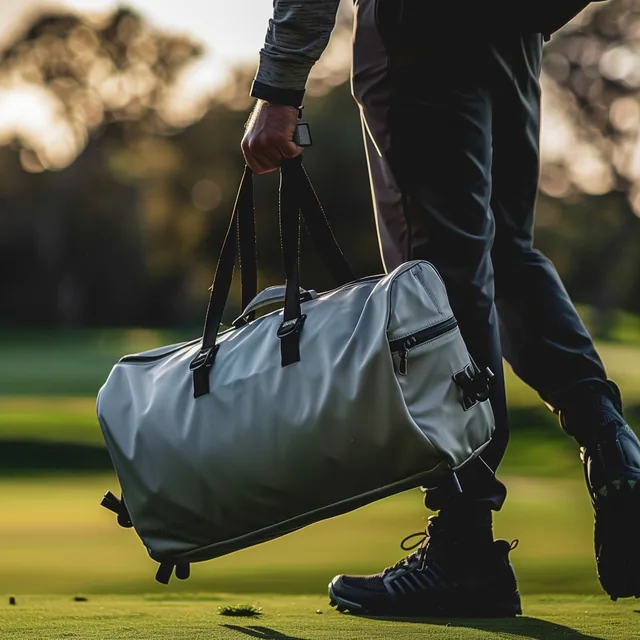
Dimension the racket compartment first, then add organisation for balls, grips, a towel and a bottle. A tennis bag has no damp kit to separate, which means the volume can go into pockets instead of into a wet zone.
What Sets the Size of a Tennis Team Bag?
The racket. A standard adult racket is around 685 mm long with a head roughly 315 mm wide, and it is rigid in both dimensions. Two rackets carried side by side need an internal width of around 360 mm, and a club bag carrying three needs more again.
The second dimension that matters is the head. A racket head is the fragile part and it is the widest part, so a compartment that fits the handle but crowds the head will bend the frame at the throat. Dimension to the head, not to the handle.
| Racket type | Length | Head width | Compartment internal |
|---|---|---|---|
| Junior, 25 inch | 635 mm | 280 mm | 660 x 300 mm |
| Junior, 26 inch | 660 mm | 290 mm | 685 x 310 mm |
| Adult, standard | 685 mm | 315 mm | 710 x 335 mm |
| Adult, oversize | 690 mm | 330 mm | 715 x 350 mm |
| Adult, two rackets | 685 mm | 315 mm each | 710 x 360 x 80 mm |
Should the Racket Compartment Be Separate From the Main Volume?
Yes, for two reasons. A racket lying loose in a main volume has its head against the contents, and a bag that is set down hard puts the whole load onto the frame. A separate compartment with a padded or stiffened base isolates it from both.
The second reason is access. A player needs a racket out at the start of a session and away at the end, and reaching into a main volume for it means unpacking. A compartment with its own opening is the difference between ten seconds and two minutes.
How Many Rackets Should a Club Bag Carry?
Two for a player bag, three or more for a coaching bag. A club player carries two for the obvious reason that strings break; a coach carries several for a drill. Both should be specified rather than assumed, because the compartment width follows directly.
- Player bag: two rackets, individual sleeves or a divided compartment.
- Coaching bag: three or more, with the heads offset so they do not sit on each other.
- A divided compartment rather than a shared one, so frames do not rub.
- A stiffened base under the compartment, so the head takes no load.
- A bound mouth, because it is the edge a racket goes in and out of.
Where Do Balls, Grips and a Towel Go?
Balls in a dedicated compartment or an external mesh pocket, because they are hard and they mark. Grips and overgrips in a small pocket, because they are small and disappear. A towel in an external strap or a small pocket, because on a tennis bag it is a hand towel rather than a bath one.
| Item | Property | Where it goes | Why |
|---|---|---|---|
| Balls | Hard, marking | A dedicated compartment or external mesh | They mark a racket face |
| Grips and overgrips | Small, loseable | A small zipped pocket | They disappear otherwise |
| Towel | Small, sometimes damp | An external strap or a small pocket | Smaller than a gym towel |
| Bottle | Wet on the outside | An external sleeve or a lined pocket | Leaks eventually |
| Phone and keys | Dry | A lined valuables pocket | Findable |
| Cap and sunscreen | Small | Any remaining pocket | Secondary |
Does a Tennis Bag Need a Wet Compartment?
No, and this is where tennis bags get over-specified. Tennis kit is dry — a shirt, shorts, socks and a towel, none of which arrives wet in the way a football shirt or a hockey guard does. A wet compartment on a tennis bag is volume spent on a condition that does not occur.
What a tennis bag does need is a base that survives a court surface, and a bottle arrangement that does not leak into the kit. Both are more economical in volume terms than a wet zone and both address conditions that actually happen.
How Does Heat Affect the Specification?
Strings and grips dislike heat. A bag left in direct sun on a court for two hours gets hot enough to affect string tension over a season, and a grip left in a hot bag degrades faster than one kept in a cool one.
The practical answer is a compartment position rather than a material: keep the racket compartment away from the face that sits in the sun, and think about where the bag stands between matches. A club that plays in a hot climate should say so on the enquiry.
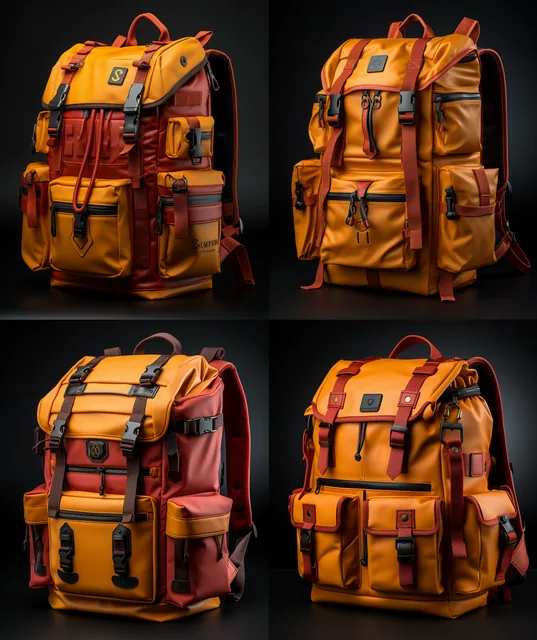
How Does Colour Work on a Tennis Programme?
Tennis clubs run a wide range of colours and often a bright one, and the bag usually sits beside a shirt and a cap in the same colour. That makes the reference and the coupon set matter more than they do on a darker club bag, because a bright colour drifts more visibly.
The approval is the standard discipline — one reference, a coupon per substrate, approval under one light — and outdoors as well, because tennis is played outdoors and a printed shirt beside a dyed bag will separate in daylight. The method is set out in Reorder colour consistency.
| Substrate | Drift risk | Exposure | What to insist on |
|---|---|---|---|
| Shell fabric | Moderate | Sunlight on court | AATCC 16 at a stated exposure |
| Racket compartment lining | Low | Abrasion from the frame | ISO 12947 result |
| Embroidery thread | High | Sunlight | A coupon matched to the reference |
| Webbing and binding | Moderate | Sunlight | A coupon in the same session |
| Zipper tape | Moderate | Low | Stated as a requirement |
What Should the Tech Pack Say?
Six fields, and a tennis bag is specified. The compartment internal width is the one clubs leave out, and it is the one that decides whether two rackets fit.
Tech pack fields for a tennis team bag
- Racket compartment: internal length and width to the head, divided, with a stiffened base.
- Racket count: how many, and whether heads are offset.
- Ball storage: a dedicated compartment or an external mesh pocket, and how many balls.
- Bottle: an external sleeve or a lined pocket with a sealed base.
- Base: coated or heavier denier, with feet for a court surface.
- Colour references for shell, lining, binding, webbing, tape and thread.
How Is the Sample Judged?
With the rackets in it. Two rackets in the compartment, a can of balls, a towel, a bottle and a change of clothes — closed, carried and set down. Three questions decide it: do the rackets go in and out without force, does the bag close with them in it, and does it stand upright.
The colour check happens outdoors beside a shirt. A tennis bag approved indoors has been approved under the wrong light, and the club will notice on the first sunny Saturday.
How Does the Season Calendar Drive the Order?
Tennis runs across the summer in most markets, with an indoor season alongside it, which puts the production window in the spring — the busiest window in the calendar. A club that wants kit for the start of the outdoor season has to raise the enquiry early.
Sampling runs 6-10 working days from a signed-off tech pack, extending to 12-15 working days where a new club colour is being matched. Bulk runs 35-50 days from written sample approval, inspected at AQL 2.5 under ISO 2859-1 and shipped FOB Xiamen on T/T 30/70. The calendar is set out in Why 35 to 50 days.
What Does the Inspection Criteria Need to Include?
Six checks: racket compartment internal dimensions, whether it is divided, whether the base under it is stiffened, ball compartment presence, colour against the approved coupon set, and crest position measured from a seam. Written into the major defect classification, they are enforceable at the Ac/Re decision.
The stiffened-base check is the one that predicts a return, because a racket head resting on a soft base takes the whole load when the bag is set down, and the damage shows up months later rather than at inspection. The arithmetic is set out in AQL 1.5 versus 2.5.
What Does a Tennis Programme Cost to Run?
The four usual levers, with one tennis-specific point: the racket compartment is a structural feature rather than a pocket, and a divided compartment with a stiffened base costs more to make than a simple sleeve. It is worth the spend, and it should be specified rather than assumed.
The saving available is the reorder. Holding the reference, the coupon set, the dye-lot record and the shade band makes the next season a comparison, and it is what makes 300 pcs available on a repeat against the standard MOQ 500 pcs.
What Goes Into the Enquiry?
Six fields, and a tennis enquiry is complete. The racket count is the one clubs forget, and it sets the compartment width.
- How many rackets the bag has to carry, and the longest racket length in the squad.
- Whether the compartment is for a player or for a coach, because the counts differ.
- Ball storage: how many balls, and a compartment or an external pocket.
- Whether the club plays in a hot climate, which affects the compartment position.
- Colour references for shell, lining, binding, webbing, tape and thread.
- Quantity split and the date the kit is needed.
What Fails First on a Tennis Bag?
The compartment mouth, the base under the heads and the strap root. The mouth takes abrasion from a racket going in and out several times a session; the base under the heads takes the load; the strap root takes the whole bag.
All three are one clause each: a bound rather than turned mouth with a stitch type named to ASTM D6193, a stiffened base board under the racket compartment, and a reinforcement patch at the strap root.
How Does a Tennis Bag Handle Court Surfaces?
Tennis is played on surfaces that abrade: hard court, clay and artificial grass all leave a mark on a base panel, and clay in particular works into a coating. A coated base that can be wiped is the specification, plus feet that lift the bag off a damp surface.
The second point is where the bag is put down. A bag set down on clay picks up dust that then works into the lining every time it is opened, which is why an external ball pocket and a wipeable base matter more on a tennis bag than on most.
Should One Bag Serve Tennis and Squash?
Usually yes, and it is one of the easier consolidations in the cluster. A squash racket is shorter than a tennis one, so a compartment dimensioned to the tennis racket takes a squash racket with room to spare. The kit lists are otherwise almost identical.
The one difference worth noting is the ball. Squash balls are smaller and a compartment sized for tennis balls holds more of them than a squash player needs, which is a harmless surplus rather than a problem.
The second difference is the string. Squash strings break more often and a squash player is more likely to carry a spare racket for that reason, so the two-racket compartment is a firmer requirement in squash than in tennis.
How Is the Programme Kept Stable Across Seasons?
With the four artefacts: the reference, the coupon set, the dye-lot record and the shade band. Tennis clubs have an extra reason to keep them, because bright club colours are common in the sport and a bright colour drifts more visibly than a dark one does.
Where the artefacts exist the reorder is a comparison. Where they do not, the club re-develops, and the re-development lands in spring — the one window in which a tennis programme cannot afford to lose time.
The fifth artefact worth keeping for tennis is the racket count and length the compartment was cut to. Frames change across generations, and a compartment cut for one generation will not necessarily take the next.
How Does a Tennis Club Handle Stringing and Spares?
Club players carry spare grips, dampeners and often a reel of string, and a coach carries more of all of it. These are small, hard and easy to lose, and they are the reason a tennis bag benefits from several small pockets rather than one large one.
The specification answer is to list them. A pocket for grips, a pocket for dampeners and a sleeve for a reel is three lines on a tech pack, and it is the difference between a bag a player uses and a bag a player tips out.
How Does a Tennis Club Handle Junior Programmes?
Junior rackets are shorter, so a compartment dimensioned to an adult frame takes a junior one with a great deal of room to spare — which means one silhouette can serve a whole club, from the youngest group to the first team.
That is the most useful consolidation available in this sport, and it is worth stating plainly: a tennis club does not need a junior silhouette and an adult one. One bag, dimensioned to the longest racket, serves everybody, and the age group is carried by a tab or a print.
What Is the Shortest Useful Advice for a Tennis Club?
Dimension the compartment to the head and put a board under it. Those two clauses prevent almost every racket-damage complaint a club will ever receive.
The second piece of advice is to skip the wet compartment and spend the volume on organisation. Tennis kit is dry, and a bag with six useful pockets beats one with four pockets and a wet zone nobody uses.
And the third is to run one silhouette across the whole club. Junior rackets fit an adult compartment, so a tennis club needs one bag and a set of age-group tabs rather than two silhouettes and two minimums.
Send the racket count and the colourway
Tell us how many rackets, the ball arrangement and the date the kit is needed, and we come back with a specified bag and a delivery date you can calculate.
Frequently Asked Questions
How should a tennis racket compartment be dimensioned?
To the head rather than the handle, and to the longest racket in the squad — around 710 x 335 mm internally for an adult standard frame.
Should a tennis bag have a wet compartment?
No. Tennis kit is dry. A wet compartment is volume spent on a condition that does not occur; spend it on organisation instead.
How many rackets should a club bag carry?
Two for a player bag, three or more for a coaching bag. The count sets the compartment width directly.
Does heat affect the specification?
Yes. Strings and grips dislike heat, so the racket compartment should be positioned away from the face that sits in the sun.
Why does the base under the heads matter?
A racket head resting on a soft base takes the whole load when the bag is set down, and the damage shows up months later.
What is the minimum order?
MOQ 500 pcs per style and colourway, with 300 pcs open to discussion on a repeat.
How long does sampling take?
6-10 working days from a signed-off tech pack, extending to 12-15 working days where a new club colour is being matched.
How long is bulk production?
35-50 days from written sample approval, inspected at AQL 2.5 under ISO 2859-1.
Which standards apply?
ASTM D6193 for stitches and seams, ISO 12947 for abrasion on the lining and base, and AATCC 16 for light fastness.
How is the sample tested?
With the rackets in it — do they go in and out without force, does it close, does it stand upright.
What fails first on a tennis bag?
The compartment mouth, then the base under the heads, then the strap root.
Can one bag serve tennis and squash?
Yes. A compartment dimensioned to a tennis racket takes a squash racket with room to spare.
People Also Ask
How do you size a tennis team bag?
From the racket head outwards — around 710 x 335 mm internally for an adult frame.
Does a tennis bag need a wet compartment?
No. Tennis kit is dry — spend the volume on organisation.
How many rackets should a club bag carry?
Two for a player, three or more for a coach.
Why does the base under racket heads matter?
A head on a soft base takes the whole load when the bag is set down.
What fails first on a tennis bag?
The compartment mouth, the base under the heads and the strap root.
Sources and further reading
Every figure on this page is either our own programme data or attributed below. Open the originals before you write them into a specification.
- ITF — official tennis equipment and racket specificationsInternational Tennis Federation
- ASTM D6193 — Standard Practice for Stitches and SeamsASTM International
- AATCC 16 — Colorfastness to LightAmerican Association of Textile Chemists and Colorists