Custom Wine Cooler Bags: Insulated Bottle Carriers for Events
A bottle carrier is a cylinder problem: a 750 ml bottle is about 300 mm tall and 75 to 90 mm across, and the build has to work around a curved void with a heavy, brittle payload. Five to eight millimetres of foam, a rigid divider and a reinforced base.
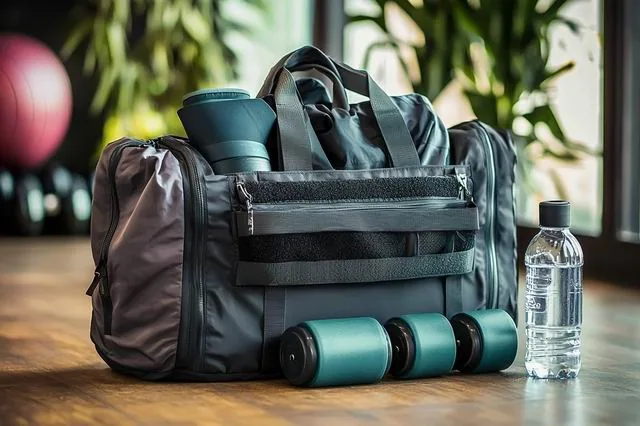
A wine cooler bag is a cylinder problem rather than a box problem: a standard 750 ml bottle is about 300 mm tall and 75 to 90 mm across, and the insulation has to work around a curved void with a heavy, fragile payload. The working build is 5-8 mm closed-cell foam with a divider, a welded liner that contains a broken bottle, and a base that carries 1.2 kg per bottle without puncturing.
Bottle carriers look simple and fail in specific ways. A bottle is heavy for its volume, it is glass, it sweats, and it is carried to an event where it is handed over as a gift. That combination drives a specification that has little in common with a beverage cooler: the payload is rigid and cylindrical, the consequence of breakage is a wet bag and a lost gift, and the presentation matters as much as the thermal result. This piece sets out how bottle geometry changes the build, what containment and base protection require, and how branding behaves on this format.
Why Is a Bottle Carrier a Different Engineering Problem?
Three reasons, all geometric. First, a cylinder in a rectangular bag leaves four corner voids that do nothing useful, so the insulation has to be shaped or the bag has to be round. Second, the payload is dense: a 750 ml bottle weighs about 1.2 kg, so a two-bottle bag carries 2.4 kg in a volume of about 3 litres, which is four times the density of a can load. Third, the payload is rigid and brittle, so it transmits shock straight to the base panel and to whatever it is set down on.
Those three together rule out the constructions that work for cans. A thin base panel that is fine under 6 kg of cans spread across a wide footprint is not fine under 2.4 kg concentrated on two circles. A liner that holds meltwater is not necessarily a liner that contains a broken bottle. And a soft unstructured bag lets two bottles knock together, which is the most common cause of breakage in transit.
What Insulation Thickness Suits a Bottle?
Five to eight millimetres of closed-cell foam, with the divider doing as much work as the wall. A bottle is usually carried for two to six hours rather than twelve, and it starts at cellar temperature, so the thermal duty is lighter than a full-day cooler; what matters more is that the insulation holds the bottles apart and stops them touching. A 6 mm divider between two bottles prevents the knock that breaks them and costs less than the extra wall thickness.
Where the duty is genuinely long — an outdoor event in summer, a full day of transport — the answer is the same as for any bag: a reflective facing, a foam-filled lid flap and a pre-chilled bottle. A bottle at 12 °C arriving at an event at 30 °C ambient in a 6 mm bag will warm through in two to three hours; the same bottle pre-chilled to 8 °C and carried with a small gel sleeve will hold much of the day.
| Format | Bottles | Internal dimensions, mm | Empty weight | Build notes |
|---|---|---|---|---|
| Single | 1 | 100 x 100 x 330 | 240 g | Structured base, a sleeve rather than a cavity |
| Double | 2 | 190 x 100 x 330 | 420 g | A rigid divider that stops the bottles touching |
| Twin with accessories | 2 plus glasses | 240 x 130 x 340 | 560 g | Separate compartment, padded |
| Triple | 3 | 270 x 100 x 340 | 610 g | Two dividers; the base carries 3.6 kg |
| Six-bottle carrier | 6 | 300 x 200 x 340 | 980 g | Handles specified for 7.2 kg loaded |
How Does the Base Have to Be Built?
To carry a point load without letting the bottle punch through the liner, and to survive being set down on a hard surface with 2.4 kg inside. Three constructions work: a moulded or semi-rigid base tray under the liner, a double thickness of foam with a stiffener board, or a suspended base in which the liner hangs inside the shell with a gap. The first is the most robust and the most expensive, the third is the lightest and the least protective. Where the bag is carried by hand at an event, the second is usually enough; where it goes into a vehicle or a hold, the first is worth the cost.
The acceptance test is simple and worth specifying: load the bag to its rated bottle count with filled bottles, drop it from a stated height onto a stated surface, and inspect for liner damage and for bottle breakage. A drop test on a bottle carrier is not a formality — it is the test that separates a bag that survives an event from one that produces a wet, stained return.
Does the Liner Have to Contain a Broken Bottle?
Where the bag is sold as a gift carrier or used for transport, yes, and that is a different requirement from holding meltwater. A welded film liner contains liquid; it does not resist a shard. The working answer is either a heavier film — 0.20 mm TPU rather than 0.15 mm PEVA — or a laminated liner with a scrim, plus a welded seam rather than a sewn one because a seam is the first place a sharp edge finds.
There is a second containment question that is easier to miss: the seam at the base corner. A broken bottle pools at the lowest point, which is exactly where the seam is weakest. Specify a welded corner with a radius rather than a mitred and taped one, and leak-test the finished base rather than a flat specimen.
How Does Condensation Change the Design?
A chilled bottle in a warm room sweats, and the water has to go somewhere. In a sealed film liner it pools at the base and stains the shell from inside; in a breathable liner it wets whatever the bag is standing on. Neither is acceptable for a gift format. The answers are a liner with a small drain path to a sealed sump, an absorbent pad in the base, or a material that manages vapour rather than merely blocking it.
The presentation consequence is the one buyers notice: a wet ring on a table at an event. Where the bag will be put down on a surface that matters, either manage the condensation or supply a coaster panel — a base panel faced in a material that does not show water and can be wiped. It is a small component and it removes the most common complaint about this format.
What Branding Methods Work on a Bottle Carrier?
Three, and the choice is driven by the panel. Heat transfer suits a flat panel and gives photographic detail; screen print suits a flat coated panel and gives a solid, durable mark; an embroidered or woven patch suits a curved or structured panel where a flat print would crease. On a small cylindrical format the available flat area is limited, so the panel position is a design decision rather than an afterthought.
Where the bag is an event gift, the branding is often the point of the product, so the print durability matters more than usual. Specify a light-fastness grade under AATCC 16 for a bag that will sit in a shop window, and a rub or wash fastness expectation for one that will be handled. Both are low-cost tests and both prevent the argument that follows a faded gift.
| Branding method | Where it works on this format | Durability | Cost and lead time |
|---|---|---|---|
| Heat transfer | A flat front panel, photographic detail | Good, if applied at the stated temperature and pressure | A film per colour; low setup |
| Screen print | A flat coated panel, solid marks | Very good on a coated fabric | A screen per colour; a setup step |
| Woven or embroidered patch | A curved or structured panel | Excellent | Higher unit cost; a sourced component |
| Debossed or moulded badge | A structured base or a rigid panel | Excellent | Tooling; moves the sampling window |
| Silicone print | A panel that needs grip as well as a mark | Excellent, with a raised hand | Higher unit cost; a cure step |
How Should the Handles Be Specified?
By the loaded weight and by how the bag is carried. A double-bottle bag carries 2.4 kg, a six-bottle carrier 7.2 kg, and the second number is a shoulder strap rather than a hand loop. Specify the strap width and the anchorage: 25 mm webbing box-stitched and bar-tacked into a reinforced panel that reaches the base, stitched to a stated class under ASTM D6193, with a pull test to a stated load on a production unit.
The failure this prevents is the one that ruins an event: a handle pulling out as the bag is lifted. Where the bag is a gift format the consequence is not only the bag but the bottles, and the bottles are the expensive part. A handle specification is the highest-value line on this drawing.
Specifying a bottle carrier
- Design around the cylinder: the corner voids and the point load decide the build.
- The divider prevents breakage and buys more than extra wall foam.
- Specify the base for the point load and drop-test it loaded.
- Manage condensation, or the bag leaves a ring on the table.
- Specify the handle for the loaded weight; the bottles are the expensive part.
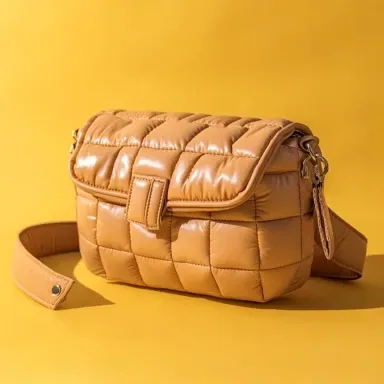
Two further design details decide whether the format works at an event. The first is the mouth: a bottle has to go in and out vertically, so a wide mouth is unavoidable and it is the largest loss path on this format. A foam-filled flap that folds over the top of the bottles, plus a closure that can be worked one-handed, is the answer. The second is the neck: a bottle carried with the neck against the closure risks pressure on the cap, so the internal height has to be specified with the tallest bottle the brand sells plus headroom.
Where the carrier is sold filled, there is a packing question that belongs in the specification: whether the bottle is loaded at ambient or chilled. A bottle loaded at ambient in a sealed liner sweats heavily as it cools and fills the base with condensation, which is the same problem as before and worse. Loading chilled and keeping cold, rather than loading warm and cooling down, is the better operational instruction.
A fourth design point is the closure height on a single format. A bag sized exactly to the bottle has no room for the neck or for a closure flap, and the result is a bag that is hard to close and that stresses the zipper every time it is used. Twenty to thirty millimetres of headroom above the tallest bottle is the working allowance, and it costs less in thermal terms than a closure that is permanently under strain.
What Compliance Documents Apply?
The liner is a food-contact article, so a declaration under EU 1935/2004 with EU 10/2011 migration data, or an FDA 21 CFR 177 citation in the United States. Where the bag is sold with a glass inside or marketed for a specific beverage, check whether the market has additional packaging requirements for that category; several do, and they attach to the pack rather than to the bag.
The print is a separate article and, where the bag is marketed to children or handled frequently, CPSIA with EN 71-3 applies to accessible components. A restricted-substance declaration against the REACH candidate list and a Proposition 65 position for California close the file. Ask for them at tech pack sign-off rather than at sample approval, because they come from suppliers and they have a queue.
A related question is whether the carrier is a single-use gift or a reusable product, because it changes every decision above. A single-use gift can be lighter, with a simpler base and a printed panel rather than an embroidered one; a reusable carrier needs the reinforced base, the wipe-clean liner and a handle rated for the loaded weight over years. Decide which it is at the brief, because the two products share almost nothing.
Where the programme includes a printed or woven brand mark, one more decision affects the reorder more than the first order: whether the mark is applied to a panel that can be re-made without re-tooling. A woven patch is a sourced component with a lead time and a minimum of its own, and running out of patches holds the whole order. Where the brand is likely to reorder, a printed mark on a standard panel is the more robust choice.
How Do the Programme Numbers Work for This Format?
MOQ 500 pcs per style and colourway, sampling 6-10 working days from a signed-off tech pack, bulk production 35-50 days from sample approval, inspection at AQL 2.5 under ISO 2859-1 General Inspection Level II, T/T 30/70, FOB Xiamen. Bottle carriers with a moulded base or a debossed badge are complex builds and move toward the 12-15 working day sampling end, because the tooling is a sourced item with its own lead time.
Event programmes are seasonal and they repeat, which makes the reorder addendum unusually valuable here. Hold a reference sample, record the weld parameters, and require notice before any substitution, because a gift product that looks different from last year is a complaint even when it performs the same.
Specify the carrier around the bottle
Send the bottle count, the duty, the branding method and the quantity. You get a build recommendation within one business day.
Frequently Asked Questions
How much insulation does a wine cooler bag need?
Five to eight millimetres of closed-cell foam, with a rigid divider between bottles. The thermal duty is two to six hours rather than twelve, and the divider prevents breakage.
Why do bottles break in insulated carriers?
They knock together, or the base lets the bottle punch through the liner when the bag is set down. A rigid divider and a reinforced base answer both.
What base construction is needed?
A moulded or semi-rigid tray under the liner, a double foam thickness with a stiffener, or a suspended base. The first is the most protective.
Should the liner contain a broken bottle?
Where the bag carries glass, yes. Specify a heavier film or a scrim-laminated liner with welded corners rather than a light film with taped corners.
How is condensation managed?
With a drain path to a sealed sump, an absorbent base pad, or a vapour-managing liner. A sealed film liner pools water at the base and stains the shell.
Which branding method suits this format?
Heat transfer or screen print on a flat panel, a woven patch on a curved or structured panel, and a moulded badge where tooling is justified.
How should the handles be specified?
For the loaded weight: 25 mm webbing box-stitched and bar-tacked into a reinforced panel reaching the base, with a pull test on a production unit.
What handle does a six-bottle carrier need?
A shoulder strap rather than a hand loop, because the loaded weight is about 7.2 kg.
Which compliance documents apply?
A liner declaration under EU 1935/2004 with EU 10/2011 data or an FDA 21 CFR 177 citation, plus a REACH declaration and a Proposition 65 position.
How long does sampling take for a bottle carrier?
6-10 working days, moving toward 12-15 where a moulded base or a debossed badge is tooled.
What is the MOQ?
500 pcs per style and colourway, with repeat programmes open to discussion at 300 pcs.
How is a bottle carrier drop-tested?
Loaded with filled bottles to the rated count, dropped from a stated height onto a stated surface, then inspected for liner damage and breakage.
Does a bottle carrier need a gel pack?
For a short window with a pre-chilled bottle, no. For a full day outdoors, a slim gel sleeve alongside the bottle is the practical answer.
What inspection applies?
AQL 2.5 for major defects to ISO 2859-1 at General Inspection Level II, with a class list written for a gift format in which appearance counts.
People Also Ask
How much insulation does a wine cooler bag need?
Five to eight millimetres of closed-cell foam plus a rigid divider, because the duty is two to six hours and breakage matters more.
Can a wine cooler bag hold two bottles?
Yes. A double format with a rigid divider and a reinforced base carrying 2.4 kg.
Why does my bottle carrier get wet inside?
Condensation from a chilled bottle in a sealed film liner. Manage it with a sump, a pad or a vapour-managing liner.
Will a wine cooler bag keep a bottle cold all day?
Two to three hours from cellar temperature at 30 °C ambient. Pre-chill the bottle and add a slim gel sleeve for a full day.
What is the MOQ for custom wine cooler bags?
500 pcs per style and colourway, with repeat programmes open to discussion at 300 pcs.
Sources and further reading
Every figure on this page is either our own programme data or attributed below. Open the originals before you write them into a specification.
- AATCC 16 — Colorfastness to LightAmerican Association of Textile Chemists and Colorists
- ASTM D6193 — Standard Practice for Stitches and SeamsASTM International
- Regulation (EC) No 1935/2004 on food-contact materialsEuropean Union