DDP vs FOB vs EXW for Bag Orders: Which Should You Choose?
EXW, FOB and DDP are not three prices for the same bag. They are three different answers to who pays, who carries the risk and who files the entry. Choose from your buyer size, your entry capability and how much cost control you need. MOQ 500 pcs per style and colourway.
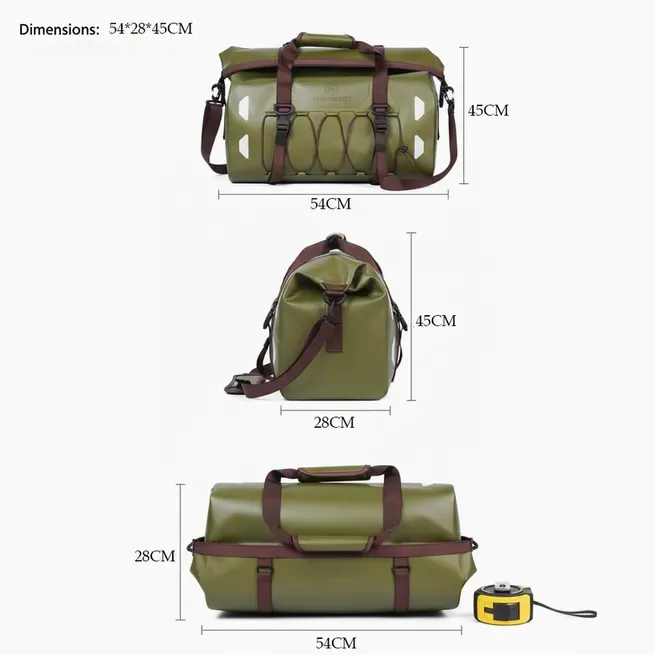
Choose EXW when you already own the pickup, the export filing and the main carriage, and you want one invoice for the goods alone. Choose FOB Xiamen when you want the goods on board and the export formalities done, but you want to buy freight yourself. Choose DDP when you have no importer set-up at destination and you need one number that ends at your door. The right term is a function of your entry capability, not of the price.
What Does an Incoterm Actually Decide?
An Incoterm decides two things and nothing else: where the sellers cost obligation ends, and where the risk of loss or damage passes from seller to buyer. It does not decide when title passes, it does not decide which law governs the contract, and it does not decide who owns the goods in transit unless the sales contract says so separately. Those three are the most common misreadings in bag sourcing, and each one has produced an insurance claim that nobody could settle.
The distinction that matters day to day is that cost and risk do not always move at the same point. Under CIF the seller pays the freight to the destination port but the risk passes when the goods are on board at the load port, so the buyer carries a risk over a leg it did not pay for and cannot control. Under DDP the seller carries both cost and risk all the way to the named place, which is why DDP is the most expensive term and the least transparent one. The Incoterms 2020 rules published by the International Chamber of Commerce set these out as two parallel obligation tables, A for the seller and B for the buyer, and reading the two columns side by side is faster than reading any summary.
Where Does Risk Transfer Under EXW, FOB and DDP?
Under EXW the risk passes at the sellers premises, or at another named place, when the goods are made available and not loaded. That means the buyer owns the bag from the moment it is set aside at the production site, including during loading, including during the domestic haul to the port, and including during export filing. A buyer who has never arranged a pickup in Fujian has taken on a leg it cannot supervise and usually cannot insure sensibly.
Under FOB the risk passes when the goods are on board the vessel at the named port of shipment. Everything before that — packing, marking, inland haulage, export declaration, terminal handling and loading — sits with the seller and is inside the FOB price. From the ships rail onwards the buyer owns the risk and buys the freight. Under DDP the seller carries the risk to the named place of destination, which in practice means the buyers door or its nominated warehouse, and the seller also handles import entry, duties and taxes.
| Term | Risk passes | Cost ends | Who files export | Who files import entry |
|---|---|---|---|---|
| EXW | At the sellers premises, unloaded | At the sellers premises | The buyer | The buyer |
| FOB Xiamen | When the goods are on board | When the goods are on board | The seller | The buyer |
| CIF | When the goods are on board | At the destination port | The seller | The buyer |
| DDP | At the named place of destination | At the named place of destination | The seller | The seller |
Who Pays for What Under Each Term?
The practical way to compare terms is to write the cost lines down the side of a page and tick who pays each one. There are eleven lines that matter on a bag shipment from Xiamen: the goods themselves, export packing and marking, inland haulage to the terminal, export declaration, terminal handling at load port, loading on board, ocean or air freight, insurance, import entry, duties and taxes, and final delivery. Every one of those lines is somebodys cost under every term; the term only decides whose.
Two of those lines are chronically under-estimated by buyers making their first China order. Terminal handling at the load port is real money and it sits inside FOB, which is one reason an FOB price is never the same as an EXW price plus a truck. Import entry is the second: it is a fixed-cost activity that costs roughly the same whether the shipment is 500 pcs or 5,000 pcs, so on a first order at MOQ 500 pcs the entry cost per bag is at its worst and shrinks as the programme grows.
| Cost line | EXW | FOB Xiamen | DDP |
|---|---|---|---|
| Goods and packing | Buyer | Seller | Seller |
| Inland haulage to terminal | Buyer | Seller | Seller |
| Export declaration | Buyer | Seller | Seller |
| Terminal handling at load port | Buyer | Seller | Seller |
| Loading on board | Buyer | Seller | Seller |
| Main carriage | Buyer | Buyer | Seller |
| Marine insurance | Buyer | Buyer | Seller |
| Import entry and broker | Buyer | Buyer | Seller |
| Duties and taxes | Buyer | Buyer | Seller |
| Delivery to final address | Buyer | Buyer | Seller |
Which Term Fits Which Buyer Profile?
The decision is not really about the bag, it is about the buyer. Three questions settle it in almost every case: how large is the order in units and in value, does the buying entity have an established importer of record and a broker at destination, and does the buying entity need to see and control the freight line or does it need one number it can put into a spreadsheet. Answer those three and the term is usually obvious.
A buyer with no importer set-up should not buy EXW and should probably not buy FOB either, because both require somebody at destination to file the entry, hold a bond where one is required and receive the cargo. A buyer with a broker, a bonded entry routine and a consolidation programme should not buy DDP, because DDP hides the freight and duty lines inside a single number and makes it impossible to benchmark the forwarder year on year.
| Buyer profile | Entry capability at destination | Cost control need | Recommended term |
|---|---|---|---|
| First import, one order, no broker | None | Low — wants one number | DDP to door |
| First import, has a broker already | Broker on retainer | Medium | FOB Xiamen |
| Small repeat importer, 500-2,000 pcs | Broker, occasional | Medium | FOB Xiamen |
| Established importer, full containers | In-house entry team | High | FOB Xiamen or EXW |
| Established importer, consolidated LCL | In-house entry team | High | EXW with a nominated consolidator |
| Marketplace seller, needs a delivery appointment | None or agent | Low | DDP to the fulfilment address |
| Programme buyer running a landed-cost model | In-house or broker | Very high | FOB Xiamen, freight bought separately |
How Does the Term Change the Unit Cost of One Bag?
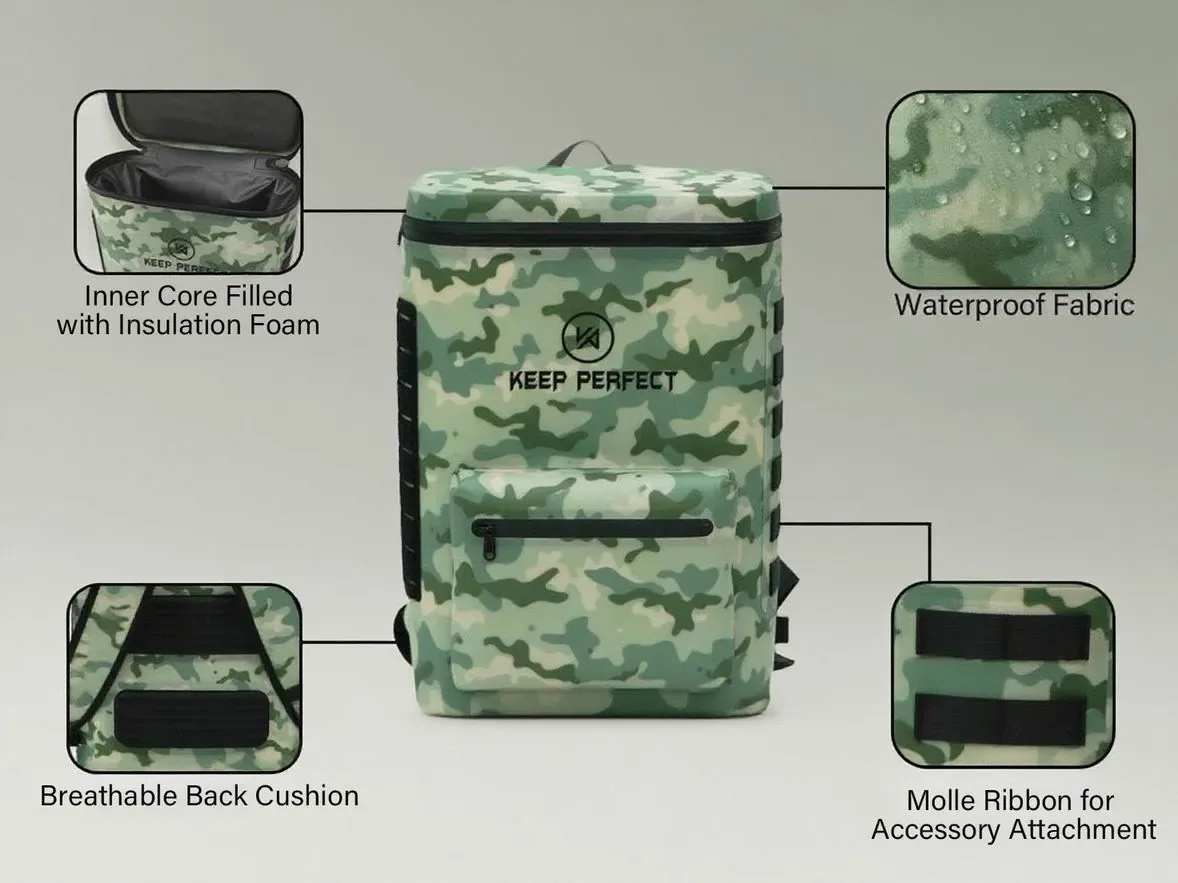
The same bag carries a different unit cost under each term, and the gap is not constant — it depends on how much air is in the box. Bags are a voluminous cargo: a carton of soft cooler bags or drawstring bags is mostly air, so freight is charged on volume rather than on weight in almost every case. That makes the freight component a larger share of the landed cost than a hardware buyer would expect, and it makes the choice of term proportionally more consequential.
Work the arithmetic on one carton before you negotiate. Take a 60 x 40 x 40 cm export carton, which is 0.096 cubic metres, and a 20-foot container with roughly 25-28 cubic metres of usable space after packing loss. The volumetric weight of that carton on the air-freight divisor is about 16 kg against an actual weight that may be 9 kg, and the airline bills the higher of the two. Under FOB you see that number; under DDP you see a blended per-bag delivery figure and you cannot tell whether it moved because freight moved or because packing changed.
- Carton dimensions
- 60 x 40 x 40 cm
- Carton volume
- 0.096 cubic metres
- Carton count per 20-foot container
- 230-260 cartons after packing loss
- Volumetric weight on the air divisor
- about 16 kg per carton
- Typical actual weight
- about 9 kg per carton
- Charged basis on air freight
- the higher of the two — usually volume
When Does EXW Look Inexpensive and Cost More?
EXW looks inexpensive because the sellers price is at its smallest: the quotation covers the goods and nothing else. It costs more whenever the buyer cannot execute the legs it has just taken on at the same cost the seller would have. The pickup at a production site in Fujian, the export declaration, and the truck to Xiamen are all activities a local operator does as a routine and a foreign buyer does as a project, with the phone calls, the errors and the delays that come with that.
There is also a documentary trap. Under EXW the seller is not obliged to load the goods, and in some jurisdictions not obliged to provide the export declaration either. If the buyer cannot be the exporter of record because it has no local entity, the export filing has to be done by somebody who can, and that somebody charges for the favour. Buyers who ask for EXW and then discover they cannot file the export should ask for FCA at a named place instead, which obliges the seller to handle the export formalities.
When Does DDP Make Sense for a Bag Programme?
DDP makes sense when the buyer has no importer capability and no appetite to build it, when the delivery address is an appointment-driven facility, or when the shipment is a one-off and the overhead of setting up entry would exceed the cost of buying the service. A marketplace seller sending one pallet to a fulfilment centre is the cleanest example: there is no broker to appoint, there is an appointment to keep, and the value of a single number ending at the door is high.
DDP stops making sense the moment the buyer wants to manage cost, because the term bundles the duty, the freight, the entry fee and the delivery into a figure that cannot be benchmarked. It also puts the declared value in somebody elses hands. If the party filing the entry declares conservatively to avoid a query, the duty is higher than it needed to be and the buyer pays for caution. The remedy is to agree in writing who the importer of record is, what the declared value will be based on, and what happens if the entry is examined.
How Does Xiamen as the Load Port Change the Calculation?
Xiamen is the load port on this programme and it changes the calculation in three ways for anyone sourcing bags made in Fujian. First, the inland leg is short, so the difference between EXW and FOB is smaller than it would be from an inland province — which means EXW buys you less than you might expect. Second, Xiamen carries direct services to the main trans-Pacific and European rotations, so a full container does not have to be transhipped through a hub, which shortens the schedule and removes one handling point.
Third, and least obvious, is consolidation. Xiamen handles enough less-than-container bag cargo that a 500 pcs first order can be consolidated without waiting for a groupage slot to fill at a smaller port. That matters because a first order at MOQ 500 pcs is almost never a full container, and the consolidation lead time is a real part of the delivery calculation. The schedule arithmetic behind the whole window is set out in Why a bag programme runs 35-50 days.
What Should You Put in the Contract So the Term Means Something?
A term written into an email is not a term. Four clauses have to travel with it: the named place, the version of the rules, the party who is importer of record, and the document set. The named place has to be specific enough to be a boundary — "FOB Xiamen" is fine, "FOB China" is not, because nobody can say where the risk passed. The version matters because Incoterms 2020 changed the insurance level required under CIF and CIP and clarified who bears the cost of onboard loading.
- Name the place precisely: the port and terminal, or the delivery address, not a country.
- State the rules version: Incoterms 2020, so the obligation tables are the current ones.
- Name the importer of record at destination in writing before the shipment moves.
- Agree the declared-value basis for the entry, and who pays if the entry is examined.
- List the documents: commercial invoice, packing list, bill of lading and any certificate.
- Say what happens on a rollover: who pays storage, and who rebooks.
The last item is the one that gets skipped. A rollover — when the vessel does not load your container on the sailing you booked — is routine on the trans-Pacific in peak season, and under FOB the storage and rebooking cost lands on whoever owns the risk at that moment. Because risk passed on board and the container never went on board, the answer is not always obvious from the term alone, and a one-line clause saves an argument.
How Do You Change Terms Between Orders Without Breaking the Price?
Changing term mid-programme is normal and it is where most of the confusion happens. The rule is to re-quote rather than to convert. An FOB price cannot be turned into a DDP price by adding a freight estimate somebody found online, and a DDP price cannot be turned into an FOB price by subtracting one, because each term carries a different set of obligations, a different insurance arrangement and a different administrative overhead on both sides.
Ask for both numbers on the same enquiry and compare them on the same day against the same sailing. Freight moves weekly, so an FOB price quoted in March with a freight estimate from January is not comparable with a DDP price quoted in March. When the comparison is done on one day against one sailing, the gap between the two terms is usually narrower than buyers expect, and what is left is genuinely the price of the service — the entry, the duty handling and the delivery — rather than a hidden margin.
The five questions that settle the term
- Do you have an importer of record and a broker at destination? If not, EXW is not for you.
- Do you need to see and benchmark the freight line? If yes, DDP is not for you.
- Is this a one-off or a programme? A programme justifies building entry capability.
- Is the volume air or weight? Bills of lading on bag cargo are usually volumetric.
- Who will hold the risk during a rollover or an examination, and is that in writing?
If you want to work the decision against your own numbers rather than against a rule of thumb, the Incoterm decision tool walks the same five questions and returns a recommendation, and the landed cost calculator turns the chosen term into a per-bag figure you can compare against your target. Classification feeds both: the duty line is driven by the subheading, and the HS code finder is where that starts.
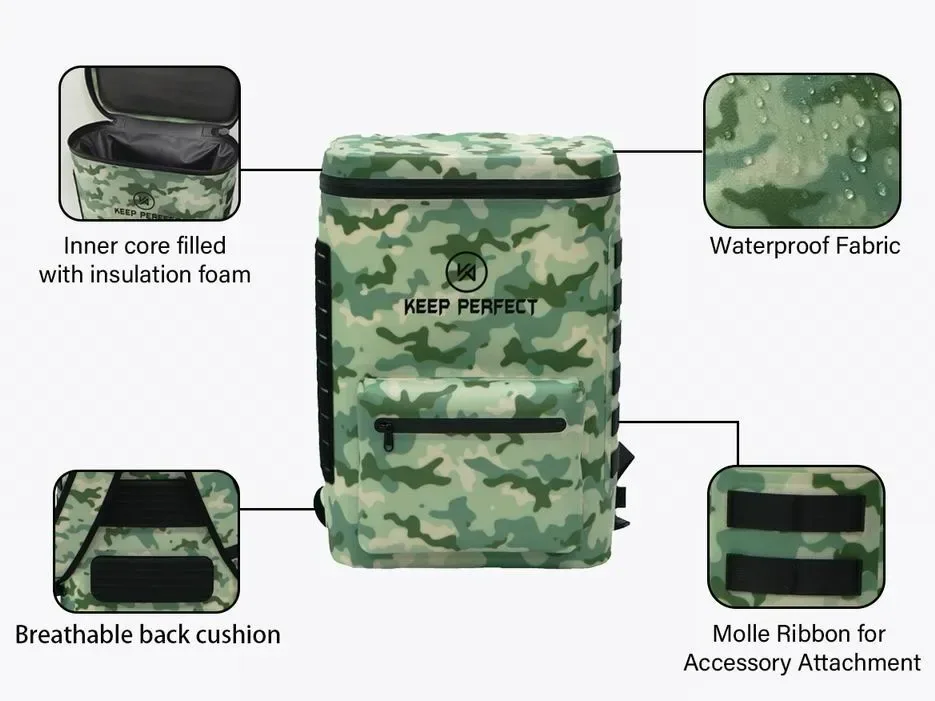
Freight bands and transit windows in this cluster are planning ranges drawn from quoted lots, not published tariff rates. They move with bunker cost, vessel rotation, port congestion and the week you book; ask for a live quotation against your sailing before you commit the order to a calendar.
Get both terms quoted on the same sailing
Send us the destination, the carton count and the delivery address and we will quote FOB Xiamen and door-to-door on the same day, itemised, so you can see exactly what the difference buys.
Frequently Asked Questions
Is DDP always the most expensive term?
Almost always, because it carries the freight, the insurance, the entry, the duty and the final delivery, and the party providing them prices the risk of getting any of them wrong. The premium is the price of a single number and of not having to build an import capability.
Can a buyer without a local entity file the export declaration under EXW?
Usually not, and this is the most common EXW failure. If the buying entity has no registered presence in the country of export, it cannot normally be the exporter of record, so the export filing has to be done by somebody who can. Ask for FCA at a named place instead of EXW.
Does the Incoterm decide when ownership of the bags passes?
No. An Incoterm allocates cost and risk; it does not transfer title. Title passes according to the sales contract and the law that governs it, and the two should be drafted together so the point of risk transfer and the point of title transfer do not sit on opposite sides of a claim.
Why does FOB cost more than EXW plus a truck?
Because FOB includes terminal handling, export declaration, documentation and loading, and because the seller prices the coordination of those as well as their cost. The inland leg from a Fujian production site to Xiamen is short, so the gap is smaller than buyers expect.
Is CIF a safe middle ground between FOB and DDP?
It is a middle ground on cost and not on risk. The seller pays freight to the destination port but risk passes on board at the load port, so the buyer insures a leg it did not book. That is workable, but it is not the simplification buyers usually assume it is.
What happens if the container is rolled over to the next sailing under FOB?
Risk has not passed because the goods are not on board, so the seller still bears it, but the practical cost of storage and rebooking has to be allocated. Put a one-line rollover clause in the contract so the answer is written down before it is needed.
Who is the importer of record under DDP?
The seller, or the sellers appointed agent, which is the whole point of the term. That is also the risk: the buyer does not control the declared value, so agree the basis of that value in writing and ask for the entry documents after filing.
Can the same order be split across two terms?
It can, and it sometimes should: the bulk of the order on FOB Xiamen for the main warehouse and a smaller door-to-door consignment for a launch event or a fulfilment centre. Each consignment gets its own documents and its own entry, which is why the split is worth the admin only above a certain size.
How does a 500 pcs first order usually ship?
Almost never as a full container. At MOQ 500 pcs a soft bag order is typically a handful of cartons, so it moves as less-than-container load, consolidated at Xiamen. The consolidation schedule is part of the delivery window and should be quoted with it.
Does the term affect the inspection point?
It can. Inspection at AQL 2.5 under ISO 2859-1 happens before shipment, so it sits inside the sellers obligation under FOB and before the buyers risk begins. Where the buyer wants the inspection to be the release trigger for payment, that has to be stated separately from the term.
Should the term be restated on the commercial invoice?
Yes. The invoice should show the same term, the same named place and the same rules version as the contract, because the entry is filed against the invoice and a mismatch between the two is a common reason for a query at the border.
How often should a programme re-check its term choice?
Once a year, or whenever the order profile changes shape — moving from LCL to full container, adding a second destination, or bringing entry in-house. The right term at 500 pcs is often the wrong term at a full container.
People Also Ask
Which Incoterm is right for a first bag order from China?
DDP if you have no broker and no importer set-up, FOB Xiamen if you have a broker and want to buy freight yourself. EXW only if you already own pickup, export filing and main carriage.
Is DDP more expensive than FOB?
Yes, because it bundles freight, insurance, entry, duty and delivery into one price and the provider prices the risk of each. The premium is the cost of not building import capability.
What does FOB Xiamen include?
The goods, export packing and marking, inland haulage to the terminal, export declaration, terminal handling and loading on board. Everything after the ships rail is the buyers cost.
Can the buyer be importer of record under DDP?
No. Under DDP the seller, or its appointed agent, is the importer of record, which is why the buyer must agree the declared-value basis in writing before the shipment moves.
Does an Incoterm transfer ownership?
No. It allocates cost and risk only. Title passes under the sales contract and its governing law, so the two documents should be drafted together.
Sources and further reading
Every figure on this page is either our own programme data or attributed below. Open the originals before you write them into a specification.
- Incoterms 2020 — ICC rules for the use of domestic and international trade termsInternational Chamber of Commerce
- ISO 2859-1:1999 — Sampling procedures for inspection by attributesInternational Organization for Standardization
- BIMCO — standard container and carriage clausesBIMCO