How Long Should a Buyer Keep Bag Programme Compliance Records?
Nine classes of record come out of a bag programme, each kept for a different reason: claim windows, contract requirements, product-safety record obligations and customs entry record requirements. No statutory numbers here, because they change. The longest applicable driver governs the whole file.

Nine classes of record come out of a bag programme, and each is kept for a different reason: the specification history explains what was agreed, the inspection and laboratory files explain what was shipped, the certificates and transaction certificates support claims made downstream, the commercial documents support customs entry and payment, and correspondence records decisions. The longest applicable driver sets the period for the whole file.
Retention is the least glamorous part of a sourcing programme and one of the parts most likely to decide a disagreement. When a claim arrives about a lot shipped long ago, the party that can produce the file wins it early and at low cost, and the party that cannot pays for a reconstruction nobody trusts. The difference is rarely whether records were created; almost every programme creates them. It is whether anybody decided how long they would be kept.
This piece sets out the nine document classes a bag programme generates, what each evidences, and the driver that sets how long it is held. It deliberately does not name statutory periods: those differ by market, by category and by agreement, and they change. Every period here is expressed as a driver, to be confirmed against the current rule in the destination market.
What Counts as a Programme Record?
Any dated item generated by the programme that evidences an agreement, a measurement, a decision or a movement of goods. That covers the nine classes below and excludes two things: drafts superseded before agreement, and routine messages that neither record a decision nor change one. Keeping both is what turns an archive into a haystack.
The test to apply at capture time is two questions. Would anybody need this to answer what was agreed, shipped, paid or decided. And is this the version that counted.
What Actually Drives a Retention Period?
Four drivers, and the longest one applicable to a file sets the period for that file. A claim window: how long after delivery either side can bring a claim under the agreement. A contract requirement: what the buyer has promised a customer or a retailer about records. A product-safety record obligation: what has to be available if a safety question is raised about the goods. And a customs entry record requirement: what the entry has to be supported by.
Note the shape of those four: three are set outside the programme, by an agreement or by the rule in force in the destination market. That is why a schedule written as a list of numbers ages badly, and one written as a list of drivers survives changes in the rules.
The instruction at the head of every schedule is therefore procedural rather than numeric: for each class, name the driver, record who confirmed the applicable period and when, and review it at the stated interval.
How Long Should Specifications and Tech Pack Versions Be Kept?
Every version, not only the last one. A specification history is what answers the question every disagreement eventually becomes: what was agreed at the time this lot was built. The driver is the claim window plus the period during which a product-safety question could be raised, whichever is longer, because the specification also evidences what materials and constructions were intended.
The practical requirement is version discipline. Each version carries a number, a date, and a one-line note of what changed and why, and the version referenced on the order is recorded against that lot. Where versions exist only as filenames with dates, reconstructing which document applied to a lot takes days and produces an answer that can be argued with.
What Should an Approved Sample Record Contain?
Five things: the sample identifier, the date it was approved, who approved it on the buyer side and in what role, what it was approved against, and where the physical reference unit is held. The fifth is the one that decides disputes, because a written description of a reference unit is a poor second to the unit itself.
The driver is the same claim window as the specification, plus the useful life of the style, since a reference unit is what a reorder is judged against. Keep the record at least as long as the style can be reordered, and keep the physical unit for as long as it is stable enough to be meaningful, which for many constructions is shorter than the paperwork. Where physical storage is impractical, standardised photographs taken to a stated setup are evidence; unstandardised ones are decoration.
How Long Are Inspection and Laboratory Reports Kept?
For the claim window, extended to cover the period during which the buyer could still raise a quality claim on the lot, because these are the records that answer it. On this programme inspection sits at AQL 2.5 under ISO 2859-1 General Inspection Level II, and the report should be retained with the counts by class intact rather than reduced to a verdict, since the counts are what a later question turns on.
Laboratory reports carry one extra driver. Where a chemical compliance claim may be made downstream, the report is part of the substantiation and it needs to outlive the period in which that claim could be challenged. The report should also travel with the material lot it belongs to: retained against the lot identifier rather than against the order number, so that a later question about that material can be answered without searching orders.
What Applies to Certificates and Transaction Certificates?
Certificates are kept for as long as any downstream party could rely on them, which is usually driven by the contract requirement rather than by the claim window: if the buyer has warranted something to a customer about a material or a process, the certificate substantiating it must survive at least as long as the warranty does.
Transaction certificates carry the tightest handling rules of any document in the file. Each one attaches to a specific shipment, has a validity window, and is often required downstream before the goods can be sold with the claim attached. Keep them indexed by shipment rather than by style, record the expiry date where one applies, and reconcile them per consignment rather than per year.
How Are Audit Reports and Corrective Action Records Retained?
Audit reports are kept through the current cycle and the succeeding one, so that a trend across cycles can be read, and the closure file travels with each finding rather than with the report. The findings in such a report are assessed by a qualified third party against the law of the production country and against the buyer code of conduct, and the file should record that alongside the report itself.
Corrective action records are kept until the finding is verified closed and for the period afterwards during which the same clause could recur. A recurring finding is only visible against history, so destroying closure records at the end of a cycle removes the one instrument that shows whether an action worked.
| Document class | What it evidences | Driver that sets the period | Review point | Handling note |
|---|---|---|---|---|
| Specification and tech pack versions | What was agreed, and when it changed | Claim window and product-safety record obligation, whichever is longer | At each version increment | Keep every version with a change note |
| Approved sample record | What the reference unit and its approval were | Claim window plus the reorderable life of the style | On each reorder | Record where the physical unit is held |
| Pre-shipment inspection report | What was found on that lot and under what plan | Claim window for the lot | At each lot closure | Retain counts by class, not a verdict alone |
| Laboratory test report | Whether a material met a stated limit | Substantiation of any downstream claim | Per programme interval | Index by material lot, not by order |
| Certificates and declarations | Support for what has been warranted downstream | Contract requirement | When any contract is renewed | Keep for as long as the warranty runs |
| Transaction certificates | Claim support for one shipment | Downstream requirement plus activity window | Per consignment | Index by shipment and record expiry |
| Audit report | Management system state at a date | Current plus succeeding audit cycle | At each cycle | Keep the trend readable across cycles |
| Corrective action record | Whether a finding closed and stayed closed | Until verified closed plus a recurrence window | At each verification | Never destroy at cycle end |
| Commercial documents | What was sold, shipped and paid | Customs entry record requirement and payment audit | Per shipment | Held as one set per consignment |
| Correspondence recording a decision | Why something was agreed or accepted | The driver of the document it modifies | When that document is reviewed | File against the document, not by date |
What About Commercial Documents and Customs Entry Files?
The quotation, the pro forma invoice, the commercial invoice, the packing list and the bill of lading belong together as one set per consignment, because they only make sense read against each other. On this programme the set is quoted FOB Xiamen with CIF and DDP available, paid T/T 30/70, and any entry made later has to be supportable from the set rather than from memory.
Two drivers apply to this class, and they differ from the rest of the file. The customs entry record requirement in the destination market determines how long the entry has to be substantiated, which is frequently longer than the commercial claim window. And payment and accounting records carry their own requirement, set by whoever audits the buyer side books.
Which Correspondence Has to Be Kept?
The messages that record a decision, change one, or record acceptance of something that differs from what was agreed. Those three categories cover most of what matters: an approval given, a substitution accepted, a date agreed, a tolerance granted. Routine scheduling traffic that simply implements a decision already recorded elsewhere does not need to be kept.
The rule that makes this tractable is to file correspondence against the document it modifies rather than by date. A message accepting a material substitution belongs with the specification version it changes; a message agreeing a revised date belongs with the order record. Filing by thread converts decisions into archaeology, because the useful message is never the last one in the thread.
How Should Records Be Stored So They Are Retrievable?
Four properties decide whether an archive works: one programme-wide search key per record, a named location following one convention, a stable export format rather than an application-specific one, and a named custodian who can retrieve it within a working day.
The custodian requirement is the one teams skip and the one that fails first: the person who set the folder moves on, the access rights lapse, and the file technically exists and practically does not. Checking once a year that a named person can retrieve one document from each class keeps the arrangement honest.
| Record class | Search key used | Named location | Who retrieves it in one step | How it usually fails |
|---|---|---|---|---|
| Specification versions | Style code plus version number | Shared specification library | The technical owner | Versions held only in personal mailboxes |
| Approved sample record | Style code plus sample identifier | Sample register with photographs | The technical owner | Reference unit location not recorded |
| Inspection reports | Lot number plus inspection date | Lot folder for the consignment | The programme owner | Verdict stored without the counts |
| Laboratory reports | Material lot number | Material lot register | The compliance owner | Filed by order, so the lot cannot be traced |
| Transaction certificates | Shipment reference | Consignment set | The compliance owner | Filed by style rather than by shipment |
| Commercial set | Invoice or consignment number | Consignment set | The finance contact | Invoice number inconsistent across the set |
| Decision correspondence | The document it modifies | Appended to that document record | The programme owner | Filed by thread, so the decision cannot be found |
What Happens at the End of the Retention Period?
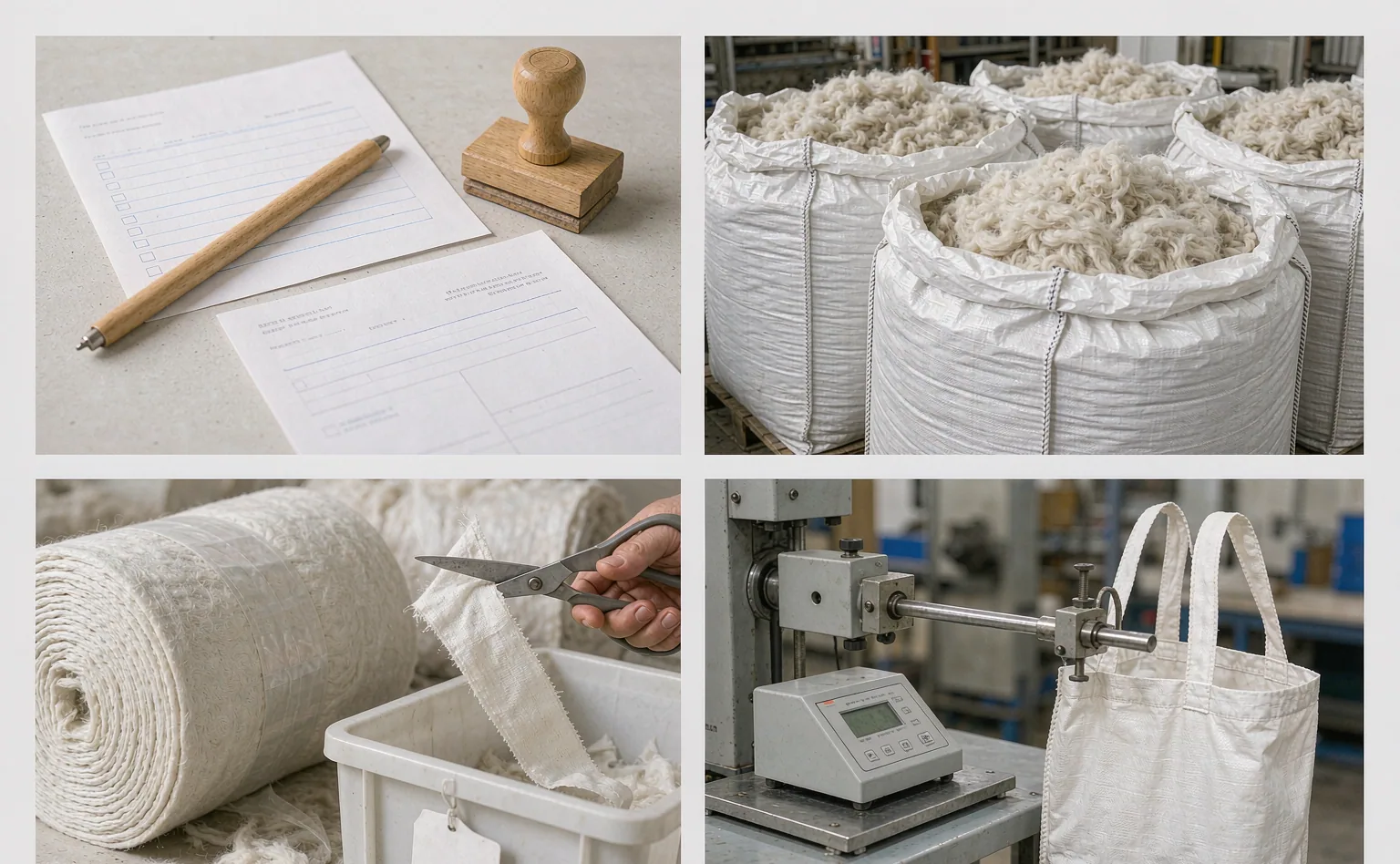
One of three things, decided deliberately rather than by default. Most records reach the end of their driver and are destroyed. Some are placed on hold because a claim, a dispute or an enquiry is live, and the hold overrides the period until the matter closes. A few are kept permanently because they have become reference material for the programme, usually the specification history and anything a successor will need.
Destruction needs its own record. A destruction log naming the class destroyed, the date, the authority relied on and the person who carried it out is short, and it converts an absence of documents from negligence into a decision. Without it, the buyer cannot distinguish a file that was legitimately destroyed from a file that was lost, and that distinction is worth a great deal.
A hold should be simple to invoke and hard to lift silently. One named person authorises it, every file under it is listed, and it is reviewed at a stated interval until closed. Where a programme changes hands, the hold list travels with the transfer so that nobody destroys something that is still needed.
Who Owns the Retention Rule Inside the Buyer Organisation?
One named person, usually the programme owner, with a second name covering absence. Ownership means four things: writing the schedule, confirming each applicable period against the current rule in the destination market, running the annual retrieval check, and holding the destruction log. None of those takes long and all four are occasionally decisive. Ownership also means recording the confirmation rather than the number: who confirmed it, on what date, against which rule and for which market.
What Should the Retention Schedule Say at Minimum?
Nine lines. The scope of the programme it covers. The ten classes and their drivers. The rule that the longest applicable driver governs the file. How each period is confirmed and by whom. Where each class lives and its search key. Who retrieves each class. The review interval. The hold procedure. And what is recorded when something is destroyed. Two further lines prevent the common failures: the date the schedule was last confirmed, and the date of the next retrieval test.
- 1. Driver expired
- The longest applicable driver for the class has actually ended
- 2. No hold
- The file is not named on a live hold list
- 3. No open action
- No corrective action or claim referencing it remains open
- 4. Superseded versions considered
- Later versions are retained where the history itself is the evidence
- 5. Copies identified
- Working copies elsewhere are listed, including personal mailboxes
- 6. Authority recorded
- Who authorised it, on what basis, on what date
- 7. Entry made
- The destruction log carries the class, date and authority
What makes retention survive contact with a real question
- Every period is expressed as a driver, never as an invented number.
- The longest applicable driver governs the whole file.
- Confirm the applicable period against the current rule in the destination market, and record who confirmed it and when.
- Specification versions are kept in full, because the history is the evidence.
- Laboratory reports are indexed by material lot and transaction certificates by shipment.
- Correspondence is filed against the document it modifies.
- Destruction is a decision with a log entry, not an absence.
The commercial documents in the file are governed by the same frame as everything else in the programme: MOQ 500 pcs per style and colourway, sampling 6-10 working days from a signed-off tech pack, bulk production 35-50 days from written sample approval, inspection at AQL 2.5 under ISO 2859-1 General Inspection Level II, T/T 30/70, quoted FOB Xiamen with CIF and DDP available. Those appear on the quotation, the pro forma and the commercial invoice, and the three documents should agree.
Get a retention schedule for a programme
Send the document list you already hold. You get the ten classes with drivers, custodians and a destruction log format, within one business day.
Frequently Asked Questions
How long should a buyer keep bag programme records?
For the longest applicable driver rather than for a single number: the claim window, a contract requirement, a product-safety record obligation or a customs entry record requirement.
What should be done about statutory periods?
Confirm the applicable period against the current rule in the destination market and record who confirmed it, on what date and against which rule. Do not invent a number.
Which specification versions should be kept?
Every version with a number, a date and a note of what changed, because the question asked later is what was agreed when the lot was built.
What belongs in an approved sample record?
The sample identifier, the approval date, who approved it and in what role, what it was approved against, and where the physical reference unit is held.
Why keep inspection reports with defect counts?
Because a later question turns on the counts and their classification. A verdict alone cannot be re-read or argued with.
How should laboratory reports be indexed?
By material lot rather than by order number, so a question about that material can be answered without searching consignments.
Why do transaction certificates need special handling?
They attach to one shipment, often carry an expiry, and are required downstream before a claim can be made on the goods.
How long are audit reports and corrective action records kept?
Audit reports through the current and succeeding cycle so a trend can be read; corrective action records until verified closed plus a recurrence window.
How are social findings in an audit report handled?
They are assessed by a qualified third party against the law of the production country and against the buyer code of conduct, and that statement is filed alongside the report.
Which commercial documents belong together?
The quotation, pro forma invoice, commercial invoice, packing list and bill of lading as one set per consignment, sharing one identifier.
Which correspondence has to be kept?
Messages that record a decision, change one, or record acceptance of something differing from what was agreed.
What makes an archive retrievable?
One search key per class, a named location, a stable format, and a named custodian who can retrieve one record per class within a day.
What happens at the end of the period?
Destruction, a hold while a claim or enquiry is live, or permanent retention as reference material. Every one of the three is a recorded decision.
Why record destruction?
Because a log entry converts missing documents from negligence into a decision.
Who should own the retention schedule?
One named programme owner plus a deputy, responsible for the confirmations, the annual retrieval test and the destruction log.
People Also Ask
How long should you keep supplier compliance records?
For the longest applicable driver: claim window, contract requirement, product-safety record obligation or customs entry record requirement, confirmed against the current rule.
What documents should a bag programme keep?
Specification versions, approved sample records, inspection and laboratory reports, certificates and transaction certificates, commercial sets and decision correspondence.
Should old specification versions be deleted?
No. The version history is what answers the question of what was agreed when a disputed lot was built.
How should supplier records be stored for retrieval?
One search key per class, a named location, a stable export format and a named custodian per class tested annually.
What do you do when a retention period ends?
Destroy it under a logged decision, place it on hold while a claim is live, or retain it permanently as reference material.
Sources and further reading
Every figure on this page is either our own programme data or attributed below. Open the originals before you write them into a specification.
- ISO 9001 — Quality management systemsInternational Organization for Standardization
- ISO 37301 — Compliance management systemsInternational Organization for Standardization
- Incoterms 2020 rulesInternational Chamber of Commerce