How to Calculate Duty on a 500-Piece Bag Order FOB Xiamen
Five hundred pieces is the standard first order, and it is the order size at which the per-entry charges dominate. This walks the same 500-piece order at FOB Xiamen USD 4.80 through the United States, the European Union and Australia, and shows how far the rate has to move before it matters.
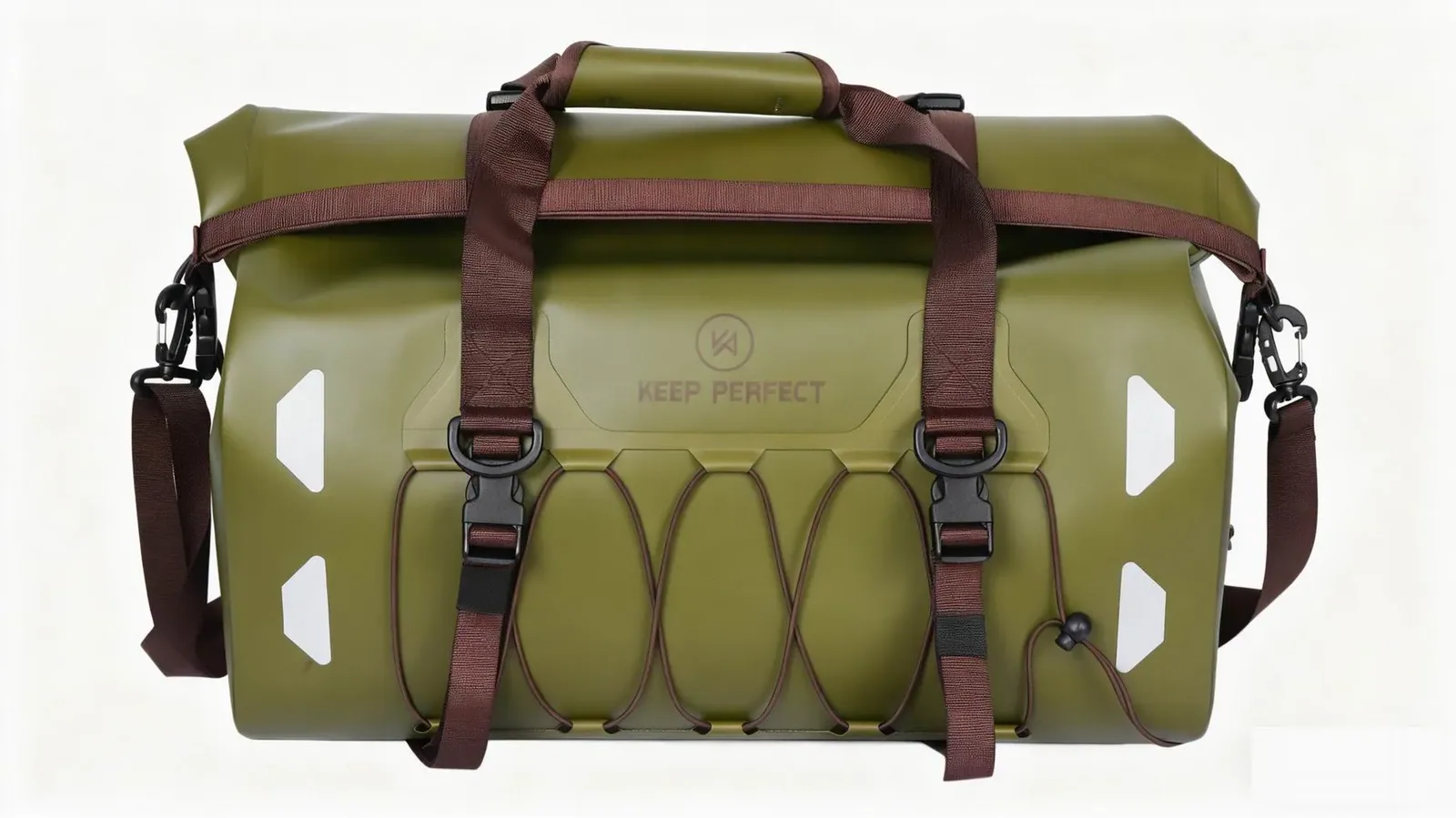
On 500 pieces at FOB Xiamen USD 4.80 the FOB value is USD 2,400.00. In the United States the duty base is that transaction value, and at an illustrative 17.6% plus a 7.5% China-origin rate the duty is USD 602.40, with MPF at its floor of USD 32.71 and HMF at USD 3.00. The order lands at USD 7.37 a unit. In the European Union and Australia the duty is charged on a CIF value of USD 2,693.10 instead.
The reason to use one order and walk it through several markets is that it separates the two things that change. The rate changes between markets, and so does the base it is applied to. Running both at once on the same arithmetic is the clearest way to see which of them is doing the work.
The second reason is that 500 pieces is where the per-entry charges are loudest. Entry, filing, minimum drayage and the MPF floor are all fixed amounts, and at 500 units they land on the unit cost with real weight. At 2,000 units the same charges are a quarter of the size per unit, which changes the shape of the answer even when the duty rate has not moved.
It is also the most useful artefact a buyer can keep. Once the structure is built, changing the FOB price, the quantity or the destination is a matter of editing inputs rather than rebuilding an argument.
What Are the Inputs for a 500-Piece Order?
Quantity 500 pieces, FOB Xiamen USD 4.80 per unit, so an FOB value of USD 2,400.00. Freight, terminal handling and booking at USD 285.00. Marine insurance at 0.30% of the FOB plus freight figure, which is USD 8.10. Those are the three inputs that exist whatever the destination.
The insurance figure deserves a note, because it is the input most often guessed and the one that appears in both bases. Marine insurance is written as a percentage of the insured value under an open policy or arranged per shipment; the actual rate belongs in the model. At 0.30% of FOB plus freight, USD 8.10 on this order, it is small — but it sits inside the CIF base, so it is dutiable in four of the five markets.
Then the destination-specific ones: in the United States the duty base is the transaction value of USD 2,400.00 and freight and insurance sit outside it; in the European Union and Australia the base is the CIF value of USD 2,693.10. Same goods, same invoices, two bases.
How Does the American Calculation Run?
Duty at an illustrative 17.6% on the transaction value of USD 2,400.00 is USD 422.40. The China-origin rate at an illustrative 7.5% on the same base is USD 180.00, giving USD 602.40 of duty in total. MPF at 0.3464% of USD 2,400.00 is USD 8.31, which falls below the floor, so USD 32.71 is charged. HMF at 0.125% is USD 3.00.
Add the non-duty layers — freight and terminal handling USD 285.00, insurance USD 8.10, broker entry and ISF USD 145.00, drayage and delivery USD 210.00 — and the landed total is USD 3,686.21. That is USD 7.37 per unit against an FOB price of USD 4.80, an uplift of USD 2.57 or 53.5%.
| Line | Basis | Amount (USD) | Per unit (USD) |
|---|---|---|---|
| FOB Xiamen, 500 pcs at USD 4.80 | 500 x 4.80 | 2,400.00 | 4.80 |
| Ocean freight, THC and booking | quote-driven | 285.00 | 0.57 |
| Marine insurance | 0.30% of FOB plus freight | 8.10 | 0.02 |
| Customs value (transaction value) | FOB, freight excluded in the US | 2,400.00 | 4.80 |
| Ad valorem duty | illustrative 17.6% on customs value | 422.40 | 0.84 |
| Section 301 China-origin duty | illustrative 7.5% list rate | 180.00 | 0.36 |
| Merchandise processing fee | 0.3464%, floor of 32.71 applies | 32.71 | 0.07 |
| Harbor maintenance fee | 0.125% of value, ocean entries | 3.00 | 0.01 |
| Broker entry and ISF filing | quote-driven | 145.00 | 0.29 |
| Drayage and delivery | quote-driven | 210.00 | 0.42 |
| Landed total | sum of the lines above | 3,686.21 | 7.37 |
How Do the European and Australian Calculations Differ?
They start from a different base. In the European Union the customs value is the CIF figure of USD 2,693.10; at an illustrative 3% the duty is USD 80.79. Import VAT at 21% is charged on the customs value plus the duty plus inland movement, and is recoverable by a registered business. Add customs entry, handling and delivery at USD 425.00 and the landed total excluding VAT is USD 3,198.89, or USD 6.40 a unit.
The European figure also carries a VAT line that the others do not. At 21% on the customs value plus duty plus inland movement, the VAT is a little over USD 620 on this order — larger than the duty by a factor of eight, and recoverable by a registered business. That asymmetry is the single most important difference between a European and an American entry on the same goods.
In Australia the base is the same CIF figure of USD 2,693.10, the general rate is 5% and the duty is USD 134.66 — or nil where the goods qualify under the China-Australia agreement. GST at 10% is charged on the customs value plus the duty and is recoverable. Add entry and delivery at USD 260.00 and the landed total excluding GST is USD 3,087.76, or USD 6.18 a unit.
| Market | Duty base (USD) | Rate used | Duty (USD) | Landed per unit (USD) |
|---|---|---|---|---|
| United States | 2,400.00, transaction value | 17.6% plus 7.5% | 602.40 | 7.37 |
| European Union | 2,693.10, CIF | 3% | 80.79 | 6.40 |
| Australia, no claim | 2,693.10, CIF | 5% | 134.66 | 6.18 |
| Australia, agreement claim | 2,693.10, CIF | nil | 0.00 | 5.91 |
| United Arab Emirates | 2,693.10, CIF | 5% | 134.66 | 6.28 |
How Far Does the Rate Have to Move Before It Matters?
This is the question the sensitivity table answers, and it is the one that decides whether a classification argument is worth having. On the American order, everything except the ad valorem duty totals USD 3,263.81. Every percentage point of duty on the transaction value of USD 2,400.00 is USD 24.00 on the order, or about USD 0.05 a unit.
So a rate that moves from 17.6% to 20% costs USD 57.60 on the order, or USD 0.12 a unit. Across a year of monthly shipments at this size that is roughly USD 691 — worth having, and worth setting against the cost of the work needed to establish it.
| Ad valorem rate | Duty (USD) | Landed total (USD) | Per unit (USD) | Against the base case |
|---|---|---|---|---|
| 5% | 120.00 | 3,383.81 | 6.77 | - USD 0.60 |
| 10% | 240.00 | 3,503.81 | 7.01 | - USD 0.36 |
| 17.6% | 422.40 | 3,686.21 | 7.37 | base case |
| 20% | 480.00 | 3,743.81 | 7.49 | + USD 0.12 |
| 25% | 600.00 | 3,863.81 | 7.73 | + USD 0.36 |
What Dominates the Cost on an Order This Size?
Not the duty. The uplift of USD 2.57 a unit splits roughly as USD 1.20 of duty, USD 0.10 of fees, USD 0.57 of freight and insurance and USD 0.71 of entry and delivery. The two commercial layers are together half the uplift, and they are the layers that respond to consolidation.
That is the practical lesson of a 500-piece order. The duty is visible and arguable; the freight and the per-entry charges are larger and are fixed by how the order is shipped. A buyer who spends the week on the classification and the freight plan on the freight forwarder last email has optimised the smaller number.
What Changes If the Order Doubles to 1,000 Pieces?
The duty doubles and almost nothing else does. Freight rises, but not in proportion, because a large part of ocean freight on a small consignment is documentation and terminal charges rather than space. Entry, filing and minimum drayage do not rise at all. MPF stays at its floor unless the entered value crosses the threshold at which the percentage exceeds it.
There is a second-order effect worth noticing. A larger order is also more likely to attract a freight quotation priced on volume rather than on a minimum, which moves the freight line in the same direction as the entry charges. The two together are why the uplift curve against order size is steep at the bottom and almost flat once a consignment fills its space.
Run it and the per-unit uplift falls by roughly a third. That is the consolidation argument in one sentence, and it is the same argument at 2,000 pieces, where the uplift comes down to 35.5% on the same duty rate.
Reusing this calculation on the next order
- Keep the structure and change the inputs: units, FOB price, freight and destination.
- Change the base flag with the destination — transaction value or CIF.
- Apply one row per duty measure, each with its own rate and date read.
- Apply MPF as a maximum of the percentage and the floor, capped at the ceiling.
- Apply HMF only when the cargo arrives by vessel.
- Re-read the rates when the tariff edition changes or a notice is published.
- Track the uplift percentage rather than the unit price, so a change in any input shows up in one cell.
What Should Be Confirmed Before This Becomes a Price?
The eight-digit line and its rate in the destination market; whether a trade-remedy rate applies to the origin; the current MPF floor and ceiling; and the freight and handling quotation for the lane. Those four turn an illustrative calculation into a price that can be quoted.
The rest is commercial and can be quoted alongside: sampling 6-10 working days, bulk 35-50 days from written sample approval, inspection at AQL 2.5 under ISO 2859-1, T/T 30/70 and FOB Xiamen. None of it changes the duty arithmetic, and all of it changes the date on which the duty is paid.
Where Does the Money Actually Go?
On this order, USD 3,686.21 leaves the buyer and USD 2,400.00 of it is the goods. Roughly USD 602.40 is duty, USD 35.71 is federal fee, USD 293.10 is transport and insurance, and USD 355.00 is entry, filing and delivery. Of those, only the duty is movable by a classification argument, and only the commercial layers are movable by planning the shipment differently.
That is the honest picture of a first order at MOQ 500 pcs, and it is why the programme question is not "what is the duty rate" but "what is the uplift, and which parts of it can I move". The landed cost calculator answers the second question directly.
What Is the Takeaway for the Second Order?
That the structure is reusable and the inputs are not. Keep the model, change the cells, and re-read the rates on the reorder calendar rather than assuming they held. A programme that re-reads its rates once a year will not be surpriced by a tariff edition.
And keep the classification with the style. If the second run changes the shell, the line can change with it, and the duty follows the line. That is the same control that holds colour and construction steady on a repeat, described in the reorder consistency note.
Get this walkthrough on your own order
Send the quantity, the FOB unit price and the destination market. You get the same walkthrough with your numbers and the uplift to track.
Frequently Asked Questions
How much duty is there on 500 bags at FOB Xiamen USD 4.80?
In the United States, at an illustrative 17.6% plus a 7.5% China-origin rate on the transaction value of USD 2,400.00, the duty is USD 602.40. In the European Union at an illustrative 3% on the CIF value of USD 2,693.10 it is USD 80.79.
Why is the CIF value higher than the FOB value?
Because it adds freight and insurance to the transaction value. In the American calculation those sit outside the duty base; in the European, British, Australian and Gulf calculations they sit inside it.
What is the landed cost per unit on this order?
USD 7.37 into the United States, USD 6.40 into the European Union excluding recoverable VAT, USD 6.18 into Australia excluding recoverable GST, and USD 5.91 into Australia with a valid agreement claim.
How much is one percentage point of duty?
USD 24.00 on the order, or about USD 0.05 a unit, on a transaction value of USD 2,400.00. A move from 17.6% to 20% costs USD 0.12 a unit.
What dominates the uplift on a 500-piece order?
The commercial layers. Of the USD 2.57 uplift, about USD 1.20 is duty, USD 0.10 is fees, USD 0.57 is freight and insurance and USD 0.71 is entry and delivery.
Does doubling the order halve the per-unit uplift?
No, but it reduces it by roughly a third. Freight rises less than proportionally, and entry, filing and minimum drayage do not rise at all.
Why is MPF charged at USD 32.71 rather than USD 8.31?
Because of the per-entry floor. 0.3464% of USD 2,400.00 is USD 8.31, which is below the floor, so the floor is charged.
Is HMF charged on this order?
If the cargo arrives by vessel, yes, at 0.125% of value — USD 3.00 here. Air freight does not pay it.
What is the Australian position on the same order?
Duty at the 5% general rate on the CIF value is USD 134.66, or nil where the goods qualify under the China-Australia agreement. GST at 10% is charged on top and is recoverable.
What has to be confirmed before this becomes a price?
The eight-digit line and its rate, whether a trade-remedy rate applies to the origin, the current MPF floor and ceiling, and the freight and handling quotation for the lane.
Does the production schedule change the duty?
Not the amount, but it sets the validity of the inputs. Sampling 6-10 working days and bulk 35-50 days from sample approval is long enough for a freight quotation to expire and for a rate to be re-read.
Can the second order reuse the same calculation?
The structure, yes. The inputs need editing and the rates need re-reading, and a change of shell on the second run can move the line and therefore the duty.
How much is the VAT on this order in Europe?
A little over USD 620 at 21% on the customs value plus duty plus inland movement — about eight times the duty, and recoverable by a registered business. That asymmetry is the main difference between a European and an American entry.
Does insurance sit inside the duty base?
In a CIF market, yes. At 0.30% of FOB plus freight the figure here is USD 8.10, small in itself but dutiable in four of the five markets covered.
What freight and handling figures are used here?
Freight, terminal handling and booking at USD 285.00, insurance at 0.30% of the FOB plus freight figure, broker entry and ISF at USD 145.00, and drayage and delivery at USD 210.00. All are illustrative and quoted per lane.
People Also Ask
How do I calculate duty on a 500-piece bag order?
Take the FOB value, set the duty base for the destination market, apply the rate for the confirmed line plus any origin measure, add the fee layer and the commercial layer, then divide by the piece count.
Is duty charged on FOB or CIF from Xiamen?
It depends on the destination market. The United States generally uses the transaction value; the EU, UK, Australia and GCC states use a CIF value.
What is the landed cost of a 500-piece cooler bag order?
At FOB Xiamen USD 4.80 into the United States with illustrative rates of 17.6% and 7.5%, the order lands at USD 7.37 a unit, an uplift of 53.5% over FOB.
How much does duty add per unit?
About USD 1.20 on this order in the United States, USD 0.16 in the European Union and USD 0.27 in Australia, before any agreement claim.
Why is a 500-piece order more expensive per unit than a 2,000-piece one?
Because entry, filing, minimum drayage and the MPF floor are charged per entry rather than per unit, so they spread across fewer units on a small order.
Sources and further reading
Every figure on this page is either our own programme data or attributed below. Open the originals before you write them into a specification.
- Harmonized Tariff Schedule of the United StatesU.S. International Trade Commission
- Basic importing and exporting: entry, duties and feesU.S. Customs and Border Protection
- Incoterms 2020 rulesInternational Chamber of Commerce