Football Team Bags: How to Design for 18-Player Squads
An 18-player squad generates a specific order: eighteen player bags, three or four staff bags, a ball carry, a wet compartment for muddy kit, and a float for replacements. Design for that list and the quantity arithmetic takes care of itself.

Design for the match-day squad list, not for the registered squad. Eighteen players, three or four staff, a ball, a wet compartment and a float of four units — that is the order. Everything else in a football bag is detail that can be settled after those are fixed.
Why Is Eighteen the Number That Matters?
Eighteen is the match-day squad in most adult football: eleven on the pitch and seven named substitutes under the standard competition format. Registered squads are larger, often twenty-five or more, but a club does not need twenty-five bags for a season — it needs bags for the players who travel, plus a small number for everyone else.
That distinction is the whole of the quantity arithmetic. A club that orders to the registered squad over-orders by a third and then carries the surplus into next season, by which point the dye lot has changed and the surplus no longer matches. A club that orders to the match-day squad plus staff plus a float orders the right number and reorders on a known date.
| Squad element | Count | Bag type | Note |
|---|---|---|---|
| Match-day players | 18 | Player bag | The base of the order |
| Coaching staff | 3 | Coach or staff bag | Different silhouette, same colourway |
| Physio or kit staff | 1 | Coach or staff bag | Often specified with a device sleeve |
| Replacement float | 4 | Player bag, plain | Held back, not personalised |
| Ball and equipment | n/a | Shared equipment bag | One or two per squad |
What Goes in a Football Player Bag?
The kit list is short and it is dirty. Boots, shin pads, a match shirt, shorts, socks, a training top and a drink. Two of those items — boots and a worn shirt — are damp and abrasive, and they are the reason a football bag needs separation rather than volume. A single-volume bag carrying that list produces a damp bag and a muddy shirt by October.
The separation that matters is between wet and dry, and between boots and everything else. Everything beyond that is optional. A club that specifies two compartments properly will get better results than a club that specifies six badly, because the two that matter are the two that get used every single week of a winter season.
How Should the Wet Compartment Be Specified?
A wet compartment for football has to do three things: hold a damp shirt and a pair of boots without wetting the dry kit, survive being wiped out, and let water out rather than holding it. The first two are lining and seam questions; the third is a drainage question, and it is the one clubs forget.
| Wet compartment option | Holds damp kit | Wipeable | Drains | Best for |
|---|---|---|---|---|
| Coated lining, sealed | Yes | Yes | No | Cold, dry climates |
| Coated lining with a drain grommet | Yes | Yes | Yes | Winter football in the wet |
| Mesh panel, external | Partly | Yes | Yes | Boot storage only |
| Unlined pocket | Partly | No | No | Not recommended |
| Loose wet bag supplied separately | Yes | Yes | No | Works, but gets separated |
How Many Staff Bags Does a Squad Need?
Three or four, and they are a different product. A coach carries a clipboard, a set of bibs, a first-aid roll, a whistle and a phone — not boots and a shirt. Asking the player bag to do that job produces a bag that is too big for the coach and wrong for the player, which is why most football programmes run two silhouettes in one colourway.
That has a cost consequence worth stating plainly: two silhouettes is two minimums. MOQ 500 pcs applies per style and colourway, so a club running a player bag and a coach bag is committing to two minimums at 500 pcs each unless the programme consolidates. The way through it for a single club is to plan the two silhouettes in one production slot, and for a larger programme to plan the volume across the season.
How Does an 18-Player Order Reach the Minimum?
It usually does not on its own, and that is the honest answer a club needs. Twenty-five units is not 500. A single club ordering for one squad is not a production order; a club ordering for a whole age-group structure, or a group of clubs ordering together, or a programme planning two seasons at once, is.
Three routes get a single club to a workable order. Order across the whole club — every age group, one colourway, one production slot. Order two seasons at once where the colourway is stable, which halves the freight and the approval work. Or join an order with a neighbouring club or a county association. All three are planning decisions rather than product decisions, and all three cost less than a small order priced at a small-order rate.
What Does the Colour Requirement Ask of a Football Bag?
Football clubs are the most colour-sensitive buyers in the cluster, because the kit is striped or hooped and the bag has to sit beside it without arguing. A striped shirt gives two or three colours to match and no single flat field to match them against, which means the reference has to be chosen deliberately — usually the dominant shirt colour — rather than averaged.
- Choose one dominant reference from the shirt, and state which one it is.
- Approve a coupon per substrate: shell, binding, webbing, zipper tape and thread.
- Approve under daylight, because that is where the bag will be photographed.
- Hold the coupon set and the dye-lot record against the next season.
- Where the shirt has two dominant colours, carry the second one in trim only.
How Is the Order Dated Against a Football Season?
A football season starts in late summer in most markets, and the kit has to be on the bus before the first fixture, not in the store before the first friendly. That puts the production window in the spring and early summer, which is the single most contested window in the calendar because every northern-hemisphere summer sport wants it too.
Working backwards: bulk is 35-50 days from written sample approval, sampling is 6-10 working days from a signed-off tech pack, and the club needs its own approval time on top. A club that wants kit on the bus in August has to have raised the enquiry in the spring, and every week of delay after that is a week it does not get back. The calendar is set out in Why 35 to 50 days.
| Milestone | Window | Held by | What slips it |
|---|---|---|---|
| Enquiry raised with the squad list | Club decision | Club | Waiting for the committee |
| Tech pack signed off | Club decision | Club | Artwork without colour references |
| Coupon set approved | Within sampling | Club | Approving the shell only |
| Sample built | 6-10 working days | Production team | Late trim booking |
| Bulk production | 35-50 days | Production team | Booking into a peak slot late |
| Inspection at AQL 2.5 | Within bulk window | Inspection team | No agreed defect list |
| Shipment, FOB Xiamen | After release | Freight desk | Booking after release |
What Personalisation Does a Football Squad Need?
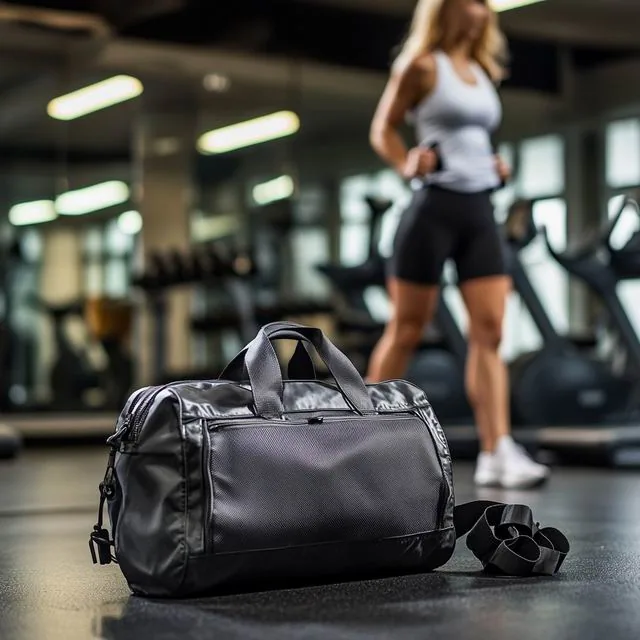
Less than most clubs think. A crest on the side panel, a player number on the end panel, and optionally a surname. The kit manager's real requirement is a way to tell eighteen identical bags apart at a glance from across a changing room, and a large number does that better than a surname does.
Personalisation decisions that change the cost of a football order
- Crest: vector artwork with the colour references named.
- Number: method, position, cap height and the range as a file.
- Surname: whether it is needed at all, since a number does the identifying.
- Role tab for staff bags: coach, physio, kit.
- Spare plain units for late joiners, held back rather than personalised later.
How Does a Club Handle the Players Who Join Late?
Every squad changes. Players join in October, a trialist appears in November, a bag is lost on an away trip. A club that personalised every unit at the start has no answer to any of those except a fresh personalisation run, which is a small, expensive, colour-risky order.
The answer is to hold plain units back. Ordering four plain units with the main lot costs almost nothing, they come from the same dye lot so they match, and they can be personalised locally or left plain. It is the single most useful clause in a football programme and it is usually the one clubs forget.
What Should the Tech Pack Say About an 18-Player Programme?
The tech pack should describe one bag used eighteen times, not eighteen bags. That sounds obvious and it is routinely ignored: clubs submit a personalisation list before they have signed off the silhouette, and then discover that the number they specified does not fit on the panel they specified.
- Silhouette and internal dimensions, with the wet compartment dimensioned separately.
- Ball carry: whether it exists and how it is shaped.
- Wet compartment: lining, whether it drains, and where the drain sits.
- Colour references for every visible substrate, plus the dye-lot requirement.
- Personalisation: method, position, size — measured from a seam, not described.
- Quantity split between player bags, staff bags and plain spares.
How Is the Programme Kept Stable Across Seasons?
By treating the first season as the work and every season after it as a reorder. The club that approves a coupon set, records the dye lot and files the tech pack revision has done the hard part once. The second season is a comparison against those artefacts rather than a fresh development.
That is also what makes 300 pcs on a repeat available. A reorder with a reference, a coupon set and a lot record is a comparison; a reorder without them is a re-development, and no quantity makes a re-development inexpensive. The full method is set out in Reorder colour consistency.
What Does a Football Programme Actually Cost to Run?
Four levers decide it, in descending order: quantity, colourway count, personalisation count and silhouette count. A club that orders once, in one colourway, with one silhouette and a number-only personalisation will spend far less per unit than a club that orders two silhouettes in three colourways with names, numbers and crests in two drops.
The fifth lever is timing, and it is the one nobody plans. Booking into a peak production slot late costs money in expedite fees and it costs reliability in delivery. A club that raises the enquiry in the spring gets the slot it wants; a club that raises it in June gets whatever is left.
What Does the Shared Equipment Bag Need to Carry?
Every football squad needs one or two bags that are not player bags: the ball bag, the bib bag and often a first-aid bag. These are specified differently because they carry a fixed, known load rather than a personal one, and because they are handled by the kit staff rather than by the player.
A ball bag wants volume and a mesh or ventilated panel so damp balls can dry; a bib bag wants volume and nothing else; a first-aid bag wants internal organisation and a wipeable lining. None of them needs personalisation beyond a crest or a role print, and all three consolidate into one silhouette with different prints.
How Does a Club Specify Base and Corner Protection?
A football bag is set down on wet ground, on gravel and in a bus hold, and it is set down loaded. The base takes abrasion from underneath and the corners take the impact of being put down hard. Two clauses cover it: a base panel in a heavier denier or with a coating, and corner protection that is either a binding or a moulded foot.
The third clause is the one that gets missed — the base board. Without a board the bag sags into whatever it is standing on and the load moves from the base into the side seams, which were never designed to carry it. A board is a single line on the tech pack and it is the difference between a bag that holds its shape for four seasons and one that looks tired by Christmas.
What Happens When the Squad Grows Mid-Season?
It always does. A player is promoted from the reserves, a trialist stays, a bag is lost. The club that planned a float absorbs all three without a new order; the club that did not is now trying to place a twenty-unit order in November, which is a small order at a small-order rate with a fresh colour risk attached to it.
The float is therefore not spare capacity — it is the plan. Four plain units on an eighteen-player squad covers late joiners, lost bags and the promotion from the reserves, and it costs a fraction of one emergency order. It is the highest-return line on the whole order sheet.
What Does the Inspection Criteria Need to Include?
The inspection criteria for a football order should be written by the club and agreed before inspection, not supplied by the inspection team on the day. Six checks cover a football bag: wet compartment dimensions and drain presence, base board presence, stitch type at the strap root, colour against the approved coupon set, crest position measured from a seam, and carton marking by dye lot.
Written as measurable checks and classified as major defects, those six are enforceable at the Ac/Re decision under AQL 2.5 and ISO 2859-1. Written as intentions, none of them survives an argument at the loading bay, and the club ends up accepting a shipment it would have rejected if it had put the criteria in writing.
How Does a Football Club Judge the Sample?
With boots in it. A football sample should be loaded with a pair of boots, a damp training top, a match shirt, shin pads and a drink, closed, carried by the strap and set down on gravel. The questions are whether it closes, whether the wet compartment is genuinely separated and whether the base holds its shape when it is put down loaded.
The colour check happens outdoors, in daylight, beside a shirt. A football bag approved under fluorescent light and approved without a shirt next to it has been approved under the wrong conditions twice, and the club will find out on the first Saturday of the season.
Send the squad list and get a calculated date
Tell us the squad size, the staff count and the colourway, and we come back with a costed programme and a delivery date you can calculate.
Frequently Asked Questions
How many bags does an 18-player squad need?
Around 25: eighteen players, three or four staff, and a float of four plain units.
Should a club order to the registered squad or the match-day squad?
To the match-day squad plus staff plus a float. Ordering to the registered squad over-orders by roughly a third.
Why does a football bag need wet and dry separation?
Boots and a worn shirt are damp and abrasive every week of a winter season. A single-volume bag produces a damp, muddy bag by October.
Should the wet compartment drain?
Yes, in any climate where the club plays in the wet. A drain grommet cannot be added after the pattern is cut.
Who decides the colour reference on a striped shirt?
The club. One dominant colour has to be chosen deliberately rather than averaged.
What is the minimum order?
MOQ 500 pcs per style and colourway, with 300 pcs open to discussion on a repeat.
How does a single club reach the minimum?
Order across the whole club, order two seasons at once, or join an order with a neighbouring club or association.
How long does sampling take?
6-10 working days from a signed-off tech pack, extending to 12-15 working days for a complex build or a new club colour.
How long is bulk production?
35-50 days from written sample approval, inspected at AQL 2.5 under ISO 2859-1.
When should a club raise the enquiry for an August season?
In the spring. Bulk is 35-50 days and sampling is 6-10 working days on top of the club's own approval time.
How are late joiners handled?
Hold plain units back from the main lot. They come from the same dye lot, so they match.
Do staff need the same bag as players?
No. A coach carries a clipboard, bibs and a first-aid roll, so a separate staff silhouette in the same colourway is the usual answer.
People Also Ask
How many bags does an 18-player squad need?
About 25: eighteen players, three or four staff and a float of four.
Should a football bag have a wet compartment?
Yes. Boots and a worn shirt are damp every week of a winter season.
How does one club reach MOQ 500 pcs?
Order across the club, order two seasons at once, or join a neighbouring club.
When should a football club order for August?
In the spring — bulk is 35-50 days and sampling is 6-10 working days on top.
Should staff bags match the player bags?
Different silhouette, same colourway. A coach carries different things.
Sources and further reading
Every figure on this page is either our own programme data or attributed below. Open the originals before you write them into a specification.
- IFAB — Laws of the GameInternational Football Association Board
- ASTM D6193 — Standard Practice for Stitches and SeamsASTM International
- ISO 2859-1:1999 — Sampling procedures for inspection by attributesInternational Organization for Standardization