GRS Certified Bags: What Does Certification Actually Cover?
A GRS scope certificate tells you that one named site was audited and is entitled to trade in certified material. It does not tell you that any bag contains recycled content, and it does not tell you that a shipment does. This page separates the three claims that buyers routinely merge into one, and shows which document proves each.
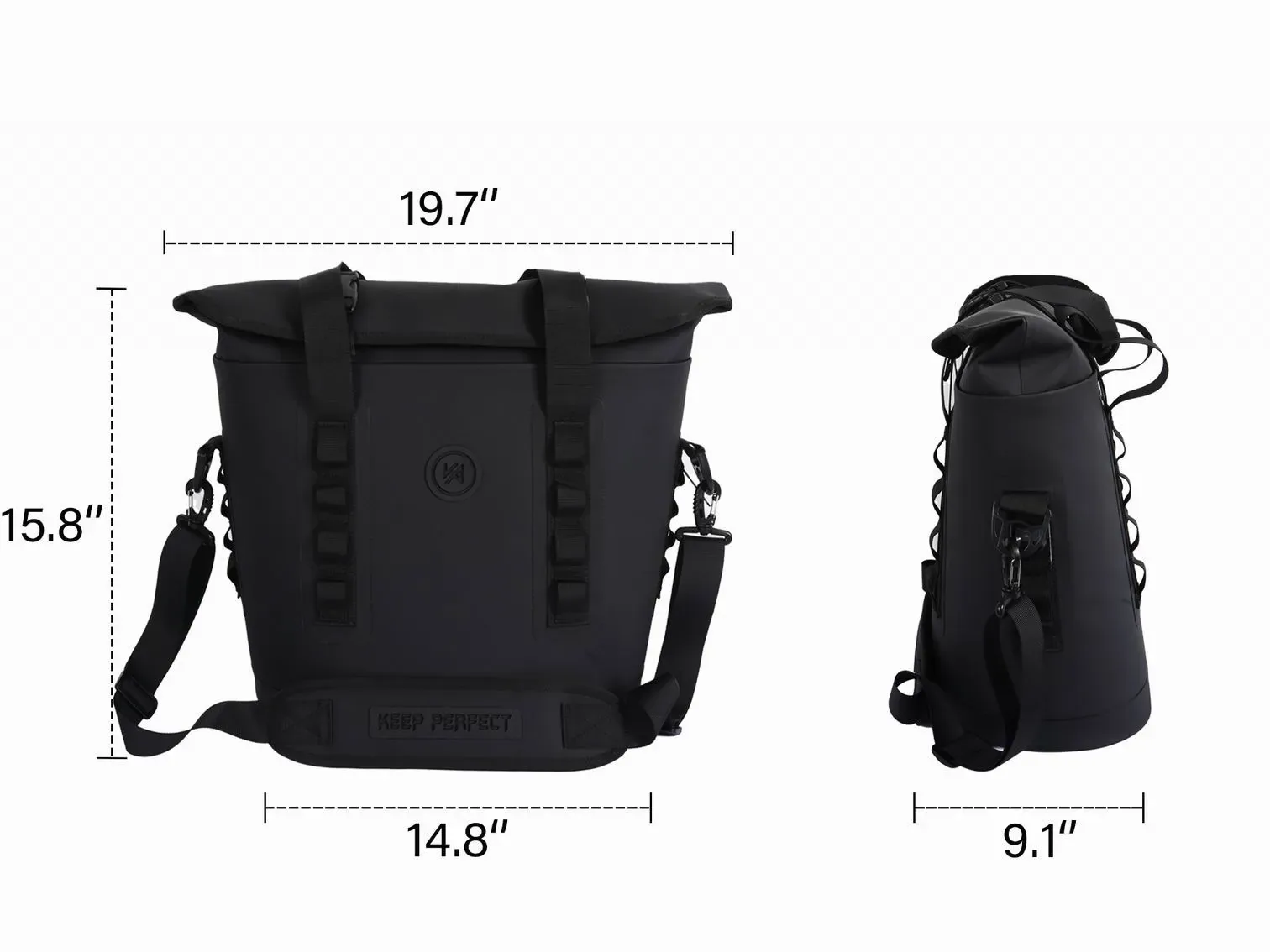
GRS certification has three separate layers that buyers collapse into one sentence. The standard sets the rules. The scope certificate proves a company and a site were audited against them. The transaction certificate proves one shipment carried a specific recycled percentage. Only the third one lets you print a number on a bag. MOQ 500 pcs, sampling 6-10 working days, bulk 35-50 days.
What Does a GRS Scope Certificate Actually Cover?
A scope certificate is issued to a legal entity for a physical site after an audit by an accredited certification body. It records the entity name, the site address, the certification body, a licence or registration number, an issue date and an expiry date, and — the part that matters most — a list of the product categories and the process types the site is certified to handle. Nothing on that document describes a bag you have bought. It describes a permission.
Buyers misread this because the word "certified" carries an everyday meaning of tested and passed. In the recycled-content standards the word means audited and entitled. A site can hold a current scope certificate and ship you a container of conventional cloth, and the certificate will not contradict that, because it was never about the container. The moment you treat a scope certificate as product evidence, your claim is unevidenced and stays that way until someone re-tests it in a dispute.
Which Three Claims Do Buyers Usually Merge Into One?
The first claim is about the material: this cloth contains a stated percentage of recycled input. The second is about the site: this company was audited and may trade in certified material. The third is about the shipment: this quantity of this product left this seller for this buyer carrying this percentage. Three claims, three documents, three different failure modes. A buyer who receives a scope certificate has evidence of the second and nothing else.
| Claim being made | Document that supports it | Who issues it | What it proves | What it cannot prove |
|---|---|---|---|---|
| "This cloth is recycled" | Transaction certificate for the input lot | The certification body of the input seller | A stated percentage of recycled input in a stated quantity | Anything about the finished bag |
| "This site is audited" | Scope certificate | An accredited certification body | The site passed an audit and holds a scope | Any fact about a shipment |
| "This order carries recycled content" | Transaction certificate for the finished-goods sale | The certification body of the selling entity | Quantity, product description and percentage on one transaction | That the goods physically match the paper |
| "This product is safe" | Chemical test report against an RSL | An accredited laboratory | Substance results for the samples submitted | Anything about recycled content |
How Much Recycled Content Does the Standard Require?
The recycled-content standard sets a minimum threshold for a product to be sold as certified, and it separates pre-consumer input from post-consumer input rather than adding them into one flattering number. The threshold has moved between versions of the standard, so the number to rely on is the one printed in the current Textile Exchange text, not the one in a supplier fact sheet or a trade-press summary. Read the version number on the certificate and check it against the version you are citing.
The practical consequence for a bag programme is a specification decision, not a marketing decision. If you want the certified mark on a hangtag, the whole certified input chain has to be in place before the cloth is cut, and the percentage you print has to be the percentage on the transaction certificate. If you only want to talk about recycled content in a catalogue, check the environmental-claim rules in the destination market first, because those are a separate body of law from the standard itself.
Which Parts of a Bag Fall Inside the Certified Scope?
A bag is an assembly. Shell, lining, webbing, thread, foam, mesh, zipper tape, hardware, labels and print films all come from different places, and a recycled claim can attach to one layer and not to the others. The trap is a percentage quoted for the shell cloth and then printed as a percentage for the bag. Those are not the same number, and the gap between them is exactly what an enforcement body or a retail compliance reviewer will measure.
| Component | Whether recycled content is common | Where the evidence comes from | Typical buyer error |
|---|---|---|---|
| Shell fabric | Common | Input transaction certificate from the mill | Quoting the cloth percentage as the bag percentage |
| Lining fabric | Common | Input transaction certificate from the mill | Assuming the shell certificate covers the lining |
| Webbing and tape | Less common | Separate input certificate per trim lot | Ignoring trims in the mass balance |
| Sewing thread | Rare | Mill declaration plus certificate where claimed | Counting it as recycled with no document |
| Foam and interlining | Rare | Mill declaration | Including it in a percentage with no proof |
| Hardware and zipper | Rare | Supplier declaration only | Assuming metal content is covered by a fabric certificate |
| Print and label stock | Rare | Supplier declaration only | Printing a mark that overshoots the certified share |
Who Has to Hold Certification Along the Chain?
Certification runs with the entity that takes ownership and processes the material, so the chain normally runs from the recycler to the yarn spinner, to the fabric mill, to the cut-and-sew site, and then to you. Each buyer in that chain needs to be certified at the point it takes title, and each sale generates its own transaction certificate. A single uncertified link does not invalidate the cloth, but it does break the documented chain, and a broken chain is what stops a transaction certificate from being issued at the end.
This is why the question to ask at the start of a programme is not whether the finished-goods site is certified. It is whether the mill that will actually weave the cloth is certified, and whether that mill can buy certified yarn from a spinner that is certified in turn. If the answer is no at the mill, the finished-goods certificate will not save the claim, and you will find this out at the point where the certificate is refused, which is weeks after the cloth is booked.
Ask which mill will weave the cloth, then ask whether that mill holds a current scope. A certified cut-and-sew site with an uncertified mill produces a bag with no documented recycled content, no matter what the finished-goods paperwork says.
What Do the Social and Environmental Criteria Cover?
The recycled-content standard is not only a content standard. It carries social criteria drawn from workers' rights conventions and environmental criteria covering water, energy, emissions and waste handling at the certified site, plus a chemical-restrictions section that limits what may be used in processing. These matter to a brand for a different reason than the content claim does: they are what a social-compliance reviewer asks about, and they sit in the audit that produces the scope certificate.
Keep them separate in your file. A social audit answers "was this site audited against a code of conduct". A recycled-content certificate answers "did this shipment carry recycled input". Chemical test reports answer "do the substances in this article meet the restricted-substances list". When a buyer asks for one document that answers all three, the answer is that no such document exists, and any document claiming to is worth reading twice.

How Do You Read the Scope Certificate Itself?
Open it at the scope table first. The categories and processes listed there define what the site may trade in, and a bag programme needs both a trading category and the relevant process steps to appear. Then check the entity name against the name on your purchase order and your invoice: a certificate issued to a parent company does not automatically cover a different legal entity at a different address. Then check the validity window against your production dates, not against today's date — the relevant question is whether the site was certified when your goods were made.
Seven checks on a scope certificate
- Certification body named, and the body is accredited for this standard.
- Entity name identical to the seller on the purchase order and the invoice.
- Site address identical to the address where the goods were made.
- Scope table lists the product category and the process, not just trading.
- Issue and expiry dates straddle your production window.
- Certificate number present and checkable with the issuing body.
- Version of the standard stated, and it is the current one.
What Does Certification Not Tell You About the Bag?
It says nothing about strength, colourfastness, seam behaviour, coating adhesion or any other performance property. Those are tested to physical standards such as ISO 13934-1 for breaking force and ISO 12947 for abrasion, and they are evidenced by laboratory reports on the lot you are buying. A recycled-content programme and a physical-performance programme are two separate specification exercises that happen to run on the same bill of materials, and collapsing them is how a bag ends up compliant and unfit.
It also says nothing about restricted substances on its own. Recycled input can carry contaminants from its previous life, which is one reason a recycled programme needs a chemical screen that a conventional programme might scope more narrowly. Ask for the restricted-substances test on the certified lot specifically, not on a "representative" sample of the same construction made from conventional input.
| Question a buyer asks | Does certification answer it? | What answers it instead |
|---|---|---|
| Is there recycled content in this bag? | No | Transaction certificate for the shipment |
| Was the site audited? | Yes | The scope certificate itself |
| Is the bag free of restricted substances? | Partly | Laboratory report against an RSL |
| Will the fabric survive the duty? | No | Physical test reports on the shipped lot |
| Is the social position acceptable? | Partly | Social audit report with scope and date |
| May I print the mark on a hangtag? | Only with a TC | Transaction certificate plus brand approval |
| Does the claim hold in my market? | No | Environmental-claim rules in that market |
How Does Certification Connect to the Shipment You Receive?
Through the transaction certificate, and only through that. When the certified seller sells certified goods to a certified buyer, the seller applies to its certification body for a transaction certificate that names the product, the quantity, the material composition with the recycled split, the buyer, and the transport documents. That document is what carries the claim from one party to the next, and it is the document a retailer compliance team will ask for when you submit the product.
The operational point is timing. A transaction certificate is applied for after the sale, and its fields have to reconcile with the invoice, the packing list and the bill of lading. If your commercial documents are written before anyone has thought about the certificate, the quantities will not match and the application will be refused or amended. Write the product description and the quantity convention into the purchase clause so the certificate can be issued against documents you already hold, rather than against documents you have to remake.
What Should You Put in the Purchase Clause?
Three lines do the work. State the recycled percentage you are buying and whether it is pre-consumer or post-consumer. State that a transaction certificate from an accredited body must be supplied for the shipment before or with the balance payment, and state that the certificate must reconcile with the commercial invoice quantity. Add a fourth line if the mark will be printed: state that no claim, mark or logo may be applied to goods or packaging until the certificate for that shipment is held.
Then treat the certificate as a commercial document rather than a marketing one. It arrives with a number, a quantity and a date, and it belongs in the same folder as the invoice and the inspection report. When a reorder runs, the certificate for the reorder is a new certificate. A file that holds last season's certificate and calls the programme certified is a file with an expiry problem that nobody has noticed yet.
Send us the certificate you were given
Send the scope certificate or the transaction certificate you were offered and the programme details behind it. Our production team will tell you which of the three claims it actually supports, which documents are still missing, and how long the missing ones take to raise. MOQ 500 pcs, sampling 6-10 working days, bulk 35-50 days from sample approval, FOB Xiamen.
Frequently Asked Questions
Is a GRS scope certificate proof that my bag contains recycled content?
No. A scope certificate proves that a named legal entity at a named site was audited and holds a scope to trade in certified material. It carries no product, no quantity and no percentage. The document that ties a recycled percentage to a shipment is the transaction certificate issued for that sale.
Who issues a GRS certificate and how do I know the issuer is real?
An accredited certification body issues it, and the certificate names that body. Confirm the body is accredited for the standard and confirm the certificate number with the body directly where a verification route is offered. A certificate that does not name its issuer is not a certificate.
Does certification cover the whole bag or only the fabric?
Certified content attaches to the components that carry certified input, which is normally the shell and often the lining. Webbing, thread, foam, hardware and print films usually sit outside the certified share. The claimable percentage is a mass calculation across the bill of materials, not a property of one cloth.
What recycled percentage does the standard require as a minimum?
The standard sets a minimum threshold and the figure has changed between versions. Read the threshold in the current Textile Exchange text and check the version number printed on the certificate. Do not rely on a percentage quoted in a supplier summary or a trade article.
Does certification tell me anything about chemical safety?
It carries a chemical-restrictions section within the standard, but that is not the same as a restricted-substances test on your article. Ask for a laboratory report against your RSL on the certified lot itself, because recycled input can carry contaminants from its previous life.
Does certification cover social compliance at the site?
The standard carries social criteria that are audited at the certified site. That audit report sits alongside the certificate and is a separate document from any social audit run under a different code. Read the scope and the date on whichever report you are given.
Can a certified site ship me conventional goods?
Yes. Holding a scope certificate does not oblige a site to sell certified material on every order. That is precisely why the shipment-level transaction certificate exists and why a scope certificate alone is not evidence about your goods.
How long does a scope certificate stay valid?
It carries an issue date and an expiry date, and the certificate is valid inside that window. The date that matters to you is whether the window covers the period when your goods were produced, not whether it covers the day you asked for the document.
What happens if one link in the chain is not certified?
The documented chain is broken at that link and a transaction certificate cannot be issued across the break. The material may still be recycled in fact, but the claim becomes unevidenced. Check the mill and the spinner before you book the cloth, not after.
Can I print a recycled mark on the hangtag once I hold a scope certificate?
Not on the strength of the scope certificate. The mark is tied to the certified shipment, so it needs the transaction certificate for that shipment, plus whatever brand or retailer approval your customer requires for artwork.
Does a certificate cover a reorder?
No. A transaction certificate covers one transaction. A reorder is a new transaction and needs its own certificate, issued against the new quantity and the new transport documents.
What should I do if the certificate never arrives?
Treat it as a document default, not a paperwork delay. Hold the balance payment against the clause in your purchase order, and escalate before the goods are shipped if the certificate is a condition of the sale into your market.
People Also Ask
What is a GRS certificate?
It is a document issued by an accredited certification body to a legal entity for a site, showing that the site was audited and holds a scope to trade in certified material.
Is a GRS certificate proof of recycled content?
No. Only a transaction certificate issued for a specific sale ties a recycled percentage to a stated quantity of a named product.
How much recycled content does GRS require?
The standard sets a minimum threshold that has changed between versions, so read the current text and check the version printed on the certificate.
Does GRS cover social and environmental criteria?
Yes, the standard carries social and environmental criteria audited at the certified site, alongside the content requirements.
Do I need a certificate for every shipment?
Yes if you intend to make a recycled-content claim on that shipment. Each transaction needs its own transaction certificate.
Sources and further reading
Every figure on this page is either our own programme data or attributed below. Open the originals before you write them into a specification.
- Global Recycled StandardTextile Exchange
- Transaction certificate policy for recycled input claimsTextile Exchange
- OEKO-TEX STANDARD 100 — limit values and product classesOEKO-TEX