How Do You Market a Recycled Bag Claim Honestly?
A recycled claim is either a statement about a shipment or it is a statement about nothing. Four tiers of claim exist, and each one permits different wording on different surfaces. This page sets out which evidence each tier requires and how to lock the wording before artwork is signed off.
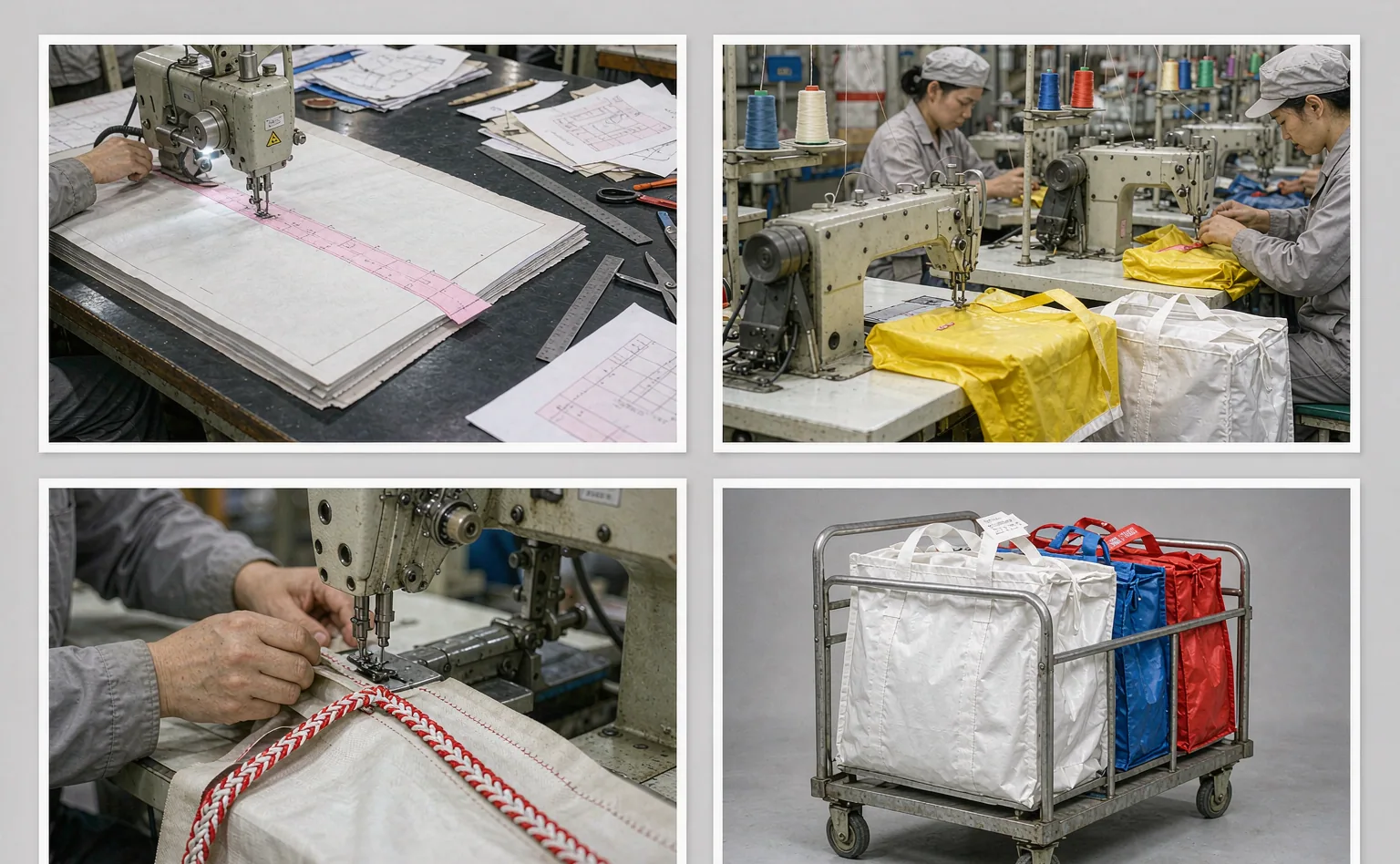
There are four ways to talk about recycled content and they require four different levels of evidence. Saying nothing at all needs none. Saying a component is made from recovered input needs traceability behind that component. Publishing a percentage needs a mass calculation across the bill of materials. Using a certification mark needs the shipment-level certificate and approval for the artwork. Limits, lists and thresholds change when a regulation is amended. Confirm every figure against the current official text before you rely on it, and ask your importer of record to confirm the version that applies in the destination market. MOQ 500 pcs, sampling 6-10 working days, bulk 35-50 days.
What Is the Difference Between a Recycled Claim and a Certified Claim?
A recycled claim is a factual statement you make about your product and have to be able to support. A certified claim is a statement that a third party has audited the evidence and issued paper for a specific transaction. The first you substantiate yourself; the second you substantiate by holding a document issued for the goods you are selling. Confusing them is how a truthful sentence becomes an unsupportable one.
The distinction decides who carries the burden. With an uncertified claim, you hold the evidence and must produce it on request. With a certified claim, you hold a certificate for that shipment and produce that. Either way, if you cannot produce what supports the sentence at the moment somebody asks, the sentence was premature, whatever the underlying facts later turn out to be.
| Tier | What you say | What supports it | Where it may appear |
|---|---|---|---|
| One — factual description | The shell fabric incorporates recovered fibre | Traceability for that component, held on file | Product copy, catalogue text, customer presentations |
| Two — quantified statement | The bag contains a stated share of recycled input | A mass calculation across the bill of materials | Catalogue, specification sheets, website copy |
| Three — certified input | The input is certified to a named standard | The transaction certificate for the input lot | All of the above, plus retail submissions |
| Four — certified product with a mark | Use of the standard's mark or hangtag | The transaction certificate for the sale, plus mark approval | Hangtag, label and artwork only where approved |
| Five — no claim | Nothing is said about recycled content | Nothing is required | Anywhere, and nothing to defend |
Which Percentage Are You Allowed to Print?
The share you can publish is a share of the article by mass, not a share of one fabric. If the shell is fully certified and everything else is not, then the printable number is the shell's share of the whole bag, calculated from the bill of materials with real component weights rather than estimates. Buyers print the shell number because it is the one to hand, and the gap between the two is exactly what a reviewer measures.
Weight the components before you decide the wording, and keep the calculation in the product file next to the certificate. It takes a spreadsheet, it changes whenever the trim set changes, and it is the difference between a claim that survives arithmetic and one that does not. Where the percentage rounds, round downward and keep the underlying figures.
Do Pre-Consumer and Post-Consumer Content Have to Be Split?
Yes, and for two reasons. The standards treat the two streams separately rather than adding them into one flattering figure, because recovered factory scrap and post-consumer waste are not the same environmental story. And the marketing rules in several markets expect qualification where a claim could otherwise be read as more beneficial than it is. Writing "recycled content" without saying which stream invites exactly that reading.
The sentence to use names the stream and the number for it. Where a garment carries both, name both. Where only pre-consumer input is present, say so rather than letting the ambiguity work in your favour. That single qualification costs one line of artwork and removes the most common objection a reviewer raises against a recycled claim.
Where Does a Claim Have to Appear to Count as Marketing?
Everywhere it is read, including surfaces nobody thinks of as advertising. A hangtag, a care label, a woven flag, a printed polybag, a catalogue spread, a product page, a trade-show panel and a sales presentation all make the same claim, and all of them are judged by the same standard. Teams police the hangtag and forget the catalogue, then discover the catalogue opened the exposure.
| Surface | Who reviews it | What they ask for | Typical error |
|---|---|---|---|
| Hangtag or printed label | Retail compliance reviewers | The certificate and the mark approval | Using the mark without approval for the artwork |
| Care label or fibre statement | Enforcement bodies and retailers | Composition accuracy to the stated rules | Listing the bag composition as the fabric composition |
| Product page or catalogue | Competitors and consumer authorities | Substantiation held before publication | Copy written before the certificate exists |
| Packaging print | Retailers and environmental claim reviewers | That the outer claim matches the article inside | Claiming more on the box than the bag carries |
| Trade-show or line-review material | Prospective customers | The same file the retail buyer will later see | Claims made at pitch stage and never reconciled |
Divergence between surfaces is the most expensive failure, because it is evidence that nobody controlled the wording. One approved sentence, used identically on every surface, closes it.
What Do the Environmental Claim Rules Ask For?
Three ideas run through environmental marketing guidance in most markets: the claim must be substantiated when it is made, it must not overstate the benefit, and qualifications must be clear enough that an ordinary reader takes the right meaning. The general thrust is that a broad claim needs broad support, and a narrow claim needs narrow support, so the safest wording is usually the most specific one.
Applied to bags, three rules follow. Say what is recycled rather than implying the whole product is. Quantify rather than gesturing, where you can support the number. And avoid suggesting a benefit that flows from content alone, such as an environmental outcome the content does not deliver. Confirm the current guidance text for your destination market with counsel rather than relying on a summary.
How Do You Word a Claim That Is True but Uncertified?
Carefully, and component by component rather than about the bag. A sentence that names the part, the material and the stream, and stops there, is supportable with the traceability you already hold. The same sentence with "bag" swapped in is probably not, because the shell's properties do not transfer to the assembly.
- Name the component: the shell fabric, the lining, the webbing.
- Name the stream: pre-consumer or post-consumer recovered input.
- Quantify only what the mass calculation supports.
- Avoid the article-wide word unless the whole bill of materials carries it.
- Avoid any standard's mark until that standard's certificate is held.
- Keep the supporting calculation beside the approved sentence in the file.
What Happens When Only Part of the Bag Is Certified?
Then the statement has to be about the part. This is the situation most programmes are actually in, because shell and lining are commonly available with certified input while webbing, thread, foam, hardware and print films rarely are. Rather than treating that as a compromise, write it precisely: the shell and lining incorporate certified input of a stated share, and the remaining components do not.
The other route is to engineer the article upward so that more of it carries certified input, which is a specification decision taken before the components are booked rather than a wording decision taken afterwards. Both paths are legitimate. What fails is publishing the aspirational version before the purchased one.
How Much Does the Claim Depend on the Recycling Claim Rules Alone?
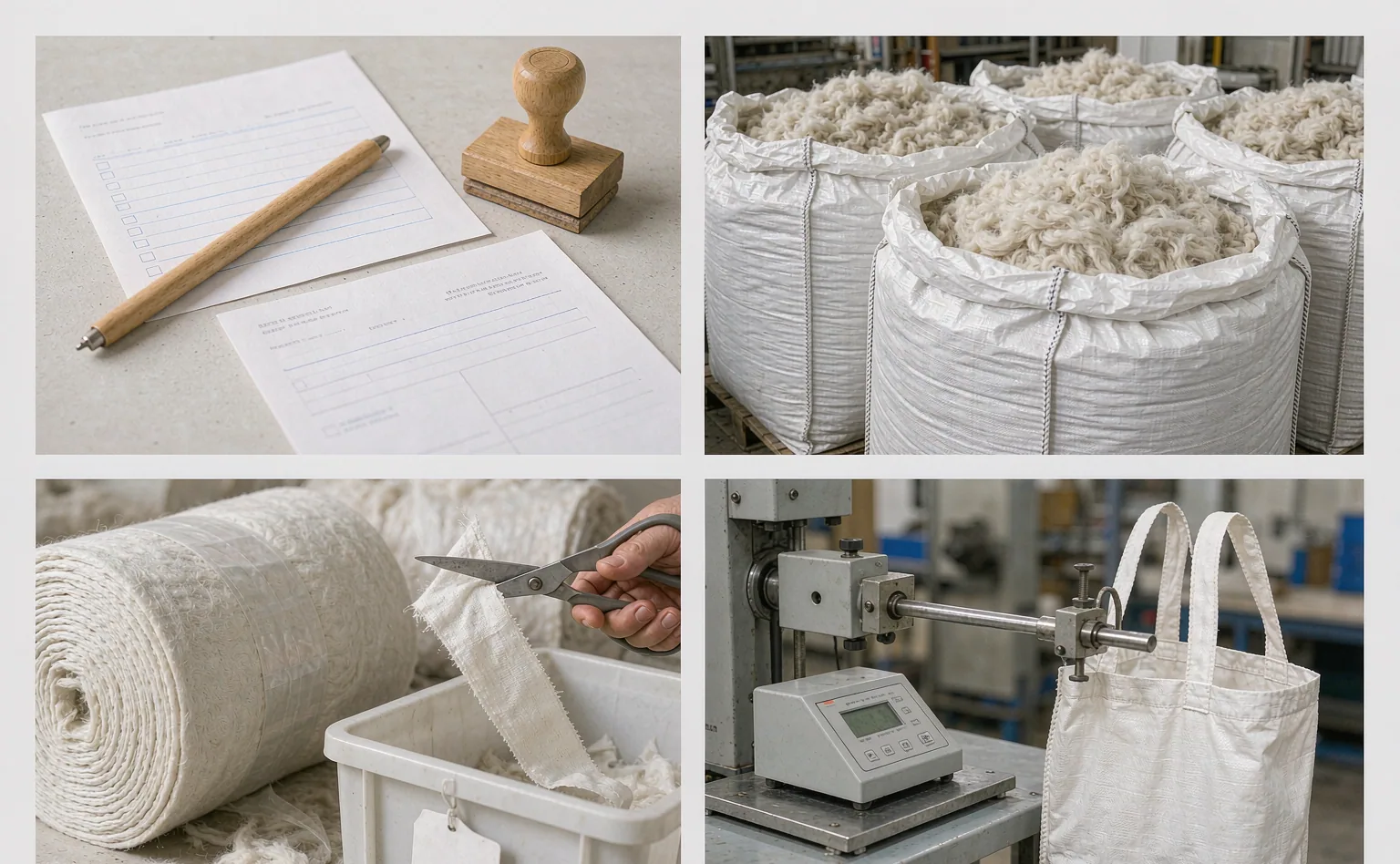
Less than teams expect. A recycled claim sits at the intersection of three bodies of rules: the content standard that governs how input is traced and certified, the environmental marketing rules that govern how it may be described, and the general consumer protection rules that govern whether a statementmisleads. Satisfying one of the three does not discharge the others, which is why a technically valid certificate can still sit behind a sentence that is unlawful where it is published.
Run them separately in the file. The standard answers whether input is documented. The marketing rules answer whether the wording matches what the documents support. Consumer protection answers whether a normal reader takes the meaning you intended. Three questions, three lines of reasoning, and only one of them is solved by holding a certificate.
This is also why the safest governance is a single approver who owns the claim across all three, rather than the certificate sitting with one team and the artwork with another. The failure mode is structural: each side assumes the other checked, and the wording reaches print having been examined by nobody end to end.
What Language Habits Cause Honesty Problems?
Four habits account for most overstated recycled claims, and none of them involves dishonesty. They are all ordinary ways of writing marketing copy that happen to outrun the evidence behind them, and each one has a simple correction.
| Habit | What it produces | Why it overstates | The correction |
|---|---|---|---|
| Writing about the bag rather than the part | "Made from recycled materials" | The evidence covers the shell, not the assembly | Name the component holding the certified input |
| Merging the two recovery streams | One flattering combined figure | The streams are different stories and read differently | State each stream with its own share |
| Using a mark because the input is certified | A hangtag with the standard's logo | The mark belongs to the certified transaction | Hold the certificate and the approval first |
| Publishing before the document exists | Copy to meet a launch date | Substantiation has to predate publication | Freeze artwork until the evidence is held |
| Rounding generously | A rounded-up share | The claim must survive the underlying arithmetic | Round down and keep the calculation |
Who Checks the Claim and What Do They Ask For?
Four audiences, in ascending order of difficulty: your own customer, a retail compliance team, a consumer protection authority, and in California a private enforcer. Each asks the same first question — show me what supports this sentence — and each expects an answer within days rather than weeks. The file that answers it is the one built before publication rather than after.
| Audience | What triggers their question | What they expect | Response time they assume |
|---|---|---|---|
| Your own customer | A claim in your catalogue or on a hangtag | A document referenced in the product file | Immediate |
| Retail compliance team | Product submission, or a periodic review | The certificate and the approval records | Days |
| Consumer protection authority | A complaint, or a market sweep | Substantiation dated before publication | Short and formal |
| Private enforcer | Public-facing wording in the relevant market | Proof that satisfies the specific regime | Immediate, and adversarial |
How Do You Freeze a Claim Before Artwork Is Signed Off?
With a claim lock: one page listing the approved sentence, the surfaces it may appear on, the certificate or calculation that supports it, the date it was approved and who approved it. Nothing goes to print without that page being signed, and any later change to the bill of materials reopens it. Artwork is where claims escape control, because it moves faster than the file behind it.
Nine lines on a claim lock
- The exact approved wording, character for character.
- Every surface it may appear on, including packaging.
- The certificate reference, or the calculation that supports it.
- The version of the standard relied on.
- The date the supporting evidence was verified.
- The name and role of the person who approved it.
- The production window it covers, including reorders.
- The change triggers that reopen the lock.
- The review date for the whole claim.
What Happens When the Evidence Runs Out Mid-Season?
This is the ordinary failure rather than the exotic one: a certificate covered the first shipment, the reorder was booked against an uncertified lot because the certified quantity ran short, and the hangtags for the whole season were printed once. Now the same stock is sold with the same claim and only part of it is supported. The fix is administrative discipline rather than chemistry.
Track the certified quantity you have bought against the quantity you have claimed, and treat the shorter of the two as the claim limit. Where they diverge, print sticky corrections for the unsupported units, or hold them back from the claim-bearing channels. Both cost something; neither costs as much as defending a claim you cannot support for goods already sold.
Close the loop on the purchase side too. Write into the purchase clause that a certificate must be supplied for every shipment carrying the claim, and that no mark may be applied until the document is held. That single line prevents the gap rather than detecting it later.

Send the sentence you intend to print
Send the claim wording and the surfaces it will appear on, and our production team will tell you which tier it belongs to, what evidence each line needs, and whether the input chain behind it can support that wording. MOQ 500 pcs, sampling 6-10 working days, bulk 35-50 days from sample approval, FOB Xiamen.
Frequently Asked Questions
Is a recycled claim the same as a certified claim?
No. A recycled claim is a factual statement you substantiate yourself. A certified claim is supported by a document issued for a specific transaction by a third party that audited the evidence.
What percentage may I print on a hangtag?
The share by mass of the article, calculated across the bill of materials with real component weights. The share belonging to one fabric is rarely the share belonging to the bag.
Do pre-consumer and post-consumer content have to be separated?
Yes. The standards treat the two streams separately and several markets expect the qualification, so name the stream alongside the number rather than merging them.
Where counts as a marketing claim?
Anywhere the wording is read: hangtags, care labels, packaging, catalogues, product pages, trade-show material and sales presentations. They are all judged against the same standard.
May I use a standard's mark if the input is certified?
Not on that basis alone. Use of a mark is tied to the certified transaction and normally also requires approval for the specific artwork, so hold both before anything goes to print.
How should an uncertified claim be worded?
Component by component rather than about the whole article: name the part, the material and the stream, quantify only what the mass calculation supports, and avoid any standard's mark.
What should a claim lock contain?
The exact wording, the surfaces it may appear on, the supporting certificate or calculation, the standard version, the verification date, the approver, the production window, the change triggers and a review date.
Why do honesty problems appear mid-season rather than at launch?
Because certified quantity runs out before hangtag stock does. Track claimed against certified quantity and treat the smaller figure as the limit.
Does site scale affect what I may claim?
No. A recycled claim attaches to documented material flow for the shipment, not to the scale of the sites involved. Evidence is per transaction, so a larger or smaller facility makes no difference to the sentence you can support.
Who challenges claims and how quickly must I answer?
Your customer, a retail compliance team, a consumer protection authority and private enforcers. All ask for the same thing and none expects to wait weeks for it.
Do I need legal review of the wording?
Where a claim will run in several markets, yes. Environmental claim rules differ by jurisdiction, and counsel in the destination market will spot wording risk earlier than a guess.
Can the same claim run across several styles?
Only where the bill of materials genuinely matches. A shared shell across a range helps, provided the trims, linings and prints also match and the file records which styles rely on which evidence.
People Also Ask
What is the difference between a recycled claim and a certified claim?
A recycled claim is substantiated with your own evidence; a certified claim rests on a document issued for the specific transaction.
What percentage can I print on a bag?
The recycled share of the article by mass, calculated across every component rather than taken from one fabric.
Can I use a certification mark without approval?
No. Mark use requires the shipment-level certificate and normally approval for the specific artwork.
Do pre-consumer and post-consumer shares have to be split?
Yes. Keeping them separate is both a requirement of the standard and good practice under environmental claim rules.
When does a claim have to be true?
On the day it is published. Substantiation has to be held before the wording goes public, not assembled afterwards.
Sources and further reading
Every figure on this page is either our own programme data or attributed below. Open the originals before you write them into a specification.
- Green Guides — environmental marketing claimsU.S. Federal Trade Commission
- Global Recycled StandardTextile Exchange
- Transaction certificate policy for recycled input claimsTextile Exchange