How to Request a Quote for Custom Bags: What Factories Need
A quotation needs six things before it can be calculated: what the bag is, what it is made of, what holds it together, how many are wanted, where they are going, and when. Everything else on an RFQ is detail on top of those six.
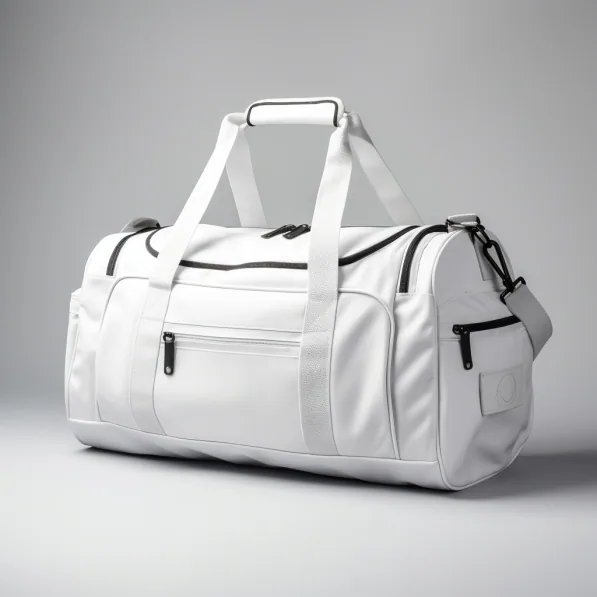
A bag can be priced when six things are known: geometry, material, hardware and trim, quantity per colourway, destination and Incoterm, and the date the goods are needed. Without all six, the number is an indication. With all six, sampling runs 6-10 working days and bulk runs 35-50 days from written sample approval.
Buyers often assume a quotation is a matter of looking at a bag and naming a price. It is not. It is a sum of material quantities, a multiplication by component prices, an estimate of minutes at each operation, and an overhead and margin applied on top. Every one of those four terms needs an input, and the inputs come from the buyer.
That is why the fastest way to a firm number is not to ask harder but to supply more. A buyer who sends six complete inputs gets a price back that can be held to; a buyer who sends two gets a range and a follow-up email with four questions in it.
What Does Geometry Actually Mean to the Person Pricing?
Not a photograph — a set of panel sizes. The person costing the bag needs to know how much material each panel takes, and that comes from the drawing rather than from the silhouette. Two bags of the same external size can use very different amounts of cloth depending on how the gussets and the base are constructed.
The second geometry input is the seam count and the seam type, because labour is minutes. A bag with one continuous gusset and a bag with four separate gusset panels look similar and take very different time to assemble. Where the buyer has a construction note, send it; where they do not, say so and accept that the labour estimate is provisional.
A third input sits behind the first two and is almost never supplied: the operation list. How many separate operations the bag passes through — cut, bind, assemble, line, close, turn, topstitch, fit hardware, inspect — is the raw material of the labour estimate. A buyer who cannot write it can still ask how many operations the price assumes, and the answer is often revealing.
How Much Material Detail Does a Price Need?
Enough to buy it. A shell line needs the fibre or polymer, the denier or the gauge, the weave or the construction, the coating or finish, the finished weight, and the colour reference. Four of those six are routinely missing, and the two that survive are usually the denier and the colour.
The same applies to the parts buyers treat as small. Lining, foam, interlining, webbing, binding, thread and hook-and-loop each need a specification, because each is a line on the material cost. A bag quoted without a lining specification has been quoted with a guess about the lining.
| Input | What the buyer supplies | What the price does without it | How to supply it quickly |
|---|---|---|---|
| Geometry | Panel sizes and a construction note | Guesses at material and at minutes | A dimensioned drawing and one line on construction |
| Shell material | Fibre, denier, weave, finish, weight, colour | Prices a stock shell instead | One line per field, or a physical reference |
| Lining and foam | Construction, weight or thickness, density | Omits two material lines | One line each on the material block |
| Hardware | Sizes, finishes, performance figures | Prices a stock part that may not hold | A hardware schedule with pull figures |
| Quantity | Pieces per style and colourway | Prices at the wrong break | A split table on the RFQ |
| Destination and terms | Port or door, and the Incoterm | Prices on the wrong rule | FOB Xiamen, or CIF or DDP named |
| Date needed | The date the goods must land | Quotes a window that may not fit | A date, and whether it is flexible |
Why Is Hardware the Input Most Often Under-Specified?
Because it looks interchangeable. A 25 mm side-release buckle in black is a description that fits several hundred parts, and those parts differ in material, in pull strength, in cycle life and in price. Without a performance figure the person costing has to pick one, and the one they pick will be the one they already buy.
The performance figure is not a nicety. On a bag that carries load — a camera bag with a body and two lenses, a kit bag with wet kit, a cooler bag full of drink — the hardware is the part that fails in service, and the failure is a return rather than a repair. State the pull in newtons and the cycle count, and the price will be for a part that survives.
Six inputs, one sentence each
- What the bag is: a description of the duty, not the category.
- What it is made of: one line per material with construction, weight and colour.
- What holds it together: a hardware schedule with sizes, finishes and pull figures.
- How many: pieces per style and per colourway, split out.
- Where: the destination port or door, and the Incoterm with its place.
- When: the date the goods are needed, and whether that date is firm.
How Does Quantity Change the Number It Produces?
Through four mechanisms, and only one of them is the obvious one. The obvious one is the price break: more pieces means a lower unit price from suppliers and better machine utilisation. The other three are the material buy, the setup cost, and the freight.
Setup is the one buyers forget. Cutting, setting a weld parameter, threading a line and making a first-off all cost the same whether the run is 500 or 5,000, and on a short run that fixed cost sits on few units. Freight behaves the same way: a carton of 40 and a carton of 50 carry the same broker entry and the same terminal handling, and the difference lands on the unit cost.
What Does the Date Needed Actually Constrain?
Whether the standard window fits at all. Bulk is 35-50 days from written sample approval, and sampling is 6-10 working days from a signed pack. Add the courier time for the sample and the approval cycle on the buyer side, and a date that looks comfortable can be tight by three weeks.
There is a second-order effect of a tight date that buyers rarely price in: it reduces the number of quotations worth getting. Where a date is comfortable, two or three material directions can be costed and compared. Where it is tight, the only direction worth costing is the one that can be delivered, and the buyer loses the comparison along with the choice.
Stating the date on the RFQ is what lets the answer be honest. Where the date does not fit, the options are a material that is in stock rather than one that has to be dyed, a stock hardware finish rather than a plated one, or a partial shipment. All three are available and all three are easier to arrange before the order than during it, and all three are visible on a request that says what the date is.
| Date pressure | What usually gives | What it costs | What it does not change |
|---|---|---|---|
| A dyed-to-match shell | Move to a stock colour | The shade moves away from the brand | Quality or construction |
| A plated hardware finish | Move to a moulded colour | The finish looks different | The pull figure |
| A tooled part | Move to a stock part | The branding on the part is lost | Function |
| A full shipment | Split the shipment | A second freight and entry charge | Unit price |
| A full sample round | Approve on photographs | Risk on hand and colour | Dimensions and construction |
| An inspection slot | Inspect inline rather than at the end | Less coverage of the finished run | The AQL level applied |
What Should Come Back With the Number?
Five things: the unit price at a stated quantity and Incoterm, the material list the price was built from, the sampling schedule, the bulk window, and the assumptions. A quotation that returns only the first of those five is a number without an argument behind it.
The assumptions are worth insisting on. They are the difference between a price that can be checked and a price that can only be accepted, and they are also the fastest way to find a mistake: an assumption that does not match the RFQ is either a misread or a gap, and both are worth knowing before the order rather than after it.
How Do You Compare Two Quotations That Are Not on the Same Terms?
Put them on one Incoterm first, and only then compare the numbers. A FOB Xiamen price and a CIF price differ by freight and insurance; a CIF and a DDP price differ by duty, entry and inland delivery. Comparing them directly is comparing two different products.
Then compare the material lists rather than the totals. Where two quotations differ by more than a small margin, the cause is almost always a material: a different shell weight, a different foam density, a different hardware source. Find that line and the difference explains itself.
Where the material lists match and the totals still differ, the cause is usually labour or overhead rather than materials, and that is a harder conversation because there is no line to point at. Ask what operation count each price was built on; a bag with four gusset panels and a bag with one continuous gusset are the same bag to look at and not the same bag to assemble.
There is a related point about the artwork file itself. A logo supplied as a screen-resolution raster cannot be scaled to a print area without loss, and the redraw is a cost and a delay that belongs on the request rather than arriving later as a surprise.
How Does Branding Change What the Request Must Say?
Decoration is a separate cost line with its own lead time, and the request has to say which process, how many placements, what size and where. Embroidery, heat transfer, silicone, a woven label and a printed panel each have a different setup cost, a different unit cost and a different minimum.
The number of placements is the figure most often understated. A logo on the front panel and the same logo on the strap pad, the lining and the puller is four placements, and each one is a separate operation with its own spoilage. Stating four rather than one changes both the price and the sampling schedule.
What If the Buyer Genuinely Does Not Know Yet?
Say which of the six is unknown and ask for a range against it. "Price this at 600D and at 420D" is a request a production team can act on; "price this bag" with no material is not. A buyer who names their uncertainty gets two numbers and a recommendation.
That is a better position than pretending certainty, because a quotation issued against a guess will be revised, and a revised quotation reads as a change of mind. Two numbers up front read as diligence and cost the same effort.
What Does a Reference Sample Do That a Drawing Cannot?
It carries the hand, the weight and the construction at once, and it resolves three questions a drawing leaves open: how stiff the shell feels, how the bag stands when it is empty, and how the panels meet at a corner. A buyer sending a reference should mark which of those three matters, because a reference sent without a note gets read for its silhouette alone.
Where the reference is a competitor's product, the note matters more. A production team reading it will otherwise copy everything, including the parts the buyer wanted to improve. Marking the two or three features that matter and the one that does not is the whole instruction.
| What is being sent | What it answers | What it cannot answer | What to add |
|---|---|---|---|
| A dimensioned drawing | Geometry and panel sizes | Hand, weight, how it stands | A construction note and a material line |
| A reference sample | Hand, weight, construction | Whether the dimensions are the ones wanted | A note on what to copy and what to change |
| A photograph | Silhouette and proportion | Anything measurable | A drawing, or a reference sample |
| A written description | Intent | Anything a price can be built on | A material class and a quantity |
| A finished pack | Everything technical | Nothing commercial | The RFQ with quantity, terms and date |
How Does the Request Turn Into a Programme?
The quotation is accepted in writing, the pack is finished and signed, and the sampling clock starts at 6-10 working days. Bulk follows at 35-50 days from written sample approval, inspected at AQL 2.5 under ISO 2859-1, shipped FOB Xiamen, paid T/T 30/70. Every one of those figures is on the quotation if the request asked for it.
Where the request did not ask, they have to be negotiated afterwards, which is the slowest place to negotiate anything. The landed cost calculator takes the quoted FOB figure and builds the rest of the unit cost from it.
Send the six inputs and get a price you can hold to
Send what you know. You get a number with the material list and the assumptions behind it, and a note on what is still open.
Frequently Asked Questions
What information do I need to request a bag quotation?
Six inputs: geometry, material, hardware and trim, quantity per colourway, destination and Incoterm, and the date the goods are needed.
Can I get a price from a photograph?
You can get a range. Material, hardware and labour minutes cannot be read from a photograph, so the number rests on assumptions.
Why does hardware need a pull figure on an RFQ?
Because a size and a colour fit several hundred parts that differ in strength, cycle life and price. Without a figure, the part chosen is the one already being bought.
How does quantity change the unit price?
Through the price break, the material buy, the setup cost and the freight. Setup and entry charges are fixed, so they sit more heavily on a short run.
What is the standard bulk window?
35-50 days from written sample approval. Sampling is 6-10 working days from a signed pack, widening to 12-15 working days on a complex style.
What if my delivery date does not fit the window?
Say so on the RFQ. A stock colour instead of a dye lot, a moulded finish instead of a plated one, or a split shipment are the usual answers.
What should come back with the price?
The unit price, the material list, the sampling schedule, the bulk window and the assumptions the number rests on.
How do I compare quotations on different Incoterms?
Put them on one rule first. FOB and CIF differ by freight and insurance; CIF and DDP differ by duty, entry and inland delivery.
What is the fastest way to find why two prices differ?
Compare the material lists rather than the totals. The cause is almost always a shell weight, a foam density or a hardware source.
What if I do not know which material I want?
Ask for two numbers against two directions. "Price this at 600D and at 420D" is actionable; a bag with no material direction is not.
Does the destination market change the price?
It changes the documents, the testing and the Incoterm. A European Union shipment needs a REACH position; a California sale needs a Proposition 65 position.
What payment terms should I expect?
T/T 30/70 is the standard position, with FOB Xiamen as the standard rule and CIF or DDP available where the buyer wants them.
How many pieces do I need to order?
500 pcs per style and colourway, with 300 pcs open to discussion on a repeat.
Should I ask for the assumptions behind the price?
Always. They turn a number into an argument that can be checked against the request in a few minutes.
People Also Ask
What do I need to send to get a bag quoted?
Geometry, material, hardware and trim, quantity per colourway, destination and Incoterm, and the date needed.
How long does a bag quotation take?
It depends on how complete the request is. Six complete inputs produce a price that can be held to; two produce a range and a list of questions.
Why do bag quotations vary so much?
Usually a material difference: a different shell weight, a different foam density or a different hardware source. Compare the lists, not the totals.
What is FOB Xiamen?
The seller puts the goods on the vessel at Xiamen and the buyer carries freight, insurance, duty and delivery from there.
Can I get a quotation before my tech pack is finished?
Yes, as an indication. It becomes a firm number when the pack is signed, because that is when the material and the labour minutes are fixed.
Sources and further reading
Every figure on this page is either our own programme data or attributed below. Open the originals before you write them into a specification.
- ASTM D6193 — Standard Practice for Stitches and SeamsASTM International
- Incoterms 2020 rulesInternational Chamber of Commerce
- YKK fastening products — size charts and specification dataYKK Corporation