How to Specify Zippers in a Tech Pack: Size, Brand and Slider
A zipper line on a pack carries six fields: chain size, chain type, direction, finish or coating, slider and puller, and cut length. "Zipper" is not a specification, and a pack that says only that will get whatever the line has on the shelf.
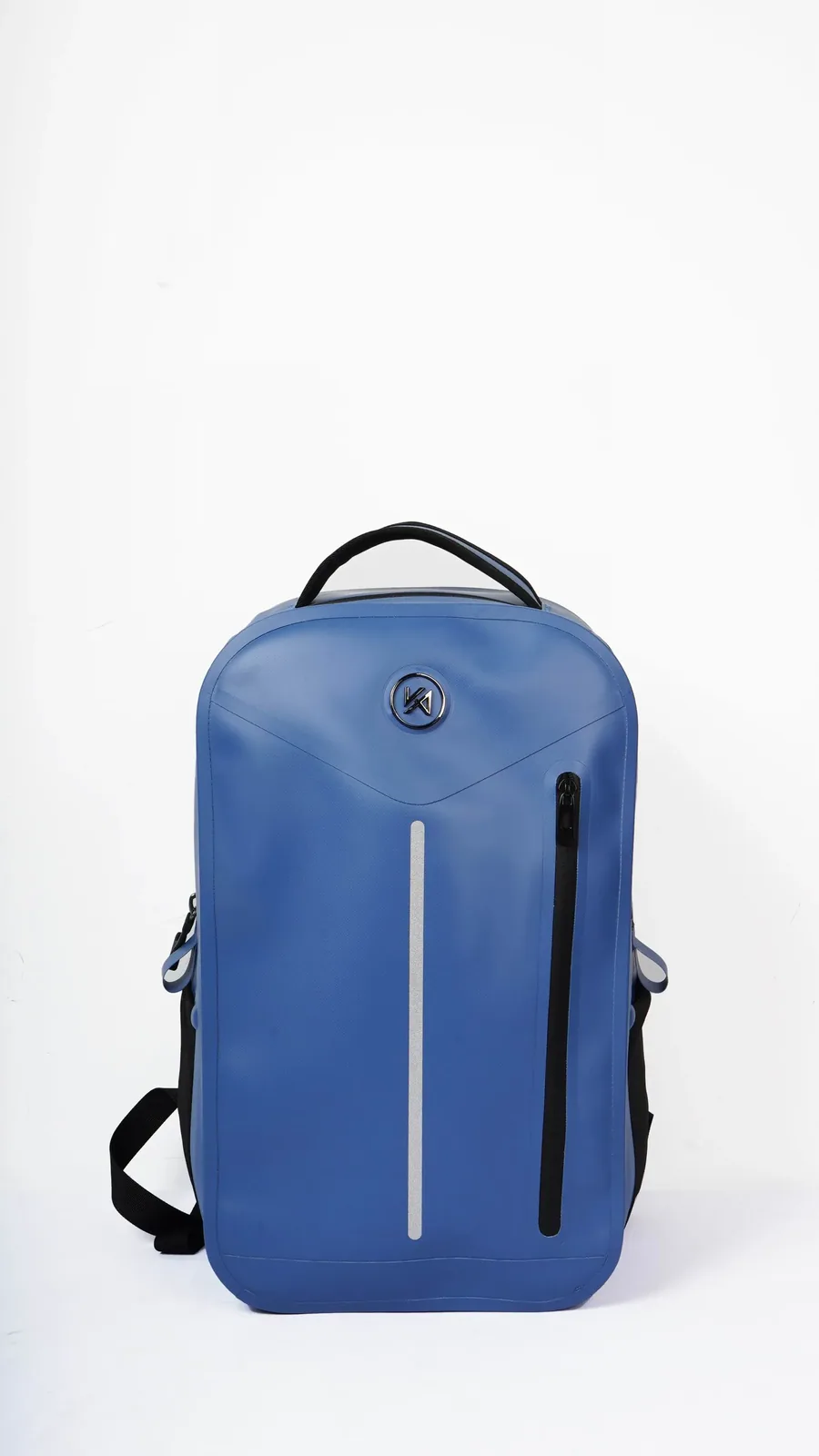
Write a zipper as a chain size, a chain type, a direction, a finish, a slider and puller type, and a cut length — for example "#5 coil, reverse, water-resistant, black oxide auto-lock slider, 320 mm". Six fields, and each one is a purchasing decision with a lead time behind it. Where a brand is named, add it as a seventh field with the part reference.
Zippers are the component most often specified in one word and the one most often wrong on a first sample. The reason is that a zipper is not one part; it is an assembly of chain, tape, slider, puller and stops, and each of those has to be chosen. A pack that says "zipper" has asked somebody else to choose five things.
The second reason is that the wrong zipper is discovered late. A chain that is too light for the duty survives sampling, passes inspection and fails in the hands of a customer, at which point the bag comes back rather than being repaired.
What Does Chain Size Actually Mean and How Is It Chosen?
Chain size is the width of the closed elements in millimetres, conventionally written as a number with a hash: #3, #5, #8, #10. It is not the tape width, which is wider, and it is not a brand-specific code — though the brands publish their own part references against the same conventional sizes.
Choosing a size is a duty question rather than an aesthetic one. A #3 suits a light pocket closure; a #5 is the general-purpose size for a main opening on a soft bag; a #8 or #10 goes on a bag that will be opened under load or over-filled. Going one size up costs a little and removes the most common field failure on the product.
Coil, Metal or Moulded: Which and Why?
Coil — sometimes written as spiral — is a continuous polymer element sewn into the tape. It is the general-purpose choice: it runs smoothly, it tolerates a curve, and it is the lowest-cost of the three to repair because a slider can often be re-set. Metal is a series of individual teeth crimped onto the tape, chosen for appearance and for a rigid feel. Moulded, or injected, is a set of polymer teeth moulded onto the tape, sitting between the two in cost and weight.
The practical consequences are worth stating on the pack. Metal teeth are heavier and can corrode at the plating; moulded teeth are stiffer than coil and do not take a tight curve well; coil is the only one of the three that behaves well when the insertion runs around a corner. Where a bag has a curved opening, that decides it.
| Chain type | Construction | Where it suits | Where it does not | What the pack should add |
|---|---|---|---|---|
| Coil, #3 | Continuous polymer element sewn to the tape | A light internal or valuables pocket | A main opening under load | Tape colour and whether the coil is dyed to match |
| Coil, #5 | As above, larger element | A general main opening on a soft bag | A heavy structured opening | Whether it is reverse, and the finish |
| Coil, #8 | As above, larger still | A kit bag or a cooler bag main opening | A light pocket, where it looks heavy | Slider type and the puller |
| Metal, #5 | Individual teeth crimped to the tape | Where appearance and a rigid feel matter | A curved insertion; a salt-air market | Plating type and thickness, and a corrosion note |
| Moulded, #5 or #8 | Polymer teeth moulded onto the tape | A straight, structured opening | A tight curve | Tooth colour and whether it is dyed to match |
| Water-resistant coil | Coil with a coated or laminated face | A cooler bag or an external opening on a wet duty | Where the pack claims full water protection | State the coating and what the claim actually is |
What Is a Reverse Zipper and When Is One Needed?
On a conventional zipper the slider body sits on the face of the chain and the puller lies on top of it. On a reverse zipper the chain is turned so the slider body sits behind and only the puller shows on the face. It is a cleaner look and it is what most soft bag programmes specify on an external opening.
There is a functional reason too. A reverse insertion puts the element on the inside of the curve, which means a coated or laminated face sits where it is protected rather than where it gets rubbed. On a water-resistant opening the reverse construction is the one to specify.
Six fields on every zipper line
- Chain size: #3, #5, #8 or #10, in conventional sizes with the brand part reference where a brand is named.
- Chain type: coil, metal or moulded, and whether it is reverse.
- Finish or coating: none, water-resistant coating, or a laminated face, stated with what the claim is.
- Slider: auto-lock, non-lock or reverse, with the finish.
- Puller: type, whether it is branded, and the attachment.
- Cut length in millimetres, with the stop type at each end.
How Does the Slider and Puller Get Specified?
The slider has three properties that matter: whether it locks, what it is made of, and what finish it carries. An auto-lock slider holds position under load without a separate stop, which is what a bag needs on any opening that will be pulled sideways. A non-lock slider is lighter and is used on a pocket that is not loaded.
The puller is the part the customer touches and the part that carries the brand. Specify the type — a standard pull, a cord pull, a moulded grip — and whether it carries a logo, because a branded puller is a tooled part with a minimum and a lead time of its own.
How Is Zipper Length Written and What Are the Stops?
As the cut length of the assembled chain in millimetres, with the stop type at each end. A non-separating zipper — the usual case on a bag opening — has a bottom stop and two top stops, and the cut length has to include the allowance for the stops and for the tape that gets captured in the seam.
A separating zipper, of the kind used where two panels come apart entirely, has a box and pin at the bottom and is specified differently: the pack has to say separating, and give the length and which side the pin sits on. Writing "zipper, 400 mm" without saying which kind is how a bag comes back with the wrong closure.
| Field | What to write | Why it matters | What happens if it is omitted |
|---|---|---|---|
| Chain size | #5, with the brand part reference | Sets strength and appearance | Whatever is on the shelf gets used |
| Chain type | Coil, metal or moulded | Sets behaviour on a curve and under load | A chain that does not suit the insertion |
| Direction | Conventional or reverse | Sets how the finished opening reads | The slider shows where it was not wanted |
| Finish | None, water-resistant, or laminated | Sets the weather claim | A claim made that the product cannot support |
| Slider | Auto-lock or non-lock, with the finish | Whether the opening holds under load | A closure that creeps open when the bag is full |
| Puller | Type and whether it is branded | The touch point and the brand | A plain puller where a branded one was quoted |
| Cut length | mm, with the stop allowance stated | What is actually ordered | A chain that is short, or one that wastes tape |
| Stop type | Bottom stop and two top stops; or box and pin | Whether the panels separate | A bag that opens the wrong way |
| Tape colour | A reference matched to the shell | Whether the trim reads as one colour | A tape a shade off the panel |
What Does a Water-Resistant Claim on a Zipper Actually Cover?
Less than buyers assume. A coated or laminated coil resists water arriving at the face of the chain; it does not make the insertion sealed, because the needle holes in the tape still pass water and the ends of the chain do not seal. A pack that specifies a water-resistant zipper and then claims a sealed bag has specified one part of a system.
Where a genuinely sealed opening is needed, the construction is a welded track or a sealed panel behind the zipper, and that is a different line on the pack with a different cost. The honest wording is worth getting right, because a claim made on a listing is a claim a customer will test.
How Does a Named Brand Fit the Specification?
As a seventh field, not as a substitute for the others. Naming a brand and a part reference fixes the quality of the chain, the slider and the tape in one move, and it is the fastest way to remove ambiguity. It does not remove the need to say what size, what type, what direction and what length.
The cost of naming a brand is a longer lead time and a higher unit price, and on a short run that is a real consideration. Where the programme cannot carry it, the pack should still specify the six fields and then state the performance the chain has to meet — a cycle count and a lateral strength figure — so an unbranded part can be tested against something.
How Is a Zipper Tested and What Goes on the Pack?
Two figures are worth having: a cycle count and a lateral strength. The cycle count says how many open-and-close operations the chain survives before it fails; the lateral strength says how much sideways load the closed chain takes before the elements separate. Both are testable on a tensile machine and both can be written as a minimum with the method named.
Where the pack names a brand, the brand's published figures are the reference and the pack should cite them rather than invent its own. Where it does not, the figures belong on the pack as a requirement, because without them an unbranded chain is untestable.
How Does the Zipper Reach the BOM and the Calendar?
As one line per zipper, each with a cut length and an allowance, and each checked against the pack quantity the chain is sold in. Chain is supplied on reels and cut to length, so the buy is a length rather than a piece count, and the allowance is a cutting loss rather than a defect rate.
The calendar effect is at the branded end. A stock chain in a stock colour is available immediately; a dyed-to-match tape or a branded puller carries a lead time that has to fit inside the bulk window. Sampling runs 6-10 working days and bulk 35-50 days from written sample approval, and the zipper line is one of the two most likely reasons a component arrives after bulk was due to start.
How Does the Zipper Line Change on a Wet-Duty or Insulated Bag?
Three things move. The chain gets a coated or laminated face, because the opening is the first place water reaches on a cooler bag that is carried wet. The insertion gets a storm flap or a garage, because a coated chain still passes water at the ends and at the needle holes in the tape. And the slider gets a finish that will not mark, because a coated chain wears the plating off an untreated slider in a season of use.
The cost consequence is worth writing down before the pack goes out. A coated chain costs more than a plain coil, a flap adds a panel and an operation, and a garage adds two more. None of those is a large number on its own, but they are the difference between a closure that works on a wet duty and one that reads as a weather product without being one.
Where the bag is insulated rather than wet-duty — a wine carrier, a lunch cooler — the more common failure is not water at all, it is a chain that stiffens in the cold and a slider that binds. Specifying a coil rather than a moulded chain, and stating a low-temperature handling note on the pack, removes that without adding cost.
One more field belongs on the line for these bags: whether the chain is single or double slider. A double-slider opening lets a customer work the bag from either end and is the arrangement most cooler bags use, and it has to be stated because a single-slider chain will not take a second slider afterwards.
What Is the Short Rule for a Zipper Line?
Write it as a part reference rather than as a word. Six fields, one line, and a brand reference on top where the programme can carry it. A pack that does this gets the zipper it asked for on the first sample rather than on the third.
Then hold the line steady. A zipper is the component most often changed silently between runs, because it looks the same at a glance and the difference is in the chain and the slider rather than in the appearance. Where the pack names the part, the second run has to match it or issue a revision.
Get the zipper line written as a part reference
Send the bag and the duty. You get the chain size, the type, the slider and the length written as one purchasable line.
Frequently Asked Questions
How do I specify a zipper on a tech pack?
Six fields: chain size, chain type, direction, finish, slider and puller, and cut length. Add a brand and part reference as a seventh where the programme can carry it.
What does zipper size mean?
The width of the closed elements in millimetres, written conventionally as #3, #5, #8 or #10. It is not the tape width.
What size zipper should I use on a bag?
A #3 for a light internal pocket, a #5 for a general main opening, and a #8 or #10 where the opening is under load or over-filled.
What is the difference between coil, metal and moulded chain?
Coil is a continuous polymer element sewn to the tape; metal is individual teeth crimped on; moulded is polymer teeth moulded onto the tape. Coil takes a curve; metal is heavier; moulded is stiff.
What is a reverse zipper?
One where the chain is turned so the slider body sits behind and only the puller shows on the face. It reads cleaner and puts a coated face where it is protected.
Should I specify a locking slider?
On any opening that will be pulled sideways, yes. An auto-lock slider holds position under load without a separate stop.
What does a water-resistant zipper actually resist?
Water arriving at the face of the chain. The needle holes in the tape still pass water and the ends do not seal, so the claim is not a sealed opening.
How is zipper length specified?
As the cut length of the assembled chain in millimetres, including the allowance for the stops and for the tape captured in the seam.
What is the difference between a separating and a non-separating zipper?
A non-separating chain has a bottom stop and two top stops; a separating one has a box and pin and the panels come apart entirely.
Should I name a zipper brand on the pack?
Yes, where the programme can carry the lead time and the price. It fixes chain, slider and tape quality in one reference, and it does not replace the other six fields.
What test figures belong on a zipper line?
A cycle count and a lateral strength, each as a minimum with the method named. Where a brand is named, cite its published figures.
Why does the tape colour need its own reference?
Because the tape is a dyed component and a polyester tape and a nylon shell do not land on the same shade from one formula.
Does a branded puller change the calendar?
Yes. It is a tooled part with a minimum and a lead time of its own, and it has to fit inside the bulk window.
What are the standard programme windows?
Sampling 6-10 working days from a signed pack, bulk 35-50 days from written sample approval, inspection at AQL 2.5 under ISO 2859-1.
People Also Ask
How do you specify a zipper in a tech pack?
Size, type, direction, finish, slider, puller and cut length — one line, no adjectives, with a brand reference on top where possible.
What zipper size do I need for a bag?
A #5 for a general main opening, a #3 for a light internal pocket, and a #8 or #10 where the opening is under load.
What is a reverse coil zipper?
A chain turned so the slider sits behind and only the puller shows. It reads cleaner and protects a coated face.
Are water-resistant zippers sealed?
No. They resist water at the face of the chain; the needle holes and the ends still pass water.
Should a bag tech pack name a zipper brand?
Yes where the lead time and price allow it, as a seventh field on top of the other six.
Sources and further reading
Every figure on this page is either our own programme data or attributed below. Open the originals before you write them into a specification.
- YKK fastening products — size charts and specification dataYKK Corporation
- ASTM D6193 — Standard Practice for Stitches and SeamsASTM International
- ISO 2859-1:1999 — Sampling procedures for inspection by attributesInternational Organization for Standardization