HS 4202.92 vs 4202.32: How to Classify Canvas, Leather and Synthetic Bags
The two subheadings differ in the article, not in the material: 4202.32 takes articles of a kind normally carried in the pocket or in a handbag, and 4202.92 takes everything else left in the heading. Both then require a plastics or textile outer surface, which is where canvas and synthetic shells land.
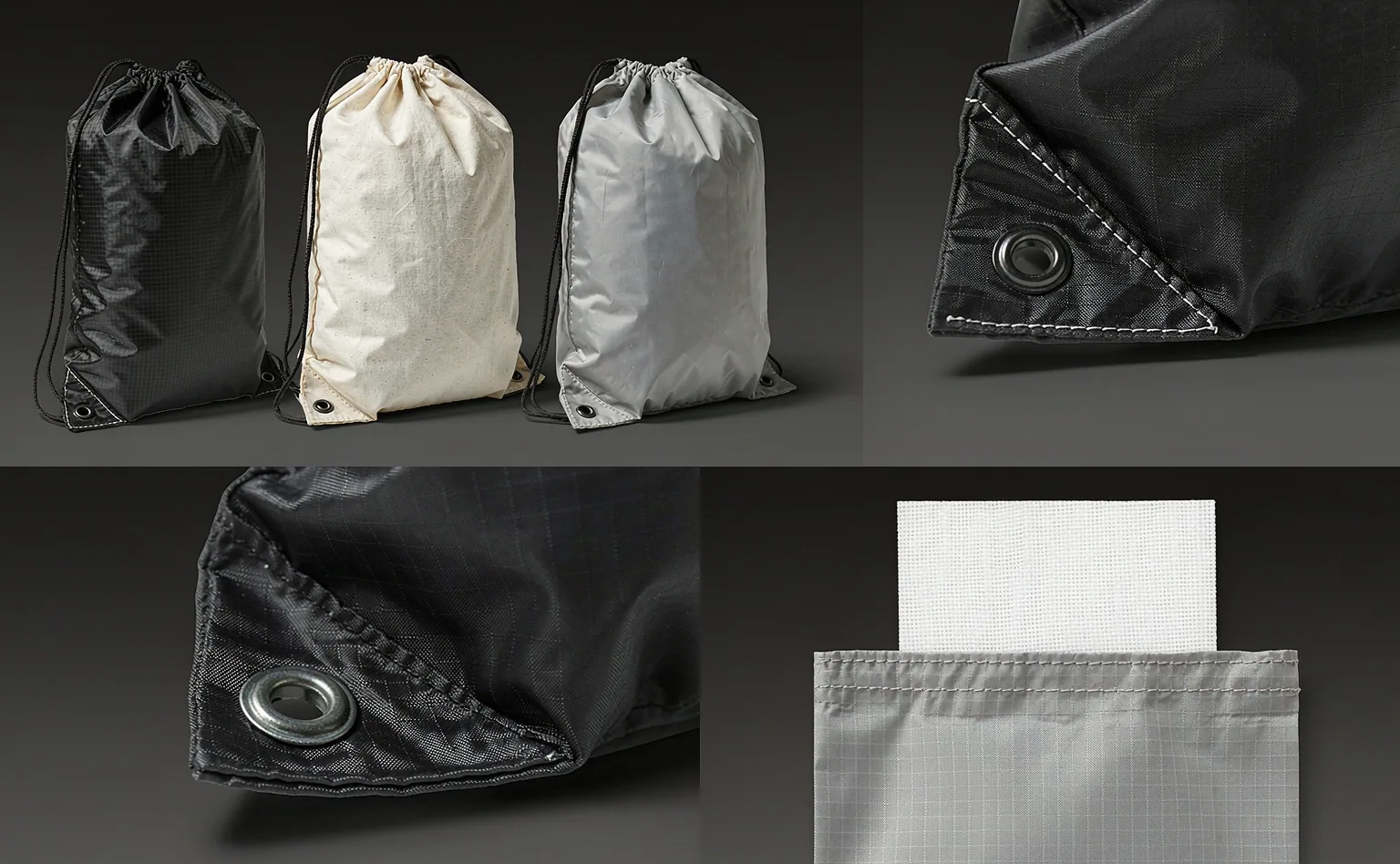
4202.32 covers articles of a kind normally carried in the pocket or in a handbag — wallets, purses, card holders, small pouches and similar — when the outer surface is sheeting of plastics or textile materials. 4202.92 covers the remainder of the heading with the same kind of surface: travelling bags, rucksacks, insulated food or beverage bags, camera cases, tool bags, sports bags and bottle cases.
These two lines are close enough in the schedule that they get confused, and far enough apart in practice that the confusion costs money. The difference is not canvas against leather against synthetic — all three can appear in either line. The difference is what the article is, decided first, and then what the surface is, decided second.
A canvas coin pouch and a canvas tote are made of the same cloth and sit in different subheadings, because one is carried inside a bag and the other is the bag. That is the whole test, and it is worth stating plainly at the beginning because every other argument about these lines comes back to it.
What Does "Normally Carried in the Pocket or Handbag" Actually Mean?
It is a test about the article, not about how one particular customer happens to use it. The phrase has been read for decades in rulings and it points at small personal articles that accompany a person inside a bag or a pocket: wallets, purses, card holders, key cases, spectacle cases, cigarette cases and tobacco pouches. Size is evidence, not the rule, and the shape and the function carry more weight than the dimensions.
Presentation is evidence here, and it is evidence the importer controls. A pouch shipped with a hanging loop and a barcode card reads as a retail article with its own identity; the same pouch packed six to a polybag with a care label that says "organiser" reads as an accessory to a bag. Neither reading is decisive on its own, but they are the kind of detail an officer reaches for when the product sits on the boundary, and they cost nothing to get right at the specification stage.
The failure mode is the in-between product. A flat zip pouch made of canvas can be sold as a pencil case, a cosmetics pouch, a cable organiser or a wallet, and the classification follows what it is presented as and how it is made rather than what the catalogue calls it. Where a product is genuinely built to sit inside another bag, 4202.32 is a defensible line; where it is built to be carried on its own with a strap or a handle, it is not.
Where Does the Outer Surface Come In?
Second, and only second. Both 4202.32 and 4202.92 carry the digit 2 because both are the plastics-or-textile surface branch of their group. A leather version of the same pouch is 4202.31, and a leather version of the same travelling bag is 4202.91. The material never moves an article between 4202.32 and 4202.92; it only moves it around inside its own group.
It is also worth separating the surface from the structure. A bag can have a textile face bonded to a foam core and a foil lining, and only the face decides the digit. Buyers who write "polyester and foam" on a specification leave the question open, because the foam and the foil are not surfaces in the sense the heading uses. State the face material, then state what is behind it, in that order, and the classification stops being arguable.
That ordering matters because buyers tend to classify by what they can see, which is the fabric. Working in the right order — article, then surface — removes most of the ambiguity, and it also produces a record that a customs officer can follow, because it follows the structure of the heading.
| Article | Group | Textile or plastics surface | Leather surface |
|---|---|---|---|
| Wallet, purse, card holder, key case | 4202.3, carried in pocket or handbag | 4202.32 | 4202.31 |
| Small flat zip pouch sold to sit inside a bag | 4202.3, carried in pocket or handbag | 4202.32 | 4202.31 |
| Travelling bag, rucksack, sports bag | 4202.9, other | 4202.92 | 4202.91 |
| Insulated food or beverage bag | 4202.9, other | 4202.92 | 4202.91 |
| Camera case, tool bag, bottle case | 4202.9, other | 4202.92 | 4202.91 |
| Handbag, with or without a shoulder strap | 4202.2, handbags | 4202.22 | 4202.21 |
What Does the Choice Cost on a Real Order?
The two lines carry different national rates, and the gap between them is what makes the argument worth having. Take a 500-piece order at FOB Xiamen USD 3.60 entered in the United States, so the transaction value is USD 1,800.00 and the duty base is the same on either line. Put an illustrative 8% on one line and an illustrative 17.6% on the other, and add a Section 301 rate of 7.5% in both cases, because that layer follows origin rather than the subheading.
At 8% the duty is USD 144.00; at 17.6% it is USD 316.80. The difference is USD 172.80 on the order, or USD 0.35 per unit. Everything else is identical: MPF falls to its floor of USD 32.71 on both, HMF is USD 2.25 on both, and freight, insurance, entry and delivery do not move at all.
| Line | Illustrative rate | Duty on USD 1,800.00 | Landed per unit | Difference |
|---|---|---|---|---|
| 4202.32 line | 8.0% | USD 144.00 | USD 5.33 | — |
| 4202.92 line | 17.6% | USD 316.80 | USD 5.68 | + USD 0.35 per unit |
| Same order, air freight | 17.6%, no HMF | USD 316.80 | USD 6.11 | Mode change costs more than the line |
| Same order, 301 removed | 17.6% only | USD 316.80 | USD 5.23 | Origin layer is the bigger lever |
How Do Leather and Synthetic Shells Change the Reading?
They change the final digit and nothing else. Full-grain, corrected-grain and split leather, and composition leather, take the digit 1. Sheeting of plastics and textile materials take the digit 2. Anything else — metal, wood, a rigid moulded shell, bare cellular rubber — takes the digit 9, and may take the article out of the heading altogether if it fails the materials condition.
Synthetic is the word that causes trouble, because it can mean a plastic sheeting or a man-made textile, and both land on the digit 2 anyway. Where it matters is further down, at the national level, where the break is by fibre and by whether the surface is coated. Write the construction, not the category: a PU-coated 600D polyester shell is a description a broker can work from, and "synthetic" is not.
Deciding between the two lines
- Ask whether the article is of a kind normally carried in the pocket or in a handbag. If yes, the group is 4202.3.
- If it is carried on its own, with a strap, a handle or a harness, the group is almost certainly 4202.9.
- Then read the outer surface: plastics sheeting or textile gives the digit 2, leather gives 1, anything else gives 9.
- Write the construction, including coating and lamination, because the national break often turns on it.
- Extend to the eight-digit national line and read the rate there.
- Compare the two candidate rates on your own order value before deciding whether an argument is worth having.
- Where the doubt survives the notes, request a ruling rather than choosing the lower line.
When Does an Article Fall Out of Both Lines?
When the exterior is not leather, not plastics sheeting and not textile. A bare neoprene shell, a moulded EVA case and an aluminium flight case all fail the surface condition on their face, and each has to be tested against its own chapter before any 4202 line is claimed. This is the boundary that produces the most rulings, because the products look like bags and are not described by the heading materials.
The second exit is function. An article that exists to protect a specific piece of equipment can be argued into a heading for that equipment, and an article that is essentially packaging can be argued into a packaging heading. Both arguments exist, both have published rulings behind them, and neither can be settled by looking at the product photograph.
The practical consequence of both exits is that a buyer should not assume a 4202 line just because the article is soft and has a zip. Softness is not a test, and neither is having a zip. The tests are the list in the heading and the materials condition, and both are answered from a construction statement rather than from a photograph of the finished product.

How Should the Decision Be Documented?
In the tech pack, in one paragraph, written before the sample is made. Record the article description in the words of the heading, the surface construction, the subheading that follows, and the date the nomenclature was read. Where the product sits near a boundary, record the competing line too and why it was rejected.
The paragraph should also carry the sample reference. A classification tied to a photographed, numbered sample is a classification that can be defended when the production run is questioned; one tied to a description alone depends on somebody remembering what the first article looked like. Where the programme repeats, keep the sample through the life of the style.
That last sentence is the one people skip, and it is the one that matters. A classification file that only records the winning line looks like a choice. A file that records both candidates and the reasoning between them looks like an analysis, and an analysis is what an officer accepts when the entry is reviewed eighteen months later.
What Does This Mean for a Mixed Catalogue?
It means one product family can span both subheadings, and the split has to be managed line by line. A programme that runs insulated delivery bags, bottle carriers and drawstring bags is all 4202.92. The moment it adds a flat organiser pouch sold to live inside a tote, part of it becomes 4202.32, and that part needs its own entry line, its own rate and its own evidence.
The administrative answer is a classification table in the master spec, one row per style, maintained in the same review as the tech pack. It costs an hour a quarter and it removes the scramble that happens when a broker asks for the code on a style nobody has classified. The HS code finder keeps the same table in the format the entry needs.
How Does This Feed the Landed Cost Model?
A mixed catalogue cannot use one blended duty rate. The rate has to be attached per style, because the mix changes the weighted average every time the order composition changes, and a blended figure hides the one style that is carrying a rate three points above the rest.
Build the model per style and aggregate at the end. Each row carries units, FOB unit price, the transaction value, the rate for that line, the fee layer and the freight allocation, and the total is divided by the total units. That is the structure behind the landed cost calculator, and it is also the structure an auditor can follow backwards from the entry to the purchase order.
There is a further reason to keep that table per style rather than per programme: a style can move. A pouch that grows a wrist strap, or a tote that shrinks into an accessory sized to live inside another bag, can cross the boundary between the groups, and the only way to notice is to have the old line written down beside the new construction and compare them on the day the change is made.
Get both candidate lines priced
Send the style list with constructions and quantities. You get the subheading for each style and the duty gap between them, in writing.
Frequently Asked Questions
What is the difference between 4202.32 and 4202.92?
The article, not the material. 4202.32 covers articles of a kind normally carried in the pocket or in a handbag; 4202.92 covers the remainder of the heading. Both require a plastics or textile outer surface.
Does a canvas bag go in 4202.32 or 4202.92?
It depends what the article is. Canvas is a textile surface, which gives the digit 2 in either group, so a canvas pouch carried inside a bag is 4202.32 and a canvas tote or rucksack is 4202.92.
Where does leather sit in this comparison?
Leather takes the digit 1 in the same groups: 4202.31 for pocket or handbag articles and 4202.91 for the remainder. The material moves the last digit, not the group.
Is size the test for "carried in the pocket or handbag"?
Size is evidence, not the rule. The phrase points at small personal articles that accompany a person inside a bag or a pocket; shape and function carry more weight than dimensions.
How much can the two lines differ in duty?
On a 500-piece order at FOB Xiamen USD 3.60, an illustrative 8% against an illustrative 17.6% is USD 172.80 on the order, or USD 0.35 per unit. Confirm both rates against the eight-digit lines before relying on the gap.
Does the Section 301 layer follow the subheading?
No. It follows origin. A China-origin bag carries the list rate attached to its line whatever the 4202 subheading is, which is why the origin layer is often the bigger lever.
What happens if the exterior is neoprene or moulded EVA?
Neither is leather, plastics sheeting nor textile on its face, so the article has to be tested against its own chapter before a 4202 line is claimed. These are the boundaries that generate the most published rulings.
Can a product fall under a heading for the equipment it protects?
Yes, that argument exists and it has rulings behind it. An article that exists to protect a specific piece of equipment can sometimes be argued into the heading for that equipment, and packaging-like articles into a packaging heading.
Should I classify by what the catalogue calls the product?
No. Classification follows what the article is presented as and how it is made. The marketing name is not part of the analysis, and a product sold under three names does not get three codes.
How should a mixed catalogue be handled?
One row per style in a classification table held with the master spec, reviewed with the tech pack. A blended duty rate across a mixed catalogue hides the style carrying the highest rate.
Why record the rejected line as well as the chosen one?
A file that records only the winning line looks like a choice; a file that records both candidates and the reasoning between them looks like an analysis. Reviews happen long after the entry.
Does changing the lining change the subheading?
No. The lining, the foam and the interlining are not the outer surface. Only the material on the outside of the finished article decides the digit, so a lining substitution does not move a 4202 line.
How do I handle a style that ships in two markets?
Hold the six-digit core once and then a national line per market, each with the date it was checked. The core travels; the national line and the rate do not, and each market reads the national break differently.
Do I need a ruling for every style?
No. Request one where the doubt survives the notes and the published rulings, or where the spend makes the exposure material. Routine styles are covered by a documented analysis.
People Also Ask
How do I tell 4202.32 from 4202.92?
Ask whether the article is normally carried in the pocket or in a handbag. If so it is 4202.3; if it is carried on its own it is 4202.9. Then read the outer surface for the last digit.
Does the material decide the 4202 subheading?
Only the last digit. Plastics sheeting and textile both give 2, leather gives 1, and anything else gives 9 or takes the article outside the heading.
What is a textile outer surface?
The material on the outside of the finished bag: polyester, nylon, canvas, recycled polyester and jersey-laminated fabrics all count. Lining, foam and webbing do not decide it.
Can two styles in one catalogue use different subheadings?
Yes, and a mixed programme often does. Each style carries its own line, its own rate and its own evidence, which is why a blended duty rate is misleading.
Where do I check the rate for a 4202 line?
In the national schedule: hts.usitc.gov for the United States, TARIC for the European Union, the UK trade tariff for Great Britain, and the national databases for Australia and the GCC states.
Sources and further reading
Every figure on this page is either our own programme data or attributed below. Open the originals before you write them into a specification.
- Harmonized System nomenclature, explanatory notes and amendmentsWorld Customs Organization
- Harmonized Tariff Schedule of the United StatesU.S. International Trade Commission
- CROSS — Customs Rulings Online Search SystemU.S. Customs and Border Protection