HS Code for Bags: The Complete 4202 Subheading Guide
Almost every soft bag shipped out of China carries a code that starts 4202. That code is built in two moves: the kind of article fixes the group, and the material on the outside fixes the last digit. Get those two moves right and the national line follows; get either wrong and the duty moves with it.
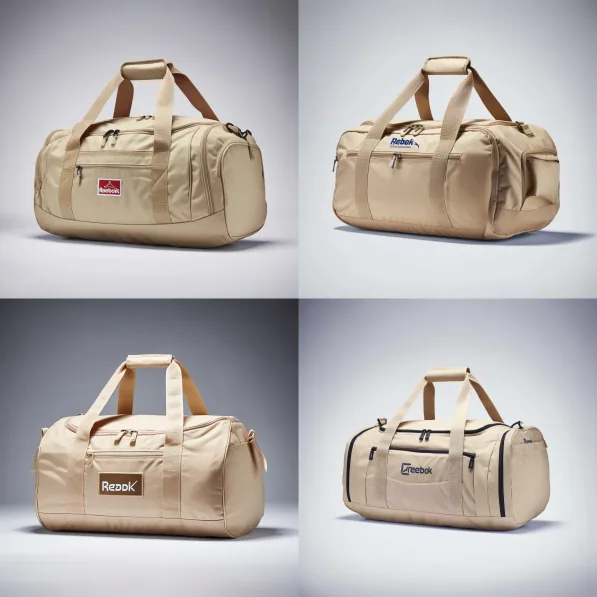
A bag is classified under 4202 by two questions, in this order: what kind of article is it, and what is on the outside. The answer to the first selects the group — 4202.1, 4202.2, 4202.3 or 4202.9 — and the answer to the second selects the final digit: 1 for leather, 2 for sheeting of plastics or textile materials, 9 for anything else.
Buyers usually meet the Harmonized System at the worst possible moment: a broker has asked for "the code" and there is a container waiting. The code is not a label anyone invents at that point. It is the output of a short decision tree written into the nomenclature, and the decision tree is stable enough that a buyer who works through it once can work through it again on the next style without asking anybody.
What makes 4202 unusual is that the description of the product — cooler bag, camera case, wine carrier, kit bag — does not appear in the code at all. The statistical name of the article decides the group, and the surface decides the digit. Two products sold side by side in the same catalogue can sit in two different groups, and the same product in two different fabrics can sit in two different digits.
What Does Heading 4202 Actually Cover?
Heading 4202 covers trunks, suit-cases, vanity-cases, executive-cases, brief-cases, school satchels, spectacle cases, binocular cases, camera cases, musical instrument cases, gun cases, holsters and similar containers, and then a second list that runs travelling bags, insulated food or beverage bags, toilet bags, rucksacks, handbags, shopping bags, wallets, purses, map cases, cigarette cases, tobacco pouches, tool bags, sports bags, bottle cases, jewellery boxes, powder boxes and cutlery cases.
That list is long enough to be useful and short enough to be argued over, which is why the heading carries a second condition. The article must be of leather or composition leather, of sheeting of plastics, of textile materials, of vulcanised fibre or of paperboard, or wholly or mainly covered with such materials or with paper. A bag whose exterior is bare cellular rubber or a rigid moulded shell does not satisfy that condition on the face of it and has to be tested against chapter 40 or chapter 39 before it lands in 4202.
How Do the Four Article Groups Split?
The heading divides into four groups at the second digit, and the division is by article kind. The first group takes the luggage-type containers: trunks, suit-cases, vanity-cases, executive-cases, brief-cases, school satchels and similar. The second takes handbags, whether or not they have a shoulder strap and including those without a handle. The third takes articles of a kind normally carried in the pocket or in the handbag. The fourth takes everything else in the list.
The fourth group is where most bag programmes land. Travelling bags, rucksacks, insulated food or beverage bags, toilet bags, shopping bags, camera cases, musical instrument cases, tool bags, sports bags and bottle cases are all "other" relative to the first three groups. A buyer who assumes a bag must be group 1 because it is large, or group 2 because it has a strap, has skipped the actual test, which is which list the article appears in.
| Group | Articles covered | Leather outer surface | Plastics or textile outer surface | Other outer surface |
|---|---|---|---|---|
| 4202.1 | Trunks, suit-cases, vanity-cases, executive-cases, brief-cases, school satchels and similar | 4202.11 | 4202.12 | 4202.19 |
| 4202.2 | Handbags, whether or not with a shoulder strap, including those without a handle | 4202.21 | 4202.22 | 4202.29 |
| 4202.3 | Articles of a kind normally carried in the pocket or in the handbag | 4202.31 | 4202.32 | 4202.39 |
| 4202.9 | Other: travelling bags, insulated food or beverage bags, toilet bags, rucksacks, shopping bags, camera cases, sports bags, tool bags, bottle cases | 4202.91 | 4202.92 | 4202.99 |
What Does "Outer Surface" Mean for the Final Digit?
Inside every group the last digit is set by the outer surface: 1 for leather, composition leather or patent leather; 2 for sheeting of plastics or of textile materials; 9 for other. Plastics and textiles share one digit, which is why a polyester rucksack and a TPU-laminated cooler bag can sit in the same subheading while carrying completely different duty treatments further down the national schedule.
The surface that counts is the one a person sees and touches on the outside of the finished bag. It is not the lining, not the interlining, not the foam and not the webbing. A canvas shell laminated to a foil liner is a textile outer surface; the same bag finished in a PVC-coated sheeting is a plastics outer surface. Where the exterior is a laminate, chapter 42 treats sheeting of plastics that is reinforced, laminated, supported or similarly combined as sheeting of plastics — read Note 2 to Chapter 42 in the edition in force before relying on that reading.
| Outer surface of the bag | Reading under 4202 | Where it goes |
|---|---|---|
| Full-grain, corrected-grain, split or composition leather | Leather or composition leather | 4202.x1 |
| Coated, laminated or PVC / TPU sheeting, laminated with textile | Sheeting of plastics | 4202.x2 |
| Polyester, nylon, canvas, recycled polyester, jersey-laminated foam | Textile materials | 4202.x2 |
| Metal, wood, moulded rigid shell, cellular rubber without a textile face | Other | 4202.x9, or outside 4202 — read the chapter notes |
Where Do Rucksacks, Cooler Bags and Camera Cases Land?
Rucksacks are named in the heading and sit in the fourth group, so a rucksack with a textile or plastics outer surface is a 4202.92 article at the six-digit level. Insulated food or beverage bags are named in the heading as well and sit in the same group; that naming was written into the nomenclature in a recent edition precisely because these bags were being pushed into packaging headings. Camera cases are named too, so a camera bag is not classified by asking whether it looks like luggage.
The consequence for a catalogue is that three products which look unrelated — a cooler bag for a grocery delivery fleet, a camera insert bag and a school rucksack — can all arrive at 4202.92, and then diverge again at the eight- and ten-digit level where national schedules add statistical breaks. That is the level where the duty rate actually lives, and it is the level a broker needs.
How Does a Six-Digit Code Become an Eight- or Ten-Digit Line?
The Harmonized System is harmonized to six digits. Everything after that is national. The United States publishes an eight-digit tariff line and a ten-digit statistical suffix; the European Union publishes ten digits inside TARIC with measures attached to the line; the United Kingdom publishes its own ten-digit commodity codes after leaving the EU tariff; Australia and the GCC states publish their own extensions.
Practically, this means the same physical bag has four or five correct codes depending on where it is entered, and the six-digit core is the only part that travels. A specification sheet that carries only "4202.92" is correct and insufficient. Write the six-digit core and then, per market, the national line confirmed against that market database on the date the quotation was issued.
What to write into the tech pack
- The six-digit 4202 subheading with the reasoning in one line: article kind first, outer surface second.
- The outer-surface construction stated as material plus finish, for example 600D polyester with a PU coating.
- The national line per destination market, each with the date it was checked.
- The edition of the nomenclature the code was read from.
- A photograph of the exterior at the point the surface claim is made.
- The ruling reference if the line was confirmed in writing by the authority.
- The person who signed the classification off and when.
Where Does the Code Stop Being Harmonized?
At the sixth digit, and a little earlier in practice. Two countries can read the same product differently at the six-digit level because the explanatory notes leave room, and they can certainly read it differently at the eight-digit level because the national breakouts differ. A code that has been confirmed in one market is evidence, not authority, in another.
It is also worth knowing that the nomenclature itself is revised on a multi-year cycle, so a code carried on a spec sheet for years may have been renumbered or split. Insulated food or beverage bags are the case in point: they were pulled into the heading text in a recent revision, and any classification reasoning written before that revision has to be redone.
| Decision in the tree | What to record | Where it gets checked |
|---|---|---|
| Article kind | The word from the heading list the product matches | Explanatory notes to 4202, current edition |
| Outer surface | Material, finish and whether it is laminated | Chapter 42 notes; the physical sample |
| Six-digit subheading | The four groups and the surface digit | WCO nomenclature; national database |
| National line | Eight or ten digits with the rate attached | hts.usitc.gov, TARIC, the UK trade tariff, ABF |
| Ruling | Reference number and date if one was requested | CROSS, a national binding ruling register |
What Evidence Should Travel With the Code?
The classification record belongs with the tech pack and not with the invoice, because the invoice is produced after the decisions that need to be documented have already been made. The minimum is the subheading, the construction that justifies it, the date it was checked and the name of the person who checked it. Where the spend or the risk justifies it, a written ruling is worth more than any amount of internal reasoning.
A written ruling is also the only answer that binds. Internal reasoning, a broker opinion and a supplier declaration are all useful, and none of them stops an officer at the port from reading the entry differently. A ruling requested in advance, against a sample and a construction statement, converts an argument into a document.
How Does the Code Reach the Landed Cost?
The code selects the duty rate, the duty rate is applied to a base that differs by market, and the result is one line in a landed cost model. In the United States the base is the transaction value, which is generally the FOB-type invoice value with international freight excluded; in the European Union, the United Kingdom, Australia and the GCC states the base is a CIF value that includes freight and insurance. The same rate produces different cash because the base is different.
That is why a code change is never only a compliance event. Moving a textile surface bag from one 4202 line to another can move several points of ad valorem duty, and on a 500-piece order at FOB Xiamen USD 4.80 a rate that moves from 17.6% to 20% is about USD 58 of duty on the order — small on one shipment, and a full margin point over a year of monthly shipments. Run the numbers in the landed cost calculator before the code is confirmed, not after.
What Happens When Two Codes Both Look Defensible?
It happens more often than most buyers expect, usually because a product sits on the boundary between a named article in 4202 and a container in a packaging heading, or because the exterior is a laminate that could be read as plastics or as textile. The resolution is not to pick the lower rate. The resolution is to read the general rules in order, then the section and chapter notes, then the explanatory notes, and then to look for published rulings on the same construction.
Where the doubt survives all of that, request a ruling. A buyer who has asked and received an answer has a defence; a buyer who chose the favourable line and kept the reasoning in a drawer has an exposure that grows with every entry, because the authority can revisit prior entries and the interest runs from the date of entry rather than the date of the audit.
Get the code confirmed before the entry
Send the construction, the destination market and the quantity. You get the subheading reasoning and the national line to check, in writing.
Frequently Asked Questions
What is the HS code for bags in general?
Most soft bags fall in heading 4202. The six-digit subheading is built in two moves: the article kind selects the group — 4202.1 for luggage-type containers, 4202.2 for handbags, 4202.3 for articles carried in the pocket or handbag, 4202.9 for the rest — and the outer surface selects the final digit.
Is 4202 the only heading a bag can fall under?
No. A bag whose exterior is bare cellular rubber or a rigid moulded shell does not meet the materials condition in the heading and has to be tested against chapter 40 or chapter 39 first. Insulated liners sold without a carrying function can be pulled toward packaging headings.
What does "outer surface of sheeting of plastics" include?
It covers sheeting of plastics and, per the chapter notes, sheeting that is reinforced, laminated, supported or similarly combined with textile or other materials. Confirm the wording in Note 2 to Chapter 42 in the edition in force before you rely on it.
Do plastics and textiles share a subheading?
Yes. Both fall in the .x2 subheading of their group, so a polyester rucksack and a TPU-laminated cooler bag can sit at 4202.92 and still diverge at the national eight- or ten-digit level where rates live.
How many digits of the code are international?
Six. Everything after the sixth digit is national: the United States publishes eight digits plus a ten-digit statistical suffix, the EU publishes ten digits in TARIC, and the UK, Australia and the GCC states publish their own extensions.
Where does a rucksack or backpack sit?
Rucksacks are named in the heading and sit in the fourth group, so a textile or plastics outer surface puts them at 4202.92 at the six-digit level. The national schedule then breaks the line further and attaches the rate.
Where does an insulated cooler bag sit?
Insulated food or beverage bags are named in the heading text and sit in the fourth group, so a textile or plastics exterior gives 4202.92. That naming was written into the nomenclature in a recent edition, so reasoning written before it has to be redone.
Where does a camera bag sit?
Camera cases are named in the heading, so the classification does not turn on whether the bag looks like luggage. A textile or plastics exterior gives 4202.92 at the six-digit level, confirmed against the national line.
Does the HS code decide the duty rate?
The code selects the line and the line carries the rate. It also decides the base that rate is applied to: the United States generally uses the transaction value, while the EU, UK, Australia and the GCC states use a CIF value.
What should be written on a spec sheet?
The six-digit subheading, the construction that justifies the outer-surface claim, the national line per destination market with the date it was checked, the nomenclature edition, and the name of the person who signed it off.
Does a supplier declaration settle the classification?
It is evidence and it is not authority. A written ruling from the importing authority is the only answer that binds, and internal reasoning does not stop an officer reading the entry differently.
Can a code I have used for years go stale?
Yes. The nomenclature is revised on a multi-year cycle and lines get split or renumbered. Re-check any code that has been carried on a spec sheet for more than one revision cycle, and re-check insulated bags in particular.
People Also Ask
How do you classify a bag under HS 4202?
Answer two questions in order: which list in the heading does the article appear in, which fixes the group, and what is on the outside, which fixes the final digit. Then extend the six-digit code to the national line for the destination market.
What is the difference between 4202.12 and 4202.92?
Both are plastics-or-textile-surface lines, but 4202.12 covers the luggage-type containers such as trunks, suit-cases and school satchels, while 4202.92 covers the remainder including travelling bags, rucksacks, insulated food or beverage bags and camera cases.
What is the outer surface test in heading 4202?
The material on the outside of the finished bag decides the final digit: 1 for leather, 2 for sheeting of plastics or textile materials, and 9 for other. Lining, foam and webbing do not decide it.
How often does the Harmonized System change?
The nomenclature is revised on a multi-year cycle, with the current edition having added a number of new product categories to existing headings. Codes carried on old spec sheets should be re-checked against the edition in force.
Does the same bag have one HS code worldwide?
The first six digits are the same worldwide. Each country then adds its own digits, so one bag has several correct national codes and the duty rate sits at the national level.
Sources and further reading
Every figure on this page is either our own programme data or attributed below. Open the originals before you write them into a specification.
- Harmonized System nomenclature, explanatory notes and amendmentsWorld Customs Organization
- Harmonized Tariff Schedule of the United StatesU.S. International Trade Commission
- CROSS — Customs Rulings Online Search SystemU.S. Customs and Border Protection