Rugby Team Bags: Ball Pockets, Boot Carriers and Shoulder Load
Rugby generates the heaviest, dirtiest kit list in the cluster: a size 5 ball, a pair of moulded boots with mud on them, a scrum cap, a gumshield and a wet shirt. The bag has to carry all of it, separate the mud, and survive being carried across a field.
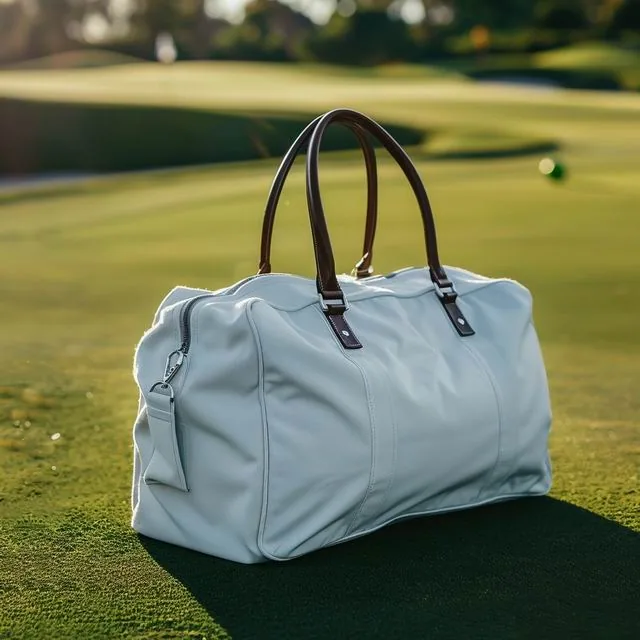
Three objects decide a rugby bag: a size 5 ball, a muddy pair of boots and a wet shirt. Separate the boots, shape the ball pocket, and specify the strap for a load that is carried across a field rather than across a car park.
What Makes Rugby Kit the Hardest Load in the Cluster?
Weight and dirt, together. A rugby kit list is a pair of boots, a shirt, shorts, socks, a scrum cap, a gumshield, a water bottle and often a change of clothes for afterwards — and two of those items arrive with mud on them. That is heavier and dirtier than a football kit and considerably dirtier than a cricket kit.
The second factor is distance. Rugby is played on pitches that are often a long way from the car park, and a rugby bag is carried across a field rather than from a bus to a changing room. That makes the shoulder load the governing design constraint rather than the volume.
| Item | Weight contribution | Dirty | Design consequence |
|---|---|---|---|
| Boots | High | Very | A separated, lined, wipeable compartment |
| Wet shirt and socks | Moderate | Yes | A drained wet zone |
| Ball, size 5 | Low | Sometimes | A shaped pocket, 280 x 220 mm |
| Scrum cap | Low | Sometimes | A pocket that does not crush it |
| Water bottle | Moderate | No | External or lined |
| Change of clothes | Moderate | No | The dry zone, genuinely separated |
How Should the Ball Pocket Be Dimensioned?
To a size 5 ball, which is about 280 mm long and 220 mm wide, and which does not compress usefully. A pocket cut to 280 by 220 will not take a muddy ball with any ease, so the working figure is the ball plus a margin — roughly 300 by 240 internally.
The second decision is whether the pocket is shaped or is simply a space. A shaped pocket with a curved base holds a ball in one orientation and stops it rolling into the middle of the bag; a plain space lets it move, and a moving ball is a ball that ends up against the wet compartment seam.
External Ball Holder or Internal Pocket?
For rugby, external is usually the better call. The ball is needed at the pitch, not in the changing room; it is muddy; and carrying it inside means carrying mud inside. An external holder — a pair of straps or a shaped cradle on the end of the bag — keeps it out of the volume and reachable without opening anything.
The counter-argument is snagging, and it is real: an external ball on a bag that goes into a minibus will catch. Where a club travels by bus, the internal shaped pocket is the better answer and the mud problem is solved by putting the pocket where it can be wiped rather than by leaving the ball outside.
Where Do Rugby Boots Go?
In a compartment of their own, lined with a coated cloth, positioned at the end of the bag and opening externally wherever the silhouette allows. Rugby boots carry more mud than any other footwear in this cluster and the studs are hard, so the lining has to be wipeable and abrasion-resistant.
| Boot storage | Mud contained | Wipeable | Stud damage | Verdict |
|---|---|---|---|---|
| Lined end compartment, external opening | Yes | Yes | Low | The standard answer |
| External boot pocket with a drain | Yes | Yes | Low | Best for a wet club |
| Sealed wet compartment | Yes | Yes | Low | Works, but holds damp |
| Mesh pocket | Partly | Yes | Moderate | Acceptable, not ideal |
| Loose in the main volume | No | No | High | The complaint clubs report |
How Does the Shoulder Load Get Specified?
Rugby is the sport in which the strap matters most, because the bag is carried furthest. Four fields: webbing width, padding position, the reinforcement patch and the stitch type. The webbing has to be wide enough to spread a heavy load; the padding has to sit where the strap crosses the shoulder rather than where it looks symmetrical.
- Webbing width and material, stated as a specification.
- Padding position, not merely padding — it has to sit on the shoulder.
- A reinforcement patch behind the root, dimensioned on the drawing.
- Bar-tack or box stitch at the root, named to ASTM D6193.
- Seam strength on the assembled joint, evidenced to ISO 13934-1.
How Heavy Is a Loaded Rugby Bag?
Around 8 kg for a full kit with a change of clothes, and up to 11 kg where a water bottle and a second pair of boots are carried. That is comparable with a loaded cricket bag and heavier than a football bag, and it is carried further than either.
The consequence is that a rugby bag benefits from a padded yoke rather than a simple strap wherever the silhouette allows it. A yoke spreads the load across both shoulders and it is the single most effective change a club can make to a bag that is carried across a field.
Does a Rugby Bag Need Wheels?
Rarely. The bag is carried across grass, which is the surface wheels handle worst, and a wheeled bag is heavier before anything is put in it. A club that has a long walk on a hard path may benefit; a club that crosses a field will not.
The better investment for a rugby bag is the yoke and the base. A coated base panel with corner protection survives being set down on a wet pitch, and a yoke makes the carry bearable. Between them they solve the two problems a rugby club actually has.
How Does Colour Work on a Rugby Programme?
Rugby clubs tend to run strong, saturated club colours and often a hooped or quartered shirt, which presents the same problem a football club faces: no single flat field to match against. The reference should be chosen deliberately from the dominant shirt colour and stated as such on the tech pack.
The approval is the standard discipline, with one addition worth naming for rugby: mud. A club colour that is light will show every mark from a pitch, and a club that plays on a heavy ground should think hard before specifying a pale shell. The method is set out in Reorder colour consistency.
| Substrate | Drift risk | Mud visibility | What to insist on |
|---|---|---|---|
| Shell fabric | Moderate | Depends on the shade | A coupon and a lot number |
| Boot compartment lining | Low | High — it is the muddy one | A dark, coated lining |
| Embroidery thread | High | Low | A coupon matched to the reference |
| Webbing and binding | Moderate | Moderate | A coupon in the same session |
| Zipper tape | Moderate | Low | Stated as a requirement |
What Should the Tech Pack Say?
Six fields, and a rugby specification is complete. The two most often left out are the shoulder load requirement and the boot compartment lining.
Tech pack fields for a rugby team bag
- Ball pocket: internal dimensions to a size 5 ball plus margin, shaped or plain.
- Boot compartment: position, lining, wipeability and whether it drains.
- Strap or yoke: width, padding position, reinforcement and stitch type to ASTM D6193.
- Base: coated or heavier denier, with corner protection and a board.
- Wet zone: dimensions, lining and whether it drains.
- Colour references for shell, lining, webbing, tape and thread.
How Is the Sample Judged?
Loaded and carried across grass. That is the test a rugby bag needs and it is not reproducible in a meeting room. Put boots in the boot compartment, a wet shirt in the wet zone, a ball in the pocket and a change of clothes in the dry zone, then carry it two hundred metres and set it down.
Four questions decide it: does the strap stay on the shoulder, does the bag keep its shape, is the dry zone still dry, and can the boots be reached without opening everything.
How Does the Season Calendar Drive the Order?
Rugby seasons start in the autumn in most markets, which puts the production window in the summer — the most contested window in the calendar, because every northern-hemisphere autumn sport wants it. Working backwards: bulk is 35-50 days from written sample approval and sampling is 6-10 working days from a signed-off tech pack.
A club that wants kit for a September start has to raise the enquiry in the spring. A club that raises it in July is competing for the same slots as every football and hockey programme in the country. The calendar is set out in Why 35 to 50 days.
What Does the Inspection Criteria Need to Include?
Six checks: ball pocket dimensions, boot compartment lining and position, strap reinforcement and stitch type, base coating and board, colour against the approved coupon set, and crest position measured from a seam. Written into the major defect classification, they are enforceable at the Ac/Re decision.
The stitch check is the one that predicts a return on a rugby bag, because the strap root is the part that fails and it fails after the inspection rather than during it. The arithmetic is set out in AQL 1.5 versus 2.5.
What Does a Rugby Programme Cost to Run?
The four usual levers, with one rugby-specific point: the boot compartment and the wet zone are both lined compartments, and a coated lining costs more than a plain one. Two lined compartments on one bag is a material decision worth making deliberately rather than by default.
The saving available is the reorder. Holding the reference, the coupon set, the dye-lot record and the shade band makes the second season a comparison, and it is what makes 300 pcs available on a repeat against the standard MOQ 500 pcs.
What Goes Into the Enquiry?
Six fields, and a rugby enquiry is complete. The carry distance is the one clubs forget, and it is the one that decides the strap or yoke specification.
- How far the bag is carried, and over what surface.
- Whether boots travel in the bag, and how muddy they arrive.
- Ball carry: external holder or internal shaped pocket.
- Whether a padded yoke is wanted in place of a strap.
- Colour references for shell, lining, webbing, tape and thread.
- Quantity split and the date the kit is needed.
What Fails First on a Rugby Bag?
The strap root, the boot compartment lining and the base corner. In that order, and all three are consequences of the same thing — rugby kit is heavy, dirty and carried a long way.
Each is prevented with one clause: a reinforcement patch with a stitch type named to ASTM D6193, a coated dark lining in the boot compartment with an abrasion result to ISO 12947, and corner protection on the base.
How Does a Rugby Club Handle the Front Row and Heavy Kit?
Front-row kit is heavier than the rest, and in some clubs the props carry a scrum cap, a second shirt and a pair of boots that are larger and muddier than everyone else's. Asking one silhouette to serve the whole squad is usually fine; asking it to serve the front row and the backs identically is not.
Where a club wants to accommodate it, the answer is not a bigger bag — it is a stronger one. A yoke, a wider strap and a stiff base board do more for a heavy kit than extra volume does, and they keep the silhouette the same across the squad.
What Does a Rugby Club Do About Post-Match Kit?
A rugby club has a specific problem no other sport in this cluster has: the shirt is worn after the match as well as during it, and the club often needs a dry top for the bar. That means the dry zone has to survive a full match of the wet zone being used.
The specification answer is a genuinely separated dry zone with a barrier rather than a fold, and it is worth testing on the sample — a wet shirt in the wet zone and a dry top in the dry zone, closed for two hours, then checked. Clubs that skip the test discover the problem on the first Saturday.
Should a Rugby Club Use the Same Bag as a Football Club?
It can, and many do, because the kit lists are close: boots, a shirt, a ball and a wet zone. The two differences are the ball size and the boot weight — a rugby ball is larger and rugby boots are heavier and muddier.
Where one silhouette serves both, specify the ball pocket to the larger ball and the boot compartment to the heavier boot. The football club gets a slightly larger bag than it needs and the rugby club gets one that works, which is the right way round for the compromise to fall.
How Is the Programme Kept Stable Across Seasons?
With the four artefacts: the reference, the coupon set, the dye-lot record and the shade band. Rugby clubs have a particular reason to hold them, because the boot compartment lining is a dark, coated substrate that will never read identically to the shell, and without a coupon set that difference gets re-litigated every season.
Where the artefacts exist the reorder is a comparison. Where they do not, the club re-develops, and the re-development lands in the summer — the one window in which a rugby programme cannot afford to lose time.
What Is the Shortest Useful Advice for a Rugby Club?
Specify the carry, not the compartments. A rugby bag with three perfect compartments and a narrow strap is a bag that hurts, and a bag that hurts gets left in the car.
The second piece of advice is to make the boot compartment dark. It is the one part of the bag that will be muddy every single week of the season, and no colour decision matters as much as that one.
The third is to test the dry zone properly. A rugby club is the only buyer in this cluster who needs a dry top at the end of the session rather than at the start of it, and that requirement is worth writing on the tech pack in plain terms.
Specify the carry, not the compartments
Tell us how far the bag is carried, what arrives muddy and the date it is needed, and we come back with a specified bag and a delivery date you can calculate.
Frequently Asked Questions
How should a rugby ball pocket be dimensioned?
To a size 5 ball plus a margin — roughly 300 by 240 mm internally, shaped so the ball does not roll.
Should a rugby bag carry the ball outside?
Usually yes, because it is needed at the pitch and it is muddy. Where a club travels by bus, a shaped internal pocket avoids snagging.
Where do rugby boots go?
A lined, wipeable compartment of their own, ideally opening externally. Rugby boots carry more mud than any other footwear in the cluster.
Should a rugby bag have wheels?
Rarely. Wheels handle grass badly and add weight before anything is put in the bag.
How heavy is a loaded rugby bag?
Around 8 kg, and up to 11 kg with a second pair of boots and a full bottle.
What is a padded yoke and when does it earn its place?
A yoke spreads the load across both shoulders. For a bag carried across a field it is the single most effective change a club can make.
What is the minimum order?
MOQ 500 pcs per style and colourway, with 300 pcs open to discussion on a repeat.
How long does sampling take?
6-10 working days from a signed-off tech pack, extending to 12-15 working days for a complex build or a new club colour.
How long is bulk production?
35-50 days from written sample approval, inspected at AQL 2.5 under ISO 2859-1.
When should a club order for a September start?
In the spring. Bulk is 35-50 days and sampling is 6-10 working days, against the busiest production window of the year.
What fails first on a rugby bag?
The strap root, then the boot compartment lining, then the base corner.
Can one silhouette serve rugby and football?
Yes. Specify the ball pocket to the larger ball and the boot compartment to the heavier boot.
People Also Ask
How do you size a rugby team bag?
By the ball, the boots and the carry distance — in that order.
Where do rugby boots go?
A lined, wipeable compartment of their own, ideally opening externally.
Should a rugby bag have wheels?
Rarely — wheels handle grass badly and add weight.
How heavy is a loaded rugby bag?
Around 8 kg, up to 11 kg with a second pair of boots.
What fails first on a rugby bag?
The strap root, the boot compartment lining and the base corner.
Sources and further reading
Every figure on this page is either our own programme data or attributed below. Open the originals before you write them into a specification.
- World Rugby — Laws of Rugby Union and equipment guidanceWorld Rugby
- ISO 13934-1 — Tensile properties of fabrics, strip methodInternational Organization for Standardization
- ASTM D6193 — Standard Practice for Stitches and SeamsASTM International