What Does a Sample Room Show About Production Capability?
A sampling setup is the clearest window onto capability that a site visit offers, because it is where a design becomes an object. Six things are observable in an hour: the stations, the pattern store, the tech pack at the bench, the comment log, whether the sample was built on production tooling, and how a revision is numbered.
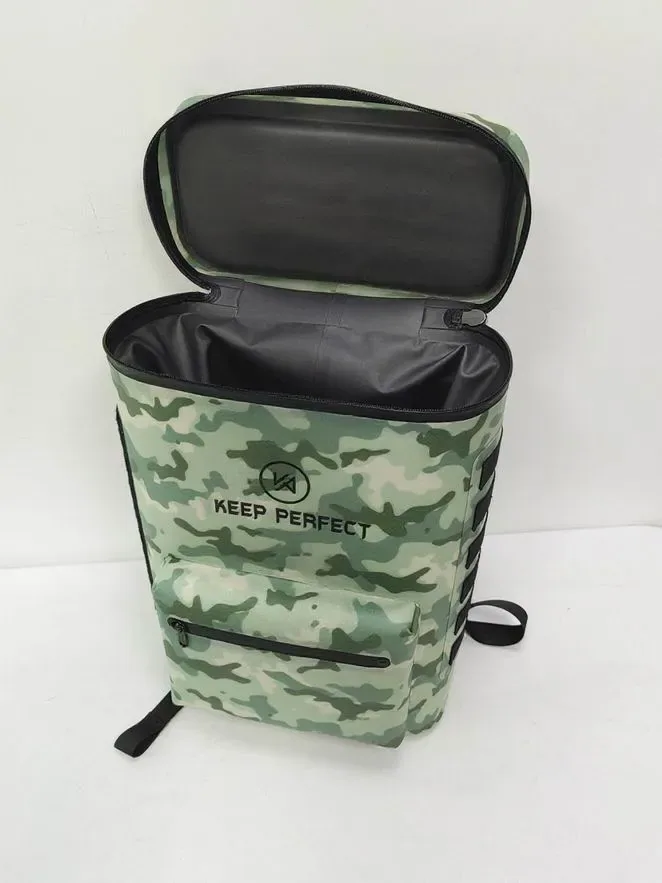
Six things are observable in an hour in a sampling area: how many stations there are and how they are laid out, how patterns are made and stored, whether the tech pack is the working document at the bench, how comments from the last round are tracked, whether the sample was built on production tooling or by hand, and how a revision is numbered. None of the six requires a question to be answered. All six are visible from the door.
A sampling area is the most informative hour a site visit can buy. It is where a design becomes an object, where the specification is either used or ignored, and where the distance between what was asked for and what was made is either recorded or forgotten. A showroom shows what a production partner can do once. A sampling area shows how often they get there, and how they know.
This piece treats the subject as an assessment of process rather than of any named place. Everything below is observable in an hour without specialist knowledge, and none of it depends on a claim being made. The output is a table of what was seen, what it implies and what to ask, plus the four questions that discriminate fastest when time is short.
Why Does the Sampling Area Tell You More Than the Showroom?
Because a showroom is a record of successes and a sampling area is a record of method. Any production base can show a good bag. The interesting question is how many rounds it took, how the comments from each round were carried forward, and whether the approved unit can be reproduced. Those three are visible in the sampling area and invisible in the showroom.
The second reason is that sampling sits directly on the critical path of the buyer programme. On this programme sampling runs 6-10 working days from a signed-off tech pack and bulk production runs 35-50 days from written sample approval. A sampling process that needs four rounds instead of two is not a quality problem. It is a calendar problem, and it costs more than any single defect found later.
What Should You Look at First When You Walk In?
Three things, in the first two minutes, before anybody explains anything. Whether the benches are laid out by operation or as a single run of identical stations. Whether there is paper at each station. And whether finished and part-finished units are identifiable, by a label, a bag or a tag carrying a style and a revision. All three are visible from the door and none of them can be arranged in advance.
The third is the one most visitors miss and the one that predicts the most. A unit on a bench with no marking is a unit whose history ends at that bench. Where a programme runs three or four revisions before approval, unmarked units mean the approved reference cannot later be identified with confidence, and the first argument about which version was approved is then unwinnable for both sides.
How Many Sampling Stations Matter, and How Are They Laid Out?
The number matters less than the variety. A room of eight identical sewing stations tells a buyer that one operation is done at volume. A room with a cutting table, a skiving station, a welding or heat-seal station, a sewing bank, a setting station for hardware and a finishing bench tells a buyer that a whole bag can be made in one place without leaving it. The second arrangement is what a sampling area is for.
What matters about the layout is sequence. Stations arranged in the order the bag is built signal that the flow was thought about; stations grouped by machine type signal that they were arranged by what was available. Neither is disqualifying, but the first tends to produce a sample in fewer rounds, because a problem found at the setting station does not require a walk across the room to discuss.
How Are Patterns Made and Stored?
Ask to see the pattern for a style currently in sampling, and then ask how it is stored. Two things are being established: whether the pattern exists as a controlled item with a revision, and whether it can be found. A pattern cut from card, marked with a style number and a revision, hanging on a numbered rack, is a controlled item. A pattern in a drawer with a handwritten note is a working aid.
Then ask how the pattern was produced. A digitally produced pattern, cut on a plotter or a cutting machine, transfers to bulk without redrawing and carries its own tolerance. A hand-drawn pattern transfers as a shape that somebody has to interpret. Both can produce an excellent bag; only one produces the same bag twice, and repeatability is what a programme at MOQ 500 pcs per style and colourway actually requires.
Is the Tech Pack the Working Document at the Bench?
This is the single most discriminating observation in the hour. At each station there is either a printed tech pack and a marked-up pattern, or there is a sample unit and a conversation. Where the document is present it is usually annotated, with a measurement circled, a note in the margin or a tick against a line, and those annotations are the strongest available sign that the specification is being worked from rather than remembered.
Where the document is absent, ask what the sampler is working to. The answer is normally a previous sample or a verbal instruction, and both fail in the same way: they carry the last round rather than the requirement. A measurement taken from a previous sample inherits every error in that sample. A measurement taken from the tech pack starts from the requirement, which is why a document-led sampling process converges in fewer rounds.
| What is visible | What it implies | What to ask |
|---|---|---|
| A printed tech pack at each station, annotated | The specification is the working document | Which version is at the bench, and who updates it |
| Samples only, no document at the bench | The process runs on the previous unit | What is this round being measured against |
| Patterns on a numbered rack with revisions | Pattern control and repeatability at volume | How many revisions has this style had |
| Patterns in a drawer, unlabelled | The pattern depends on who is working | Can the approved version be reproduced next season |
| A comment log with owner, date and closure | Comments are tracked rather than remembered | Who closes a comment, and how is closure evidenced |
| Comments only in email | Nothing is tracked at the bench | What happens to a comment that arrives mid-round |
| Units tagged with style and revision | The approved reference is identifiable | Where are the last three versions kept |
| Units untagged on a bench or shelf | History ends at the bench | Which unit was approved, and how would it be found |
How Are Comments From the Last Round Tracked?
Look for one artefact: a comment log for the style, sitting with the sample, listing each point raised, who raised it, who owns the fix, and whether it was closed. Where it exists it is normally a printed sheet or a spreadsheet. Where it does not, the comments exist only in an email thread on somebody else's computer.
The distinction matters because of what happens between rounds. A sampling round produces a set of points; some are accepted, some are questioned, and a few are missed. Without a log, the missed ones are discovered at the inspection rather than at the sample, and by then the bulk has been cut. A log is the difference between a comment that is closed and a comment that is assumed.
Is the Sample Built on Production Tooling or by Hand?
The most useful question in the room and the one least often asked. A sample built by a skilled operator on a bench, with hand-cut panels and hand-set hardware, demonstrates that the bag can be made. It does not demonstrate anything about the bulk, because the bulk will be made with dies, jigs and a welding electrode by operators working at pace.
Ask directly which operations in this sample were done on production tooling. A well-run sampling area answers precisely: panels cut on the production die, welds made with the production electrode, hardware set with the production jig. It will also say which operations were done by hand and why. The honest answer nearly always includes some hand work at the sampling stage; what matters is that the answer is specific rather than general.
How Is a Revision Numbered, and Where Are the Old Versions?
Ask to see the last three versions of a style in sampling. Three things are being checked: that a version number exists at all, that it appears on the unit rather than only in a file name, and that the previous versions are still there. Where the previous versions have been discarded, the comparison that makes a revision meaningful is gone, and the buyer is left approving a unit in isolation.
A workable numbering scheme is short and unambiguous: the style number, a revision letter or number, and a date, marked on the unit and used consistently in the comment log and in the correspondence. A scheme that reuses the same number for an unchanged resubmission, or that changes the style number when only the colour changes, produces confusion at exactly the point where clarity matters.
| Where to look | A document-led room looks like this | A unit-led room looks like this |
|---|---|---|
| The bench | A printed tech pack and a marked-up pattern at the station | A previous sample unit and a note |
| The pattern store | Numbered rack, a revision on each pattern | A drawer with handwritten notes |
| The units | Tagged with style and revision, previous versions kept | Unmarked, previous versions discarded |
| The comments | A log with owner, date and closure | An email thread on another computer |
| The tooling | Panels cut on the production die, welds on the electrode | Everything cut and set by hand |
| The fabric | Production material, or a substitute named as one | Whatever was available at the time |
Which Four Questions Discriminate Fastest?
Where the hour is short, four questions carry most of the information. One: which operations in this sample were done on production tooling and which by hand. Two: can the tech pack and the comment log for the current round be seen. Three: how is a revision numbered, and can the last three versions be produced. Four: what changes between this unit and bulk, and is the material in this unit available at production volume.
- 1. Production tooling
- A specific list of which operations used production tooling, and which did not
- 2. Working document
- A tech pack at the bench and a comment log for the current round
- 3. Revision control
- A version number on the unit, and the previous three versions still held
- 4. Bulk difference
- A named difference, if any, and confirmation the material exists at volume
The fourth question is the one buyers forget and the one that most often explains a later surprise. A sample built from a fabric held in small quantity, or from a hardware item bought locally, is a sample that cannot be repeated at MOQ 500 pcs per style and colourway. Asking whether the material exists at production volume, at the sampling stage, converts a discovery at bulk into a decision at sampling.
How Should What You Saw Be Recorded?
On the day, in a single note, in a fixed format: what was observed, at which station, what it implies, and what remains unresolved. Observations rather than conclusions, so six sewing stations rather than adequate capacity, because an observation can be checked later and a conclusion cannot. Twenty minutes of writing at the end of the visit is enough.
Then two follow-ups. The unresolved items go into the next communication with the production side as questions rather than as findings. And the note goes into the programme file with the date and the visit owner. A note that stays with one person is not evidence of anything; a note in the file is the basis of the next review, and it is what makes the second visit comparable with the first.
What the sampling setup shows
- A showroom records successes; a sampling area records method.
- The tech pack at the bench, annotated, is the single strongest signal.
- Patterns on a numbered rack with revisions predict repeatability at volume.
- Ask which operations used production tooling; the honest answer is specific.
- A revision number belongs on the unit, and the previous versions should still exist.
- A sample fabric that is not available at production volume is a bulk problem waiting.
- Record observations rather than conclusions, on the day, and file them with a date.
The commercial frame is unchanged by anything observed in the room: MOQ 500 pcs per style and colourway, sampling 6-10 working days from a signed-off tech pack, bulk production 35-50 days from written sample approval, inspection at AQL 2.5 under ISO 2859-1 General Inspection Level II, T/T 30/70, quoted FOB Xiamen with CIF and DDP available. What the visit establishes is how much of that window will be spent in revision rounds.
One closing caution about how the hour is spent. The instinct is to look at the bag. The bag is the output and it will be good; it was made to be good, slowly, by a skilled operator. The useful information is in everything around it, in the document at the bench, the pattern on the rack and the log on the unit, because those are the things that will still be there when the bag is being made at pace by somebody else. Look at the process and the bag takes care of itself.
Get a sample room assessment checklist
Send the style and the visit date. You get a one-hour observation sheet with the four questions, within one business day.
Frequently Asked Questions
Why is the sampling area more informative than the showroom?
A showroom records successes and a sampling area records method: how many rounds it took, how comments were carried, and whether the approved unit can be reproduced.
What should you look at first when you walk in?
Whether benches are laid out by operation, whether there is paper at each station, and whether units are identifiable by style and revision.
How many sampling stations matter?
The variety matters more than the number. A room that can cut, skive, weld, sew, set hardware and finish can make a whole bag without leaving it.
How should patterns be made and stored?
Produced digitally where possible, marked with a style number and a revision, and held on a numbered rack rather than in a drawer.
Why does the tech pack at the bench matter?
Because a measurement taken from the requirement converges in fewer rounds than one taken from the previous sample, which inherits every error in it.
How should comments from the last round be tracked?
In a comment log sitting with the sample, listing each point, who raised it, who owns the fix, and whether it was closed.
What does it mean if a sample is built by hand?
That the bag can be made, and little about the bulk. Ask which operations used production tooling; a specific answer is the signal.
How should a revision be numbered?
Style number, revision letter or number, and a date, marked on the unit and used consistently in the log and the correspondence.
What are the four questions that discriminate fastest?
Which operations used production tooling, can the tech pack and comment log be seen, how is a revision numbered, and what changes between this unit and bulk.
Why ask whether the sample material is available at production volume?
Because a fabric held in small quantity or a locally bought hardware item cannot be repeated at MOQ 500 pcs per style and colourway.
How should what you saw be recorded?
On the day, as observations rather than conclusions, filed with the date and the visit owner so the next visit is comparable.
Does a good sample prove bulk capability?
No. A good sample proves the bag can be made by a skilled operator on a bench. Bulk capability is shown by the process around it.
How does sampling affect the programme calendar?
Directly. Sampling runs 6-10 working days from a signed-off tech pack and bulk runs 35-50 days from written sample approval, so extra rounds come out of the launch date.
People Also Ask
How do you assess a sample room?
Observe rather than ask: stations and layout, pattern storage, the tech pack at the bench, the comment log, production tooling versus hand work, and revision numbering.
What does a sampling setup show about capability?
Method rather than output: whether the specification is the working document and whether an approved unit can be reproduced at volume.
Why is a tech pack at the bench important?
It means measurements come from the requirement rather than from the previous sample, so the process converges in fewer rounds.
Should samples be built on production tooling?
Where possible. A hand-built sample proves the bag can be made; a tooled sample predicts what bulk will look like.
How should sample revisions be numbered?
Style number, revision and date, marked on the unit, with the previous three versions still held for comparison.
Sources and further reading
Every figure on this page is either our own programme data or attributed below. Open the originals before you write them into a specification.
- ISO 9001 — Quality management systemsInternational Organization for Standardization
- ISO 2859-1:1999 — Sampling procedures for inspection by attributesInternational Organization for Standardization
- ISO 19011 — Guidelines for auditing management systemsInternational Organization for Standardization