Is SBR Neoprene, or Is Polychloroprene the Real Thing?
Both are sold under that name. Polychloroprene resists oil, ozone and weathering better and recovers better from compression; styrene-butadiene rubber prices well below it and its weak points rarely decide a bag outcome. Name the polymer, then buy the properties.
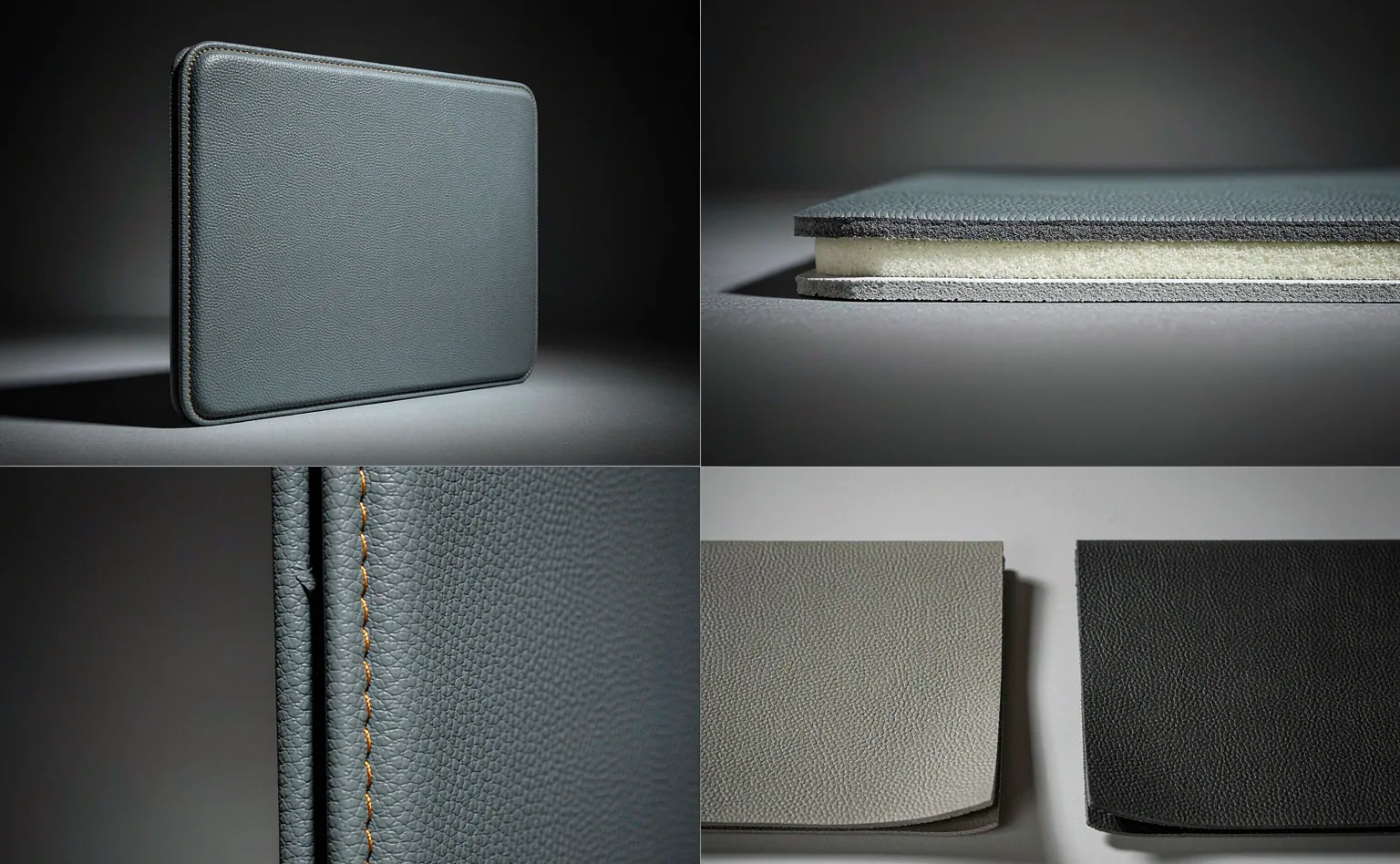
Two polymers are sold in the bag trade under the word neoprene. Polychloroprene (CR) is the original chloroprene rubber: better against oil, ozone and weathering, better recovery, higher cost. Styrene-butadiene rubber (SBR) is a general-purpose synthetic: adequate against water and repeated flexing, poor against oil and ozone, and priced well below CR. Most volume bag programmes use one of the two, or an SCR blend in between.
The naming problem in this material is old enough that the trade stopped caring, and buyers pay for that indifference. A quotation says "neoprene" and might mean a chloroprene elastomer, a styrene-butadiene foam, or a blend of the two in an unspecified proportion, each of which behaves differently against oil, sunlight, ozone and time. This page separates the chemistry, says plainly what each one is good at, and sets out the clause that makes whichever is supplied verifiable at goods-in.
Where Did the Word Neoprene Come From, and What Does It Cover Now?
Neoprene began as a trade name for polychloroprene, developed as an oil-resistant synthetic rubber, and it became generic in English-speaking buying long before anybody thought to police it. In the sheet foam trade today it functions as a category word covering several closed-cell elastomeric products made for wetsuits, protective padding and — in thinner gauges — bag panels. That usage is not going to change, which means the answer is precision in the specification rather than pedantry in the conversation.
The precision needed is small and specific. A material line that says "neoprene, 3 mm" is unenforceable. A line that says "closed-cell SBR sheet, 3 mm plus or minus 0.20 mm, density stated" can be checked against a mill certificate, and a line naming CR instead can be checked the same way. The whole argument about what neoprene means dissolves the moment the polymer is named.
| Property | Polychloroprene (CR) | Styrene-butadiene rubber (SBR) | SCR blend |
|---|---|---|---|
| Oil and solvent resistance | Good; this is what it was developed for | Poor; swelling and softening | Intermediate, tracks the CR share |
| Ozone and weathering | Good chlorine-based resistance | Poor without protective additives | Intermediate |
| Flame behaviour | Self-extinguishing tendency from chlorine content | Burns readily | Intermediate |
| Compression set and recovery | Better recovery after sustained load | Adequate; can take more permanent set | Intermediate |
| Low-temperature flexibility | Good in a properly compounded grade | Good; often slightly better at very low temperature | Intermediate |
| Cost position | Highest of the three | Lowest of the three | Between the two |
| Typical bag use | Premium protective and marine-exposed article | Volume bag, pouch and sleeve work | The common compromise |
What Is Polychloroprene Chemically?
It is a polymer built from chloroprene monomer, and the chlorine atom in the repeat unit is what does the work. It makes the chain more polar, which is why the material resists swelling in hydrocarbon oils far better than an unsaturated hydrocarbon rubber does, and it makes the polymer intrinsically less flammable. The result is a general-purpose elastomer with better-than-average resistance to oil, weathering and heat, sold at a premium over the volume synthetics.
In sheet foam form it is compounded with blowing agents to create the closed cell structure, vulcanised, and usually laminated to a textile face. The grade and the compound matter as much as the base polymer: two CR sheets from different mills can differ more than CR differs from SBR, because filler loading, cure system and cell structure are all mill decisions. This is why every clause in this page ends on the same point — name the polymer, then ask for the certificate.
What Is SBR, and Why Does It Appear in Bag Programmes?
Styrene-butadiene rubber is the largest-volume synthetic rubber in the world, originally developed as a general-purpose replacement for natural rubber and used mostly in tyres. Its compound cost sits well below CR, it processes well, it takes a fine uniform cell structure in sheet foam form, and it has entirely adequate resistance to the things a bag actually meets: water, sunlight behind a window, repeated flexing, and the abrasion a bag gets in normal use.
Where it falls short is specific and usually irrelevant to a bag. It swells in contact with oils and greases, so an article carried next to mechanical equipment degrades. It is attacked by ozone, so an article stored stretched outdoors cracks. And it burns, where CR tends to self-extinguish. None of those three decide the outcome of a pencil case or a bottle tote, which is why SBR carries most of the volume in this category.
How Do CR and SBR Differ on Oil, Ozone and Weathering?
Oil resistance is the decisive one, because it is the largest gap and the easiest to test. Rubber compounds are evaluated for dimensional change and property change after immersion in a reference fluid for a stated time and temperature, and the oil-swelling behaviour of rubber is standardised in ISO 1817. An SBR sample immersed in a hydrocarbon oil visibly swells and softens; a CR sample changes far less. Where an article will meet grease, solvent or oil, that one test settles the choice.
Ozone resistance is the second gap, and it is tested by exposing a stretched specimen to an ozone-containing atmosphere until cracking appears. A stretched SBR article stored outdoors develops the characteristic crazing across the stress direction, while CR survives far longer. Weathering follows the same pattern, though the face fabric hides it in service: by the time any sign reaches the outside, the foam beneath has usually lost much of its recovery.
How Do They Differ on Compression Set and Recovery?
Compression set is the measure that matters most in practice for a bag, and it is measured by compressing a specimen by a stated percentage for a stated time at a stated temperature, then allowing it to recover and measuring what came back. Poor set behaviour shows up as a panel that has gone flat: a bag that looked full in photography and looks tired after two months in a container, or a base that has lost its cushioning.
CR generally recovers better, which is one of the arguments for spending more on it. But compound design moves this result more than base polymer does: a well-compounded SBR with a proper cure system can beat a poorly-compounded CR. The practical instruction is to specify set as a property with a number and a test condition rather than to specify CR and hope. Set costs less bought as a requirement than as a polymer.
- Base polymer
- Named: polychloroprene, styrene-butadiene rubber, or a stated blend ratio
- Cell structure
- Closed cell, stated skin on both faces
- Gauge
- Core before lamination, absolute tolerance
- Density
- Stated with a tolerance and a measurement method
- Compression set
- Maximum percentage at a stated compression, time and temperature
- Oil resistance
- Where relevant, dimensional change limit to ISO 1817 in a named fluid
- Certificate
- Mill certificate against the lot, naming polymer and compound
- Face fabric
- Fibre, construction and weight, named separately
- Change control
- Written notice before any polymer or compound substitution
- Reference specimen
- Retained from the approved lot and held against the reorder
What Temperature Range Does Each Handle?
Both are comfortably specified across the temperature range a bag will meet, and neither should be chosen on this axis. Chloroprene grades are commonly quoted across a broad sub-zero to well above boiling range, SBR similarly across a broad sub-zero band, and both lose flexibility at the cold extreme and stiffen with heat ageing at the other. Those are the general behaviours; the specific figures come from the mill, not from a summary.
What does differ, and what a bag programme actually notices, is heat ageing rather than service temperature. Both polymers stiffen and eventually embrittle with prolonged heat, and an article left on a dashboard in summer or shipped in a container through a tropical port ages faster than the laboratory would predict. Where the duty involves sustained heat, ask for an accelerated ageing result rather than a service range, because the range tells you nothing about the slope.
The other practical thermal question is what happens repeatedly rather than continuously. An article that is washed warm, dried warm and then carried moderately warm every day accumulates heat ageing in small increments, and the symptom is a panel that has gone stiff rather than one that has failed outright. That is why a specification written only around extremes misses the failure mode that actually reaches the customer, and why an ageing result over a stated period is more useful than a maximum figure.
Cold behaviour deserves a sentence for programmes shipping into northern markets. Both polymers stiffen below zero, and a stiff panel is a poor cushion exactly when it matters least — in transit. Recovery after cold storage is usually complete once the article returns to room temperature, but an automated pack-out line operating in an unheated warehouse handles the panels differently in February than in June, and that difference shows as seam defects rather than as material complaints.
| Duty signal | Polymer to specify | Property to write into the clause | Evidence to request |
|---|---|---|---|
| Everyday bag, no oil or marine exposure | Styrene-butadiene rubber | Density and compression set | Lot certificate with the physical results |
| Carried near food oils, grease or solvents | Polychloroprene | Maximum volume change in a named fluid | Immersion result to ISO 1817 |
| Stored stretched outdoors for a season | Polychloroprene | Minimum time to cracking under ozone exposure | Ozone resistance result, stated conditions |
| Sustained stacking rather than falls | Either, with higher density | Compression set at stated time and temperature | Set figure for the supplied lot |
| Shipped flat-packed through a tropical port | Either, with an ageing result | Property retention after stated heat ageing | Accelerated ageing result with the slope recorded |
| General volume with no specific exposure | An SCR blend is usually sufficient | Density, set and a named blend ratio | Certificate naming the blend ratio |
What Do the Two Cost, and Where Does the Money Show?
CR sits well above SBR on compound cost, and the gap is large enough that it changes the part price rather than being absorbed in it. That is usually the whole argument, and it is a legitimate one: for most bag applications, specifying CR buys properties the article will never need. The money is better placed in the density, the face fabric and the seam construction, all of which decide more of what the customer notices.
Where CR earns its place is specific duty. Marine and watersports exposure, anything carried close to oils or solvents, an article stored stretched outdoors for a season, or a programme whose selling story is explicitly about the material rather than the shape. In those four cases the price difference buys something the customer can perceive, and in every other case it buys a line on a specification nobody reads.
How Should the Polymer Be Named in the Specification?
By base polymer, then by the three properties that actually decide behaviour — density, compression set and, where relevant, oil resistance — rather than by a trade name. That formulation survives a mill substitution because the properties still have to be met, while a trade-name-only clause either locks the programme into one supplier or quietly expires the first time stock runs short.
Where the programme genuinely depends on chlorine-containing performance, write it as a requirement rather than a name: a stated maximum dimensional change after immersion in a named fluid, or a stated minimum time to cracking under a stated ozone exposure. Those two lines are enforceable without arguing about what neoprene means, and they are how most disputes in this material end.
Keeping the polymer decision honest
- The word neoprene covers several polymers; name the base polymer in the material line.
- Buy properties rather than names: density, compression set, and oil resistance where it matters.
- SBR carries most bag volume because its weaknesses rarely decide a bag outcome.
- CR earns its premium in marine, oil-exposed or stored-stretched duty, not generally.
- Require a lot certificate and written notice before any compound substitution.
What Evidence Should a Mill Declaration Carry?
Four items, and all four are routine requests that a competent supplier answers without fuss. The base polymer and compound reference. The physical results for the lot: gauge, density, and where specified, set or oil resistance with the method named. The date and the lot identification, so that the certificate can be tied to the actual goods. And a restricted-substance position against the REACH candidate list, because both polymers are compounded with curatives, accelerators and oils that appear on the substances buyers screen for.
The last item deserves a sentence to itself. A bag programme usually asks for OEKO-TEX certification on textile components and then stops, leaving the foam itself without a chemical position. The foam is the largest single component by mass in many of these articles, and it is the one with the most chemistry in it. Ask for it in the same email as the physical certificate, before rather than after the first shipment.
Programme numbers do not change with the polymer decision: MOQ 500 pcs per style and colourway, sampling 6-10 working days from a signed-off tech pack, bulk production 35-50 days from sample approval, inspection at AQL 2.5 under ISO 2859-1 General Inspection Level II, T/T 30/70, quoted FOB Xiamen. What does change is the sampling window when a specific sheet is not held in stock, because a mill order for a named polymer and compound has its own lead time and moves the build toward 12-15 working days.
Name the polymer before you name the price
Send the duty, the exposure and the quantity. You get a polymer recommendation with the property clause behind it, within one business day.
Frequently Asked Questions
Is SBR the same as neoprene?
In trade usage both are sold under the word neoprene. Chemically, polychloroprene is the original chloroprene rubber and SBR is a different synthetic; name the base polymer in the material line.
Which is better for bags, CR or SBR?
For most bag duty, SBR: lower in cost, adequate against water and flexing, and compounded to a fine cell structure. CR is specified for oil, marine or prolonged outdoor exposure.
How can I tell CR from SBR at goods-in?
Not reliably by eye. Ask for a lot certificate naming the polymer and compound, and where oil resistance matters, ask for an immersion result to ISO 1817.
What is an SCR blend?
A compound blending polychloroprene and styrene-butadiene rubber, positioned between the two on both properties and price. Ask for the blend ratio in writing.
Does SBR crack outdoors?
It is attacked by ozone and will craze when held stretched outdoors. CR resists far longer. For a bag stored relaxed behind glass, this rarely decides anything.
Does the polymer affect compression set?
Yes, though compound design moves the result more than base polymer does. Specify set as a number with a test condition rather than relying on choosing a polymer.
Which polymer resists oil better?
Polychloroprene, substantially. Oil swelling is tested by immersion to ISO 1817 and it is the widest single performance gap between the two.
Is CR flame resistant?
Chlorine content gives it a self-extinguishing tendency where SBR burns readily. Any regulated flame requirement is still a tested property, not a claim.
What does CR add to the cost?
It sits well above SBR on compound cost, enough to move the part price. Spend it when the duty needs it rather than as a general specification.
What certificate should the mill provide?
A lot certificate naming polymer and compound, physical results for gauge and density, lot identification, and a restricted-substance position against the REACH candidate list.
What is the MOQ for a named polymer?
MOQ 500 pcs per style and colourway, with repeat programmes open to discussion at 300 pcs.
Can a named sheet slow sampling?
Yes. If the specific sheet is not held in stock, the mill order has its own lead time and moves sampling toward 12-15 working days.
Should the face fabric be specified separately?
Yes. Fibre, construction and weight belong on their own line, because the same foam can be laminated to very different faces.
Does neoprene yellow?
Both polymers discolour to some extent with ultraviolet exposure, though the face fabric usually shows it first. Ask about light-fastness where appearance is critical.
People Also Ask
Is neoprene the same as SBR?
Not chemically. Both are sold as neoprene in the trade; polychloroprene is the original and SBR is a general-purpose synthetic sold below it.
What is real neoprene made of?
Polychloroprene, a chlorine-containing synthetic rubber. The chlorine is what gives it oil resistance and a self-extinguishing tendency.
Is SBR good enough for bags?
For most programmes yes, because a bag rarely meets oil, ozone or sustained outdoor stretch.
When should I pay for polychloroprene?
For marine exposure, oil contact, stored-stretched outdoor duty, or where the material itself is the selling story.
How do I check which polymer was supplied?
Request a lot certificate naming the polymer and compound, plus the physical results for that lot.
Sources and further reading
Every figure on this page is either our own programme data or attributed below. Open the originals before you write them into a specification.
- ISO 1817 — Rubber, vulcanized: determination of the effect of liquidsInternational Organization for Standardization
- REACH — Registration, Evaluation, Authorisation and Restriction of ChemicalsEuropean Chemicals Agency
- OEKO-TEX Standard 100 — testing for harmful substances in textiles and allied materialsOEKO-TEX Association