How to Spec a Team Bag Tech Pack: Compartments and Reinforced Seams
A tech pack is not a drawing with notes — it is the set of fields that makes a bag repeatable. For a team bag, the two fields that decide whether the bag survives a season are the compartment dimensions and the reinforcement and seam specification at the load points.
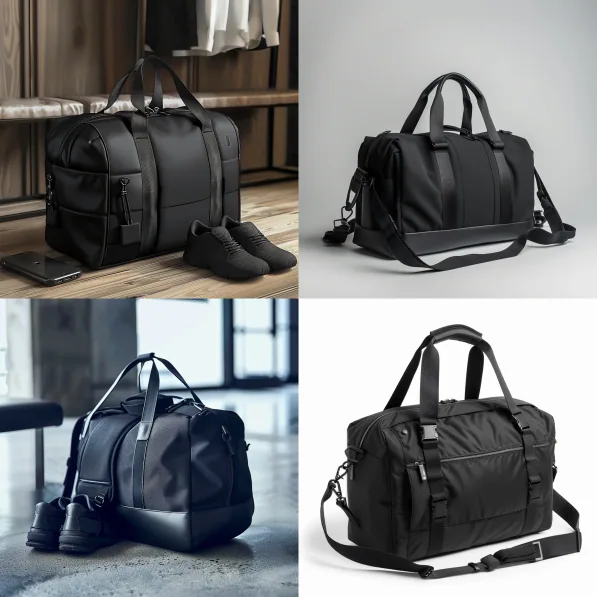
A complete team bag tech pack has eight sections: silhouette, compartments, materials, colour, reinforcement and seams, hardware, personalisation and compliance. Six of the eight are usually supplied; reinforcement and compliance are the two that go missing.
What Is a Tech Pack Actually For?
It is for making the second bag the same as the first, and the second order the same as the first one. A drawing gets a sample made; a tech pack gets a repeatable product made. The difference is that a drawing describes and a tech pack specifies — dimensions, materials, tolerances and evidence.
Clubs feel this at the second order rather than the first. A first order can be made from a sketch, a conversation and a sample that gets approved by eye. The second order, placed eleven months later by a different person, cannot — and that is when an incomplete pack turns into a different bag.
| Document | What it does | What it cannot do |
|---|---|---|
| A sketch | Communicates an idea | Be measured against at inspection |
| A photograph | Shows what existed | Specify a compartment or a seam |
| A product page | Describes a range | Carry a tolerance |
| A tech pack | Specifies every field | Nothing — this is the specification |
| A purchase order | Commits a quantity and a price | Describe the product |
How Should Compartments Be Dimensioned?
Internally, in three dimensions, with the lining installed. External dimensions tell a club nothing useful, because the lining, the padding and the seam allowances consume different amounts of space in different constructions. Internal dimensions with the lining in are the only figures that predict whether the kit fits.
The second rule is to attach a purpose to each compartment. "Compartment two: 260 x 180 x 120 mm, wet kit, coated lining, drain at the base" is a specification. "Three compartments" is not, and it will produce whatever the pattern cutter thinks three compartments should be.
| Compartment | Internal dimensions | Purpose | Lining | Special |
|---|---|---|---|---|
| Main | 400 x 240 x 260 mm | Dry kit | Standard | None |
| Wet zone | 260 x 180 x 120 mm | Damp kit | Coated | Drain at the base |
| Boot | 340 x 200 x 140 mm | Boots | Coated, dark | External opening |
| Valuables | 180 x 120 x 40 mm | Phone and keys | Standard | Sealed seam |
| Ball pocket | 300 x 240 x 240 mm | Ball | Standard | Shaped base |
What Does the Reinforcement Section Need?
Four load points, and a reinforcement and a stitch type for each: the strap roots, the handle attachment, the base corners and the compartment mouths that get pulled. Those four are where a team bag fails, and they are the four that a drawing does not describe.
The specification has three parts per load point: the reinforcement patch and its dimensions, the stitch type named to ASTM D6193, and the stitch density. Naming the type without the density is half a specification, because a bar-tack at six stitches behaves differently from one at twelve.
| Load point | Reinforcement | Stitch type | Density | Evidence |
|---|---|---|---|---|
| Strap root | Patch, 80 x 60 mm | Bar-tack or box, ASTM D6193 | Stated per cm | ISO 13934-1 on the joint |
| Handle attachment | Continuous webbing under the bag | Lockstitch, ASTM D6193 | Stated per cm | ISO 13934-1 on the joint |
| Base corner | Binding or moulded foot | Lockstitch, ASTM D6193 | Stated per cm | Transit evidence |
| Compartment mouth | Bound rather than turned | Chain or lock, ASTM D6193 | Stated per cm | ISO 13934-1 |
| Zip end | Bar-tack at the stop | Bar-tack, ASTM D6193 | Stated per cm | Visual and pull test |
Which Stitch Types Does a Team Bag Actually Use?
Four, and the names matter because they are the ones that appear in ASTM D6193. A lockstitch is the general seam. A chainstitch appears where a seam needs to give slightly. An overlock or a bound seam finishes an internal edge. A bar-tack or a box stitch concentrates strength at a point.
- Lockstitch for the general seams, with the density stated per centimetre.
- Bar-tack or box stitch at every strap root, handle end and zip stop.
- A bound seam at every compartment mouth that gets pulled open.
- A continuous handle webbing under the bag rather than two stitched tabs.
- Stitch density stated as a number, not as "standard".
How Is Seam Strength Evidenced?
On the assembled joint rather than on the fabric. A fabric tensile result to ISO 13934-1 tells a club how strong the cloth is; it does not tell the club whether the seam holds. The seam has to be tested as it is built, with the specified stitch type and density.
That distinction is worth stating on the tech pack as a requirement, because the default is to supply a fabric result. A club asking for a seam result gets a different answer, and it is the one that predicts whether a strap stays on a bag.
What Goes in the Materials Section?
Five lines, one per zone: shell, base, lining, wet-zone lining and trim. Each line identifies the cloth by construction and denier, gives the mass per unit area, states the finish or coating, and names the test result required.
| Zone | Fields to complete | Test result to request |
|---|---|---|
| Shell | Construction, denier, mass, finish | ISO 13934-1 tensile |
| Base | The same four, plus whether it differs | ISO 12947 abrasion |
| Lining | The same four | ISO 13937-1 tear |
| Wet-zone lining | The same four, plus coating | ISO 2411 coating adhesion |
| Trim and webbing | Width, material, colour reference | AATCC 16 light fastness |
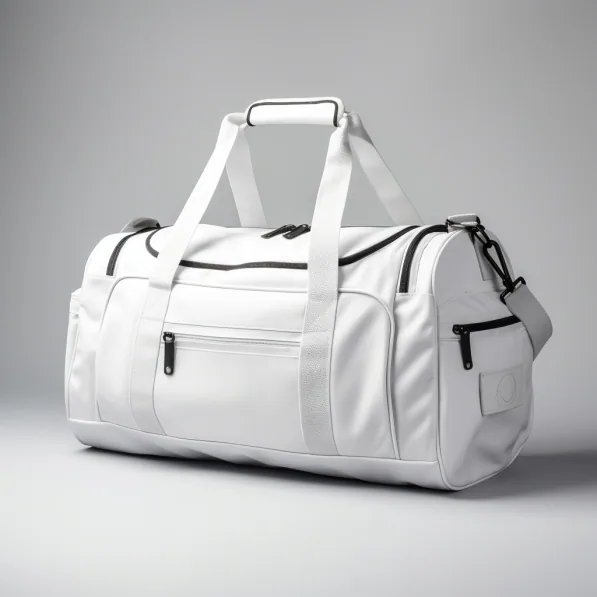
How Does Colour Belong in the Tech Pack?
As its own section rather than as a note on the drawing, because it is the section with the most fields and the most risk. It names the reference and its library, lists every visible substrate, states the dye route for each, and states what evidence arrives with the approval.
A colour section that says "club navy" has not specified a colour. A colour section that gives a reference with no substrate list has specified a quarter of one, and the trim will be matched to whatever shell arrives. The full method is set out in Reorder colour consistency.
The colour section, in seven fields
- Reference: a named reference with the library stated.
- Substrate list: shell, lining, binding, webbing, zipper tape, thread.
- Dye route per substrate: yarn-dyed, piece-dyed or sublimated.
- Trim matching: to the reference, not to an approved shell coupon.
- Tolerance: an upper and a lower physical coupon.
- Evidence: a light fastness grade at a stated exposure.
- Lot record: lot numbers required on the order and on the approval.
What Does the Hardware Section Say?
Four fields per part: material, finish, size and attachment. Material decides whether it survives the environment; finish decides whether it corrodes or marks; size decides whether a replacement exists; attachment decides whether it stays on the bag.
The field most often left out is availability. A slider in a common gauge and a buckle in a common size turn a bag that would have been discarded into one that gets repaired, and that is worth asking about at quotation rather than at failure.
What Belongs in the Compliance Section?
The frameworks the market requires and the evidence that has to arrive with the order. For a club bag that is usually REACH in the European Union and CPSIA where the market treats the article as a children's product; for a school programme it is both.
Asking for the evidence at the order rather than at the delivery is the whole point. A certificate requested at shipment arrives three weeks after the decision has been made, and a consignment that cannot be released is a consignment that misses the season.
How Is a Tech Pack Revision Controlled?
With a number on the pack and on every document that refers to it. A bag has a revision, not a version history in somebody's head. When the club changes the compartment size, the revision number goes up and the old revision is marked superseded.
- A revision number on the pack and on the artwork.
- A change log: what changed, when, and who signed it.
- A superseded mark on the previous revision.
- The revision number quoted on the purchase order.
- The revision number quoted on the approval.
What Happens When a Field Is Left Blank?
Somebody else decides it, and they decide it against their own constraints rather than the club's. A blank stitch density becomes the line default. A blank lining becomes whatever is on the shelf. A blank compartment dimension becomes whatever the pattern cutter thinks looks right.
None of those decisions is made badly; they are made without information. That is why the cost of an incomplete pack is not a bad bag — it is a bag that is different from the one the club pictured, and a second order that cannot reproduce it.
How Long Does a Complete Pack Take to Produce?
Less time than an incomplete one saves. A club that fills in eight sections once takes an afternoon; a club that fills in five and answers questions for three weeks takes longer and gets a worse result.
Sampling runs 6-10 working days from a signed-off tech pack, and that clock starts when the pack is signed rather than when it is sent. A pack with three blank sections is not signed, whatever the club thinks. The calendar is set out in Why 35 to 50 days.
What Does the Pack Say About Packaging and Marking?
Two fields, and they matter more than clubs expect: how the bags are packed, and how the cartons are marked. Packing affects whether bags arrive creased or flat; carton marking affects whether a club can distribute a mixed consignment without opening every box.
The clause worth specifying is marking by style, colourway and dye lot on the outside of the carton. It costs nothing, it makes a mixed lot visible before distribution, and it is what allows a partial hold rather than a whole-consignment rejection. Transit evidence is worth requesting to a stated procedure such as the ISTA sequence.
How Does the Pack Handle Personalisation Data?
As a separate file with a stated format, not as a note on the drawing. The pack states which fields the file contains — surname, number, year group, house — and who signs it off. The bag specification stays stable while the data changes every year.
That separation is what makes a school or a large club programme survivable. The pack is approved once and the data is supplied annually, so the second year is an email rather than a re-development.
How Is the Pack Used at Inspection?
As the criteria. Every measurable field in the pack becomes a check in the inspection criteria, and the ones the club cares about most are classified as major defects so they are enforceable at the Ac/Re decision under AQL 2.5 and ISO 2859-1.
That is the practical test of whether a pack is complete: can every line in it be checked at inspection? If a line cannot be checked, it was not a specification — it was a preference. The arithmetic is set out in AQL 1.5 versus 2.5.
What Does the Club Keep Afterwards?
The pack, the revision log, the approved coupon set, the dye-lot record and the inspection report — five documents, one folder, held by the club. That folder is the programme, and it is what makes the second order a reorder rather than a re-development.
Where the folder exists, 300 pcs is open to discussion on a repeat against the standard MOQ 500 pcs. Where it does not, the club re-develops and pays for it in sampling time, in quantity and in colour risk at the same time.
What Does the Pack Say About the Zips?
Four fields per zip: gauge, type, slider and puller, plus the tape colour. The gauge and type decide whether it survives being forced; the slider decides whether it can be replaced; the puller decides whether a player in a hurry can find it; and the tape colour decides whether it sits inside the approved coupon set.
The zip most worth specifying properly is the one on a compartment that is opened with the bag full, because that is the condition in which a zip is forced and a slider is broken. On a team bag that is usually the boot or shoe compartment.
How Does the Pack Handle an Option Pack Across Sports?
Where one silhouette serves several sports, the pack has a variant section rather than a second document. The base specification is fixed once and the variant lists what changes per sport: a bat sleeve here, a ball holder there, a wet pocket everywhere.
The discipline is to keep the variant list short and to keep every variant on the same shell, the same colourway and the same load-point specification. Three variants on one silhouette is one minimum; three silhouettes is three.
What Does the Pack Say About Tolerances?
A tolerance for every dimension, because nothing is made to an exact figure. A compartment specified as 260 mm arrives somewhere near 260 mm, and the question is how near is acceptable. Without a tolerance the answer is decided at inspection rather than at the pack.
A workable convention for bag dimensions is plus or minus 5 mm on internal dimensions and plus or minus 3 mm on personalisation position. Both are achievable, both are measurable, and both turn an argument into a measurement.
How Is the Pack Used by the Production Team?
As the instruction set rather than as a request. Every line in it becomes either a cutting instruction, a material booking, a trim order or an inspection check. A line that becomes none of those four was not a specification — it was a preference, and it will be decided somewhere else.
That is the practical reason the reinforcement and compliance sections matter so much. They are the two sections that turn directly into a stitch instruction and a test booking, and they are the two most often left blank.
What Is the Shortest Test of a Complete Pack?
Hand it to somebody who has never seen the bag and ask them to specify the second order from it. If they can, the pack is complete. If they have to ask a question, the answer to that question is a missing field.
It is a ten-minute test and it is more reliable than any checklist, because it simulates the only situation in which the pack actually matters — the handover to the next person.
Send eight sections and get a repeatable bag
Tell us the compartment layout and the load points, and we come back with a complete pack and a delivery date you can calculate.
Frequently Asked Questions
What is a tech pack for?
Making the second bag the same as the first, and the second order the same as the first one.
How should compartments be dimensioned?
Internally, in three dimensions, with the lining installed, and with a purpose attached to each.
Which load points need reinforcement?
Strap roots, the handle attachment, base corners, compartment mouths that get pulled, and zip ends.
Which standard covers stitch types?
ASTM D6193, Standard Practice for Stitches and Seams. Name the type and the density.
How is seam strength evidenced?
On the assembled joint to ISO 13934-1, with the specified stitch type and density — not on the fabric alone.
What belongs in the colour section?
The reference with its library, every visible substrate, the dye route per substrate, the tolerance as two coupons, the evidence required and the lot record.
What is the minimum order?
MOQ 500 pcs per style and colourway, with 300 pcs open to discussion on a repeat.
How long does sampling take?
6-10 working days from a signed-off tech pack, extending to 12-15 working days for a complex build or a new colour.
How long is bulk production?
35-50 days from written sample approval, inspected at AQL 2.5 under ISO 2859-1.
How is a revision controlled?
A revision number on the pack, on the artwork, on the purchase order and on the approval, with a change log.
What happens when a field is left blank?
Somebody else decides it, against their own constraints. The result is a bag that differs from the one pictured and cannot be reproduced.
What should the club keep afterwards?
The pack, the revision log, the coupon set, the dye-lot record and the inspection report.
People Also Ask
What is a tech pack for?
Making the second order the same as the first — a drawing cannot do that.
How should compartments be dimensioned?
Internally, with the lining installed, and with a purpose attached to each.
Which standard covers stitch types?
ASTM D6193. Name the type and the density, not just the type.
How is seam strength evidenced?
On the assembled joint to ISO 13934-1, not on the fabric alone.
What happens when a tech pack field is blank?
Somebody else decides it, and the bag cannot be reproduced next season.
Sources and further reading
Every figure on this page is either our own programme data or attributed below. Open the originals before you write them into a specification.
- ASTM D6193 — Standard Practice for Stitches and SeamsASTM International
- ASTM D204 — Standard Test Methods for Sewing ThreadsASTM International
- ISO 13934-1 — Tensile properties of fabrics, strip methodInternational Organization for Standardization