Team Kit Bag MOQ: How Many Units Does a 500-Piece Order Cover?
MOQ 500 pcs applies per style and colourway, and what that covers depends entirely on the head count behind it. An 18-player squad with staff and a float is 25 units, so 500 covers twenty squads — or one academy structure with three age groups and a season of spares.
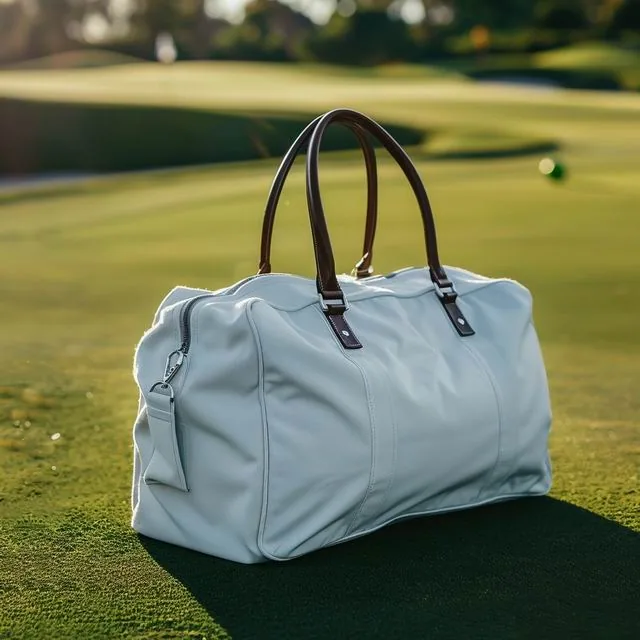
Divide 500 by the units one squad needs. An 18-player squad with three staff and a float of four is 25 units, so 500 covers twenty squads. Add a coach bag as a separate style and the same 500 covers one style only — the second style needs its own 500.
What Does the Minimum Actually Apply To?
MOQ 500 pcs applies per style and per colourway. That is the whole definition, and almost every misunderstanding in this category comes from reading it as 500 per order. One order can contain several styles and several colourways, and each combination carries the figure.
The reason is the dye house and the line. A style is a pattern and a set of materials; a colourway is a dye lot. Setting up either costs the same whether 500 or 5,000 follow, so the figure is the point at which the setup becomes worth doing rather than a quantity somebody chose.
| Reading | What it means | Example |
|---|---|---|
| Per style | Each silhouette separately | A player bag and a coach bag is two styles |
| Per colourway | Each colour separately | Navy and white is two colourways |
| Per order | The whole order | This is the misreading |
| Per season | Everything a club buys in a year | This is a planning choice, not the rule |
How Many Units Does One Squad Need?
Twenty-five, for a standard 18-player squad: eighteen players, three staff and a float of four. The float is not spare capacity — it covers late joiners, lost bags, promotion from a lower side and the bag that gets left on an away trip. Clubs that leave it out run short between October and February.
The staff number is worth questioning. Three is the common figure for one squad — a coach, an assistant and a physio or kit person — but a club with a larger backroom team needs more, and a club where the coach shares a bag with the kit needs fewer. It is the number most worth measuring rather than assuming.
| Squad element | Units | Note |
|---|---|---|
| Match-day players | 18 | Eleven plus seven substitutes |
| Coaching and backroom staff | 3 | Varies by club — measure it |
| Replacement float | 4 | Held back plain, not personalised |
| Total for one squad | 25 | The number to divide into 500 |
| Two squads | 49 | Shared staff, one float across both |
| Three age groups | 72 | The academy case |
So How Many Squads Does 500 Cover?
Twenty, on the standard 25-unit figure. That is the answer most clubs are looking for, and it is the reason a single club rarely reaches the minimum on its own — a club with one squad needs 25, not 500.
The practical reading is therefore about who else is in the order. A club with an age-group structure reaches it; a group of clubs ordering together reaches it; a club ordering two seasons at once reaches it. One squad on its own does not, and no amount of negotiating changes that — what changes it is who else is ordering.
| Scenario | Units needed | Covered by 500 | Note |
|---|---|---|---|
| One 18-player squad | 25 | 20 squads | Twenty clubs or twenty seasons |
| Two adult squads | 49 | 10 clubs | Shared staff across both |
| Academy, three age groups | 72 | 6 academies | 432 units, with 68 remaining |
| College, six teams | 140 | 3 programmes | 420 units |
| County or association order | 500 | One combined order | The usual route for one club |
| Two seasons, one colourway | 50 | 10 seasons | Halves the freight and the approval work |
How Does the Coach Bag Change the Arithmetic?
It doubles it, in the sense that a coach bag is a second style with its own MOQ 500 pcs. A club that wants a player bag and a coach bag is placing two minimums, which is the single most surprising fact in this article for most clubs.
Three routes make it workable. Order both styles in one production slot, so the dye house works to one schedule and the approval is done once. Specify the coach bag as a variant with unchanged external dimensions, which some programmes accept as one style. Or run the coach bag on a different cycle — order it every other year, because staff bags last longer than player bags do.
How Does the Colourway Count Change It?
The same way. Each colourway carries its own figure, so a club wanting navy and white is placing two minimums. That is the reason the consolidation advice appears in every article in this cluster: one shell colourway, with the second colour carried in trim, binding and print.
- One shell colourway, second colour in trim — one minimum.
- Two shell colourways — two minimums, one production slot.
- Three shell colourways — three minimums and three approvals.
- One silhouette across age groups, group carried by a tab — one minimum.
- Age group carried by shell colour — one minimum per group.
What Does 500 Units Cost to Ship?
Enough to matter. Five hundred team bags is a substantial consignment and the freight line is a real part of the unit figure, which is why the landed calculation belongs at the quotation stage rather than after it. FOB Xiamen is the standard term; CIF and DDP are available where a club wants a delivered figure.
The second freight point is consolidation. One order of 500 ships as one consignment; four orders of 125 ship as four, and the freight on four small consignments exceeds the freight on one large one by a wide margin. That is the arithmetic behind ordering once a year.
Why Is 300 Available on a Repeat?
Because a reorder with artefacts is a different job from a new order. Where the reference, the coupon set, the dye-lot record and the shade band all exist, the reorder is a comparison: no pattern development, no fresh colour matching, and a shorter sampling stage.
That is what makes the lower figure available, and it is worth being precise about the condition. A repeat without the artefacts is not a repeat — it is a re-development, and a re-development does not qualify for the lower figure because it costs the same to set up.
How Should a Club Plan the Quantity for a Whole Season?
Backwards from the reorder date. Work out how many units the season consumes, set the point at which the float would run out, and order enough to reach it. That produces a number that is usually close to the squad-plus-staff-plus-float figure, and it has the advantage of being based on something observed rather than on a round number.
| Planning method | What it produces | Risk |
|---|---|---|
| Squad list plus staff plus float | A rounded, reliable figure | Under-orders if attrition is high |
| Last season's usage plus a margin | A figure based on observation | Needs one season of records |
| Two seasons at once | Halves the freight and the approval work | Ties up storage |
| Order to the registered squad | Over-orders by roughly a third | Surplus that no longer matches |
| Order the exact squad size | Under-orders | A mid-season top-up at a premium |
What Happens If a Club Cannot Reach the Figure?
Four honest options, and none of them is to negotiate the number down. Consolidate the club — one silhouette, one colourway, every age group. Consolidate the seasons — order two at once. Consolidate with another club or with an association. Or accept a higher unit figure on a smaller quantity, which is available and is simply more expensive per piece.
The fifth option is the one that costs least and is chosen least: wait for the next cycle. A club that has just bought bags and needs four more does not need a production order; it needs to have ordered a bigger float, and the float is a decision made at the previous order rather than at this one.
How Does Sampling Fit the Quantity Decision?
Sampling is independent of quantity — it runs 6-10 working days from a signed-off tech pack whether the order is 300 or 5,000. That is worth knowing, because it means the sampling cost per unit is lower on a larger order, which is one more argument for consolidation.
What does change with quantity is the bulk window. Bulk runs 35-50 days from written sample approval, and the higher end of that range is more likely on a larger, more complex consignment. Plan to the higher end and the date holds; plan to the lower end and a club spends August hoping.
What Should the Tech Pack Say About Quantity?
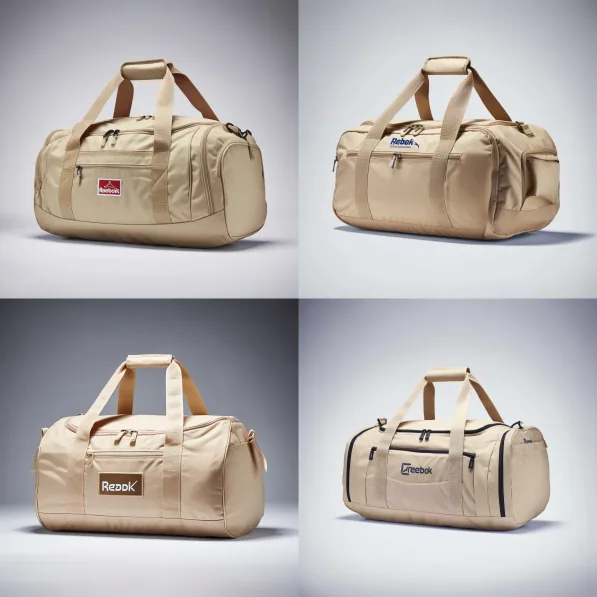
Three fields, and they are the ones that stop a quantity argument later: the split by style, the split by colourway, and the split by personalisation. A purchase order that says 500 bags and nothing else is a purchase order that will be interpreted rather than followed.
Quantity fields to complete on a team bag order
- Split by style: how many player bags and how many coach or staff bags.
- Split by colourway: how many of each, and whether they share a dye lot.
- Split by personalisation: how many personalised, how many held plain.
- The float: stated as a line rather than left inside the squad count.
- Carton marking: by style, colourway and dye lot.
What Should the Inspection Sample Be at This Quantity?
At AQL 2.5 under ISO 2859-1, General Inspection Level II, a 500-piece consignment draws a sample of 50 units with an accept of three and a reject of four. That is the arithmetic a club should know before agreeing to an inspection, because it is the number the whole decision turns on.
The club-specific checks — compartment dimensions, base board, stitch type, colour against the coupon set, personalisation position — belong inside that sample as major defects. The arithmetic is set out in AQL 1.5 versus 2.5 and the sample sizes are in the AQL sampling table.
What Does the Programme Cost at Each Quantity?
The unit figure moves with quantity, and the shape of the curve is steeper below the standard figure than above it. The setup — pattern, colour matching, sampling, line setup — is the same at 300 and at 500, so it is spread across fewer units at the lower figure.
The second cost is the reorder risk. Clubs that under-order to save money on the first invoice usually pay more across the season than clubs that ordered correctly once, because the top-up carries a premium, an extra freight movement and a fresh colour risk at the same time.
What Goes Into the Enquiry?
Six fields, and a quantity question is answered. The structure of the club is the one that matters most and the one clubs describe least precisely.
- How many squads, and how many players travel with each.
- How many staff, measured rather than assumed.
- Whether the club runs age groups, and whether they share a colourway.
- Whether a coach bag is needed as a separate style.
- Whether the club can consolidate across a season or with another club.
- The date the kit is needed, and whether a second drop is expected.
How Does Personalisation Change the Quantity Split?
Personalisation splits the order into two populations: units that carry a name or a number and units that do not. The personalised ones are committed at the point the file is sent, which means they cannot be reassigned, and the plain ones are the only flexible stock the club has.
That argues for a larger plain float than most clubs hold. Personalising every unit maximises the appearance of the order and removes the club's ability to respond to a late joiner, a lost bag or a promotion. Holding eight or ten units plain out of 500 costs nothing and covers all three.
How Does the Order Split Across Cartons?
By style, colourway and dye lot, marked on the outside of the carton. It is a one-line clause and it is what makes a mixed lot visible before the bags reach the players rather than after.
Without it, a consignment arrives as a quantity and the club discovers the shade difference at the point of distribution, which is the worst possible moment — the bags are already on their way to players and every one of them has to be retrieved.
The clause also makes a partial rejection possible. Where one carton contains a second dye lot, a club can hold that carton and release the rest rather than rejecting the whole consignment or accepting all of it. That is a negotiation position a club only has if the cartons are marked.
How Is the Quantity Recorded for Next Season?
On the one-page programme record, as three numbers: what was ordered, what the float drew down, and what the attrition rate turned out to be. Three numbers, one minute, and the next season's quantity is based on observation rather than on a guess.
Clubs that do this stop over-ordering and stop running short, which are the two failure modes of kit quantity planning and which usually happen to the same club in alternate years.
How Does the Figure Compare With a General Bag Order?
The figure is a production threshold rather than a commercial one, and it is worth stating what it is not. It is not a negotiating position, it is not a reflection of how much a club wants to spend, and it is not higher because the bags are harder to make. It is the quantity at which a pattern, a colour match and a line setup become worth doing.
Clubs sometimes read it as a signal to look elsewhere, and that is a misreading. A smaller quantity is available — it is simply priced to carry the same setup across fewer units, and it carries the same colour risk. The decision is whether to consolidate, not whether to find a different figure.
What Is the Shortest Honest Answer?
Five hundred covers twenty squads of twenty-five, or one academy structure for a season with spares left over, or one combined order for a group of clubs. It does not cover one club with one squad, and no amount of discussion changes that.
The useful response is therefore structural rather than commercial: find the other nineteen squads, or find the age groups, or find the second season. The figure is not negotiable; the structure behind it is entirely up to the club.
And the second shortest answer is that the club should count what it actually uses before it counts what it would prefer to order. Attrition, float draw-down and staff numbers are three observations, and they produce a quantity that survives contact with a season in a way that a round number does not.
Send the squad structure and get the arithmetic
Tell us how many squads, how many staff and whether age groups share a colourway, and we come back with the quantity arithmetic and a delivery date you can calculate.
Frequently Asked Questions
What does MOQ 500 pcs apply to?
Per style and per colourway. A player bag and a coach bag are two styles; navy and white are two colourways.
How many bags does one 18-player squad need?
Around 25: eighteen players, three staff and a float of four.
How many squads does an order of 500 cover?
Twenty squads at 25 units each, or six academies at 72 units, or three college programmes at 140.
Is a coach bag part of the same minimum?
No. It is a second style and carries its own MOQ 500 pcs.
How can a single club reach the figure?
Consolidate across age groups, order two seasons at once, or join an order with another club or an association.
Why is 300 available on a repeat?
Because a reorder with the colour artefacts is a comparison rather than a re-development. Without them it does not qualify.
Does quantity change the sampling time?
No. Sampling runs 6-10 working days from a signed-off tech pack regardless of quantity.
How long is bulk production?
35-50 days from written sample approval, inspected at AQL 2.5 under ISO 2859-1.
What sample size is drawn from 500 units?
At AQL 2.5, General Inspection Level II, the sample is 50 units with an accept of three and a reject of four.
What is the most common quantity mistake?
Ordering to the registered squad rather than to the match-day squad plus staff plus a float, which over-orders by roughly a third.
Should a club order more than one season at once?
Where the colourway is stable, yes. It halves the freight and the approval work.
What happens if a club needs four more bags mid-season?
That is what the float was for. A four-unit order is the most expensive per piece a club will ever place.
People Also Ask
What is the MOQ for custom team bags?
MOQ 500 pcs per style and colourway, with 300 pcs on a repeat.
How many squads does 500 pieces cover?
Twenty squads of 25 units, or one academy structure for a season.
Is a coach bag part of the same minimum?
No — it is a second style with its own MOQ 500 pcs.
What sample is drawn from 500 units at AQL 2.5?
50 units, accept three, reject four.
How can one club reach the minimum?
Consolidate age groups, order two seasons, or join another club.
Sources and further reading
Every figure on this page is either our own programme data or attributed below. Open the originals before you write them into a specification.
- ISO 2859-1:1999 — Sampling procedures for inspection by attributesInternational Organization for Standardization
- ASTM D6193 — Standard Practice for Stitches and SeamsASTM International
- ISO 9001 — Quality management systems: requirementsInternational Organization for Standardization