Water-Repellent vs Waterproof: Which Do You Need?
The two words are used interchangeably in bag specifications, and they describe behaviour that is measured in different ways and achieved by different means. This page sets out what each one means in a test report, where a bag actually lets water in, and what to write so the requirement survives into production.
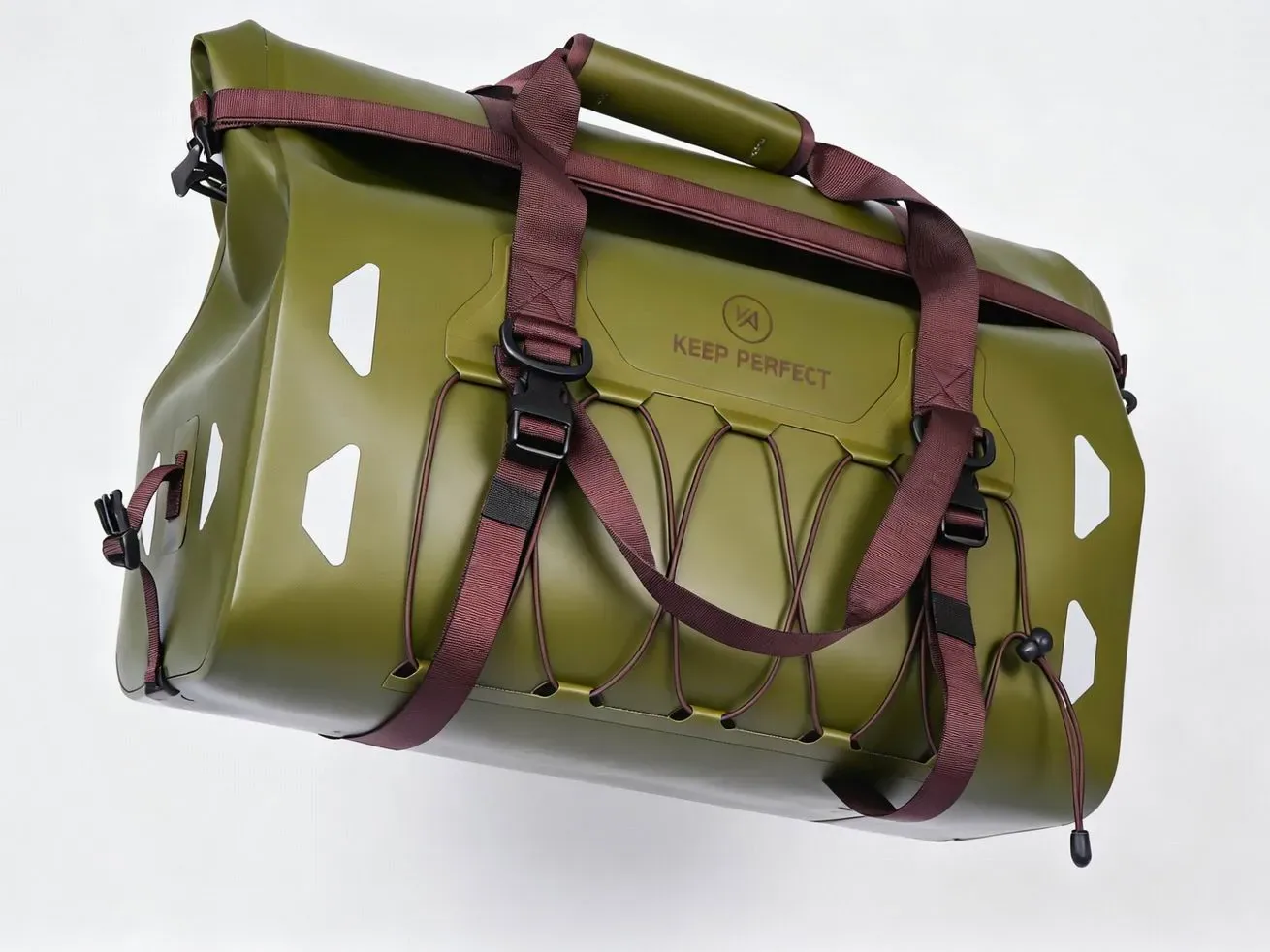
Repellency and resistance are two different measurements of two different behaviours. Shedding water off the face is one thing; holding it back under pressure is another. Most bags that fail in the field failed at a seam or a closure rather than through the cloth.
What Is the Difference in One Sentence?
A repellent finish makes water bead and run off the surface, and a resistant construction stops water getting through it when something pushes. The first is a surface property of a cloth. The second is a property of a construction, and no finish alone delivers it.
| Behaviour | How it is measured | What it needs to work | What it does not cover |
|---|---|---|---|
| Surface shedding | A spray rating on the face | A finish on the cloth | Pressure, seams or closures |
| Resistance under pressure | A hydrostatic result to a stated method | A film, a laminate and a treated seam | What happens after abrasion or washing |
| Seam resistance | A result on the joint rather than the cloth | Welding, taping or binding | The rest of the article |
| Closure resistance | A closure spanning the opening | A chain or a sealed flap | The panels around it |
| Water uptake | Mass gained after immersion | A closed cell and a treated face | Pressure, which is a different question |
| Durability of the finish | A result after stated cycles | A finish that survives them | Anything measured only at manufacture |
What Does a Spray Rating Describe?
How the face of a cloth looks after water has been sprayed at it under stated conditions, rated against a standard scale. It is a surface behaviour, it is quick, and it is the right requirement for a product that will meet rain in passing. It tells you nothing about what happens when a loaded bag is set down in a puddle.
What Does a Hydrostatic Result Describe?
The height of a water column the material held before it passed water through, under a stated method. It is a pressure behaviour, and it is the right requirement where the product will be set down on wet ground or carried against a wet back. The figure is meaningful only with the method beside it, since the procedures differ in how they load the specimen.
Where Does a Bag Actually Let Water In?
At the seams, at the closures and at the base, in that order in most cases, and through the cloth last of all. A stitch line is a row of holes, a closure is a gap with a lip, and a base is the part that sits in whatever is on the ground. A requirement that describes only the cloth addresses the route water uses least.
What Does a Coating Do and Not Do?
It stops water crossing the face, and it does that well. It does not close a stitch hole, it does not seal a closure, and its own durability is a separate question from the level it achieved when new. A coated cloth in an untreated seam is a construction with one good element and three open routes.
What Does a Laminate Do?
The same thing a coating does, more uniformly, and with a film that can be welded. The weld is the point: a laminate is what makes it possible to join two panels without a stitch line at all. Where the requirement is resistance rather than shedding, that is the reason to choose it over a coated cloth.
| Route water takes | How it gets in | What closes it | What to check on the sample |
|---|---|---|---|
| Through the face | Absorption into an untreated cloth | A finish or a laminate | A spray rating on the delivered cloth |
| Through the stitch line | Along the thread and through the holes | Welding, taping or binding | A result on the joint rather than the cloth |
| Through the closure | Past the lip and through the gap | A chain spanning the opening, or a sealed flap | The closure spanning the full width |
| Through the base | Sitting in water under the load | A treated base panel and a seam off the ground | A hydrostatic result on the base panel |
| Through the edge | Along raw or turned edges | Binding or turning into a sealed construction | The edge treatment present on the prototype |
| Through the lining | Wicking from the inside | A treated or non-wicking liner | The liner named on the specification |
Why Do Seams Decide the Outcome?
Because the seam is the weakest part of every construction and the part most often left unspecified. A requirement stated for the cloth and not for the joint is a requirement that will be met on the swatch and missed on the bag. Name the treatment for every joint in the wetted volume, and the requirement becomes checkable.
Eight lines for a water behaviour clause
- The behaviour named as either shedding or resistance, since they are different.
- The method named, and the figure required against it.
- The seam treatment named for every joint in the wetted volume.
- The closure across the opening named as spanning its full width.
- The base panel treated separately from the walls.
- The evidence required on the finished article, not only the cloth.
- Durability evidenced after the stated number of cycles.
- Inspection sample drawn at AQL 2.5 under ISO 2859-1 General Inspection Level II.
What Role Do Closures Play?
A large one, because a closure that does not span the opening leaves a gap at each end and a lip along the top. A chain closure spanning the whole width, with a treated panel behind it, is the configuration that works. A flap held by a spot closure, whatever its quality, leaves the corners.
What About the Base and the Edges?
The base is where the load and the water meet, so it needs its own treatment and its own seam position, kept off the ground where the pattern allows. The edges are where a turned construction can carry water inward, so they need binding or to be built so they do not present an open edge to the water.
How Does the Requirement Differ by Use?
A bag carried in passing rain needs shedding and a treated base. A bag set down in it needs resistance and a welded seam. A bag holding ice needs the liner and the seams treated but very little else. Working out which of those three the product meets is the whole of the specification, and it costs less than specifying all of them.
What Does Ageing Do to Each?
A finish wears off, and a laminate does not wear off in the same way but it can delaminate. Both effects are slower than most buyers expect and faster than most suppliers say. The right evidence is a result after stated cycles, which converts a claim about durability into a figure that can be compared.
What Claims Can Be Made?
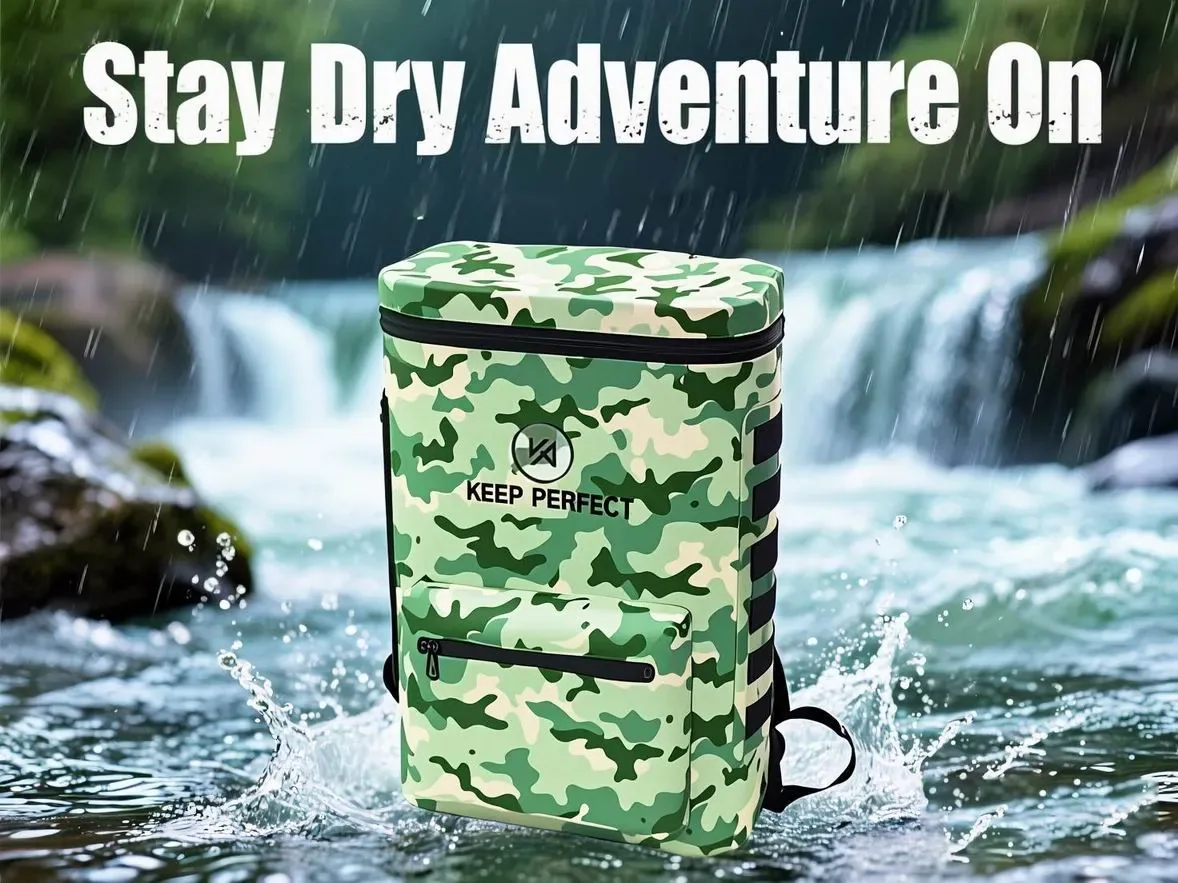
The ones the evidence supports, in the words the evidence supports. A spray rating supports a shedding statement, and a hydrostatic figure supports a resistance statement up to that figure. Neither supports an unqualified word on a product page, and an unqualified word is what a customer complains about when the bag gets wet inside.
How Is Each Evidenced?
A spray rating on the cloth for shedding, and a hydrostatic result for resistance, both to named methods, and then a result on the joint whichever of the two was specified. Three measurements at most, and the third is the one that predicts whether the bag keeps water out.
What Is the Most Common Mistake?
Specifying the cloth and leaving the construction. It happens because the cloth is what a data sheet describes and the construction is not. A requirement written as one adjective on the material produces a bag that meets the requirement and still lets water in.
- Name the behaviour, then the method, then the figure.
- Treat every joint in the wetted volume, not only the cloth.
- Span the opening with the closure rather than covering it.
- Give the base its own treatment and its own seam position.
- Evidence the joint, since it is what fails first.
- Evidence the finish after cycles rather than only when new.
How Is Each Verified on Arrival?
Draw at AQL 2.5 under ISO 2859-1 General Inspection Level II. Confirm the specified seam treatment is present on every joint, confirm the closure spans the opening, and retain a panel from the delivery so a spray rating can be taken later. Those checks take minutes.
What Records Help Next Season?
The behaviour, the method, the figure, the seam treatment for each joint and one retained panel. Five items, and the retained panel is the one that settles an argument, because it can be tested again a season later.
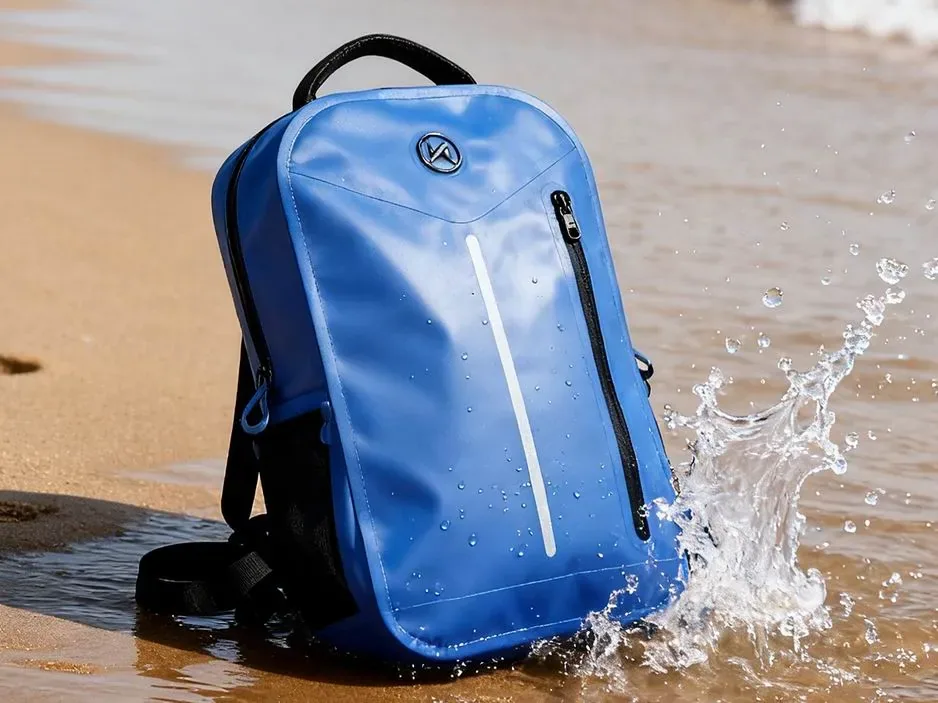
Most bags that let water in have good cloth in them and an untreated seam. Name the treatment for every joint in the wetted volume, or the requirement was never written.
What Does a Finish Do to Breathability?
It reduces it, because a finish that stops water crossing one way also slows vapour crossing the other. Where a panel sits against a body or holds damp contents, that matters. There is no setting that stops liquid and passes vapour freely, so the requirement has to be a decision about which of the two matters more.
How Should the Liner Be Specified?
By what it has to do: carry abrasion, wipe clean, or stay dry. A wipeable liner is usually a film or a laminate, and either changes how the panel behaves at a seam. A liner that stays dry is a closed-cell material, and it belongs alongside the insulation rather than inside it.
What Does a Taped Seam Do That a Bound One Does Not?
A taped joint closes the stitch line directly, so the treatment is inside the seam where the holes are. A binding covers the stitch line from outside, which protects it but leaves the holes open underneath. Taping outperforms binding for resistance; binding is often enough for shedding.
How Is the Opening Treated?
By spanning it. The closure has to run the full width of the opening and sit on a treated panel, or the gap at each end undoes everything behind it. A flap over an opening is a shedding detail and not a resistance one, however heavy the fabric in it.
What Does the Requirement Mean for Making Up?
Welding and taping both add operations, both constrain which materials can be used, and both need skill that is not present on every line. A requirement written without regard for the operation produces a sample that passes and a production run that does not, because the operation was never specified.
How Does Abrasion Affect the Result?
It removes a finish progressively and it can polish a laminate until it behaves differently. Both are slower than a laboratory result implies and faster than most suppliers say. The evidence that matters is a result after stated abrasion cycles, taken on the treated construction.
What Does Soil Do to a Finish?
It defeats it. A soiled face wets out even when the finish is intact, because the soil holds the water against the surface. Where a product will be used hard, that is a stronger argument for a laminate than for a finish, since a film is not defeated in the same way.
How Should a Water Requirement Be Evidenced at Goods-In?
Confirm the specified seam treatment is present on every joint, confirm the closure spans the opening, and retain a panel from the delivery. Those three take minutes between them, and the retained panel is what makes a later test possible.
What Should the Approval Record Carry?
The behaviour, the method, the figure, the seam treatment for each joint, the closure arrangement and one retained panel. Six items, and the sixth is the one that lets the other five be re-checked.
- The behaviour named as shedding or resistance, not as an adjective.
- The method, and the figure required against it.
- The seam treatment, named for every joint in the wetted volume.
- The closure, named as spanning the full width of the opening.
- The base panel, treated separately from the walls.
- One retained panel from the delivered lot.
How Do the Two Behaviours Affect Warranty Wording?
A shedding requirement supports a statement about rain. A resistance requirement supports a statement about being set down in water, up to the figure evidenced. Neither supports an unqualified word, and an unqualified word in a warranty is a commitment the evidence does not match.
What Is the Right Order of Decisions?
Use first, behaviour second, method third, then the seam treatment and the closure last. Working in that order produces a requirement that can be evidenced. Working from the material list forwards produces one that usually cannot.
- Decide whether the bag meets rain, sits in water, or holds something cold.
- Name the behaviour that use requires, as shedding or as resistance.
- Name the method and the figure that will evidence it.
- Name the seam treatment for every joint in the wetted volume.
- Name the closure arrangement, then evidence the finished article.
How Should a Requirement Be Set From the Use?
Work out whether the bag meets rain, sits in water, or holds something cold, then write the corresponding requirement with its method and its seam treatment. Products that need only shedding are often built for resistance, which costs more and handles worse. Products that need resistance are often built for shedding, which is where the complaints come from.
Name the behaviour, the method and the joint
Tell us what the bag will meet and where it will be set down, and we come back with the water clause written out for the tech pack.
Frequently Asked Questions
What is the difference between water-repellent and waterproof?
Repellent describes a surface shedding water, measured by a spray rating. Resistance describes holding water back under pressure, measured by a hydrostatic result. They are different measurements.
Which test should I ask for?
A spray rating where the product meets rain in passing, and a hydrostatic result where it will be set down in water. Name the method either way.
Can a coating make a bag resist water?
It stops water crossing the face. It does not close a stitch hole, a closure or an edge, and those are the routes water uses.
Where does water get into a bag?
At the seams, at the closures and at the base, and through the cloth last of all.
Do I need a welded seam?
If the requirement is resistance under pressure, a welded or taped joint is what delivers it. For shedding, a treated stitch line is usually enough.
How long does a finish last?
Until washing, abrasion or the environment removes it. Ask for a result after the stated number of cycles.
What does a spray rating number mean?
How the face looked after water was sprayed at it under stated conditions, rated against a standard scale.
Can I claim a bag is waterproof?
Only if the evidence supports the behaviour being claimed, stated with the method and the figure. An unqualified word on a product page is what a complaint is made about.
Does a laminate help?
It does, because it carries a film that can be welded, which removes the stitch line entirely.
What should I specify for the base?
Its own treatment and a seam position kept off the ground, since that is where load and water meet.
How is water behaviour evidenced?
By a spray rating, a hydrostatic result and a result on the joint, each to a named method.
What is the most common error?
Specifying the cloth and leaving the construction. The requirement is then met on the swatch and missed on the bag.
People Also Ask
What is the difference between water-repellent and waterproof?
Repellent is a surface behaviour measured by a spray rating; resistance is holding water back under pressure, measured by a hydrostatic result.
Which water test should I ask for?
A spray rating for a product that meets rain in passing, and a hydrostatic result for one set down in water. Name the method either way.
How do you make a bag resist water?
With a laminate, a treated seam and a closure spanning the opening. A finish on the cloth alone does not do it.
Where does water get into a bag?
At the seams, the closures and the base, and through the cloth last of all.
Does water-repellent finish wear off?
It does, through washing, abrasion and the environment. Evidence it after the stated number of cycles.
Sources and further reading
Every figure on this page is either our own programme data or attributed below. Open the originals before you write them into a specification.
- ISO 811 — Resistance to water penetration (hydrostatic pressure test)International Organization for Standardization
- AATCC 22 — Water Repellency: Spray TestAmerican Association of Textile Chemists and Colorists
- ASTM D751 — Standard Test Methods for Coated FabricsASTM International