What Is a Squad Bag and How Is It Different from a Duffel?
A squad bag is specified for a team; a duffel is specified for a person. The difference is not the shape — it is the compartment logic, the load path and the area available for a club crest. Understanding the distinction stops a club buying the wrong silhouette.
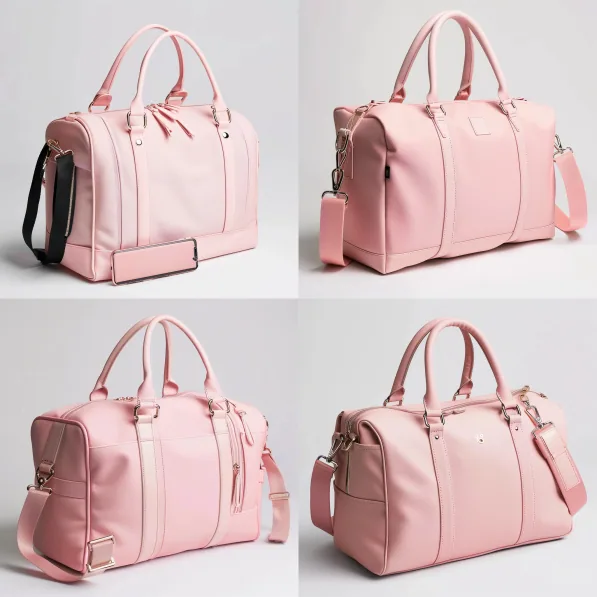
The two silhouettes overlap in appearance and diverge completely in specification. A squad bag is built around a kit list that includes wet or muddy items, a ball and a pair of boots, and it carries a club crest on a large flat panel. A duffel is a general carrier with one volume and no kit logic.
Where Does the Distinction Actually Matter?
The distinction matters at the point of specification, not at the point of sale. Both silhouettes are soft, roughly rectangular and carried by a shoulder strap and a pair of handles. Once a club starts writing a tech pack, though, the two diverge on every field that matters: what goes where, how the load is carried, what the base does, and how much flat area exists for a crest.
It also matters for word-domain reasons that have nothing to do with bags. A club sourcing a team bag is buying into a programme — colour matching across substrates, annual reorder cycles, personalisation files and a dye-lot record. None of that machinery is needed for a general carrier, and a club that buys a general carrier and then asks for club colour control is asking the wrong product to do the wrong job.
What Is the Compartment Logic of Each?
A squad bag assumes the kit is dirty. It separates wet from dry, boots from jerseys, and a ball from everything else, because that is what a team actually generates on a Saturday. The compartments are therefore specified against items, and the tech pack lists them as dimensions with a purpose attached to each.
A duffel assumes the kit is clean and interchangeable. It has one main volume and usually one small end pocket. That is a perfectly good design for a gym kit or a weekend away, and it is the wrong design for a boot with mud on it. A club that puts a squad kit list into a single-volume bag gets one compartment that is damp, dirty and impossible to search.
| Field | Squad bag | Duffel | Why it differs |
|---|---|---|---|
| Compartment logic | Specified against a kit list | One main volume | Team kit is dirty and varied |
| Wet or drainable pocket | Standard | Rare | Wet kit is a weekly condition, not an exception |
| Boot separation | Standard | Rare | A boot against a jersey is the complaint clubs report |
| Ball or equipment carry | External holder or shaped pocket | Absent | Both hands are needed at the gate |
| Crest area | Large flat panel, measured | Small end panel | A club crest needs area and a flat surface |
| Personalisation | Name, number and role as specified positions | Usually none | Personalisation is what makes it club property |
How Does the Load Path Differ?
The load path is where the two diverge most, and it is invisible on a product photograph. A squad bag is carried loaded — often over-loaded — by the shoulder strap, and the entire weight of the bag hangs from two strap roots. Those roots need a reinforcement patch and a bar-tack or box stitch named on the tech pack. A duffel is more often carried by its handles, so the handle attachment carries proportionately more of the load.
The second difference is the base. A squad bag gets set down on gravel, on a wet touchline and in a bus hold, and it needs a base board and corner protection. A duffel is more often set down on a floor. Specifying a squad bag without a base board is the most reliable way to produce a bag that sags, and a bag that sags puts load into the seams it was not designed to carry.
Which One Carries a Club Crest Better?
A crest needs three things: area, flatness and a stable substrate. A squad bag is designed with a large flat side panel precisely because the crest goes there, and that panel is usually the stiffest part of the bag so the embroidery does not pucker. A duffel has its largest flat area on the end, which is also the area that flexes most, so a large crest on a duffel end panel tends to distort.
The practical consequence is that a club crest above roughly 100 mm across should be specified against a panel that has been dimensioned for it, with the position measured from a seam rather than described. Where a club wants the crest on the end, the panel needs an interlining stiff enough to hold it, and that is a line on the tech pack rather than a favour the cutter can do.
Does the Distinction Change the Fabric Specification?
Only in emphasis. Both silhouettes use the same family of shell fabrics, and the same standards apply — ISO 13934-1 for tensile behaviour, ISO 12947 for abrasion, and AATCC 16 for light fastness. What changes is where the heavy cloth goes. A squad bag concentrates it in the base and the wet compartment; a duffel distributes it more evenly because the whole bag is one volume.
| Zone | Squad bag emphasis | Duffel emphasis | Standard to cite |
|---|---|---|---|
| Base | Heavier denier or coated panel plus a board | Heavier denier, no board needed | ISO 12947 abrasion |
| Side panels | Standard shell, stiffened behind the crest | Standard shell | ISO 13934-1 tensile |
| Wet compartment | Coated or laminated lining | Usually absent | ISO 2411 coating adhesion |
| Strap roots | Reinforcement patch plus bar-tack | Standard attachment | ASTM D6193 stitch type |
| Trim and webbing | Colour-matched to the reference | Usually stock colour | AATCC 16 light fastness |
What Does a Squad Bag Cost to Specify That a Duffel Does Not?
The additional cost sits in three places: the additional panels and linings for the wet and boot compartments, the base board and corner protection, and the personalisation. None of these is large in unit terms, but they are all specification items, which means they are all items that get quietly removed if the tech pack does not name them.
That is the real risk in this comparison. A club that asks for a squad bag and does not specify the base board may receive something that looks right and sags in a month. A club that specifies the board, the wet compartment lining and the stitch type will receive the bag it asked for, whether the pattern started from a squad bag or from a duffel. The specification does the work, not the silhouette name.
How Does Personalisation Work on Each?
Personalisation is where the squad bag earns its keep. A squad bag is designed to carry a player number, a surname, a role — coach, physio, captain — and an age-group or team tab, and it is designed so those elements sit on panels that exist for them. A duffel has no such panels, so personalisation tends to be added wherever there is space, which is usually wherever it is least visible.
- Fix the crest position as a measurement from a seam, not as a description.
- State the method per element — embroidery, sublimated panel, screen print or woven label.
- Give the number range and the surname list as a file.
- Decide whether the role or the age group is carried by a tab or by a print.
- Hold plain units back for late joiners rather than personalising a second time.
Which One Should a Club Actually Buy?
A club with a kit list that includes boots, wet kit and a ball should buy a squad bag. A club that wants a bag for staff to carry a clipboard, a first-aid roll and a laptop sleeve may find a simpler silhouette does the job — and a coach bag is usually the better answer there. The test is the kit list, not the sport: if the list contains anything damp, muddy or sharp, the squad bag is the right call.
How Does the Specification Read on a Tech Pack?
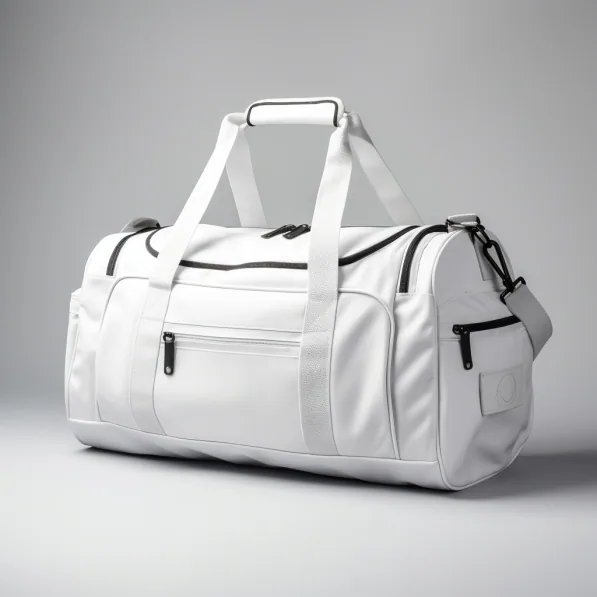
The cleanest way to keep the distinction is to write it into the tech pack as fields rather than as adjectives. "Squad bag" on a drawing means different things to different cutters. "Wet compartment 260 x 180 x 120 mm, coated lining, drain grommet at the base" means one thing, and it is the one the club will receive.
Fields that keep a squad bag from being quietly downgraded
- Wet compartment: dimensions, lining type and whether it drains.
- Boot compartment: dimensions and whether it is sealed from the main volume.
- Base: board thickness and material, plus corner protection.
- Strap roots: reinforcement patch and the stitch type named to ASTM D6193.
- Crest panel: dimensions, interlining and the position measured from a seam.
How Is the Distinction Judged at Inspection?
At inspection the distinction collapses into a small number of measurable checks, and that is how a club should write its inspection criteria. Compartment dimensions, drain presence, base board presence, stitch type at the strap root and crest position are all measurable. "A proper squad bag" is not measurable and will not survive an argument.
These checks sit inside the normal AQL 2.5 inspection under ISO 2859-1 rather than beside it. The club agrees the defect classification before inspection — critical, major and minor — and the compartment and reinforcement checks are written in as major defects, which is what makes them enforceable at the Ac/Re decision. The sampling arithmetic is set out in AQL 1.5 versus 2.5.
How Does Colour Control Apply Differently?
Colour control is a squad-bag requirement and not a duffel one, which is the sharpest practical difference between the two. A club bag has to match a jersey across shell, binding, webbing, zipper tape and thread, and it has to keep matching it across an annual reorder. A general carrier in a stock colour has no such requirement and no such record.
That means the coupon set, the shade band and the dye-lot record belong on a squad bag order and are simply absent from a general carrier order. A club that understands this will stop asking why the club colour costs more to control — it costs more because it is being controlled, which is the whole point. The full method is set out in Reorder colour consistency.
What Should a Club Ask For When It Enquires?
A club should ask for the silhouette by function rather than by name, and it should supply the kit list with the enquiry. That single change — sending the kit list — does more to get the right bag quoted than any amount of description, because the compartment layout falls out of the list.
- The kit list, with the longest, bulkiest and dirtiest items identified.
- Which items must be separated from the rest, and why.
- The crest artwork as vector, with the colour references named.
- Personalisation: method, position and the number range.
- Quantity split by style and colourway, and the reorder expectation.
- The date the kit has to be on the bus, working backwards from the first fixture.

What Happens If a Club Buys the Wrong One?
It is recoverable but it costs a season. A single-volume bag carrying a squad kit list produces damp jerseys, muddy boots against whites and a bag nobody wants to open, and the club usually responds by over-ordering the following year in the hope that more bags solve it. They do not; the compartment logic was the problem.
The quicker recovery is to keep the silhouette and change the specification on the next cycle — add the wet compartment, the boot separation and the base board, and keep the colourway so the new bags sit beside the old ones without arguing. MOQ 500 pcs per style and colourway applies to the revised specification, and 300 pcs is open to discussion on a repeat.
How Do the Two Silhouettes Differ on Size Convention?
A duffel is sold by volume — forty litres, sixty litres — and the buyer chooses a number. A squad bag is sold by kit list, and the volume falls out of it. That difference sounds academic until a club tries to compare two quotations: a volume figure tells the club nothing about whether boots and a ball will fit at the same time, and two bags of the same volume can behave completely differently.
The practical convention is to dimension the compartments rather than the bag. Three internal dimensions per compartment, stated with the lining installed, tell a club everything it needs. Volume is a derived figure and belongs on the quotation for freight purposes, not on the tech pack as a specification.
What Role Does the Lining Play in Each?
The lining is the most under-specified part of both silhouettes and it is where the least specified bags fail first. On a squad bag the lining has two jobs: it has to survive abrasion from boots and equipment, and in the wet compartment it has to be wipeable. Those are two different linings, and a tech pack that names one lining for the whole bag has already made the decision that the wet compartment will fail.
On a duffel the lining has one job and a lighter cloth does it adequately. This is the clearest example of the general point: the squad bag is not a heavier bag, it is a bag with more distinct requirements, and each requirement gets its own specification. Where a club wants to control spend it should do it on the silhouette and the trim, never on the lining of a wet compartment.
How Do the Two Compare on Repair and Spare Parts?
A squad bag is expected to be repaired. Straps get re-stitched, wheels get replaced and zippers get changed, because the club owns the bag for several seasons and a repair costs less than a reorder. That argues for common component sizes — a standard zipper gauge, a standard wheel diameter — and for asking at quotation whether spares exist.
A general carrier is more often replaced than repaired, so component commonality matters less. For a club programme, though, commonality is worth asking about at the same time as the price, because the answer changes the whole-life cost of the order. A bag that can be repaired for three seasons is a different proposition from one that has to be replaced after one, even at the same unit price.
Send the kit list, not the silhouette name
Tell us what has to go in the bag and what has to stay separate, and we come back with a compartment layout and a delivery date you can calculate.
Frequently Asked Questions
What is a squad bag?
A team bag specified against a kit list, with wet and dry separation, boot separation, a ball carry and a flat panel dimensioned for a club crest.
How is it different from a duffel?
In compartment logic, load path and crest area rather than in shape. A duffel has one volume and no kit logic.
Can a duffel be used as a team bag?
It can, but a kit list containing anything damp or muddy will defeat a single-volume bag within a season.
Why does a squad bag need a base board?
It is set down on gravel and wet ground. Without a board the bag sags and puts load into seams that were not designed to carry it.
Where should the club crest go?
On a flat, stiffened panel measured from a seam. A crest above roughly 100 mm on a flexible end panel will distort.
What is the minimum order?
MOQ 500 pcs per style and colourway, with 300 pcs open to discussion on a repeat.
How long is production?
Sampling 6-10 working days from a signed-off tech pack, then bulk 35-50 days from written sample approval.
Which standards apply?
ASTM D6193 for stitches and seams, ISO 13934-1 for tensile behaviour, ISO 12947 for abrasion and AATCC 16 for light fastness.
Does colour control apply to both?
It is a squad-bag requirement. A club colour has to be matched across substrates and held across a reorder; a stock colour does not.
How is the distinction enforced at inspection?
By writing compartment dimensions, base board presence and stitch type into the defect classification as major defects, inspected at AQL 2.5 under ISO 2859-1.
Should a staff bag be a squad bag?
Usually not. A coach bag carries a clipboard, a first-aid roll and a small device, and a simpler silhouette does that job better.
What is the fastest way to get the right bag quoted?
Send the kit list with the enquiry. The compartment layout falls out of it.
People Also Ask
What is a squad bag?
A team bag specified against a kit list rather than against a volume.
How does a squad bag differ from a duffel?
Compartment logic, load path and crest area — not shape.
Why does a squad bag need a base board?
It is set down on wet ground; without a board it sags into its seams.
Where does a club crest go?
On a flat stiffened panel, positioned by measurement from a seam.
What should a club send with an enquiry?
The kit list, the crest artwork with colour references, and the fixture date.
Sources and further reading
Every figure on this page is either our own programme data or attributed below. Open the originals before you write them into a specification.
- ASTM D6193 — Standard Practice for Stitches and SeamsASTM International
- ISO 13934-1 — Tensile properties of fabrics, strip methodInternational Organization for Standardization
- ISO 2859-1:1999 — Sampling procedures for inspection by attributesInternational Organization for Standardization