How Do You Test Drop Protection on a Wine Bag?
A wine bag drop test is a method and a pass criterion rather than a height. Fill the bag with bottles at nominal fill, drop it base, weakest bottom corner, flat side and handle, one fresh sample per orientation, and pass only if the bottle survives and the bag still contains it.
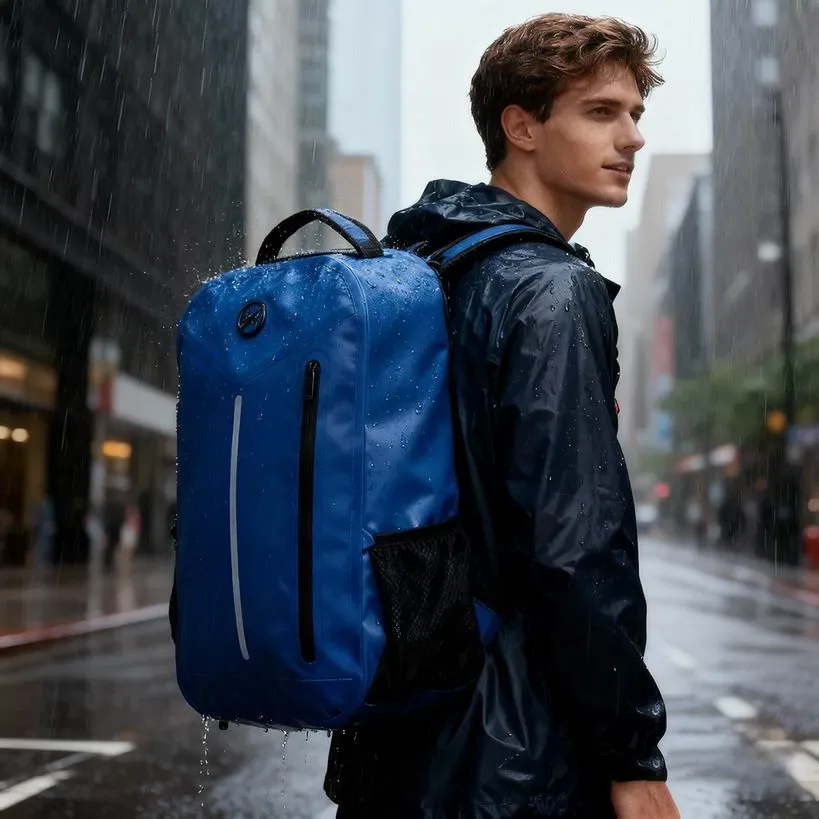
A wine bag drop test is a method and a pass criterion, not a height. ASTM D5276 covers the free fall of loaded containers: fill the bag with bottles at nominal fill, drop it in the sequence base, weakest bottom corner, flat side, handle, one fresh sample per orientation, and pass only if no bottle breaks, no seam or closure opens and no glass is exposed. A height alone tells you none of that.
Every wine bag programme that has ever come back came back because the bag met a parcel network it had never been tested against. The bag looked right, the sample was approved, the inspection passed, and the first month of delivery produced breakages that nobody could explain because nobody had written down what the bag was supposed to survive. A drop test fixes that, and it fixes it in a morning.
The bottle dimensions and the divider material behind this are in the wine bag programme hub. What follows is the test itself: which method, which height, which orientations, what fills the bag, how many samples and what counts as a pass.
Which Drop Test Method Applies to a Bottle Bag?
ASTM D5276, the standard test method for the drop test of loaded containers by free fall, is the one to cite on a bottle bag. The reason to cite a method rather than a height is that a height alone does not say which faces, in which order, on how many samples or what counts as a failure. Four people can each drop the same bag from the same height and reach four different conclusions, and all four will be defensible.
Where the bag travels as an individual parcel through a carrier network, the carrier may hold its suppliers to a procedure of its own, and ISTA 3A is the one usually named for parcel consignments. It is a longer sequence that includes random vibration and an atmospheric hazard element, and it is a different instrument. Ask the network which procedure it enforces before the test is booked, because a drop test the carrier does not recognise is a drop test that gets run twice.
There is a third method that belongs in the same conversation and it is not a drop at all: ASTM D4169, performance testing of shipping containers and systems, which builds a distribution cycle out of a sequence of hazards. It is the right frame where a programme ships a wine bag as part of a larger case, and it is over-specified for a single carrier.
| Method | What it is | When it is the right one | What it does not cover |
|---|---|---|---|
| ASTM D5276 | Free fall of a loaded container onto a stated face | The default for a bottle bag: fast, low cost, repeatable | Vibration, compression, climate |
| ISTA 3A | A parcel sequence with drop, vibration and atmospheric hazard | Where the carrier enforces it on individual parcels | It is a full sequence and it costs more |
| ASTM D4169 | A distribution cycle built from hazard elements | Where the bag ships inside a larger case | Over-specified for a single carrier |
| ISO 2206 | Identification of the parts of a complete filled package when testing | Naming the faces and edges so the report is unambiguous | It is a naming system, not a test |
| A pack-out tip test | Fill, tip to 45 degrees, carry, set down | A one-minute pre-check before any rig is booked | It is not a pass criterion |
What Drop Height Matches Which Package Weight?
The height is set by the weight of the filled package and it falls as the weight rises, which surprises buyers who assume a bigger bag is tested harder. For a parcel consignment the heights commonly set are 460 mm up to 9.5 kg, 300 mm from 9.5 to 18.5 kg and 200 mm above that. A filled six-bottle carrier at about 8.1 kg is still inside the first band; a six-Magnum shipper at over 16 kg is in the second.
Confirm the figure against the current edition of the procedure being cited rather than against a number in an email, because the tables are revised and a height copied from an old report is a height nobody is enforcing any more. Where a carrier enforces its own procedure, the carrier figure governs and the published table is only a starting point.
The weight used to set the height is the filled weight of the whole package, not the glass weight. Shell, divider, base board, handle and closure all count, and on a rigid six-bottle carrier the bag itself is a kilogram or more. Weigh a production unit rather than calculating from the bottle.
Which Orientations Break Bottles and Which Open Seams?
Four orientations, and each one interrogates a different part of the bag. The base orientation tells you whether the base panel and its attachment hold. The weakest bottom corner — the diagonal, and usually the one with a seam under it — is the one that breaks the bottle. The flat side tells you whether the divider is holding the bottles apart. The handle orientation tells you whether the attachment holds, and it is skipped nearly every time because it is the one that fails.
The corner is the one to take seriously, and the reason is contact geometry. A bottle landing flat on its side is supported along its length and the load is spread. The same bottle landing on the corner of the bag puts the shoulder of the glass against a point, and glass breaks at a point. That is also why a substitute mass gives the wrong answer: a block of the same weight has no shoulder.
The handle orientation deserves a note of its own, because it is the one programmes leave out and it is the one that separates a four-bottle bag from a six-bottle one. At 8 kg the load in the handle attachment at the moment of impact is several times the static load, and an attachment that passes a static pull test can still fail here.
Should the Bag Be Filled With Bottles or a Substitute Mass?
With bottles, and it is worth being strict about it. Filled to nominal with water, capped, at the weight of the range. Glass failure is a function of contact geometry and not of mass alone, so a steel block or a bag of sand of the correct weight will produce a result that has nothing to do with the result the bag will meet. This is the single most common shortcut in the category and it invalidates the report.
Water rather than wine, for three practical reasons: a broken bottle of wine destroys the evidence and the rig, it creates a disposal problem, and it is expensive to repeat. Water at nominal fill has the same mass and the same geometry, which are the two properties the test depends on.
Fill to nominal and cap, because an uncapped bottle has a different centre of mass and a different failure mode at the neck. And use the tallest and widest shape in the range for at least one of the samples, because the bag is built around the extremes and a test run on the house shape proves nothing about the Riesling.
How Many Samples Does a Defensible Drop Test Need?
One fresh sample per orientation, and never the same bag twice. Damage accumulates: a bag dropped on its base and then on its corner was tested for the second orientation with a damaged base, and the second result is not a result. On the four-orientation sequence that is four bags, and they are production bags rather than sample-room bags.
Then repeat the whole sequence on a second round if the first is marginal, and state the acceptance rule in advance: two of three units pass, or the mean of three passes with no individual result more than one orientation short. Without a rule, the first marginal result becomes a negotiation, and the negotiation always ends with the schedule.
The samples should come from bulk materials. A sample-room unit is usually assembled with more tolerance and with a divider cut on a different die, and it will outperform the bag that ships. Where the programme is going to repeat, ask for the drop test to be run again on the first production lot rather than only at approval.
| Test parameter | What to write down | Common mistake |
|---|---|---|
| Method | ASTM D5276, or the procedure the carrier enforces | Quoting a height with no method |
| Weight | The filled weight of a production unit, weighed | Calculating from the bottles and forgetting the bag |
| Height | The figure from the current edition of the procedure | A number copied from an old report |
| Orientations | Base, weakest bottom corner, flat side, handle | Skipping the handle orientation |
| Samples | One fresh production bag per orientation | Reusing one bag across orientations |
| Fill | Bottles at nominal fill with water, capped | A substitute mass of the same weight |
| Pass | No breakage, no opened seam or closure, no glass exposed | Judging the bag rather than the bottle |
| Rule | Two of three pass, stated before the test | Deciding what counts as a pass afterwards |
What Counts as a Pass on a Wine Bag Drop Test?
Three conditions, and the criterion is the bottle rather than the bag: no bottle breakage, no opening of a seam or a closure, and no glass exposed through the shell. All three go in the inspection instruction, and the third is the one that catches the failures the first two miss.
The important part is that a bag can fail with the bottle intact. A bag that lands with its base seam opened 40 mm and the bottle whole has still failed, because the next event will release the bottle. That is the point of writing the criterion down: it is not a cosmetic judgement, it is the question of whether the bag still contains what it was holding.
A hairline crack counts as a breakage and it is worth saying explicitly, because it is the one an untrained tester will pass. Run the bottles under a light and against a dark background after the drop, and check the neck and the shoulder rather than the body, which is where the crack will be.
Running a drop test you can argue from
- Cite the method, not the height: ASTM D5276 fixes the sequence and the criterion.
- Fill with bottles at nominal fill, capped, and use the tallest and widest shape.
- One fresh production bag per orientation — damage accumulates and a reused bag is not a sample.
- Pass is the bottle: no breakage, no opened seam, no glass exposed.
- State the acceptance rule before the test, or the first marginal result becomes a negotiation.
Does a Preconditioning Step Change the Result?
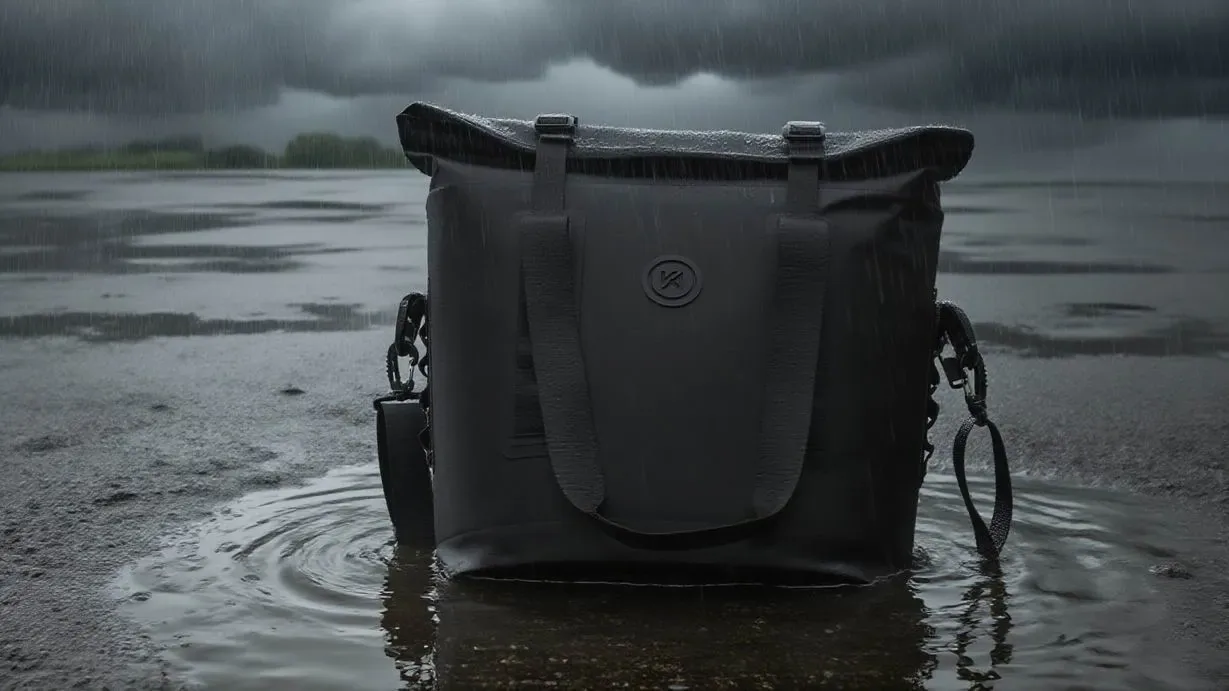
It does, and it is the step most often left out. A bag tested at ambient straight off the line is being tested in its best condition. A bag that has sat in a cold container, or a hot one, has different material behaviour at the moment of impact: a coating stiffens in the cold, a foam stiffens too, and a board that has taken up moisture is softer. Preconditioning to the condition the bag will meet is a few hours of chamber time.
The two conditions worth specifying on a wine bag are cold and damp. Cold, because a chilled bottle and a winter lane both put the bag below ambient before it is handled. Damp, because a paperboard divider that has taken up moisture behaves differently and a woven shell that is wet is heavier and stretches. Neither requires a laboratory; a cold room and a spray bottle will do for a screening test.
Where the bag will be shipped from a cold warehouse into a warm parcel network, the condensation case is the one to test, because that is the condition in which the divider is weakest and the shell is heaviest. It is also the condition nobody tests and the condition in which most field breakages happen.
How Is a Drop Test Different From ISTA 3A?
A drop test interrogates one hazard; ISTA 3A interrogates a sequence. The 3A procedure for individual parcels combines a drop sequence with random vibration, and it can include an atmospheric hazard element, and it is designed to reproduce what a parcel network does rather than what one handling event does. It takes longer, it needs a vibration table and it costs more.
The practical difference for a wine bag programme is what each one catches. A drop test catches the corner that breaks the bottle and the base seam that opens. A 3A sequence also catches the divider that walks out of position over hours of vibration, and the closure that works its way open — two failures that no drop test will ever find, and two of the most common complaints in the category.
Where the bag is a single bottle in a padded sleeve going through a postal network, the drop test alone is usually enough. Where it is a six-bottle carrier going through a parcel network on a multi-day lane, the vibration element earns its cost, and the question to ask the carrier is which procedure its suppliers are held to.
- Method
- ASTM D5276, or the procedure the carrier enforces, named with the edition
- Package weight
- The filled weight of a production unit, weighed and stated
- Drop height
- Set from the weight band, confirmed against the current edition
- Orientations
- Base, weakest bottom corner, flat side, handle
- Samples
- One fresh production bag per orientation, from bulk materials
- Fill
- Bottles at nominal fill with water, capped, including the tallest and widest shape
- Preconditioning
- Ambient only, or a stated cold and damp condition
- Pass criterion
- No breakage, no opened seam or closure, no glass exposed
- Acceptance rule
- Two of three pass, or a stated mean with no individual shortfall
- Report
- Photographs, the logged weights, and the result for each orientation
How Is the Drop Test Written Into the Purchase Order?
As a condition of release rather than as a note in an email. The purchase order should name the method, the height, the orientations, the sample count and the pass criterion, and it should say what happens when a lot fails: re-test on a larger sample, re-work, or reject. A test that is not tied to a release decision is a test that gets skipped when the date is tight.
It also needs a place in the inspection plan, and the two are different instruments. Inspection under ISO 2859-1 at General Inspection Level II accepts or rejects lots by counting defects in a sample: on a 500-piece wine bag order that is code letter H, 50 units, accept 3 and reject 4 at AQL 2.5 for major defects. A drop test is a test on a stated number of bags, and it is the instrument that catches the failure the attribute sample will not, because breakage is a critical defect and criticals are zero-tolerance.
The last piece is who pays for a re-test. It belongs in the order, because it is the clause that is argued about at the moment it matters, and it is the clause that decides whether a marginal result is reported honestly.
Write the test before you write the drawing
Send the count, the bottle shapes, the network and the lane. You get a test protocol with the method, the height, the orientations and the pass criterion, within one business day.
Frequently Asked Questions
What is the drop test standard for a wine bag?
ASTM D5276, the free-fall drop of loaded containers. It fixes the orientations, the sequence and the sample count rather than only a height, which is what makes the result defensible.
What drop height should a wine bag be tested at?
For a parcel consignment up to 9.5 kg the height commonly set is 460 mm, falling to 300 mm up to 18.5 kg and 200 mm above. Confirm against the current edition of the procedure you cite.
Which orientations should be dropped?
Base, then the weakest bottom corner, then a flat side, then the handle. The corner breaks the bottle, the base opens the seam and the handle is the orientation everyone skips.
Should the bag be filled with real bottles?
Yes. Bottles filled to nominal with water and capped. Glass failure is a function of contact geometry and not of mass alone, so a substitute mass of the right weight gives the wrong answer.
How many samples does a drop test need?
One fresh production bag per orientation, so four for the full sequence. Damage accumulates and a bag dropped twice was tested the second time with the damage from the first.
What counts as a pass?
No bottle breakage, no opening of a seam or a closure, and no glass exposed through the shell. A bag that lands with its base seam opened and the bottle intact has still failed.
Does a hairline crack count as breakage?
Yes, and it is worth saying explicitly in the instruction. Check the neck and the shoulder under a light against a dark background, because an untrained tester will pass a hairline.
Should the bag be preconditioned before the drop?
If the lane is cold or damp, yes. A coating and a foam stiffen in the cold and a board that has taken up moisture is softer, so a bag tested straight off the line is tested in its best condition.
What is the difference between a drop test and ISTA 3A?
A drop test interrogates one hazard; ISTA 3A is a parcel sequence that adds random vibration and an atmospheric element, and it catches a divider that walks and a closure that opens.
Which method will my carrier accept?
Ask the network. Many parcel carriers hold their suppliers to a procedure of their own, and a drop test the carrier does not recognise is a drop test that gets run twice.
How does the drop test relate to AQL 2.5 inspection?
They are different instruments. Inspection accepts or rejects lots by counting defects in a sample; the drop test is a test on a stated number of bags and it catches the critical failure an attribute sample misses.
What sample size applies to a 500-piece wine bag order?
ISO 2859-1 at General Inspection Level II draws code letter H: 50 units, accept 3 and reject 4 at AQL 2.5 for major defects, with criticals at zero tolerance.
What is the MOQ and lead time for a tested wine bag programme?
MOQ 500 pcs per style and colourway, sampling 6-10 working days from a final tech pack with the bottles in hand, and bulk production 35-50 days from written sample approval.
Who pays for a re-test when a lot fails?
It belongs in the purchase order. A test that is not tied to a release decision is a test that gets skipped when the date is tight.
People Also Ask
How do you test a wine bag before ordering in bulk?
ASTM D5276 free fall of the filled bag: base, weakest bottom corner, flat side, handle, one fresh production bag each, pass on no breakage, no opened seam and no glass exposed.
What drop height should a wine bag survive?
460 mm for a parcel up to 9.5 kg, 300 mm to 18.5 kg and 200 mm above, confirmed against the current edition of the procedure being cited.
Do I need real bottles to test a wine bag?
Yes. Fill to nominal with water and cap. A substitute mass has the weight and not the geometry, and glass breaks on contact geometry.
Is a drop test the same as ISTA 3A?
No. A drop test is one hazard; ISTA 3A is a parcel sequence with vibration and an atmospheric element, and parcel carriers often enforce it.
How many bags should I drop test?
One fresh bag per orientation, four for the standard sequence, taken from bulk materials rather than from the sample room.
Sources and further reading
Every figure on this page is either our own programme data or attributed below. Open the originals before you write them into a specification.
- ASTM D5276 — drop test of loaded containers by free fallASTM International
- ISTA 3 Series — packaged-product performance test proceduresInternational Safe Transit Association
- ISO 2206 — packaging: identification of parts of a complete, filled transport package when testingInternational Organization for Standardization