Should a Wine Programme Sell a Bag or a Gift Box?
A wine bag and a gift box are two different logistics decisions that happen to present as one design decision. The bag folds, absorbs a knock and is charged on weight. The box holds a shape under a stack and is charged on volume.
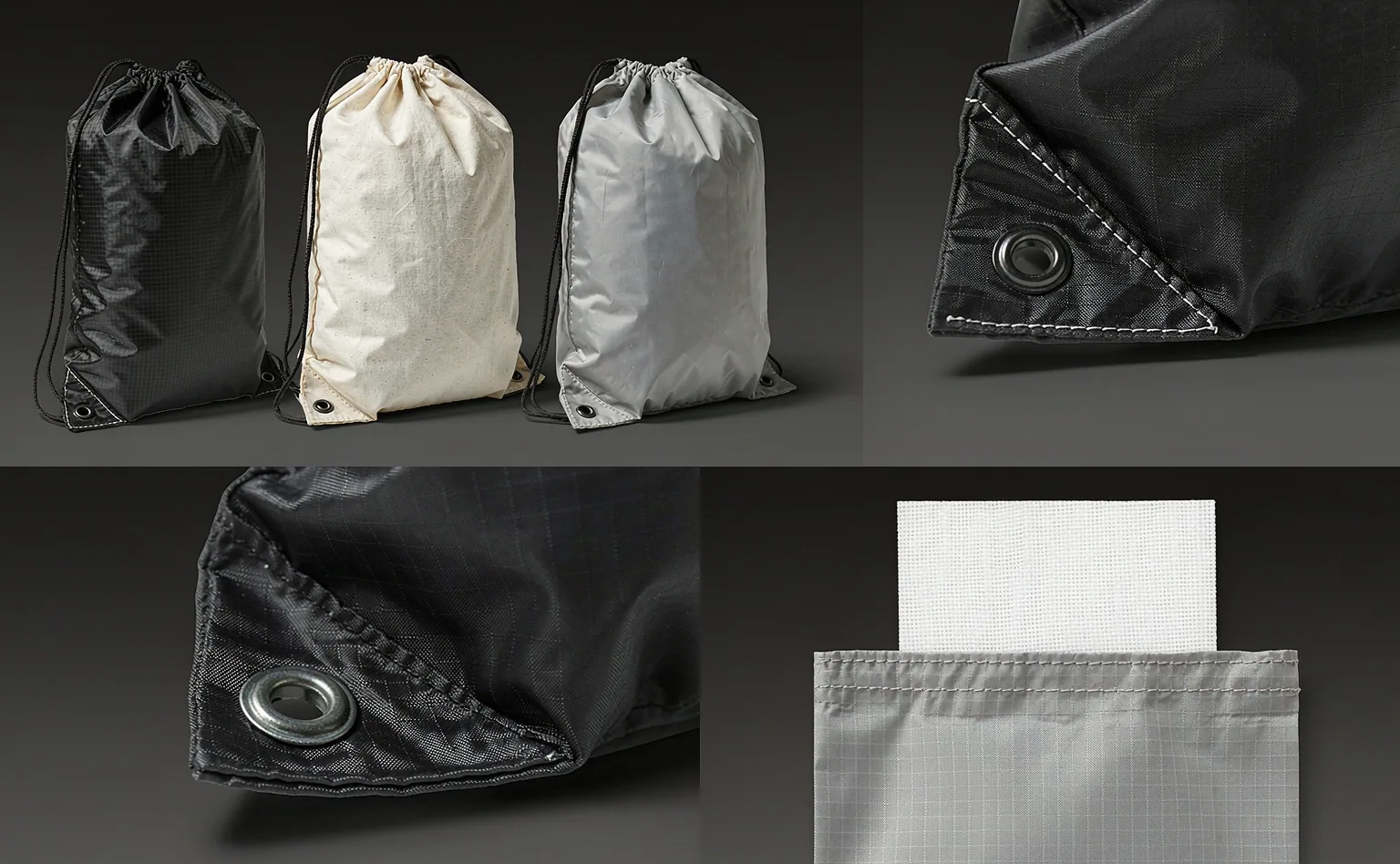
A wine bag and a gift box are two different logistics decisions that happen to present as one design decision. The bag folds, absorbs a knock, travels as a parcel and holds in a small footprint. The box presents better on a shelf, holds a rigid shape, survives stacking, and arrives as volume rather than as a folded component. Landed cost, tooling and the tariff line all differ.
The choice between a bag and a box is presented to buyers as a merchandising decision and it is mostly a logistics one. Both hold a bottle. One of them folds, absorbs a knock and can be carried; the other stands on a shelf, holds a shape under a stack and is charged on volume. The difference shows up in the freight line, in the warehouse and in the tariff heading, and it is visible in the landed number long before it is visible in a photograph.
The bottle geometry that both formats have to answer is in the wine bag programme hub. This piece compares the two formats on the six things that decide which one a programme should buy.
What Is the Buyer Choosing Between, Really?
Two supply chains rather than two presentations. A bag programme buys a sewn or welded component, folds it flat, holds it in a carton, packs a bottle into it at the last moment and sends it out as a soft parcel. A box programme buys a converted board, holds it erected or as a flat blank, packs it, and sends out a rigid rectangular unit that is charged on volume and that stacks. The operations on either side of the purchase are different, and the purchase price is the smallest part of the difference.
The second real difference is what happens at the destination. A bag is carried by a handle and is a soft-sided object in a network that is built for rectangular ones. A box is a rectangle and it goes through the network as intended. That is the whole argument for a box on any programme where the item is shipped rather than handed over, and it is the argument that a bag has to answer with a drop test.
The third is the promotional life. A bag is reused, and it is a brand asset for years. A box is opened once and it is a bin. Programmes that measure the second life rather than the first impression usually end up with a bag, and programmes that measure the moment of giving usually end up with a box. Both are defensible and they are different buying criteria.
| Dimension | Wine bag | Gift box | Which wins and where |
|---|---|---|---|
| Packed cube | folds flat or nests | erected volume, or a flat blank | The bag on storage, the blank on freight |
| Parcel survival | needs a drop test to prove it | a rectangle in a network built for rectangles | The box on an unmanaged network |
| Shelf presentation | good, and it needs a rigid base to stand | better, and it holds a shape under a stack | The box on a shelf |
| Carried | yes, by a handle | no, or by a cord that is a weak point | The bag at the door |
| Second life | reused for years | opened once | The bag as a brand asset |
| Tooling | a die for the divider | a cutting die and a crease, more on a rigid box | Roughly comparable at volume |
| Tariff heading | a bag heading | a paperboard packaging heading | Confirm both before you quote |
| Storage | flat, a small footprint | erected, a large one, or blanks | The bag, unless the box is held as blanks |
How Do Bag and Box Compare on Shelf Presentation?
The box wins on a shelf and it wins for a specific reason: it holds a shape under a stack and it presents a flat face. A bag can stand up, but it stands up because of a board in the base and a divider inside it, and it slumps when it is empty or when the board is thin. On a fixture with three rows stacked, a slumped bag is the one that does not sell.
The bag wins in one presentation circumstance that matters: when the item is seen in the hand rather than on a shelf. A bag at a cellar door, at a tasting, at a counter, in a photograph of someone giving it — that is a moment a box does not have, and it is the moment that sells most wine. Where the item is handed over, the bag is the better presentation object.
The middle case is the one worth planning for and it is common: a bag with a rigid base board and a stiffened panel, standing on a shelf among boxes. It stands, it presents a flat brand panel and it can still be carried. That build costs a little more than a soft bag and it answers both moments, which is why it is what most retail programmes end up specifying.
Which Format Survives the Parcel Network?
The box, and it is worth being honest about it, because a bag programme that ships without a test is a bag programme that will be surprised. A rigid rectangular box is what a parcel network is designed around: it sorts, it stacks, it takes a label and it survives being dropped because the corners are reinforced by the geometry. A soft bag does not sort, it does not stack and it takes a label badly.
The bag can be brought to the same place, and the route is a test rather than a claim. ASTM D5276, free fall of the filled package, one fresh production sample per orientation, base then weakest bottom corner then a flat side then the handle, and pass only on no breakage, no opened seam and no glass exposed. Where the network enforces its own procedure, ISTA 3A is the one usually named for individual parcels and it adds a vibration element that catches the failures a drop test misses.
There is a hybrid that is worth naming because it is the honest answer for a parcel wine programme: a bag inside a box, or a bag with a boarded base and a rigid outer that takes the label. The customer opens a box and finds a bag, which is the giving moment, and the network handles a rectangle, which is the shipping moment. It costs both and it is the configuration most shipped wine gifts actually use.
What Does Each Format Cost to Land?
Not what the purchase order says, and this is the part that surprises people. A bag usually costs more per unit to make and less per unit to land, because it folds and it is charged on weight; a box usually costs less per unit to make and more per unit to land, because it is charged on volume. On a programme shipping thousands of units the two lines cross, and the crossing point is a cube calculation rather than a negotiation.
The calculation is three numbers and it is worth doing explicitly: units per carton, cartons per container, and the freight charge per container for each format. Where the box can be held and shipped as a flat blank and erected at the destination, its cube falls dramatically and the comparison changes — which is the question to ask before the format is chosen rather than after.
There is a second cost that belongs in the same table and it is labour at the destination. A bag is filled in seconds by one person. A rigid box is assembled, lined, filled and closed by someone who has been shown how. At a packing bench running a thousand units a day that difference is a headcount, and it is larger than either freight line.
How Do the Two Formats Differ on Tooling?
Both have tooling and it is different tooling, which is the reason the two are quoted differently. A bag needs a cutting die for the panel, a die for the divider and, where the build is structured, a jig for the assembly. A box needs a cutting die and a creasing form, and a rigid box needs a board, a wrap and a setup operation that is largely manual.
The difference that matters commercially is what happens on a reorder. A bag die is a one-off cost paid on the first invoice and not charged again, so the reorder price is genuinely lower and the reorder can be discussed at a smaller quantity. A rigid box setup is labour that recurs on every order, so the unit price is steadier and the quantity floor is set by the setup rather than by a die.
Where a programme is going to run for several seasons, both formats should be quoted with the tooling as a separate line and with a reorder price quoted at the reorder quantity. A quotation that has absorbed the tooling into a single unit price is a number that will not survive the second order.
Choosing between a wine bag and a gift box
- It is a logistics decision: the bag folds and is charged on weight, the box is charged on volume.
- The box wins on a shelf and under a stack; the bag wins in the hand, at the counter and after the sale.
- A bag that ships needs a drop test, because the network is built for rectangles.
- Compare landed numbers, including the labour to pack at the destination, rather than unit prices.
- Ask for the tooling as a separate line and a reorder price at the reorder quantity.
Does a Gift Box Enter on a Different Tariff Line?
Usually yes, and it is the line in the comparison that catches programmes out. A sewn or welded textile wine bag and a paperboard box are different articles and they are classified in different chapters of the Harmonized System, so a programme quoting one landed number across both formats is quoting a number that is wrong for one of them. Confirm both headings before the cost is committed.
Rates move and the honest answer is a verification instruction rather than a figure: confirm the current heading and rate against the official tariff database for the destination market rather than against a number in a quotation. the HS code finder is the place to start, and the World Customs Organization maintains the nomenclature the national databases are built on. Where a box has a wooden component, the wood packaging rules under ISPM 15 can apply as well, which is a separate document rather than a separate rate.
There is a practical consequence for a programme carrying both formats: two headings means two lines on the entry, and a mixed container needs both declared correctly. It is a documentation cost rather than a duty difference, and it is one a broker will charge for if it is discovered at entry.
Which Format Does a Retail Promotion Need?
The one the promotion is promising. A promotion that promises a gift to be given — a seasonal pack, a corporate send, a hamper — is promising the moment of opening, and a box delivers that moment better. A promotion that promises something to keep — a reusable bag with a brand on it, an item the customer will carry to a picnic — is promising a second life, and only a bag delivers that.
The second question is where the promotion happens. At a shelf, the box. At a counter or a cellar door, the bag. Through a parcel network to a recipient, the bag inside a box. The format follows the moment and the channel rather than the artwork, and a promotion designed on artwork alone usually picks the wrong one.
The third question is the volume and the date. A seasonal promotion has a hard release date, and the format choice affects how far back the order has to be placed: a rigid box with a setup operation has a longer conversion window than a sewn bag in most seasons. Where the date is tight, that is often the deciding factor and it is covered in Seasonal Wine Bag Programmes.
| Programme | Format that fits | Why | What to test first |
|---|---|---|---|
| Shelf promotion, stacked | gift box | It holds a shape under a stack | A stack test on the erected box |
| Cellar door, handed over | wine bag | It is carried and it is kept | A drop test on the filled bag |
| Shipped gift, parcel network | a bag inside a box | A rectangle in the network, a bag in the hand | ISTA 3A, or what the carrier enforces |
| Reusable brand programme | wine bag, reinforced | The second life is the point | A fifty-cycle carry test |
| Subscription, monthly | wine bag, folded | Storage and pack-out at volume | A drop test and a cube calculation |
| Corporate send, one drop | gift box | The opening moment | The landed number including the duty line |
How Do Bag and Box Differ on Storage and Pack-Out?
Enough to decide the warehouse. A thousand folded wine bags occupy a small footprint and can be held for a season. A thousand erected boxes occupy a large one, and holding them for a season costs rent; holding them as flat blanks costs far less and adds an erection operation at pack-out. Where the box is held erected, the storage line is real and it is often missing from the comparison.
Pack-out is the other half. A bag is opened, filled and closed, and an operator is trained in a minute. A rigid box is assembled, lined, filled, closed and often wrapped, and it takes longer on the bench. At a thousand units a day the difference is a person, and at a seasonal peak it is the difference between hitting the release date and missing it.
The third storage factor is moisture, which is a wine-specific problem. A board box in a damp warehouse softens; a wine bag with a closed-cell divider does not. Where the warehouse is not climate-controlled and the season is humid, that is an argument for the bag that has nothing to do with presentation.
- Units per carton
- For each format, folded or erected
- Cartons per container
- For each format, and the freight charge per container
- Pack-out labour
- Seconds per unit on the bench, for each format
- Storage
- Footprint per thousand units, held for the season
- Drop test
- ASTM D5276 for the bag, a stack test for the box
- Tariff heading
- Confirmed for each format against the official database
- Tooling
- Quoted as a separate line, with the reorder price stated
- Setup
- What recurs on every order in each format
- Moisture
- How each format behaves in the warehouse it will sit in
- Second life
- Whether the programme is selling the moment or the years after it
When Should a Programme Carry Both?
When it sells through more than one channel, and most wine programmes do. A cellar door hands the bottle over and wants a bag. A mail-order channel ships it and wants a box. A corporate channel sends it and wants the opening moment. One brand, three channels, and the honest answer is two formats rather than one compromise.
The way to carry both without doubling the artwork cost is one artwork on two constructions, which is the same pattern a multi-count programme uses. The brand panel, the colourway and the print are identical; the substrate, the construction and the carton change. The customer sees one programme and the specifications are written twice.
On the programme side nothing differs between the formats: MOQ 500 pcs per style and colourway, sampling 6-10 working days from a signed-off tech pack with the physical bottles, bulk production 35-50 days from written sample approval, inspection at AQL 2.5 under ISO 2859-1 General Inspection Level II, T/T 30/70, FOB Xiamen. What differs is which of those numbers you have to plan backwards from, and that is the release date.
Compare landed numbers, not unit prices
Send the channel, the volume, the release date and the bottle shapes. You get a bag and a box comparison with freight, duty and pack-out on the same page, within one business day.
Frequently Asked Questions
Is a wine bag or a gift box better for retail?
A box presents better on a shelf and under a stack; a bag wins in the hand, at a counter and after the sale. Match the format to the channel rather than to the artwork.
Which survives shipping better, a bag or a box?
A box, because a parcel network is built around rectangles. A bag can be brought to the same place with a drop test to ASTM D5276, and a bag inside a box answers both.
What is the cost difference between a bag and a box?
A bag usually costs more to make and less to land because it folds; a box usually costs less to make and more to land because it is charged on volume. Compare landed numbers rather than unit prices.
Does a gift box have a different HS code from a wine bag?
Usually yes: a textile bag and a paperboard box sit in different chapters of the Harmonized System. Confirm both headings against the official tariff database for the destination.
Can a wooden gift box be shipped internationally?
Where it has a wooden component, the wood packaging rules under ISPM 15 can apply, which is a separate document to hold rather than a separate rate to pay.
Which format stores in less space?
A folded bag by a wide margin. A box held erected costs rent; a box held as a flat blank costs far less and adds an erection operation at pack-out.
How long does a box take to pack against a bag?
A bag is opened, filled and closed in seconds. A rigid box is assembled, lined, filled, closed and often wrapped, and at a thousand units a day that difference is a headcount.
Should a programme carry both formats?
Where it sells through more than one channel, yes — one artwork on two constructions. A cellar door wants a bag, a mail-order channel wants a box.
Does a bag need a rigid base to stand on a shelf?
Yes. A bag stands because of a board in the base and a divider inside it, and it slumps when the board is thin or the bag is empty.
What test applies to a wine bag that ships as a parcel?
ASTM D5276 for the drop, or ISTA 3A where the network enforces it, because 3A adds a vibration element that catches the failures a drop test misses.
How does moisture affect the choice?
A board box softens in a damp warehouse; a wine bag with a closed-cell divider does not. In a humid season that is a decision on its own.
What is the MOQ for a wine bag against a box?
MOQ is 500 pcs per style and colourway for a bag programme, and 300 pcs can be discussed on a repeat because the die already exists.
Does the tooling cost differ between the two?
Both have tooling. A bag die is a one-off line on the first invoice; a rigid box setup recurs as labour on every order, so its quantity floor is set by the setup.
What inspection applies to either format?
ISO 2859-1 at General Inspection Level II with AQL 2.5, with a class list written for the format: a drop failure for the bag, a crushed corner for the box.
People Also Ask
Is a wine bag or a gift box better?
A box for a shelf and a stack, a bag for the hand and for the years after the sale. Most shipped wine gifts use a bag inside a box.
What is the cost difference, a wine bag or a gift box?
To buy, usually the box; to land, usually the bag, because freight is charged on volume and a bag folds.
Can you ship wine in a bag through a parcel network?
Yes, with a drop test to ASTM D5276 or the procedure the carrier enforces, and a bag inside a box is the configuration most programmes settle on.
Do wine bags and gift boxes have the same HS code?
Usually not. A textile bag and a paperboard box are different articles in different chapters; confirm both against the official database.
Which stores better, a bag or a box?
A folded bag. A box held as flat blanks is close; a box held erected costs rent and a season of it is a real line.
Sources and further reading
Every figure on this page is either our own programme data or attributed below. Open the originals before you write them into a specification.
- WCO — the Harmonized System nomenclatureWorld Customs Organization
- ASTM D5276 — drop test of loaded containers by free fallASTM International
- IPPC — ISPM 15: regulation of wood packaging material in international tradeInternational Plant Protection Convention