Which Shell Fabric Should a Camera Bag Use: Cordura, Ballistic Nylon or Canvas?
Three families share the category. Cordura nylon gives the best abrasion to weight ratio and is the general-purpose shell; ballistic nylon gives the highest abrasion life and belongs on the base; canvas is chosen for the way it looks and ages.
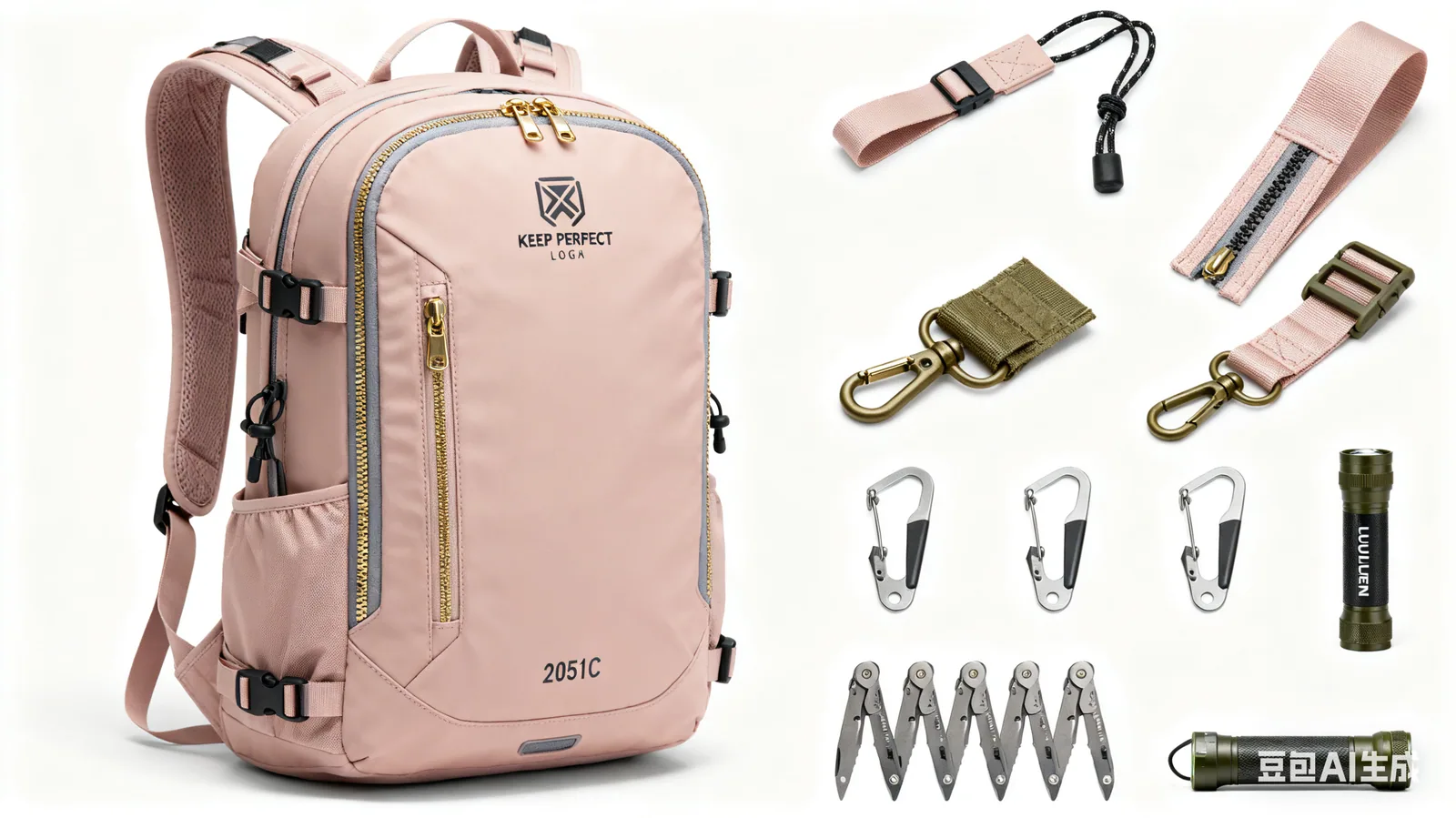
Three shell families dominate camera bags. Cordura nylon in 500D to 1000D is the general-purpose answer, with the best abrasion-to-weight ratio in the category. Ballistic nylon in 1050D and 1680D is the heaviest and the most abrasion-resistant, and belongs on the base panel and on bags that live in a vehicle. Cotton duck canvas is chosen for appearance and for a quiet hand, and it needs a finish to behave outdoors. The coating and the backing decide more than the face fabric.
A camera bag shell has to do four jobs: take abrasion for years, carry a coating that keeps water out, hold a colour that does not fade unevenly, and stay quiet and soft enough in the hand that a photographer will carry it. No single fabric family is best at all four, which is why the material choice on a camera bag is a set of trade-offs rather than a ranking. The three families in general use are Cordura nylon, ballistic nylon and cotton duck canvas, and each has a clear territory.
The mistake buyers make is specifying the face fabric and leaving the coating, the backing and the denier to the mill. Two fabrics with the same name and the same denier can differ by a factor of three in abrasion life depending on the yarn, the weave and what is painted on the back, and the difference only shows up after the bag has been used. The specification has to cover all four layers.
What Does Denier Actually Tell You?
Denier is the mass in grams of nine thousand metres of a single yarn, so a higher number is a thicker yarn. In bag fabrics the common steps are 420D, 500D, 600D, 840D, 1000D, 1050D and 1680D. A thicker yarn gives a heavier fabric with more material to abrade through, which is why abrasion life rises with denier, but it also gives a stiffer hand and a heavier bag, and it does not by itself improve tear strength.
Denier is also the number most often quoted without context. A 600D polyester and a 600D nylon 6.6 are not equivalent: nylon 6.6 has materially better abrasion resistance than polyester at the same denier, which is why a 500D Cordura nylon will often outlast a 600D polyester in the same application. Specify the polymer and the denier together, or the denier is a number without a meaning.
| Denier | Typical use on a camera bag | Hand and weight | Note |
|---|---|---|---|
| 420D to 500D | Lining, light shells, packable bags | Light and soft | Popular for travel ranges where weight is the selling point |
| 600D | The volume shell fabric | Middle | The default for mid-range bags in polyester or nylon |
| 840D to 1000D | Shell on a professional bag | Firm | The range where Cordura is usually specified |
| 1050D | Ballistic nylon, base panels | Firm and heavy | A basket weave rather than a plain weave; very high abrasion life |
| 1680D | Base panel, high-wear areas | Stiff and heavy | Usually reserved for the base and the lower walls |
How Does Cordura Differ From Generic Nylon?
Cordura is a branded family of nylon 6.6 fabrics with a specification behind the name: a stated yarn, a stated weave and a set of performance thresholds the mill has to meet, including abrasion and tear. That is the difference. A generic 1000D nylon is a description of a yarn thickness and nothing more, and two lots of generic 1000D nylon from different mills can behave completely differently.
The practical benefit for a buyer is repeatability. A programme that specifies a branded fabric gets the same abrasion result on the fifth order as on the first, because the mill is held to a specification rather than to a sample. For a camera bag that will be reordered, that repeatability is worth more than the marginal difference in performance, and it is the main argument for paying for the name.
What Is Ballistic Nylon and Where Does It Belong?
Ballistic nylon is a nylon 6.6 in a two-by-two basket weave rather than a plain weave, most often at 1050D or 1680D. The basket weave is what gives it its property: two yarns crossing two yarns spreads an abrasion load and a point load over a wider area, so the fabric resists both scuffing and tearing better than a plain weave of the same denier. It is heavier, stiffer and more expensive, and it has a distinctive sheen.
Its territory is the base panel and the lower walls of a bag that lives in a vehicle boot or on a studio floor, and bags sold into markets where abrasion is the headline claim. Using it for the whole shell makes the bag heavy and stiff and pushes the price up for a benefit the upper panels will never need. The usual answer is a 1680D ballistic base with a 500D or 1000D upper shell.
Where Does Cotton Duck Canvas Still Make Sense?
Canvas is chosen for appearance and for the way it ages rather than for any measured performance advantage. A cotton duck at 10 to 18 ounces per square yard has a quiet hand, takes a print and an embroidery well, and develops a patina rather than a scuff, which is why it dominates the heritage end of the category and the lifestyle end of the market.
The technical cost is real. Cotton absorbs water, so an untreated canvas wets through and gets heavy; it needs a wax or a synthetic finish to behave outdoors, and that finish has a life and has to be specified with a durability figure. Cotton also has lower abrasion resistance and lower tear strength than nylon at a comparable weight, and it is heavier. A canvas camera bag is a deliberate choice about appearance, and the specification has to say so.
| Family | Abrasion life | Water behaviour | Weight | Where it belongs |
|---|---|---|---|---|
| Cordura nylon 6.6, 500D to 1000D | Best abrasion to weight ratio in the category | Sheds water with a finish; dries fast | Light to middle | The general-purpose shell for camera bags |
| Ballistic nylon, 1050D to 1680D | Highest, from the basket weave | Sheds water with a finish | Heavy | Base panels and high-wear areas |
| Cotton duck canvas, 10 to 18 oz | Lower than nylon at equal weight | Absorbs water unless finished | Heaviest of the three | Heritage and lifestyle ranges |
| Polyester, 600D | Lower than nylon at equal denier | Sheds water; good colour fastness | Light | Volume and entry price points |
Polyester or Nylon: Which Is the Better Substrate?
Nylon 6.6 wins on abrasion and on tear strength at equal denier, and it is the substrate behind both Cordura and ballistic nylon. Polyester wins on colour fastness to light, on cost and on recycled content availability, because the recycled polyester stream is far more mature than the recycled nylon stream. Where a programme has a recycled content target, polyester is usually the practical route and nylon is the exception.
For a camera bag the deciding property is abrasion, because a camera bag is dragged across car boots, studio floors and rocks, and abrasion is where nylon earns its premium. The deciding property for a lining is different: a lining does not abrade, so a polyester lining at a lighter denier is the sensible economy and saves weight where it does not cost performance.
What Does the Coating Do, and What Kills It?
The coating on the back of the fabric is what makes a bag shed water, and it is the layer that fails first. Polyurethane coating is the volume answer: it is flexible, it bonds well and it is inexpensive. Thermoplastic polyurethane is more durable and more resistant to hydrolysis, and it is the upgrade where a bag will live in a humid climate. Polyvinyl chloride coating is stiff, heavy and being designed out of most programmes for environmental reasons.
The failure mode to specify against is hydrolysis, which is the breakdown of a polyester-based polyurethane in heat and humidity. It shows up as a coating that goes tacky, then cracks, then peels off the inside of the shell, and it happens in a warehouse as often as in the field. Accelerated ageing of coated fabrics is tested under ISO 1419, and a specification for a humid market should ask for a stated number of days at a stated temperature and humidity.
How Are Abrasion and Tear Measured?
Abrasion is measured by the Martindale method under ISO 12947, in which a fabric is rubbed against a standard abradant under a stated load until a stated endpoint is reached, and the result is reported in cycles. The endpoint matters as much as the number: twenty thousand cycles to a broken thread and twenty thousand cycles to a change of appearance are not the same result, and a data sheet that gives a number without an endpoint cannot be compared with another.
Tear and tensile are measured separately. Tensile properties of fabrics are tested under ISO 13934-1 as a strip test and reported in newtons, and tearing resistance has its own methods in the same family. For a camera bag the tear figure matters at the strap roots and at the corners, where a tear starts and propagates, and it is a different property from the abrasion figure that marketing copy tends to quote.
Does Colour Fastness Matter on a Camera Bag?
It matters for two reasons and both are commercial. The first is returns: a bag whose shell fades unevenly, or whose dark colour crocks onto a light shirt, comes back. The second is reorder consistency, because a colour that has to be matched to a previous order is only matchable if the dye lot and the fastness are specified rather than admired. Colour fastness to light, to rubbing and to washing each have their own methods in the ISO 105 series and at AATCC.
For a black or a dark camera bag the one to watch is fastness to rubbing, because a dark dyed nylon with poor fixation will mark a light garment, and that is a complaint rather than a defect the customer can see coming. Specify a minimum grey scale rating for dry and wet rubbing and check it on the production fabric rather than on the lab dip, because the finish applied after dyeing changes the result.
- Polymer
- Nylon 6.6 or polyester, named, not implied
- Denier and weave
- For example 1000D plain weave or 1050D two-by-two basket
- Brand or generic
- A branded fabric with a specification, or a generic with mill data
- Mass per unit area
- Grams per square metre with a tolerance
- Coating
- PU or TPU, stated thickness or add-on, with the hydrolysis test result
- Hydrolysis
- Days at a stated temperature and humidity, per ISO 1419
- Abrasion
- Cycles to a stated endpoint, per ISO 12947
- Tear and tensile
- Newtons, per ISO 13934-1 and the related tear method
- Colour fastness
- Grey scale rating for light, dry rubbing and wet rubbing, ISO 105
- Water behaviour
- Spray rating ISO 4920 and hydrostatic head ISO 811 where a claim is made
- Recycled content
- Percentage and the certification route, for example GRS
- Dye lot control
- Reference sample retained, and a tolerance on the shade
What Does Each Fabric Cost and Weigh?
On a relative index with 600D polyester at 100, a 500D Cordura nylon sits at about 150 to 190, a 1050D ballistic nylon at about 220 to 280, and a 14 ounce cotton duck with a finish at about 160 to 200. Those indices move with the market and with the order quantity, and the point of them is the shape: the step from a volume polyester to a branded nylon is the largest single material step in a camera bag bill of materials.
Weight follows the same order but with a smaller spread, because a heavy coating and a backing can add as much as a denier step. A 600D polyester shell at about 200 grams per square metre, a 1000D Cordura at about 300, and a 1680D ballistic at about 400, so the difference across the range is roughly 200 grams per square metre. On a mid-size bag with two square metres of shell, that is 400 g, which is a real number on a product the user carries.
How Does Fabric Choice Affect the Reorder?
Fabric is the largest single source of drift between orders, because a fabric is bought from a mill in lots and every lot has a shade variation and a finish variation. The control is a retained reference sample from the first order, a stated shade tolerance, and a requirement that the mill data sheet for the new lot is compared against the original before cutting starts. Without those three, the fifth order will be a different colour from the first.
The second control is to specify the fabric by construction rather than by hand. A fabric approved because it feels right is unmatchable, because the hand is the product of the finish, the calendering and the backing as well as the yarn. A fabric approved by polymer, denier, weave, mass per square metre and coating is matchable, and that is the difference between a programme that runs for five years and one that argues about every shipment.
What decides a camera bag shell fabric
- Nylon 6.6 wins on abrasion at equal denier; polyester wins on colour fastness and recycled availability.
- Ballistic nylon is a basket weave, and its territory is the base panel and the lower walls.
- Canvas is a decision about appearance and ageing, and it needs a finish with a durability figure.
- The coating fails before the face fabric, and hydrolysis is the failure mode to specify against.
- Abrasion means nothing without the endpoint: cycles to what, under ISO 12947.
- Specify fabric by construction, not by hand, or the fifth order will not match the first.
How Do You Write the Fabric Into a Tech Pack?
The tech pack carries a fabric line per material: shell, base, lining, webbing and binding. Each line names the polymer, the denier, the weave, the mass per square metre with a tolerance, the coating with its add-on, and the three test results that matter for the application, which for a shell are abrasion, tear and hydrolysis. If a line carries fewer than those fields, the mill is choosing the rest.
It also carries the shade. A Pantone reference alone is not enough, because a Pantone reference is a target on a screen and a fabric is a dye on a yarn; the pack should carry the Pantone reference plus a retained fabric swatch plus a stated tolerance in delta E. A programme that carries all three can reject a lot on evidence rather than on opinion, and that is the difference that matters when the shipment is already packed.
Programme arithmetic is unchanged by the fabric: MOQ 500 pcs per style and colourway, sampling 6-10 working days from a signed-off tech pack, bulk production 35-50 days from written sample approval, inspection at AQL 2.5 under ISO 2859-1 General Inspection Level II, payment T/T 30/70, quoted FOB Xiamen. A fabric that has to be sourced rather than taken from stock adds to the sampling start, and a branded fabric is usually the one that does.
Send the fabric target with the enquiry
Send the polymer, the denier, the finish requirement and the target quantity. You get a fabric recommendation, indicative pricing and a sampling window within one business day.
Frequently Asked Questions
Is Cordura better than ballistic nylon for a camera bag?
They do different jobs. Cordura at 500D to 1000D is the general-purpose shell with the best abrasion to weight ratio; ballistic nylon at 1050D to 1680D is heavier, stiffer and belongs on the base panel.
What does denier mean on a bag fabric?
The mass in grams of nine thousand metres of one yarn. A higher denier is a thicker yarn with more material to abrade through, but it does not by itself improve tear strength.
Is nylon or polyester better for a camera bag?
Nylon 6.6 for abrasion and tear, which is what a camera bag needs. Polyester for colour fastness to light, lower cost and recycled content availability.
What is ballistic nylon?
A nylon 6.6 in a two-by-two basket weave, usually 1050D or 1680D. The basket weave spreads an abrasion and a point load, which is where its performance comes from.
Is canvas a good material for a camera bag?
It is a good appearance decision and a poor performance one. Cotton absorbs water without a finish, has lower abrasion life than nylon at equal weight and is heavier, so the finish and its durability have to be specified.
What is hydrolysis and why does it matter?
The breakdown of a polyester-based polyurethane coating in heat and humidity. The coating goes tacky, cracks and peels off the inside of the shell, and it happens in a warehouse as often as in the field. ISO 1419 is the accelerated ageing method.
How is abrasion resistance measured?
By the Martindale method under ISO 12947, reported in cycles to a stated endpoint. The endpoint has to be named, because cycles to a broken thread and cycles to a change of appearance are different results.
How heavy is a camera bag shell fabric?
Roughly 200 grams per square metre for a 600D polyester, 300 for a 1000D Cordura and 400 for a 1680D ballistic, so the spread across the range is about 200 grams per square metre.
Does a recycled fabric change the specification?
Yes. A recycled content claim needs a certification route and a transaction certificate, and the recycled polyester stream is far more mature than the recycled nylon stream, so polyester is usually the practical route.
Why does the second order not match the first on colour?
Dye lot variation. The control is a retained reference swatch, a stated tolerance in delta E, and a mill data sheet comparison before cutting starts.
Should the lining be the same fabric as the shell?
No. A lining does not abrade, so a lighter denier polyester lining is the sensible economy and saves carried weight where it costs no performance.
Does fabric choice change the MOQ?
No. MOQ stays at 500 pcs per style and colourway. A branded fabric can add to the sampling start because it has to be ordered in, and that is the schedule item to watch.
People Also Ask
What is the best material for a camera bag?
Cordura nylon 6.6 at 500D to 1000D for the shell, ballistic nylon on the base panel, and a lighter polyester lining.
Is ballistic nylon waterproof?
No fabric is. Ballistic nylon sheds water with a coating and a finish; resistance to penetration is measured as a hydrostatic head under ISO 811.
What is the difference between Cordura and regular nylon?
Cordura is a branded family with a specification behind it covering yarn, weave and performance thresholds, so the abrasion result repeats across orders. Generic nylon is a yarn thickness and nothing more.
How long should a camera bag fabric last?
It is measured in Martindale cycles under ISO 12947 against a stated endpoint, not in years. Ask the mill for the cycles and the endpoint together.
Do canvas camera bags need a finish?
Yes. Cotton absorbs water and gets heavy, so a wax or synthetic finish is required, and the finish needs a durability figure because it has a life.
Sources and further reading
Every figure on this page is either our own programme data or attributed below. Open the originals before you write them into a specification.
- CORDURA fabric — denier, construction and abrasion performanceINVISTA
- ISO 12947 — abrasion resistance of fabrics by the Martindale methodInternational Organization for Standardization
- ISO 1419 — rubber- or plastics-coated fabrics: accelerated ageing testsInternational Organization for Standardization