How Much Padding Does a Bag for Binoculars or a Scope Need?
An optics case protects alignment rather than glass. It has to be form-fitting so the instrument cannot move, 8 to 10 mm thick for binoculars and 12 to 15 mm under a scope objective, and it has to open without a sound.
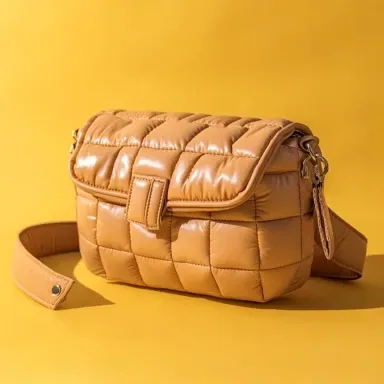
An optics bag protects alignment rather than glass. Binoculars at about 150 x 130 x 60 mm and 800 g need a form-fitting case with 8 to 10 mm of padding and a harness that holds them still on the chest. A spotting scope at about 400 mm long and up to 2 kg needs a long case with a cradle under the objective, a reinforced base and a shoulder strap. Both need a quiet shell and a closure that opens without a sound.
Binoculars and spotting scopes are optical instruments with a property a camera does not have: they can be knocked out of alignment. A camera body survives a hard knock; a roof prism binocular that takes one on the hinge can lose collimation, and the user sees a double image for the remaining life of the instrument. That single fact changes what the bag has to do, and it is why optics cases are built differently from camera bags.
The second difference is how they are used. Binoculars are worn on the chest and brought up to the eye dozens of times an hour, so the case has to open silently and let the glass come out in one movement. A spotting scope is carried to a position, set up and left, so its case is a transport product. Two uses, two products, and a single bag that tries to do both does neither.
What Is Actually Being Protected?
Three things, in order: the collimation, the lens coatings and the body finish. Collimation is the alignment of the two optical paths in a binocular and of the objective and the eyepiece in a scope, and it is set by the position of prisms and elements held in a machined frame. A shock that shifts that frame by a fraction of a millimetre produces a double image that no amount of cleaning will fix.
The coatings are second and they are softer than the glass: a lens coating scratches under a gritty cloth and under a hard lining, and a scratched coating reduces contrast permanently. The body finish is third and it is a resale matter rather than a functional one. A bag for this category is therefore a shock and a cleanliness product, not a drop product.
| Item | Dimensions, mm | Mass, kg | What the case has to do |
|---|---|---|---|
| Roof prism binocular, 42 mm objective | About 150 x 130 x 60 | 0.7 to 0.9 | Hold it still on the chest and open silently |
| Roof prism binocular, 32 mm objective | About 130 x 110 x 50 | 0.5 to 0.6 | Same, in a smaller case |
| Compact binocular | About 110 x 100 x 45 | 0.3 to 0.4 | A belt or a pocket case |
| Spotting scope, angled | About 350 to 420 long, 90 diameter | 1.5 to 2.0 | Carry a long heavy tube with a cradle under the objective |
| Spotting scope, straight | About 380 to 450 long | 1.5 to 2.2 | Same, with a longer bay |
| Eyepiece and accessories | Small | Under 0.3 | A separate pocket, never loose in the main bay |
How Is a Binocular Case Different From a Camera Bag?
It fits closely and it opens without a sound. A camera bag has spare volume so the user can add a lens; a binocular case is cut to the instrument, because a binocular that can move inside its case will rotate and the hinge will take the load. The padding is thinner, at 8 to 10 mm, because the case is usually worn against the body where a thicker wall would be bulky.
The quiet requirement is the one that separates the category. A hook-and-loop closure on a birdwatching case is unusable, because the sound carries and the subject leaves. The closures in this category are a magnetic catch, a silent zipper with a covered puller, or a simple flap with a quiet snap. That is a trim decision with a real effect on whether the product gets used.
How Much Padding Does an Optics Case Need?
Eight to 10 mm of closed-cell foam at 33 to 50 kilograms per cubic metre for a binocular case, and 12 to 15 mm at 50 to 70 under the objective of a spotting scope. The thicker figure under a scope objective is there for the same reason as under a long camera lens: the mass is concentrated into a narrow contact line and a thinner or a softer foam bottoms out along it.
What matters more than thickness on a binocular case is that the padding is form-fitting. A case cut to the shape of the instrument, with a recess for the hinge and a recess for the eyecups, holds the optics still and takes the load on the body rather than on the hinge. A rectangular case with a loose fit does neither, and a loose fit is the most common defect in the category.
Which Carrying System Suits Which Instrument?
Binoculars belong on a chest harness, which holds them against the sternum where they do not swing and can be brought up in one movement. The harness is a webbing or a cord system with a case that slides on it, and the case has to stay put when the user bends down, which is what the harness geometry does. A neck strap alone lets the binoculars swing and bang against the chest on every step.
A spotting scope belongs on a shoulder strap, carried the way a tripod bag is carried, with compression straps so a long load does not swing. Where a scope is carried together with a tripod, the case should have a sleeve or a pair of straps that attach it to the tripod bag, because carrying two long objects separately is the reason users buy a combined system.
What Should the Closure Do?
Open silently, in one movement, and stay closed when the user moves. Those three pull against each other: the quietest closures are the least secure, and the most secure are the loudest. The working answer for a binocular case is a magnetic catch under a quiet flap, which is silent, one-handed and secure enough for a case worn against the body.
For a spotting scope case the requirement is different, because it is a transport product and it can be louder. A covered zipper with a garage at each end is the right answer, with a #8 coil on a case of that length and compression straps to take the tension off the line before it is closed. A drawstring on a long case does not open flat and it makes the scope hard to lay in.
What Should Line the Inside?
A soft, low-lint, non-abrasive lining, and the property that matters is that it does not hold grit. A brushed tricot holds less grit than a plain woven lining and it is the usual answer. A lining that holds particles against a lens coating will scratch it over a season, and the scratch is permanent.
Colour matters for a reason specific to this category: a light lining makes a dark instrument and its small accessories findable in a dark case, and a mid-tone lining shows the grit that is doing the damage. Lining abrasion behaviour is checked on the Martindale method under ISO 12947, and colour fastness to rubbing in the ISO 105 series, because a lining that crocks onto a lens barrel is a complaint.
How Does Weather Enter the Specification?
More than for a camera bag, because optics are used in the open in bad weather and a wet objective is unusable. A shell with a durable water-repellent finish and a covered closure is the baseline, tested as a spray rating under ISO 4920 and a hydrostatic head under ISO 811 on the flat fabric. A rain cover is the answer for sustained rain and it should be tethered to the case.
The specific failure in this category is condensation. A sealed case carrying a cold instrument into warm air collects water inside, and water on an internal lens element is a real problem that takes days to clear. A case for this category should not be airtight: a drain path at the base and a breathable panel are deliberate features rather than compromises.
- Instrument, named
- Make and model, with the dimensions and the mass
- Interior fit
- Form-fitting, with recesses for the hinge and the eyecups
- Padding thickness
- 8 to 10 mm for binoculars, 12 to 15 mm under a scope objective
- Padding density
- 33 to 50 kilograms per cubic metre, and 50 to 70 under an objective
- Closure
- A magnetic catch under a quiet flap, or a covered zipper on a long case
- Noise
- No hook-and-loop on a binocular case; the sound carries
- Lining
- A brushed low-lint lining, with the Martindale result stated
- Carrying system
- A chest harness for binoculars; a shoulder strap for a scope
- Weather
- A spray rating and a hydrostatic head, plus a drain path
- Accessories
- A separate pocket for an eyepiece and a cloth, never loose
How Is an Optics Case Tested?
Four checks. A fit test with the named instrument: it goes in, it does not move, the hinge is not loaded and the case closes without pressing on the eyecups. A drop test with a ballasted case, using the geometry of ISO 2248 or ASTM D5276, against an acceptance rule written in advance. A noise test, which is simply opening and closing the case in a quiet room and deciding whether it is acceptable.
And a weather check: a spray rating under ISO 4920 and a hydrostatic head under ISO 811 on the flat fabric, plus a rain test on the made-up case with a duration and an acceptance limit the programme sets itself. There is no pass or fail figure in the method, so the programme writes one, as in every other post in this cluster.
What Does the Category Cost and Weigh?
A binocular case is a small product with a disproportionate amount of labour, because a form-fitting interior means a shaped pattern, a shaped foam and more sewing than a rectangular box of the same volume. That pushes the unit price toward a small camera bag rather than toward a pouch, and a programme that quotes it as a pouch will be disappointed twice.
Weight is low in absolute terms: a binocular harness case runs at about 250 to 400 g empty and a spotting scope case at about 600 to 900 g. The weight that matters is the harness and the case together on the chest, and a harness that is uncomfortable is the reason a case gets left in a vehicle rather than any property of the case itself.
| Product | Empty weight, g | Padding | Carrying system | Note |
|---|---|---|---|---|
| Compact binocular case | 150 to 250 | 6 to 8 mm | A belt loop or a neck cord | The simplest product in the category |
| Binocular chest harness case | 250 to 400 | 8 to 10 mm | A harness with a sliding case | The case has to stay put when the user bends |
| Spotting scope case | 600 to 900 | 12 to 15 mm under the objective | A shoulder strap and compression | A transport product rather than a worn one |
| Combined scope and tripod system | 900 to 1,300 | As above, plus a sleeve | One strap carrying both | Two long objects carried as one |
What decides a binocular or scope bag
- Alignment is the thing being protected, which is why the case has to be form-fitting.
- Eight to 10 mm for binoculars and 12 to 15 mm under a scope objective at 50 to 70 kilograms.
- No hook-and-loop on a binocular case: the sound carries and the subject leaves.
- Binoculars belong on a chest harness; a scope belongs on a shoulder strap with compression.
- A case for this category should breathe, or condensation collects on a cold instrument.
- A brushed low-lint lining holds less grit against a lens coating than a plain woven one.
How Do You Write the Specification?
Start with the instrument, named, with its dimensions and mass and the position of its hinge and its eyecups, because a form-fitting interior is drawn from those four things. Then the padding, then the closure and the noise requirement, then the lining, then the carrying system, then the weather behaviour. A case specified from a size band will fit loosely and loose is the failure.
Then write the noise requirement, which is the field most often left out and the one that decides whether the product gets used. It is written as a simple statement: the case is opened and closed in a quiet room and the sound is acceptable to the user. That is testable by anybody and it needs no instrument.
Programme arithmetic: MOQ 500 pcs per style and colourway, sampling 6-10 working days from a signed-off tech pack, bulk production 35-50 days from written sample approval, inspection at AQL 2.5 under ISO 2859-1 General Inspection Level II, payment T/T 30/70, quoted FOB Xiamen. A shaped foam interior is a standard build rather than a moulded one, so it stays in the shorter sampling band.
Send the instrument with the enquiry
Send the make and model, the dimensions and the mass, plus the target quantity. You get a case recommendation, indicative pricing and a sampling window within one business day.
Frequently Asked Questions
How is a binocular case different from a camera bag?
It is form-fitting and it opens silently. Binoculars can be knocked out of alignment, so the case holds the instrument still and takes the load off the hinge rather than giving it room to move.
How much padding does a binocular case need?
Eight to 10 mm of closed-cell foam at 33 to 50 kilograms per cubic metre, cut to the shape of the instrument with recesses for the hinge and the eyecups.
How much padding does a spotting scope need?
Twelve to 15 mm at 50 to 70 kilograms per cubic metre under the objective, because the mass is concentrated into a narrow contact line and a softer foam bottoms out along it.
Why does the closure have to be quiet?
Because the sound carries and the subject leaves. A hook-and-loop closure on a birdwatching case is unusable; the working answer is a magnetic catch under a quiet flap.
Should binoculars be carried on a harness or a strap?
A harness. A neck strap lets the binoculars swing and bang against the chest on every step, and a harness holds them still and lets them come up in one movement.
What lining is best inside an optics case?
A brushed low-lint lining. A plain woven lining holds grit against a lens coating, and a scratched coating reduces contrast permanently.
Should an optics case be sealed?
No. A sealed case carrying a cold instrument into warm air collects condensation inside, and water on an internal element takes days to clear. A drain path and a breathable panel are deliberate.
How is an optics case tested?
A fit test with the named instrument, a drop test using the geometry of ISO 2248 or ASTM D5276, a noise check, and a spray rating under ISO 4920 with a hydrostatic head under ISO 811.
How much does a binocular case weigh?
About 250 to 400 g empty for a chest harness case and 600 to 900 g for a spotting scope case.
Why is an optics case expensive for its size?
A form-fitting interior means a shaped pattern, shaped foam and more sewing than a rectangular box of the same volume, so labour rather than material sets the price.
Can one case carry both a scope and a tripod?
Yes, as a combined system with a sleeve or a pair of straps joining the two. Carrying two long objects separately is the reason users buy one.
Does this category change the MOQ?
No. MOQ stays at 500 pcs per style and colourway. A shaped foam interior is a standard build, so sampling stays in the 6-10 working day band.
People Also Ask
What makes a good binocular case?
A form-fitting interior that holds the instrument still, 8 to 10 mm of padding, a silent closure and a harness that keeps it on the chest.
Do binoculars need a hard case?
Not usually. A padded form-fitting case protects alignment better than a hard box with a loose interior, because the movement is what damages the instrument.
How do I carry a spotting scope?
On a shoulder strap with compression straps, in a case with a cradle under the objective, or as a combined system with the tripod.
Why are my binoculars out of alignment?
A shock that shifted the prism frame. It is why a loose-fitting case is a defect rather than an inconvenience in this category.
Should an optics case be fully sealed against rain?
No. It needs a spray rating and a drain path, because a sealed case collects condensation on a cold instrument.
Sources and further reading
Every figure on this page is either our own programme data or attributed below. Open the originals before you write them into a specification.
- ISO 2248 — vertical impact test by dropping for filled transport packagesInternational Organization for Standardization
- ISO 4920 — resistance to surface wetting of textile fabrics (spray test)International Organization for Standardization
- ASTM D3574 — standard test methods for flexible cellular materialsASTM International