What Length and What Padding Does a Tripod Carrier Bag Need?
Sized on the folded length of the tripod with the head attached plus 30 to 40 mm, and on the width of the head rather than of the legs. It is an abrasion and a carrying problem rather than an impact problem.
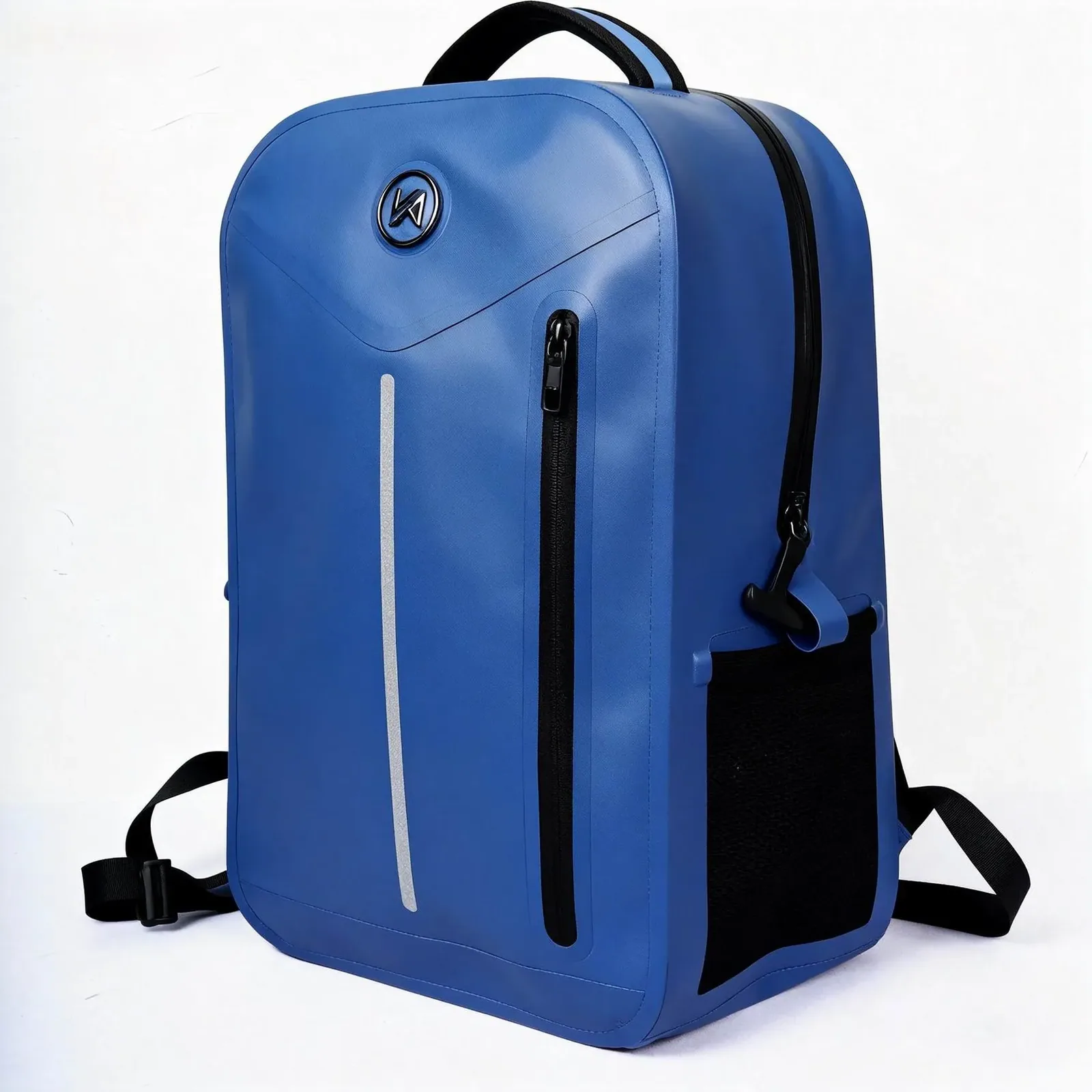
A tripod bag is sized on the folded length of the tripod with the head attached, plus 30 to 40 mm, and on the diameter of the head rather than of the legs. It needs 5 to 8 mm of padding, because a tripod is rugged, and a reinforced base, because the leg tips are the part that wears through. The carrying system is a padded shoulder strap and a pair of compression straps, because a long bag that is not compressed swings.
A tripod bag is the simplest product in this cluster and it is specified wrong more often than any of them, because it resembles a long tube and is treated as one. It is not a tube. It has to hold an awkward, heavy, asymmetric object with a hard head at one end and three sharp leg tips at the other, and it has to be carried on a shoulder for an hour on the way to a location. Both of those set requirements that a tube does not meet.
The two failures are predictable and both are specification failures. The leg tips wear through the base of the bag within a season, because a tripod is heavy and its feet are metal and pointed. And the bag swings on the shoulder, because a long narrow load that is not compressed against the body behaves as a pendulum. Both are fixed by a component rather than by better workmanship.
What Does a Tripod Bag Have to Survive?
Four things and none of them is a drop. Abrasion from the leg tips on the inside of the base is the first, and it is the one that destroys the product. Abrasion from being set down on rock and gravel is the second. Carried load on one shoulder for an hour is the third. And weather, because a tripod bag lives outdoors and is set down on wet ground, is the fourth.
A drop matters far less than on a camera bag, because a tripod is an aluminium or a carbon tube with no moving parts and no glass. That is the single most useful fact in specifying this product: it is an abrasion and a carrying problem, not an impact problem, and the padding allowance should go to the base and the harness rather than to the walls.
| Hazard | How a tripod meets it | What the bag needs | Common failure |
|---|---|---|---|
| Abrasion from the leg tips | Every time the tripod goes in and out | A reinforced base and a lined base seam | The tips wear through the base fabric |
| Abrasion from the ground | Set down on rock and gravel | A shell of 600D or more and a coated base | The base panel polishes through |
| Carried load | One shoulder for an hour | A padded strap of 50 to 75 mm and compression straps | The bag swings and the strap cuts in |
| Weather | Set down on wet ground | A coated shell and a drained base | Water sits in the base and rusts the leg locks |
| Impact | Rarely, and the tripod tolerates it | 5 to 8 mm of padding is enough | Over-padding makes the bag heavy and bulky |
How Is a Tripod Bag Sized?
On the folded length of the tripod with the head attached, because that is how it is carried, plus 30 to 40 mm of allowance. A travel tripod that folds to 350 mm takes a 390 mm interior; a full-size tripod that folds to 600 mm or 700 mm takes a 640 or 740 mm interior. The allowance exists so the tripod goes in without a fight, and 30 mm is enough.
The diameter is set by the head rather than by the legs, because a ball head or a geared head is wider than the folded leg cluster. Measure the head at its widest, add 20 to 30 mm, and that is the interior width. A bag sized on the leg cluster will not close over the head, which is the most common sizing error in the category and it is invisible until the tripod arrives.
How Much Padding Does a Tripod Need?
Five to 8 mm of closed-cell foam, and less than a camera bag needs, because a tripod tolerates impact and does not need a cradle. The padding is there to stop the tripod rattling, to protect the bag from the tripod rather than the reverse, and to give the bag enough body that it does not collapse into a fold when it is empty.
The exception is the base. The base takes the whole weight of the tripod on three metal points every time the bag is set down, and it needs either a doubled fabric, a coated abrasion panel, or a moulded or a board-reinforced insert. Where a programme is selling into a market with carbon tripods, the base still needs it, because carbon legs are light but the tips are still metal.
Where Does a Tripod Bag Wear Out First?
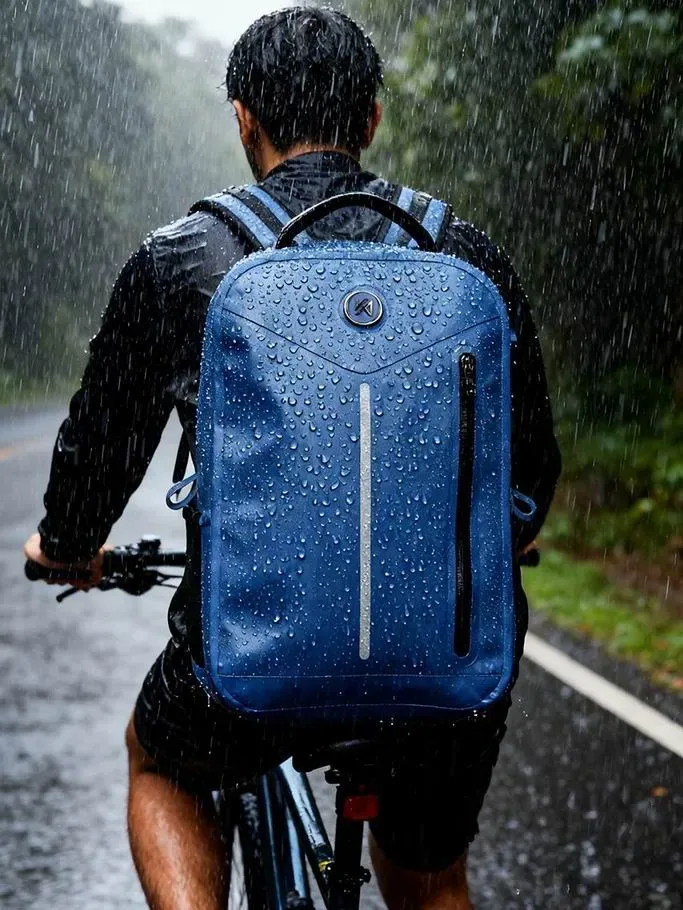
The base, then the shoulder strap root, then the closure. The base takes the abrasion described above and the strap root takes the carried load, and both are cyclical rather than one-off. The closure wears because a full-length zipper on a long bag is under tension from the contents every time it is closed, and a zipper closed under tension wears its elements and its slider.
The fix for the closure is compression. Two compression straps, one at each end of the bag, take the tension off the zipper by pulling the contents together before it is closed. That is a component costing very little and it roughly doubles the life of the zipper on a long bag, which is why almost every serious tripod bag has them and almost every entry-level one does not.
Which Closure Works on a Long Bag?
A full-length coil zipper with a garage at each end is the usual answer, and it is the only one that lets the bag open flat so the tripod can be laid in rather than pushed in. A drawstring costs less and weighs less and it does not open flat, so the tripod has to be threaded in end first, which is slow and it is hard on the base seam.
Where a drawstring is used, it should be combined with a full-length flap over the opening, because a drawstring alone leaves the top of the bag open to rain and to grit. A #8 coil on the main run and a #5 on any pocket, with the run kept straight rather than wrapped round the end of the bag, because a run that wraps is the one that jams.
How Should a Tripod Bag Be Carried?
Three systems, and a good bag has two of them. A padded shoulder strap of 50 to 75 mm with a slider, carried across the body, is the primary. A pair of grab handles at the balance point, usually a webbing loop closed with a hook-and-loop wrap, is the second and it is what the user actually picks the bag up by. A backpack harness is the third and it is only justified above about 4 kg.
The compression straps do double duty here. Pulled tight they shorten the effective length of the load and stop it swinging, which matters more on a tripod bag than on any other product in this cluster, because the load is long and narrow and its centre of mass is far from the body. A long bag without compression is unpleasant on a ten-minute walk.
What Straps and Hardware Does It Need?
Four items. A shoulder strap of 50 to 75 mm with a padded sleeve and a slider, because a narrow strap cuts into the shoulder under a 3 kg tripod. Two compression straps of 20 to 25 mm with a ladderlock buckle. A pair of D-rings at the strap attachment points, bar-tacked to a reinforcement patch. And a grab handle with a hook-and-loop wrap.
The strap attachment is the load path and it should be specified as one. A D-ring sewn into the shell alone will pull out; a D-ring on a webbing tail that runs under the bag and is bar-tacked at both ends spreads the load and lasts. Stitch class and density are covered by ASTM D6193 and seam tensile behaviour by ISO 13934-1, and both belong on the drawing.
- Interior length
- Folded length with the head attached, plus 30 to 40 mm
- Interior width and depth
- Head width at its widest, plus 20 to 30 mm
- Padding
- 5 to 8 mm of closed-cell foam; more at the base
- Base
- A doubled or coated abrasion panel, or a board insert
- Closure
- A full-length #8 coil, kept straight, with a garage at each end
- Compression
- Two straps of 20 to 25 mm with a ladderlock at each end
- Shoulder strap
- 50 to 75 mm with a padded sleeve and a slider
- Attachment
- D-rings on webbing tails running under the bag, bar-tacked
- Grab handle
- A webbing loop with a hook-and-loop wrap at the balance point
- An external pocket for a plate and tools, with a drain path
Should There Be a Pocket for the Head or the Plate?
Yes, and it should be external rather than internal, for two reasons. The first is that a quick-release plate, an Allen key and a spare battery are the things a user needs at the location, and an external pocket means the bag does not have to be opened on wet ground to reach them. The second is grit: tools carried inside the main compartment sit against the leg locks and the leg threads.
The pocket needs a drain. An external pocket on a bag that is set down in wet ground will collect water, and a pocket with no drain hole becomes a small pond that rusts whatever is in it. A grommet or a mesh base on the pocket is the fix, and it is the kind of detail that separates a bag that lasts from one that is replaced.
How Is a Tripod Bag Tested?
Three tests and none of them needs a laboratory. The first is a fit test: the tripod, named, with the head attached, goes in and comes out without force and the bag closes without tension on the zipper. The second is an abrasion trial on the base, run against a stated abradant for a stated number of cycles and reported against the Martindale method under ISO 12947 for the fabric.
The third is a loaded carry test: the bag is loaded with the named tripod and carried for a stated period, and the swing and the strap comfort are recorded. That is a programme protocol rather than a standard, and it is the only one of the three that measures what the user will actually complain about.
What Does It Cost and Weigh?
A tripod bag is the lowest-cost product in this cluster per unit of length, because it is a simple pattern with no divider system and no structured interior. The cost sits in the shell and the hardware: a coated 600D shell, a #8 zipper running the full length, two compression buckles, two D-rings and a strap assembly. Those five items are most of the bill of materials.
Weight sits in the same place. A bag for a 600 mm travel tripod runs at about 400 to 600 g empty, and a bag for a full-size tripod at about 700 to 900 g, with the strap assembly and the hardware accounting for more of that than the fabric does. Where a programme needs to save weight, the place to look is the strap hardware rather than the shell.
| Tripod folded length | Bag interior | Typical empty weight | Carrying system | Note |
|---|---|---|---|---|
| Up to 400 mm | 430 to 440 mm | 350 to 500 g | A grab handle and a short strap | Travel tripods; often carried inside a pack |
| 400 to 600 mm | 440 to 640 mm | 500 to 700 g | A shoulder strap and compression | The most common size band |
| 600 to 800 mm | 640 to 840 mm | 700 to 900 g | A shoulder strap, compression and a grab handle | Full-size tripods; compression matters most here |
| Above 800 mm | 840 mm and above | 900 g and above | A harness or a two-strap system | Rare; usually a dedicated case instead |
What decides a tripod carrier bag
- Size on the folded length with the head attached, and on the width of the head, not of the legs.
- It is an abrasion and a carrying problem, not an impact problem, so 5 to 8 mm is enough.
- The base takes the whole weight on three metal tips and it is where the allowance should go.
- Compression straps take the tension off a long zipper and stop the load swinging.
- An external pocket with a drain is more useful than an internal one, and it keeps grit off the leg locks.
- Specify the strap attachment as a load path: a webbing tail under the bag, bar-tacked at both ends.
How Do You Write the Specification?
Start from the tripod: the make, the folded length with the head attached, and the head width. Everything else follows from those three numbers. Then the padding and the base, then the closure, then the compression, then the strap and the hardware. A tripod bag specified from a length range produces a bag that fits several tripods loosely and none of them well.
Then name the tripod on the tech pack. A bag designed for a specific tripod can be checked against it, and an inspector with the tripod in hand can verify the fit in ten seconds. A bag designed for a length band cannot be checked at all, and fit is the only thing this product really has to get right.
Programme arithmetic: MOQ 500 pcs per style and colourway, sampling 6-10 working days from a signed-off tech pack, bulk production 35-50 days from written sample approval, inspection at AQL 2.5 under ISO 2859-1 General Inspection Level II, payment T/T 30/70, quoted FOB Xiamen. A tripod bag is a standard build, so it sits in the shorter sampling band unless a moulded base is specified.
Send the tripod dimensions with the enquiry
Send the make, the folded length with the head attached and the head width, plus the target quantity. You get a sizing table, indicative pricing and a sampling window within one business day.
Frequently Asked Questions
How do I size a tripod bag?
On the folded length of the tripod with the head attached, plus 30 to 40 mm, and on the width of the head at its widest, plus 20 to 30 mm.
Why is the head measurement the one that matters?
Because a ball head or a geared head is wider than the folded leg cluster. A bag sized on the legs will not close over the head.
How much padding does a tripod bag need?
Five to 8 mm of closed-cell foam, with more at the base. A tripod tolerates impact, so this is an abrasion and a carrying problem rather than a drop problem.
Why do tripod bags wear through at the bottom?
The leg tips are metal and pointed and they carry the whole weight onto three points every time the bag is set down. The base needs a doubled or coated abrasion panel.
Should a tripod bag have a zipper or a drawstring?
A full-length zipper, because it lets the bag open flat so the tripod is laid in rather than pushed in. A drawstring does not open flat and is hard on the base seam.
Why does my tripod bag swing when I carry it?
No compression straps. A long narrow load that is not pulled together behaves as a pendulum, and two compression straps fix it for very little cost.
Do compression straps really extend the zipper life?
Yes, roughly doubling it on a long bag, because they take the tension out of the contents before the zipper is closed under load.
How wide should a tripod bag shoulder strap be?
Fifty to 75 millimetres with a padded sleeve and a slider. A narrower strap cuts into the shoulder under a 3 kg tripod.
Should the accessory pocket be inside or outside?
Outside, with a drain. An external pocket means the bag does not have to be opened on wet ground, and the drain stops it becoming a pond.
How is a tripod bag tested?
A fit test with the named tripod, an abrasion result on the base fabric under ISO 12947, and a loaded carry test for a stated period.
How much does a tripod bag weigh?
About 400 to 600 g empty for a travel tripod bag and 700 to 900 g for a full-size one, with the strap assembly and the hardware accounting for more than the fabric.
Does a tripod bag change the MOQ?
No. MOQ stays at 500 pcs per style and colourway. A moulded base would put it in the longer sampling band; without one it is a standard build.
People Also Ask
What size tripod bag do I need?
The folded length of the tripod with the head attached plus 30 to 40 mm, and the width of the head at its widest plus 20 to 30 mm.
Do tripod bags need much padding?
No. Five to 8 mm is enough, because a tripod tolerates impact. The padding is there to stop rattle and to protect the bag from the tripod.
Why does my tripod bag have a hole in the bottom?
The metal leg tips carry the whole weight onto three points. It needs a doubled or coated abrasion panel in the base.
Can I carry a tripod bag on my back?
Only above about 4 kg. Below that a padded shoulder strap with a slider and two compression straps is the better system.
Should a tripod bag have a pocket?
Yes, an external one with a drain, for the plate, the tools and a spare battery. An internal pocket puts grit against the leg locks.
Sources and further reading
Every figure on this page is either our own programme data or attributed below. Open the originals before you write them into a specification.
- ISO 12947 — abrasion resistance of fabrics by the Martindale methodInternational Organization for Standardization
- ASTM D6193 — standard practice for stitches and seamsASTM International
- YKK fastening products — zipper specifications, sizes and careYKK Corporation