Food-Grade Liner Options for Custom Insulated Bags: PEVA vs TPU vs PUL
PEVA is the volume choice: weldable, chlorine-free and low in cost at 0.15 mm. TPU buys abrasion and hydrolysis resistance for hot-washed duty. PUL is a polyester knit laminated to polyurethane, which sews rather than welds and gives a textile interior.
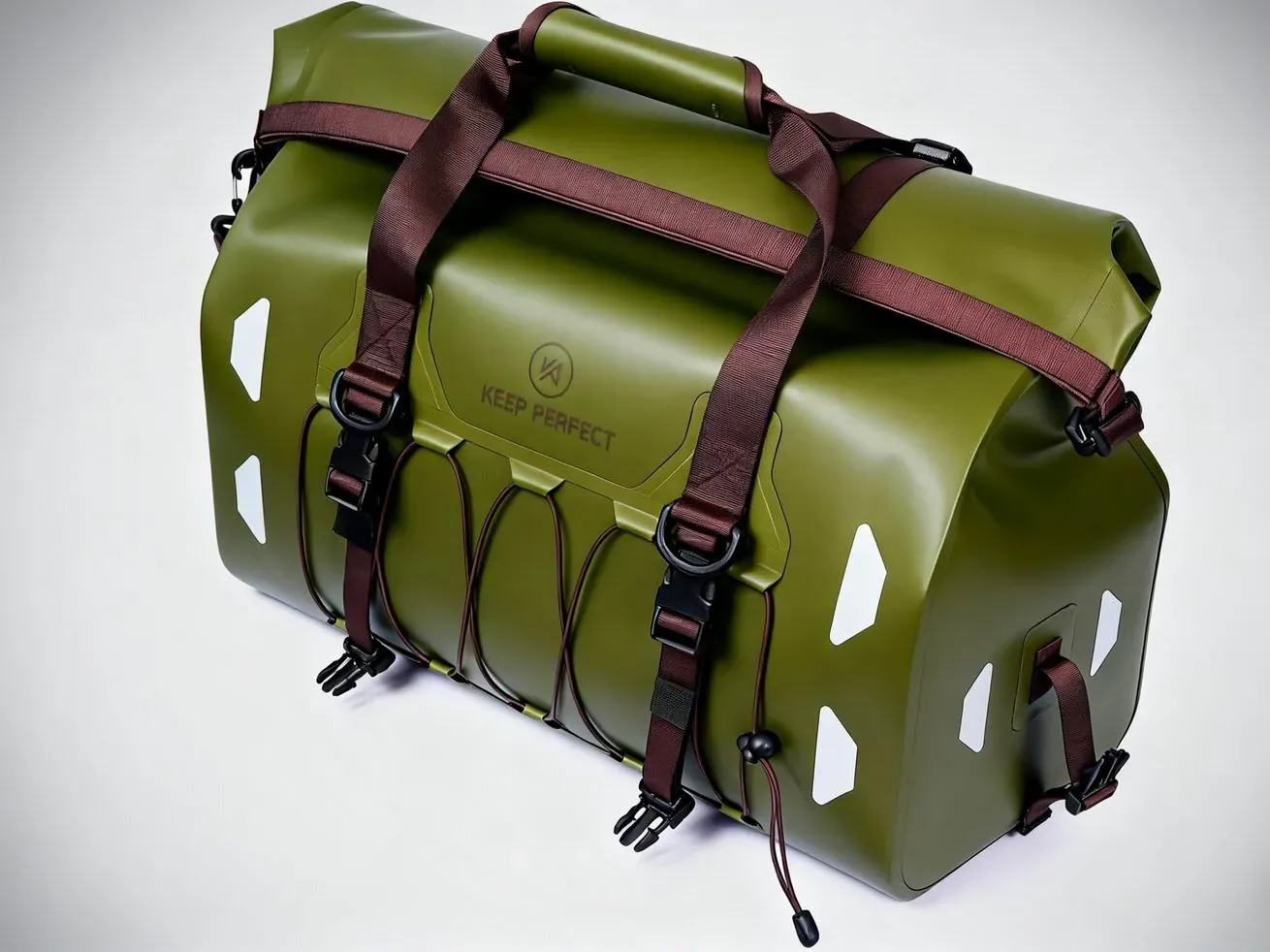
Three films cover food-grade insulated liners. PEVA is the volume choice: weldable, chlorine-free, low in cost, and adequate for chilled duty at 0.15 mm. TPU costs more and buys abrasion, hydrolysis resistance and repeated hot washing. PUL is a polyester knit laminated to polyurethane: it behaves as a fabric, it sews as well as welds, and it is the choice where the liner is also the visible interior.
The liner is the only component of an insulated bag that touches the food, and it is specified in a single line on most tech packs. That line decides the compliance file, the weld method, the cleanability and a good part of the unit cost, and it is usually chosen by habit. This piece compares the three films on the properties that actually differ, gives the seam method each one needs, and sets out what the compliance file has to contain whichever is chosen.
What Are the Three Films, Chemically?
PEVA is an ethylene-vinyl acetate copolymer, a chlorine-free film sold as a substitute for PVC; its polarity, which comes from the vinyl acetate comonomer, is what lets it be radio-frequency welded. TPU is a thermoplastic polyurethane, a block copolymer with hard and soft segments, which is why it is elastic, abrasion-resistant and available in grades tuned for hydrolysis resistance. PUL is not a single polymer at all: it is a polyester knit fabric laminated to a polyurethane film, so it is a composite with a fabric face and a film face.
That structural difference is the first thing that matters on the line. PEVA and TPU are films and they are welded; PUL is a laminate and it is usually sewn, because the knit face does not behave under a welding electrode the way a homogeneous film does. A specification that names PUL and also names a welded seam is a specification that will be changed on the floor.
| Property | PEVA | TPU | PUL |
|---|---|---|---|
| Structure | Homogeneous copolymer film | Homogeneous elastomeric film | Polyester knit laminated to a PU film |
| Radio-frequency weldable | Yes | Yes | Rarely; usually sewn and sealed |
| Hot-wedge weldable | Yes | Yes | Not reliably, because of the knit face |
| Abrasion and puncture | Fair | Very good | Good, with the knit reinforcing the film |
| Hydrolysis resistance | Good | Grade-dependent; polyether grades best | Grade-dependent |
| Low-temperature flexibility | Good, improves with vinyl acetate content | Excellent | Good |
| Hand and appearance | A film, slightly tacky | A film, dry and elastic | A fabric, with a soft textile face |
| Typical gauge | 0.10-0.20 mm | 0.10-0.25 mm | About 0.18 mm total |
| Relative cost index | 100 | 220-320 | 180-260 |
| Usual duty | Chilled liners, mainstream coolers | Hot wash, heavy duty, frozen | Reusable food pouches and visible interiors |
Which One Passes a Food-Contact Review?
All three can, and none does automatically. Under EU 1935/2004 with the plastics measure Regulation (EU) No 10/2011, each needs a declaration of compliance supported by migration data at the simulants and conditions the product will meet. In the United States each needs to fall within the indirect food additive provisions of FDA 21 CFR 177, with the section depending on the polymer. A buyer asking for a "food-grade liner" without naming the film is asking for a claim rather than a document.
The differences appear at the edges. A TPU grade can carry an additive package that needs specific migration testing; a PUL laminate has an adhesive layer between the knit and the film that needs its own position; and a PEVA with a filler or a reclaimed content needs the whole package assessed. Where the product is sold into more than one market, the strictest market sets the film and the others are usually satisfied by the same evidence.
How Do They Differ on the Production Line?
PEVA has the widest weld window of the three and the fastest cycle, which is why it is the volume default; its weakness is that the window narrows as the gauge falls and as the vinyl acetate content rises. TPU welds well but needs a higher energy input and a longer cooling time under pressure, and it is more sensitive to moisture in the film, so it wants a dry store. PUL is sewn, and its seam then needs a tape or a sealant, which adds an operation and a second material to the compliance file.
The yield difference is worth costing. A film that cuts cleanly and feeds consistently produces fewer defects than one that stretches or blocks, and the difference shows up as seam defects rather than as material waste, which is why it is usually misattributed. Ask the converter for the slip level and keep it constant across runs.
Which Film Survives Washing?
TPU, and the reason is hydrolysis. A polyurethane in a warm, wet environment slowly breaks down, and the polyester-based grades used for abrasion resistance are the more susceptible; a polyether-based grade resists hydrolysis and microbial attack and is the specification for a bag that is washed hot or stored damp. PEVA is not vulnerable to hydrolysis in the same way, but it is vulnerable to heat: it softens and creases at temperatures a hot wash reaches.
PUL sits between them and its failure mode is delamination: the bond between the knit and the film lets go after repeated wet flexing and warm drying, and the liner then bubbles inside the bag. Where PUL is specified, ask for a bond strength figure and a wash-cycle expectation rather than a general assurance.
What About Odour and Taste Transfer?
Odour is the most common food-contact complaint and the least tested. PEVA can carry a residual vinyl acetate note; TPU can carry a note from its own processing; PUL carries whatever the adhesive contributes. A low-odour grade exists in all three, and the assessment is simple: condition a sample in a closed container at a stated temperature for a stated time and have a panel assess it against a control.
Taste transfer is the same question measured differently and it matters most for unwrapped food. Where a bag will carry unwrapped items, specify an odour assessment alongside the migration data, because a film can pass migration and still be returned for smell.
How Does Gauge Interact With the Choice?
Thicker film costs more and welds more slowly, and it also stiffens the liner, which changes how the bag folds. A 0.10 mm PEVA is limp and easy to assemble and easy to puncture; a 0.20 mm PEVA is stiffer, slower to weld and much harder to puncture. A 0.12 mm TPU can outperform a 0.18 mm PEVA on puncture at a comparable cost per bag, which is why the comparison should be made per bag rather than per metre.
Where the bag carries bottles or anything with a corner or a shard risk, the gauge decision is a puncture decision rather than a cost decision. A bottle carrier wants the heavier film or a scrim-laminated liner, and a beach bag that will be rinsed and stuffed wants the same.
A fourth comparison is worth making explicitly, because it decides the specification on many programmes: how the film behaves at the fold. A bag that folds flat for storage puts a crease through the liner every time it is folded, and a film that creases permanently becomes a crack. PEVA recovers from a fold reasonably; TPU recovers best of the three; PUL, because it is a knit, tolerates folding best of all in the short term and delaminates at the crease in the long term. Where the bag ships folded, test the liner at the fold after a stated number of cycles.
A fifth comparison is the one a buyer notices on the shelf: how the film looks. PEVA has a slight sheen and can look thin under a light; TPU reads as a quality material and holds a smooth surface; PUL reads as a fabric and looks the most expensive of the three at a lower cost than TPU. Where the bag is positioned as a premium product, the visible liner is part of the positioning and the film choice is a brand decision as well as a technical one.
Which Film Should Be Specified for Which Duty?
| Duty | Film that fits | Gauge | Seam | Why |
|---|---|---|---|---|
| Chilled lunch or cooler | PEVA | 0.15 mm | RF welded | The weld window and the cost suit the volume duty |
| Grocery, daily wipe-down | PEVA, or TPU if the depot washes hot | 0.15-0.18 mm | RF welded | Cleanability with a wipe radius at the corners |
| Delivery, hot and chilled | TPU | 0.12-0.15 mm | RF welded | Steam, repeated washing and abrasion |
| Bottle carrier | TPU or a scrim-laminated film | 0.20 mm | Welded corners with a radius | Puncture and containment |
| Reusable food pouch | PUL | About 0.18 mm | Sewn and sealed | A textile face the user can wipe |
| Beach, rinsed and sun-closed | TPU with a polyether grade | 0.15 mm | RF welded | Hydrolysis and heat |
Choosing a food-grade liner
- PEVA is the volume default: weldable, chlorine-free and low in cost.
- TPU buys hydrolysis resistance, abrasion and repeated hot washing.
- PUL is a knit laminate that sews rather than welds, with a textile face.
- All three need a named grade with migration data, not an adjective.
- Compare per bag rather than per metre, because gauge and yield differ.
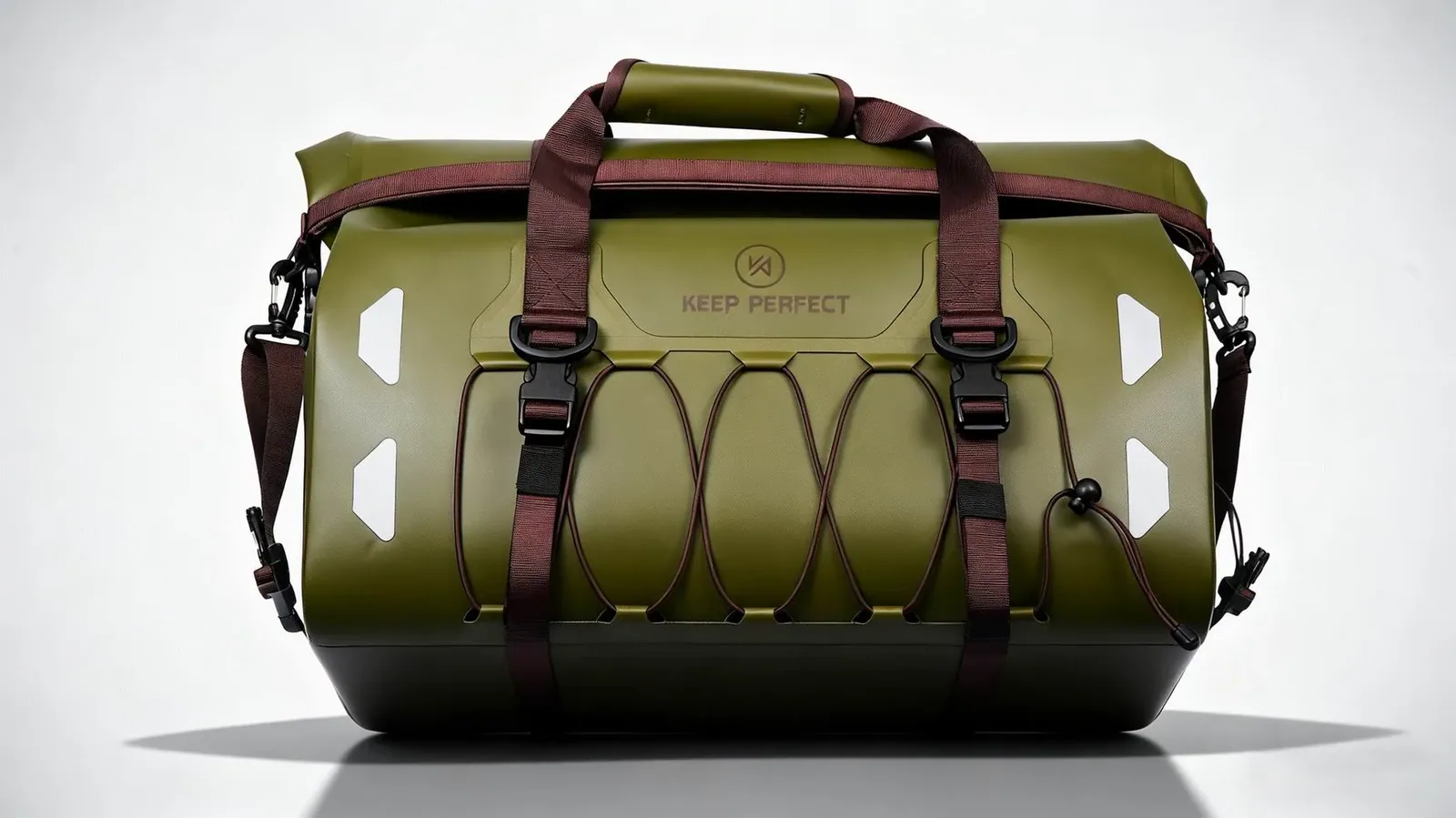
One more property decides the choice in practice and is rarely on a datasheet: the coefficient of friction of the film. A slippery film feeds and assembles cleanly and lets the liner slide into the shell; a tacky one drags, bunches and produces wrinkles at the seam, and a wrinkle in the weld line is a channel leak. PEVA is normally formulated with a slip additive; TPU varies widely by grade; PUL takes its behaviour from the knit face. Ask for the value and keep it constant.
A second practical property is the colour stability of the film itself. A white liner yellows under ultraviolet exposure and under some cleaning agents, and a tinted liner can bleed onto a light shell if the pigment is not fast. Where the liner is visible when the bag is open — which it always is — specify a colour-fastness expectation for the film as well as for the shell.
What Does the Compliance File Have to Contain?
- Declaration of compliance
- Naming the polymer, the grade and the supplier
- Migration data, EU
- Overall and specific migration to EU 10/2011, at the stated conditions
- Citation, US
- The applicable section of FDA 21 CFR 177
- REACH declaration
- Against the current candidate list, dated
- Proposition 65
- A position for California, with a warning if required
- Seam material
- The tape or weld parameter set, with its own declaration
- Odour assessment
- A stated method and result for food programmes
- Print position
- Whether any print is inside the food-contact zone
- Change control
- Written notice before any grade or supplier change
- Retained reference
- A film sample from the approved lot, held by both sides
One further document is worth asking for at the same time, because it is the one that settles arguments two years later: a retained film sample from the approved lot, labelled with the grade, the supplier and the lot number, held by both sides. Film changes quietly and a reorder that performs differently can only be diagnosed against the original sample. It costs an envelope, and it is the lowest-cost insurance in the file.
Two of those are missed most often. The seam material needs its own declaration, because a tape or a welded bead is a different article from the film it joins. And the retained reference sample of the film, held with the lot number, is what allows a reorder to be compared with the run that was approved.
There is one more decision that belongs with the film: whether the liner is loose or bonded to the foam. A loose liner costs less and is easier to assemble and it can crease; a bonded liner is stiffer, holds its shape and telegraphs any wrinkle to the shell. On a structured bag bonded is usually right; on a soft bag that has to fold, loose is. Either way the choice belongs on the pack, because it changes the assembly method and the hand of the finished article.
Where the liner is loose, ask how it is anchored. An unanchored liner pulls out of the mouth when a heavy load is lifted, and the failure looks like a seam failure to whoever is holding the bag. A tack weld or a stitch line at the mouth, outside the food-contact zone, is the usual answer and it is a drawing detail rather than a note.
How Does the Liner Choice Affect the Programme Numbers?
It moves the document set and sometimes the sampling window, and it does not move the commercial frame: MOQ 500 pcs per style and colourway, sampling 6-10 working days from a signed-off tech pack, bulk production 35-50 days from sample approval, inspection at AQL 2.5 under ISO 2859-1 General Inspection Level II, T/T 30/70, FOB Xiamen. A non-stock film or a grade that has to be brought in moves sampling toward the 12-15 working day end.
The cost that is usually underestimated is the re-test. A film substitution invalidates both the weld parameters and, where the grade has changed, the compliance file; a programme that changes film twice during development pays for the test twice and the file twice. Choose the film once, at the start, on the duty rather than on the price.
Choose the liner on the duty and the file
Send the duty, the market, the wash regime and the quantity. You get a film recommendation with the document set behind it, within one business day.
Frequently Asked Questions
What is the difference between PEVA, TPU and PUL liners?
PEVA is an ethylene-vinyl acetate film that welds and costs least. TPU is an elastomeric film with better abrasion and hydrolysis resistance. PUL is a polyester knit laminated to polyurethane, which sews rather than welds.
Which liner film is food-safe?
All three can be, with a named grade and a declaration of compliance supported by migration data under EU 10/2011 or a citation under FDA 21 CFR 177.
Can PUL be welded?
Not reliably, because the knit face does not behave under an electrode the way a homogeneous film does. PUL liners are normally sewn and then sealed or taped.
Which liner survives hot washing?
TPU, and specifically a polyether-based grade, because it resists hydrolysis. PEVA softens and creases at hot-wash temperatures.
What gauge of liner should be specified?
0.15 mm is the volume figure for PEVA; TPU performs well at 0.12-0.15 mm; a bottle carrier wants 0.20 mm or a scrim-laminated film for puncture.
Does the seam material need its own declaration?
Yes. A tape or a welded bead is a different article from the film it joins, and a reviewer will ask for it separately.
Why does a liner smell?
Residual vinyl acetate in PEVA, processing notes in TPU, or the adhesive in PUL. A low-odour grade and a stated odour assessment close the question.
Is TPU worth the extra cost?
Where the bag is washed hot, abraded, or carries bottles, yes. Compare per bag rather than per metre, because a thinner TPU can cost less per bag than a thicker PEVA.
What is PUL used for?
Reusable food pouches and bags where the liner is also the visible interior, because it has a soft textile face the user can wipe.
Does the liner choice change the inspection?
No. AQL 2.5 for major defects to ISO 2859-1 at General Inspection Level II applies regardless, with a leaking liner counted as major.
What is the MOQ?
500 pcs per style and colourway, with repeat programmes open to discussion at 300 pcs.
Can the film be changed after approval?
Only with written notice and a re-test, because a substitution changes the weld window and, where the grade changes, the compliance file.
Which film is best for a delivery bag?
TPU, because delivery bags meet steam, repeated washing and abrasion in the same week.
How is a liner leak tested?
By an inflation test or a water bath on the finished bag, with a stated pressure or dwell and a stated pass criterion.
People Also Ask
What is the best liner for an insulated bag?
PEVA for the volume chilled duty, TPU where the bag is washed hot or abraded, and PUL where the interior has to look and feel like a fabric.
Is PEVA food-safe?
With a named grade and migration data, yes. The four letters alone are not a compliance position.
Is TPU better than PEVA?
For abrasion, hydrolysis and hot washing, yes; for weld speed and cost per bag, no.
What is PUL fabric?
A polyester knit laminated to a polyurethane film: it behaves as a fabric and is sewn rather than welded.
Can cooler bag liners be welded?
PEVA and TPU can be radio-frequency welded. PUL is normally sewn and sealed.
Sources and further reading
Every figure on this page is either our own programme data or attributed below. Open the originals before you write them into a specification.
- Regulation (EU) No 10/2011 on plastic materials intended to come into contact with foodEuropean Union
- FDA 21 CFR 177 — Indirect food additives: polymersUS Food and Drug Administration
- REACH — Registration, Evaluation, Authorisation and Restriction of ChemicalsEuropean Chemicals Agency