How to Specify an Insulated Bag Tech Pack: 12 Fields You Cannot Skip
Twelve fields decide whether an insulated bag can be quoted, sampled, inspected and reordered, and the two that carry the thermal result are the per-panel build-up and the closure. A pack missing any of them is filled in by default on the line.
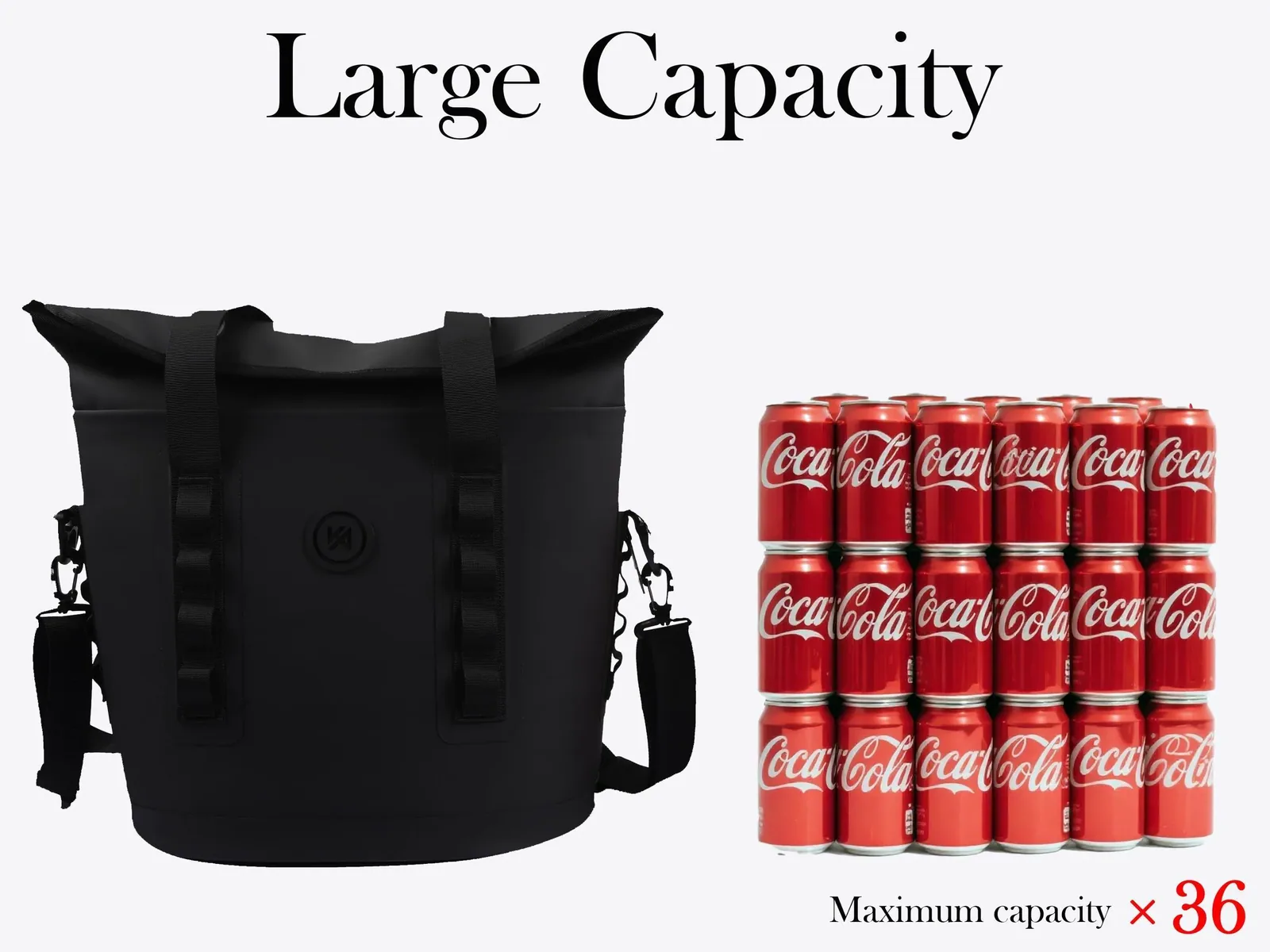
Twelve fields decide whether an insulated bag can be quoted, sampled, inspected and reordered: external and internal dimensions, the panel build-up, the foam specification, the liner with its declaration, the seam method, the closure, the hardware, the strap and handle, the branding, the labelling, the packing and the acceptance tests. A tech pack missing any of them will be filled in by somebody else, and the bag will come back different.
A tech pack is not a drawing and it is not a photograph. It is the set of statements a production floor, an inspector and a reorder all read, and its purpose is to remove the decisions that would otherwise be made by default. Insulated bags need more fields than a plain sewn article because the thermal result depends on the build-up, the seam and the closure, none of which appear on a dimensioned sketch. This piece lists the twelve, what each has to contain, and what happens on the line when it is missing.
Why Does an Insulated Bag Need More Fields Than a Plain Bag?
Because its performance is not visible in its shape. A plain bag can be specified by dimensions, material and colour, and the result is predictable from those three. An insulated bag with the same dimensions, the same material and the same colour can hold ice for four hours or twelve, depending on the panel build-up, the seam method and the closure — none of which is visible in a photograph and none of which an inspector can infer.
The consequence is that the fields below are not documentation for its own sake: each one is a decision that will otherwise be made by whoever is setting up the line. An unspecified seam method becomes whichever method the operator knows. An unspecified foam density becomes whatever the supplier has in stock. An unspecified acceptance rule becomes a discussion at inspection.
What Are the Twelve Fields?
| Field | What it has to state | What happens if it is missing |
|---|---|---|
| 1. Dimensions | External and internal, with tolerances, and the mouth opening | The bag does not hold what the label claims |
| 2. Panel build-up | Thickness and material per panel: base, walls, lid, flap | The lid gets no foam and the thermal result fails |
| 3. Foam specification | Family, thickness, density, conductivity, recovery | A lower-density board is substituted and creases |
| 4. Liner and declaration | Film, gauge, supplier, seam method, compliance documents | The bag cannot be sold into the market |
| 5. Seam method | Per seam: RF, hot-wedge, or sewn and taped, with parameters | The seam leaks on the reorder |
| 6. Closure | Brand, type, gauge, tape, finish, slider, cycle rating | The zipper jams and the bag is returned |
| 7. Hardware | Buckles, rings, feet, drains, with finish and rating | Corrosion and detachment in service |
| 8. Straps and handles | Width, padding, anchorage, stitch class, pull test | A strap pulls out under load |
| 9. Branding | Method, position dimensioned, colour standard, fastness | The print is placed differently in bulk |
| 10. Labelling and documents | Care label, market markings, tracking where required | The shipment is held at review |
| 11. Packing | Pack-out, carton, stack height, marking | Crushed foam and a short count |
| 12. Tests and acceptance | Protocol, AQL, class list, remedy | The inspection becomes a negotiation |
How Should Dimensions Be Written?
As a pair, not as a single set. External dimensions decide the carton cube and the shelf footprint; internal dimensions decide what the customer can actually put in the bag. On a bag with 8 mm walls, the difference between the two is 16 mm in each direction, which is the difference between a 12-pack fitting and not fitting. Write both, with a tolerance on each, and derive the internal figure after the build-up is fixed rather than before.
Then add the mouth opening as its own dimension, because it is the one that decides whether the bag can be packed. A bag with a generous internal volume and a narrow mouth is awkward in service, and the complaint is about the bag rather than about the number. On a lunch format the mouth is also the largest thermal loss path, so it is a thermal dimension as well as a packing one.
What Goes Into the Panel Build-Up?
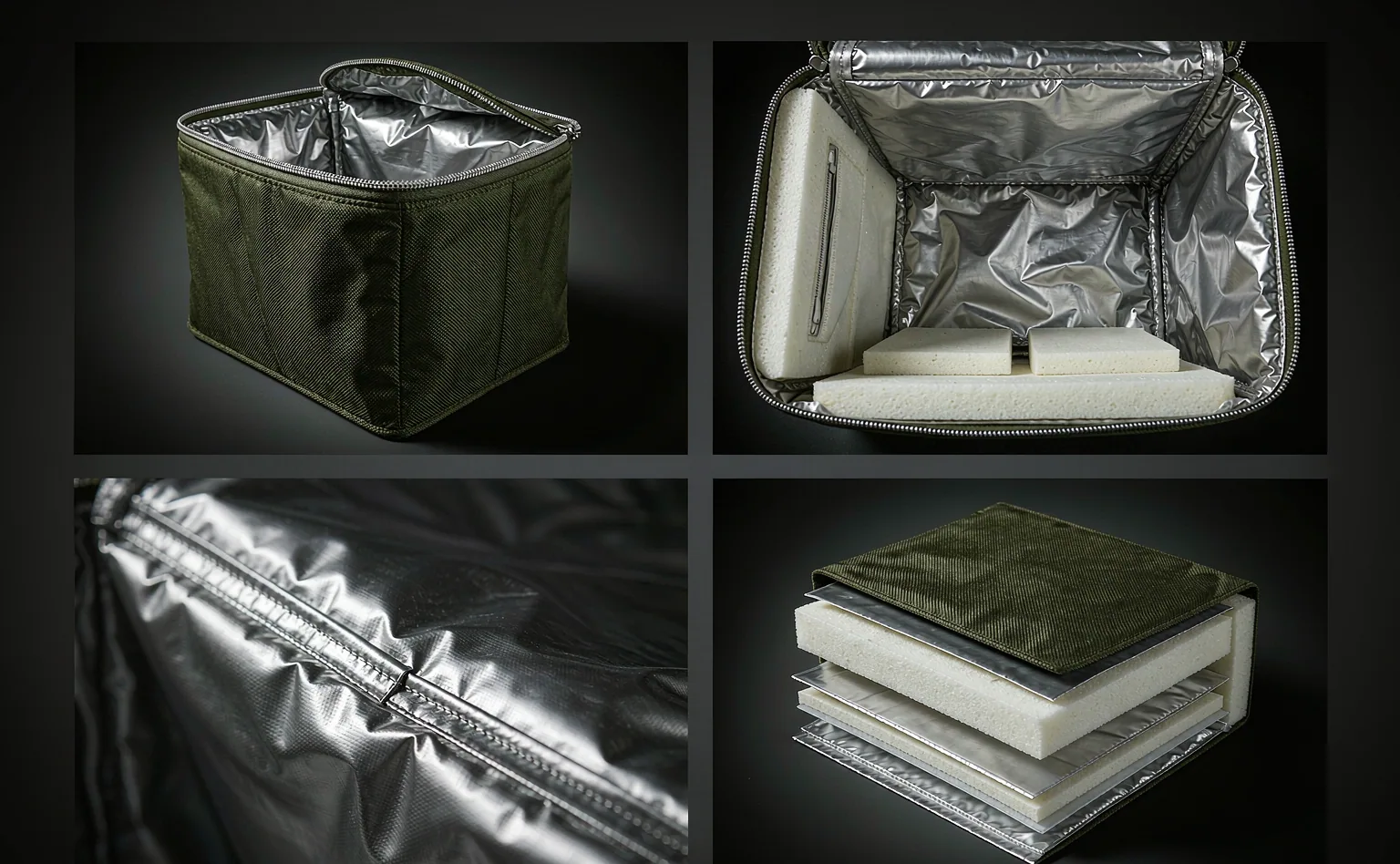
A short table: base, four side walls, lid and closure flap, each with a thickness, a material and a tolerance. The table is the single most valuable thing on the pack, because a single figure — "8 mm foam" — is read as applying to the walls, and the lid is then built from shell fabric. The lid is the largest loss path on most bags, and it is the panel that gets missed when the build-up is a single number.
Where the base carries a load, add the reinforcement: a stiffener, a moulded tray or a second layer, with the material named. And where the bag has corners, state whether they are welded with a foam insert or mitred, because a mitred corner has no insulation at the point where two panels meet.
What Does the Closure Line Have to Contain?
Seven items: brand, type, gauge, tape material, finish, slider type and cycle rating. That is one line on the pack and it is the line most often reduced to a gauge number. A #8 coil with a light slider and an uncoated tape is a different closure from a #8 with a locking slider and a laminated tape, and the difference is a season of service life.
Then state the storm flap: whether there is one, what it is filled with, and how it is secured. A foam-filled flap is the most efficient thermal intervention on most bags, and it is the item most often dropped between sample and bulk because it does not appear on a drawing with a dimension on it.
How Should Branding Be Specified?
With a dimensioned position, not a photograph. Distance from the top edge, distance from the side seam, and the print area, each with a tolerance. A print placed by eye on a sample and approved that way will be placed differently in bulk, because bulk uses a jig or a screen and the sample was placed by hand. Then add the colour standard — a Pantone reference or a physical swatch — and the fastness expectation.
Where the print is inside the food-contact zone, say so and specify a low-migration ink system. Where it is outside, say so and the compliance file gets shorter. Either statement is better than silence, because silence is read as inside.
What Tests and Acceptance Criteria Belong on the Pack?
Three: the thermal protocol with its acceptance rule, the inspection plan with its AQL and class list, and the mechanical tests the standard sampling does not cover. The thermal protocol states the endpoint, ambient, load, refrigerant and sample rule. The inspection plan states ISO 2859-1, General Inspection Level II, AQL 2.5 for major and 4.0 for minor, and zero acceptance for critical. The mechanical tests state the drop test, the strap pull test and the leak test, each with a method and a figure.
Then state the remedy. If a lot fails, is it re-work and resubmission, a buyer-signed waiver, rejection, or sort and partial release? One clause each and the failure stops being a crisis. This is the field that is most often omitted and the one that costs the most when it is.
What a complete tech pack buys
- The thermal result stops depending on unwritten decisions.
- The reorder becomes a comparison against a document rather than a renegotiation.
- The inspection becomes a measurement rather than a discussion.
- The compliance file can be assembled before the goods are made.
- The price becomes comparable between two quotations.
| Field | Who decides | When it has to be final | Cost of deciding late |
|---|---|---|---|
| Dimensions | Brand, with the pack-out in mind | Before the pattern is cut | A re-cut pattern and a fresh sample |
| Panel build-up | Brand, against the thermal target | Before sampling | A failed thermal test and a second build |
| Liner and compliance | Brand, with the market in mind | Before tech pack sign-off | A shipment held at review |
| Closure | Brand, against the duty | Before sampling | Field failures in the first season |
| Branding position | Brand | Before the screen or film is made | A re-made screen and a re-run |
| Acceptance criteria | Brand, agreed with the inspector | Before production | A failed inspection and a re-work cycle |
The same logic applies to the photographs and diagrams that accompany the pack. A photograph of a sample is useful for the branding position and useless for the build-up; a section drawing is the opposite. Include both, and mark the photograph as indicative for position only, because a photograph approved as a specification becomes a specification when the two disagree.
A fourth note concerns the sample itself. Approve a production-made sample rather than a sample-room unit, and tag it with the pack revision, the build date and the material lots. That tag is what the inspector compares the bulk against, and a sample with no tag is a sample that cannot do the job it exists to do.
How Does the Pack Control the Reorder?
By being the thing the reorder is measured against. A retained reference sample from the approved run, dated and carrying the film and foam lot numbers, plus the recorded weld and lamination parameters, is what turns a second order into a repeat. Without them the second run is a fresh interpretation of a drawing, and the differences show up as a thermal result that has moved and nobody can say why.
Two clauses on the pack make that work. Change control: written notice before any material substitution, with a stated lead time. And a re-test trigger: any change to foam, liner or closure invalidates the thermal result and requires the protocol to be run again.
Two fields deserve a note on how they are written, because they are the ones most often written in a form nobody can act on. The build-up should be a table with a row per panel, not a sentence; a sentence is read once and interpreted per panel. And the acceptance criteria should be written as pass/fail statements with numbers, not as adjectives: "no leak at a stated pressure after a stated dwell" rather than "watertight".
A third note is about revision control. A pack that is revised during sampling needs a version number and a date on every page, because the sample is built from one version and the bulk from another, and the two versions are what the inspector will be comparing. Put the revision on the pack and on the sample tag, and the argument about which drawing was approved disappears.
A fifth note is about what the pack does not contain. It does not contain the process: the weld parameters, the lamination settings and the assembly sequence are production documents, and they belong in a separate record that travels with the approved sample rather than in the pack itself. Keeping them separate means the pack can be revised for a colour or a print without invalidating the process record.
A sixth is about ownership of the pack after launch. Somebody has to own the revision, and on a programme that runs for years the person who wrote it will not be there for the fifth reorder. Give the pack an owner by role rather than by name, and it survives the staff change.
Who Should Sign the Pack, and When?
Both sides, before sampling starts. A pack signed after the sample has been made is a record of what was built rather than a specification of what should be, and it does not prevent the argument it was meant to prevent. The sequence is: brief, pack, sign-off, sample, test, approval, bulk.
Where a launch date is fixed, the pack sign-off is the milestone that has to be pulled forward. Working backwards from the date through 35-50 days of bulk production and 6-10 working days of sampling puts the sign-off earlier than most brands plan for, and every day the pack is unsigned is a day that is added to the delivery rather than to the development.
There is a second cost the pack prevents, and it is larger than the re-sample: the complaint. A bag that arrives with the lid unlined, the foam a grade lighter and the print in the wrong place passes inspection, ships, and comes back from the customer three months later. The pack is the only artefact that would have caught it, and its cost is a day of work.
A further note on the branding field: specify the colour by a physical standard and by a tolerance, not by a screen proof. A screen proof is a picture of a colour and it is not a colour; a Pantone reference or a retained swatch, with an agreed tolerance measured under a stated light source, is. Where the brand colour is critical, approve a lab dip on the actual fabric before the bulk lot is dyed, and the colour argument becomes a measurement.
The third thing the pack prevents is the price comparison that cannot be made. Two quotations for the same drawing with different build-ups are not comparable, and a buyer comparing them is comparing two different products by accident. A pack with the twelve fields turns both quotations into answers to the same question, and the difference that survives is a real difference.
What Does a Pack Cost to Produce?
A day of work from the buyer and a day from the production side, against a sampling cycle that costs 6-10 working days and a bulk window of 35-50 days. The arithmetic is not close: a pack that prevents one re-sample has paid for itself several times over. The fields that take the longest are the panel build-up and the acceptance criteria, and those are also the two that prevent the most rework.
Where a brand does not have the information to fill a field, the honest answer is to write "to be confirmed" and a date rather than to leave it blank. A blank field is filled by default; a flagged field is a task with an owner.
Fill the twelve fields before you ask for a price
Send what you have: a drawing, a photograph, or a list of requirements. You get a completed pack structure within one business day.

Frequently Asked Questions
What should an insulated bag tech pack contain?
Twelve fields: dimensions, panel build-up, foam, liner and declaration, seam method, closure, hardware, straps, branding, labelling, packing, and tests with acceptance criteria.
Why does an insulated bag need more specification fields than a plain bag?
Because the thermal result depends on the build-up, the seam and the closure, none of which is visible in the shape.
Should internal or external dimensions be specified?
Both, with tolerances. The external figure decides carton cube and the internal figure decides what the customer can pack.
Why is a single foam thickness not enough?
Because it is read as applying to the walls, and the lid — the largest loss path on most bags — then gets no foam.
What closure details belong on the pack?
Brand, type, gauge, tape, finish, slider, cycle rating, plus whether there is a foam-filled storm flap and how it is secured.
How should branding position be specified?
Dimensioned: distance from the top edge, from the side seam, and the print area, each with a tolerance, plus the colour standard and the fastness expectation.
Which tests belong in the acceptance section?
The thermal protocol with its acceptance rule, the inspection plan at AQL 2.5 under ISO 2859-1, and the mechanical tests: drop, strap pull and leak.
Why does the remedy matter?
Because a failed lot without an agreed remedy becomes a crisis. Re-work, waiver, rejection or sort and partial release should each be a clause before the failure.
When should the pack be signed?
Before sampling starts. A pack signed afterwards is a record of what was built rather than a specification.
How does the pack control a reorder?
Through a retained reference sample with lot numbers, recorded weld parameters, a change-control clause and a re-test trigger.
What if I do not know a field?
Write "to be confirmed" with a date and an owner rather than leaving it blank; a blank field is filled by default.
What is the MOQ and the bulk window once the pack is signed?
MOQ 500 pcs per style and colourway, sampling 6-10 working days, bulk production 35-50 days from sample approval, FOB Xiamen.
Can a tech pack be written from a photograph?
It can be started from one. The fields that still need the buyer are the build-up, the acceptance criteria and the market documentation.
What inspection standard should the pack name?
ISO 2859-1, or ANSI Z1.4 as the equivalent, at General Inspection Level II, with AQL 2.5 for major defects and a written class list.
People Also Ask
What is a tech pack for a bag?
The set of statements a production floor, an inspector and a reorder all read: twelve fields for an insulated bag.
Why does a cooler bag need a detailed spec?
Because the thermal result depends on the build-up, seam and closure, which a drawing does not show.
What dimensions should I specify?
External and internal, with tolerances, plus the mouth opening as its own dimension.
When should a tech pack be signed off?
Before sampling starts, because the bulk clock runs from sample approval.
What should the acceptance criteria include?
The thermal protocol, the AQL inspection plan with a class list, and the drop, strap pull and leak tests.
Sources and further reading
Every figure on this page is either our own programme data or attributed below. Open the originals before you write them into a specification.
- ISO 2859-1:1999 Sampling procedures for inspection by attributesInternational Organization for Standardization
- ASTM D6193 — Standard Practice for Stitches and SeamsASTM International
- ISO 9001 — Quality management systemsInternational Organization for Standardization