How Long Does It Take to Produce 500 Cooler Bags?
Thirty-eight to fifty-two days from written sample approval, because insulated construction adds four stages a plain bag does not have and three of them sit before sewing. We do not promise the fastest 20 days. We promise a delivery date you can calculate.
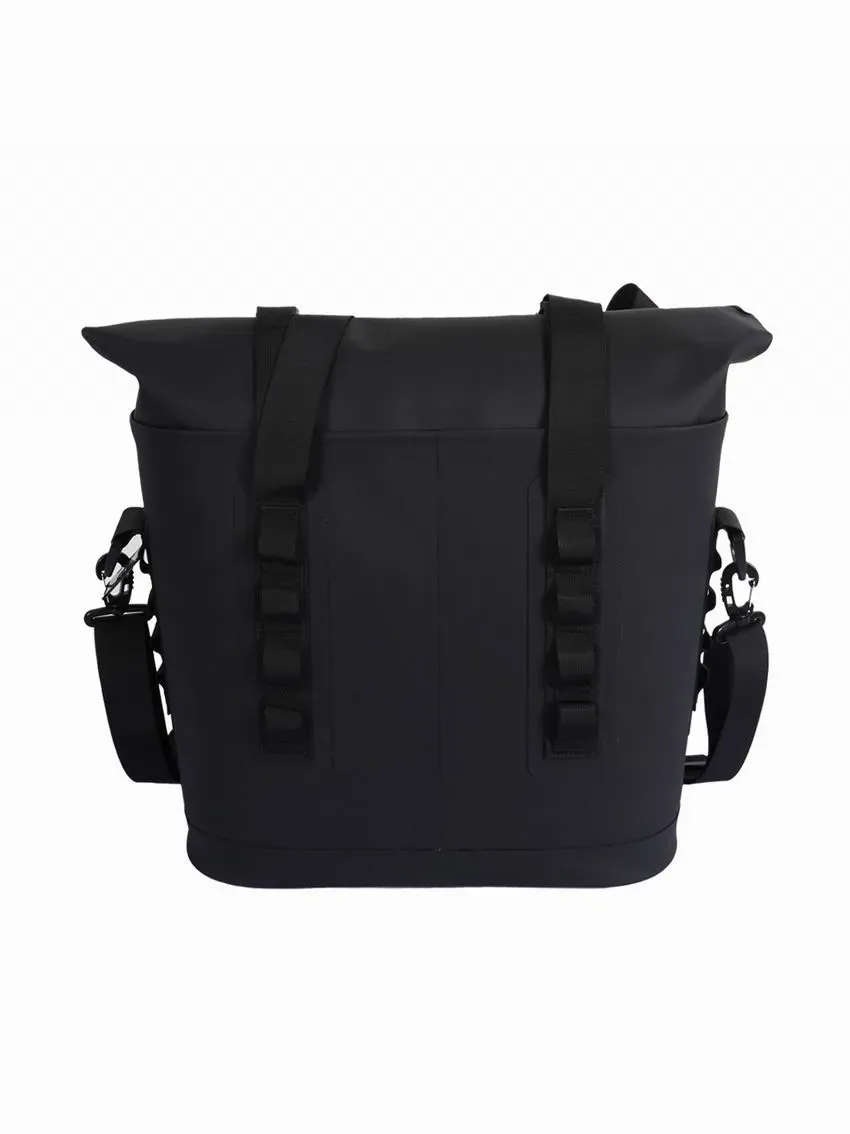
A 500-piece cooler bag run takes 38 to 52 days from written sample approval, which is three to five days longer than a plain bag of the same size. The additions are a welded liner with its tooling and weld trials, foam cut to a thickness that has to be held, a thermal validation that has to be done on the finished article, and a packing step that handles a bulkier carton. Everything else in the calendar is the same as any other 500-piece programme.
Cooler bags are the one category in this range where the construction itself changes the calendar rather than the decoration. A printed panel adds a screen and a day; a welded liner adds a tool, a trial and a validation, and each of them sits on the critical path. This piece walks a single 500-piece insulated run week by week, naming the stages that a plain bag does not have and the days each one occupies.
How Long Does a 500-Piece Cooler Bag Run Take?
Thirty-eight to fifty-two days from written sample approval, against 35-50 for a plain bag of the same panel count. The difference is not the sewing. Insulated construction adds four things: the welded liner with its tooling, the foam with its thickness tolerance, the thermal validation on the finished article, and the packing of a carton that is bulkier than the bag it holds. Remove any one of them and the window shortens; remove none of them and the window is what it is.
| Stage | Plain 500-piece bag | Insulated 500-piece bag | What the difference is |
|---|---|---|---|
| Material and lining booking | 4 to 8 days | 6 to 10 days | The liner film and the foam are separate bookings |
| Liner tooling and weld trials | Not required | 4 to 7 days | A weld tool, a first weld and a leak check |
| Cutting, including foam | 4 to 5 days | 5 to 6 days | Foam is cut to a thickness with a tolerance |
| Sewing and assembly | 10 to 14 days | 12 to 16 days | The liner has to be set and closed inside the shell |
| Thermal validation | Not required | 2 to 3 days | A measured result on the finished article |
| Inspection at AQL 2.5 | 3 to 5 days | 3 to 5 days | The same draw, with a weld check added |
| Packing and carton marking | 3 to 4 days | 4 to 5 days | A bulkier carton and a lower count per carton |
Read the table from the bottom and the practical consequence appears: the packing step is slower because the goods are bulky, so the cartons take more space and the container fills before the count is reached. That is a cost and a calendar item at the same time, and it is the reason an insulated programme should be quoted with its carton dimensions in the same document as its price.
What Makes a Cooler Bag Different From a Plain Bag?
It is a composite article. A plain bag is cloth, thread, webbing and hardware; an insulated bag adds a welded film liner, a closed-cell foam, and an outer fabric that has to be bonded or sewn to hold both. Each additional layer is a material with its own supplier, its own lead time and its own tolerance, and the assembly has to hold all of them in registration.
The tolerances are what make it a scheduling problem rather than only a costing one. A foam specified at a nominal thickness arrives compressed or a millimetre the other way, a liner film that has been rolled sits differently from one that has not, and the shell has to close around both. Small variances in three layers compound, which is why the pre-production sample matters more here than on a plain style.
How Long Does the Welded Liner Take to Set Up?
Four to seven days for a first run, and the sequence is a tool, a trial and a check. The weld tool is cut to the liner pattern, the first welds are pulled and measured, the parameters are adjusted, and then a leak check is run on a sample of the welded liners. On a reorder with the same pattern the whole stage collapses to a set-up, because the tool exists and the parameters are recorded.
The leak check is the part buyers skip and the part that costs the most when it is skipped. A liner that holds air in the sample room can fail after it has been folded, packed and shipped, and the failure is discovered by the customer rather than by anybody in the programme. Two days to check a sample of welds is two days well spent on a construction whose entire claim is that it holds.
Where Does Foam Thickness Sit on the Calendar?
In the material leg, and further forward than buyers expect. Foam is bought to a thickness with a tolerance, held in stock or cut to order, and a thickness that is not held is the most common cause of a shell that will not close cleanly. Specifying the thickness with a tolerance in the tech pack, and confirming it at goods-in with a measurement rather than a look, costs an hour and removes a class of defect that reaches the whole run.
The trade-off is worth stating plainly. A thicker foam insulates better, makes the bag bulkier in the carton, and makes assembly slower; a thinner one packs efficiently and performs less well. That is a design decision rather than a scheduling one, and it belongs at specification, because changing it after the shells are cut changes the pattern as well as the material.
How Long Does the Thermal Validation Add?
Two to three days on the finished article, and it should be booked as a stage rather than treated as a formality. The result is a measured temperature change over a stated period under stated conditions, and the conditions are what make the result usable: a starting temperature, an ambient temperature, a load and a duration, all written down. A result quoted without them cannot be compared with the next one.
It also has to be done on the article as sold. A result taken on a panel of the material is not a result for the bag, because the seams, the closure and the lid are where the heat moves. This is the same principle that governs every useful test on this site: the evidence has to be evidence for the thing that ships, and a test on a component is evidence for the component.
| Build choice | Days it moves the window | What it changes | What it costs |
|---|---|---|---|
| Welded liner instead of a sewn liner | +4 to +7 | Leak performance and a cleaner interior | A tool and a weld trial |
| Foam cut to order instead of held stock | +3 to +5 | A thickness held to a tolerance | A material booking further ahead |
| A second colourway on the same style | +4 to +6 | A second dye lot and a second set-up | Nothing on the calendar if planned |
| Retail-ready packing with barcodes | +1 to +2 | A bulkier carton and a lower count | Container space on a bulky article |
| A thermal validation on the finished article | +2 to +3 | A defensible performance number | Nothing; it is the evidence |
The third row is the one most often added late, and it is worth understanding why it costs what it does. A second colourway is not a second bag; it is a second dye lot to approve, a second set-up on the line and a second inspection draw, and all three sit after the decision was made. Planned at specification it is four to six days; added in week four it is the same days plus the ones already spent.
How Does the Sewing Block Run on an Insulated Build?
Twelve to sixteen days at a planned rate on a 500-piece run, and the rate is lower than the rate for a plain bag of the same size. The liner has to be set inside the shell, the foam has to be positioned before it is closed, and each of those is an operation before the closing seam. A construction that is slower per unit is a longer block, and a longer block is the reason the critical path moves to the line earlier on this style than on a plain one.
The other effect is on the first-off check. On an insulated build the first units have to be opened and measured, not looked at: the liner registration, the foam position and the closure alignment. Three units measured at first-off catch a setting error that would otherwise be repeated across the whole run, and the cost of that check is half a day.
How Does the Packing Step Change for a Cooler Bag?
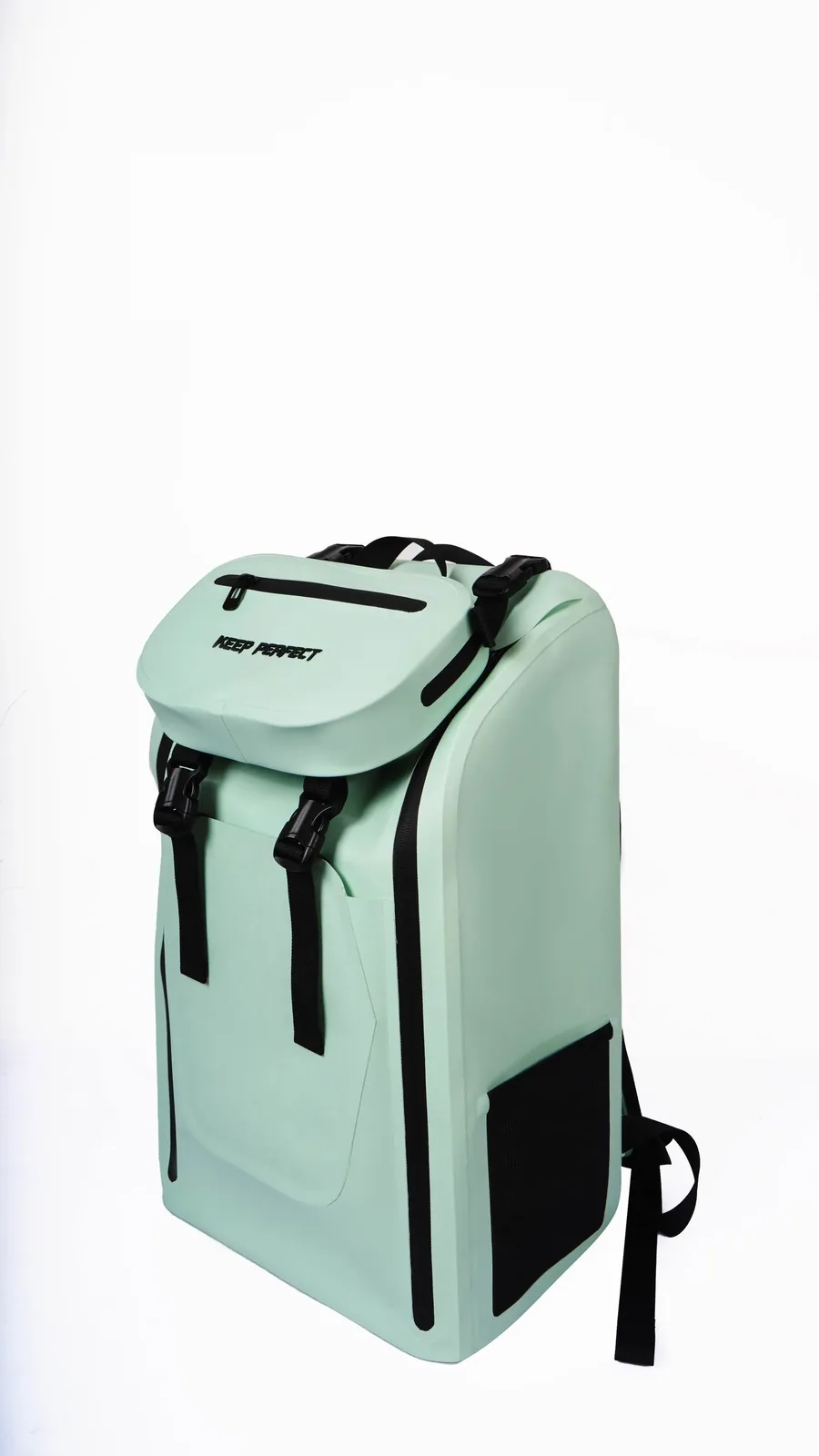
It takes a day longer and it fills the container sooner. A 500-piece insulated order occupies roughly a third more carton volume than the same count of flat bags, which means a lower count per carton, more cartons, and a container that reaches its volume limit before it reaches its weight limit. Packing that is planned on a plain-bag carton count will be replanned at the container yard.
The consequence for the calendar is that the carton count has to be known before the booking, and it is not known until the first cartons are packed. Packing a pilot quantity two days before the rest, counting it and booking against that count, is the most reliable way to avoid a booking made on an assumption. The export carton sizes and labels post sets out what has to be on the carton as well as in it.
How Do You Write the Cooler Bag Calendar Down?
- Material and liner booking
- Shell, lining, foam and the liner film, each with an inbound date
- Liner tooling and weld trials
- Days, with the leak check named
- Foam thickness and tolerance
- In the tech pack, confirmed at goods-in
- Pre-production sample
- One unit opened and measured
- Thermal validation
- On the finished article, with the conditions recorded
- Sewing block
- A rate per day, not a total
- Carton and booking
- A pilot carton count before the booking
- Inspection
- AQL 2.5 with a weld check in the defect vocabulary
Eight rows, and an insulated programme stops being a plain programme with a bigger price. We do not promise the fastest 20 days. We promise a delivery date you can calculate. The days are countable, and the two that most often go missing are the weld trial and the validation.
How Does the First Insulated Run Differ From the Reorder?
The first run carries the tooling and the validation and the second does not, which makes this the clearest category in the range for treating the two programmes as different things. On the reorder the weld tool exists, its parameters are recorded, and the thermal result is already on file for that construction. What the second run still carries is the material leg and the sewing block, and those are the two that move with quantity rather than with the design.
The saving is real and it should be quoted as real. A reorder of the same insulated style in the same colourway runs ten to fifteen days shorter than the first, because the tooling thread and the validation disappear and the shell is dyed against a recorded recipe. Where a reorder is quoted on the first-run window, the difference is a charge for two threads that no longer exist, and it is worth asking about by name.
What does need checking on a reorder is the material, because that is where the saving can turn into a problem. A reorder dyed to a recorded recipe and a recorded shade band matches the first run; one dyed to a fresh estimate does not, and the argument about whether it matches becomes an argument about memory. That is the whole subject of the guide on keeping a reorder identical to the first run, and on an insulated build it is compounded, because a different shell shade also moves the printed panel sitting on it.
There is one further trap, which is a reorder that is not one. A request for the same style with a different closure, a different foam thickness or a different print has put one of the four added stages back on the critical path, and it will not behave as a reorder does however much it resembles one. Ask the question in writing before quoting: is this the same construction, or the same appearance on a different build? The answer decides the window.
What Should the Tech Pack Say About an Insulated Build?
Three rows beyond the usual fields: the liner film with its weld specification, the foam with its thickness and tolerance, and the thermal performance the finished article has to meet with its conditions recorded. Those three rows are what make the four added stages quotable at all, and they are the ones most often missing from a pack that was written for a plain bag. Without them the four stages still have to happen, and they happen on assumptions somebody else made.
Producing 500 cooler bags
- The window is 38 to 52 days, because four stages are added and three of them sit before sewing.
- The welded liner needs a tool, a trial and a leak check; the leak check is the one usually skipped.
- Foam thickness is a tolerance to be measured at goods-in, not a nominal figure in a specification.
- The thermal validation has to be run on the finished article with the conditions written down.
- Insulated cartons fill a container by volume, so the carton count has to be known before the booking.

Get the insulated calendar named on your order
Send the style, the quantity and the date you need the goods on board. You get the stages with their days, including the weld trial and the validation, sampling 6-10 working days, bulk 35-50 days, AQL 2.5 under ISO 2859-1, FOB Xiamen.
Frequently Asked Questions
How long does it take to produce 500 cooler bags?
38 to 52 days from written sample approval, against 35-50 for a plain bag of the same size.
Why is an insulated bag slower to make than a plain one?
Because it is a composite article. The welded liner, the foam, the thermal validation and the bulkier packing are four stages a plain bag does not have.
How long does the welded liner take?
Four to seven days on a first run: a tool, a weld trial, a parameter adjustment and a leak check. On a reorder it collapses to a set-up.
Why does the foam matter to the schedule?
It is bought to a thickness with a tolerance and confirmed at goods-in. A thickness that is not held stops the shell from closing cleanly.
How long does a thermal validation take?
Two to three days on the finished article, with the starting temperature, the ambient, the load and the duration recorded.
Can a thermal test be done on the material instead of the bag?
It can, and it is not the same evidence. The seams, the closure and the lid are where the heat moves.
Why does packing take longer on a cooler bag?
The cartons are bulkier, so the count per carton is lower and the container reaches its volume limit before its weight limit.
How should the carton count be planned?
Pack a pilot quantity two days before the rest, count it, and book against that count rather than against an assumption.
What is the MOQ for an insulated bag?
500 pcs per style and colourway, with 300 open to discussion on a repeat. The volume of the finished article, not the count, is what fills the container.
Does a second colourway add days?
Four to six, for a second dye lot, a second set-up and a second inspection draw. Planned at specification it costs the same; added in week four it costs more.
What should the inspection check on an insulated bag?
The AQL 2.5 draw at code letter H, 50 units, plus a weld check and a closure alignment in the defect vocabulary.
Is the welding tool reusable on a reorder?
Yes, and the parameters should be recorded with it. That is why the second run is shorter than the first.
How does the sampling window fit?
6-10 working days, or 12-15 on a complex build, and it sits outside the bulk window rather than inside it.
People Also Ask
How long does it take to manufacture 500 cooler bags?
38 to 52 days from written sample approval, because the welded liner, the foam and the validation add four stages.
What stages does an insulated bag have that a plain bag does not?
Liner tooling and weld trials, foam preparation, a thermal validation on the finished article, and bulkier packing.
How long does a weld trial take?
Four to seven days on a first run, including the tool, the trial, the adjustment and the leak check.
Why is a cooler bag bulkier to ship?
The cartons are larger than the bag, so a container reaches its volume limit before its weight limit.
How do I know the thermal performance claim is real?
Ask for a validation on the finished article with the starting temperature, the ambient, the load and the duration recorded.
Sources and further reading
Every figure on this page is either our own programme data or attributed below. Open the originals before you write them into a specification.
- ASTM International — standards indexASTM International
- ISTA — packaged-product performance test proceduresInternational Safe Transit Association
- AATCC — evaluation procedures for colour and appearanceAmerican Association of Textile Chemists and Colorists