How Long Does It Take to Sample and Produce 500 Custom Cooler Bags?
From a signed-off tech pack, sampling takes 6-10 working days and bulk production 35-50 days from written approval; a complex build moves sampling to 12-15. Add inspection and freight and a 500-piece programme is 55 to 75 days door to door.
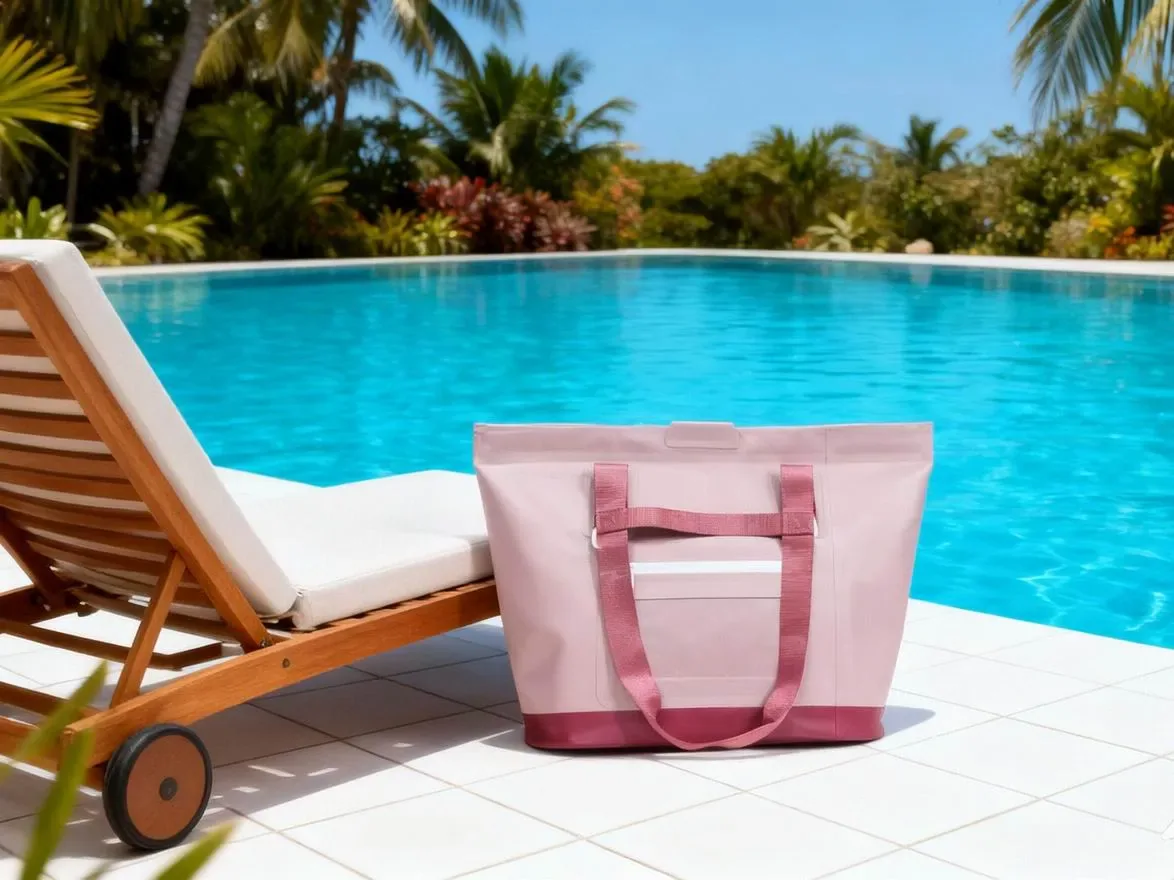
A 500-piece insulated bag programme runs 55 to 75 calendar days door to door: 2-5 days to quote from a complete tech pack, 6-10 working days to sample, 35-50 days of bulk production from written sample approval, 2-4 days of inspection and 5-30 days of freight. The only date worth promising is one built from those phases and from the trigger that starts each of them.
The question behind most first enquiries is really a calendar question: if we sign next week, when does the container arrive. The answer is not a single number, because four of the six phases are started by the buyer rather than by the production side. This piece sets out the full sequence for a 500-piece insulated bag order, what starts each phase, what each phase costs in days, and which specification choices move the date by more than a week.
What Does the Full Calendar Look Like From Brief to Delivery?
Six phases, and they are sequential: quotation, sampling, sample approval, bulk production, inspection and freight. Two of them are stable — bulk production at 35-50 days and inspection at 2-4 — and four of them depend on decisions taken on the buyer side. The two that surprise people are sampling, because it restarts whenever a sample comes back wrong, and freight, because an insulated bag is a bulky, light product and cube, not weight, sets the cost and sometimes the routing.
| Phase | Working days | What starts it | What the buyer owes |
|---|---|---|---|
| Quotation | 2-5 | A complete tech pack | Drawings, materials, quantity, target date |
| Sampling | 6-10 | A signed-off tech pack | One consolidated round of written comments |
| Sampling, complex build | 12-15 | A sourced component or a new tool | An extra round of comments |
| Bulk production | 35-50 | Written sample approval | Nothing; the line is booked |
| Inspection | 2-4 | Production complete and packed | The AQL level and the defect class list |
| Freight from FOB Xiamen | 5-30 | Cargo handed to the carrier | A booking, and the customs file |
Read as a calendar, the straightforward case is about 55 days: 3 to quote, 8 to sample, 2 to approve, 38 of bulk, 3 of inspection and sea freight on top. The complex case is about 75: 5 to quote, 14 to sample with a second round, 4 to approve, 48 of bulk, 4 of inspection, then freight. Both are arithmetic, and both can be written down before the order is placed, which is the point.
Where Does the Sampling Window Actually Go?
Six to ten working days is not six to ten days of sewing; most of it is setup. Day one is pattern and material checking against the tech pack. Days two and three are cutting, and on a welded build they include the parameter trials that establish the weld window on the actual panel stack-up. Day four is assembly. Day five is measurement, photography and the thermal check, if one is in the brief. Days six to ten absorb the parts that never go to plan the first time.
A build moves to 12-15 working days for four reasons, and all four are visible in the tech pack before it starts: a sourced component with its own lead time, such as a branded slider, a moulded badge or a woven label; a new die, mould or screen; a shell colour that has to be dyed to order; and a decoration that needs a cure step. None of those is a problem, and all of them should be named in the quotation rather than discovered in week two.
What Starts the Bulk Clock?
Written sample approval, and nothing else. That is the single most useful sentence in a cooler bag order, because it converts an argument about dates into a fact about who wrote what and when. It should appear in the order with its exclusions: public holidays at the production end, dyed-to-order materials, and the inspection cycle. Where a programme has a fixed launch date, the approval date is the one worth managing backwards from.
The failure mode is silent approval: a sample is received, comments are sent informally, and everyone assumes the clock has started while the line waits for a written sign-off that never arrives. Two weeks disappear that way on a first order more often than any other cause. The fix is one line in the order — that bulk starts on written approval and that silence is not approval — plus a named person on each side who can send it.
Why Is Bulk 35-50 Days and Not 20?
Because on a 500-piece order the constraint is not sewing time. Five hundred units is a short run on a line of this type, and the days are spent on material, on queue and on the parts of the process that cannot be compressed: film and foam lots arriving and being checked, the line being scheduled behind other programmes, welding and assembly, then packing to a carton specification. Time spent compressing those is time spent buying a failure that shows at inspection.
The fifteen-day spread inside the window is mostly material and mostly predictable. A build on stocked film, stocked foam and a standard colour sits at the short end; add a dyed-to-order shell, a sourced component or a decoration done outside, and it sits at the long end. Where a buyer needs the short end, the way to get it is to choose materials that are already in the store, not to ask for the same build in fewer days.
Which Specification Choices Move the Date?
The specification is the schedule. Six decisions account for almost every week that gets added to a cooler bag programme, and all six are taken before the quotation rather than during it. Choosing them deliberately is worth more than any amount of chasing, because a decision taken in week one costs nothing and the same decision taken in week four costs a re-schedule.
| Choice | Effect on the date | Effect on unit cost |
|---|---|---|
| Stocked film and foam, standard colour | None | Baseline |
| Shell colour dyed to order | +10 to 15 days | Higher at this quantity |
| Branded slider or a moulded badge | +5 to 10 days on sampling | Higher |
| Silicone print with a cure step | +2 to 3 days | Higher |
| RF welding on a thick panel stack | +2 to 4 days of parameter work | Broadly neutral |
| Parameters and reference sample retained | -3 to 5 days on the repeat | Lower on the reorder |
How Long Does Freight Take and When Does It Start?
On FOB Xiamen terms the freight clock starts when the cargo is handed to the carrier, not when production ends, and that distinction is where a lot of launch dates are lost. From there, sea freight is roughly 25-35 days to northern Europe and 15-20 to the United States west coast, air is 5-8 days, and customs entry sits on top of both. A buyer who plans to the cargo-ready date rather than to the delivery date will be late.
Cube is the second freight fact. An insulated bag is bulky and light, so the quotation is driven by volume: a 20-can soft cooler packed flat still occupies meaningful space, and 500 units can fill a pallet or more depending on whether the walls are compressed for shipping. Ask for the carton dimensions and the units per carton before booking, and ask how long the foam takes to recover after compression, because a bag that arrives flat and does not recover is a complaint that no freight claim will settle.
What Happens If the Sample Is Not Approved First Time?
Each additional round costs five to eight working days, and a second round is rarely about workmanship: it is usually a specification that was ambiguous, a dimension that was not on the drawing, or a decision that was left open in the tech pack. That is why the sample stage is where a good tech pack pays for itself, and why the first order is always the slowest one in a programme.
Two habits remove most second rounds. The first is consolidating comments: four people sending four lists on four days produces a sample that satisfies nobody, while one consolidated written list produces a sample that can be checked against something. The second is sending a reference — a sketch, a photograph, a competitor unit marked up — because most disagreements about a first sample are disagreements about an expectation that was never written down.
Does Inspection Add Days?
Yes: two to four working days for a first inspection, and the same again if it fails and has to be repeated. On a 500-piece order at AQL 2.5 under ISO 2859-1 General Inspection Level II the sample size is 50 units, with accept 3 and reject 4 for major defects. That is a short exercise against a written defect class list, and it is the two days best spent in the whole calendar.
The days that hurt are the ones after a fail. A rework — a re-weld, a re-pack, a replaced closure — adds three to five days and is usually survivable. A remake adds the full bulk window. The difference between the two outcomes is almost always whether the defect was found at first-article stage rather than at final inspection, which is an argument for a first-article check on day two of production rather than a gamble on day forty.
Can 500 Pieces Be Made Faster, and What Does It Cost?
Five levers, in descending order of effect: use stocked film and foam in a standard colour, avoid any new tool or mould, keep the decoration in-house and single-method, approve the sample in one round, and ship by air rather than by sea. Together they take a 75-day programme to something near 40. None of them is a secret and none of them requires the production side to work faster; they require the specification to be simpler.
The honest framing is that speed and predictability pull in different directions. Asking for the shortest possible window means asking the line to be re-sequenced, and a re-sequenced line is the one that slips. What a 500-piece insulated bag programme should be quoted on is a date built from the phases above, with each trigger written down — a delivery date you can calculate rather than the fastest one anyone was willing to say out loud.
What Does a Realistic Milestone Plan Look Like?
For a straightforward build: day 0 tech pack sent, day 3 quotation, day 4 approval to sample, day 12 sample shipped, day 14 written approval, day 52 cargo ready, day 55 inspection passed, then freight. For a complex build with a dyed shell and a sourced component: day 0 brief, day 5 quotation, day 19 sample after two rounds, day 23 approval, day 71 cargo ready, day 75 inspection, then freight. Both are ordinary programmes and neither is late.
The two dates worth holding in writing are the approval date and the cargo-ready date. Everything else is derived: if approval slips by a week, cargo-ready slips by a week, and if freight is booked against the cargo-ready date rather than the hoped-for one, the launch holds. Buyers who track two dates get deliveries; buyers who track ten dates get status meetings.
How Do Repeat Orders Differ?
A repeat is faster in sampling and identical in bulk. Where the weld parameters, the material lot references and the approved reference sample were retained, the sampling stage can be reduced to a confirmation unit — typically three to five working days — or skipped entirely where nothing in the build has changed. Bulk stays at 35-50 days, because the line still has to run, but it starts from the order rather than from an approval.
That is the commercial argument for recording parameters at the first approval, and it is also the answer to the minimum quantity question: on a repeat, 300 pcs per style and colourway is open to discussion, because the setup has already been paid for and the risk has already been retired. The first order at 500 pcs buys the second order at 300 pcs, which is a useful thing to know before choosing a supplier on the strength of a sample.
What Should Be Held in Writing Before the Clock Starts?
Six things, and they fit on one page: the specification with its tolerances; the sampling window and what triggers it; the bulk window and what triggers it; the inspection plan with its standard, level, sample size and defect classes; the commercial terms; and the name of the person who can approve a sample on the buyer side. Any order with those six in writing can be tracked against dates rather than against assurances.
Held in writing before the clock starts
- Specification: materials, thicknesses, dimensions, tolerances and the thermal target.
- Sampling window: 6-10 working days, or 12-15 where a sourced component or a new tool is involved.
- Bulk window: 35-50 days from written sample approval, with the exclusions named.
- Inspection plan: ISO 2859-1, General Inspection Level II, AQL 2.5, sample size 50 at this quantity.
- Commercial terms: T/T 30/70, FOB Xiamen, with CIF and DDP available on request.
- Named approver on the buyer side, and a written approval format that both sides accept.
The last of those is the one usually missing, and it is the one that decides whether the plan holds. A programme with a named approver and a one-page approval format has a calendar; a programme without one has a shared optimism and a series of phone calls. Both take the same time to set up, and only one of them produces a delivery date that survives contact with the schedule.
Get the calendar before you get the quotation
Send the tech pack, the quantity and the target delivery week. You get a phase-by-phase schedule with the trigger for each phase within one business day.
Frequently Asked Questions
How long does it take to sample and produce 500 custom cooler bags?
Roughly 55 to 75 calendar days door to door: 2-5 days to quote, 6-10 working days to sample, then 35-50 days of bulk production from written approval, with inspection after that, then freight.
What starts the bulk production clock?
Written sample approval. It should be stated in the order with its exclusions: public holidays, dyed-to-order materials and the inspection cycle.
Why is bulk production 35-50 days for only 500 pieces?
Because the constraint is material lead time and line scheduling, not sewing time. Film and foam lots, queue position, welding and packing set the window.
What makes sampling take 12-15 working days instead of 6-10?
A sourced component such as a branded slider or a moulded badge, a new die or screen, a shell colour dyed to order, or a decoration that needs a cure step.
How long does freight take from FOB Xiamen?
About 25-35 days by sea to northern Europe, 15-20 to the United States west coast, 5-8 by air, plus customs entry on top.
How many units are inspected on a 500-piece order?
Code letter H at General Inspection Level II: 50 units, accept 3 and reject 4 at AQL 2.5 for major defects.
Does inspection add days to the schedule?
Two to four working days for a first inspection, and the same again if it fails. A rework adds three to five days; a remake adds the whole bulk window.
What is the minimum quantity on a repeat order?
MOQ is 500 pcs per style and colourway; on a repeat, 300 pcs is open to discussion because the setup has already been paid for.
How can the programme be made faster?
Use stocked film and foam in a standard colour, avoid a new tool, keep the decoration in-house, approve in one round, and ship by air rather than by sea.
What happens if the first sample is not approved?
Each extra round costs five to eight working days, and the cause is usually an ambiguous specification rather than workmanship.
What should be in writing before the clock starts?
The specification, the sampling window, the bulk window with its trigger, the inspection plan, the commercial terms and the name of the person who can approve a sample.
What are the payment and delivery terms?
T/T 30/70, FOB Xiamen, with CIF and DDP available. Inspection at AQL 2.5 under ISO 2859-1 General Inspection Level II.
Does a confirmation sample replace full sampling on a repeat?
Where parameters and the reference sample were retained, yes: a confirmation unit takes three to five working days instead of six to ten.
Why does cube matter more than weight on this product?
An insulated bag is bulky and light, so freight is quoted on volume. Ask for carton dimensions and units per carton before booking.
People Also Ask
How long does a 500-piece bag order take?
About 55 to 75 days door to door: quote, sample, approve, 35-50 days of bulk, inspection, freight.
What starts bulk production on a bag order?
Written sample approval, stated in the order with the exclusions named.
Can I get 500 cooler bags in 30 days?
Not through bulk production. Air freight and a stocked-material specification shorten the total, not the 35-50 day production block.
How long does sampling take for a custom cooler bag?
Six to ten working days from a signed-off tech pack, or twelve to fifteen for a complex build.
What is the MOQ for a custom cooler bag order?
500 pcs per style and colourway, with 300 pcs open to discussion on a repeat.
Sources and further reading
Every figure on this page is either our own programme data or attributed below. Open the originals before you write them into a specification.
- ISO 2859-1:1999 Sampling procedures for inspection by attributesInternational Organization for Standardization
- ISO 9001 — Quality management systemsInternational Organization for Standardization
- Incoterms rulesInternational Chamber of Commerce