Which Wine Bag Material Should You Specify: Jute, Canvas, Faux Leather or Neoprene?
Four shell materials carry most wine bag programmes and they answer four different jobs. Jute is a rough natural face that needs a lining. Canvas is the volume choice. Faux leather wipes clean and carries a plasticiser question. Neoprene cushions and insulates one bottle.
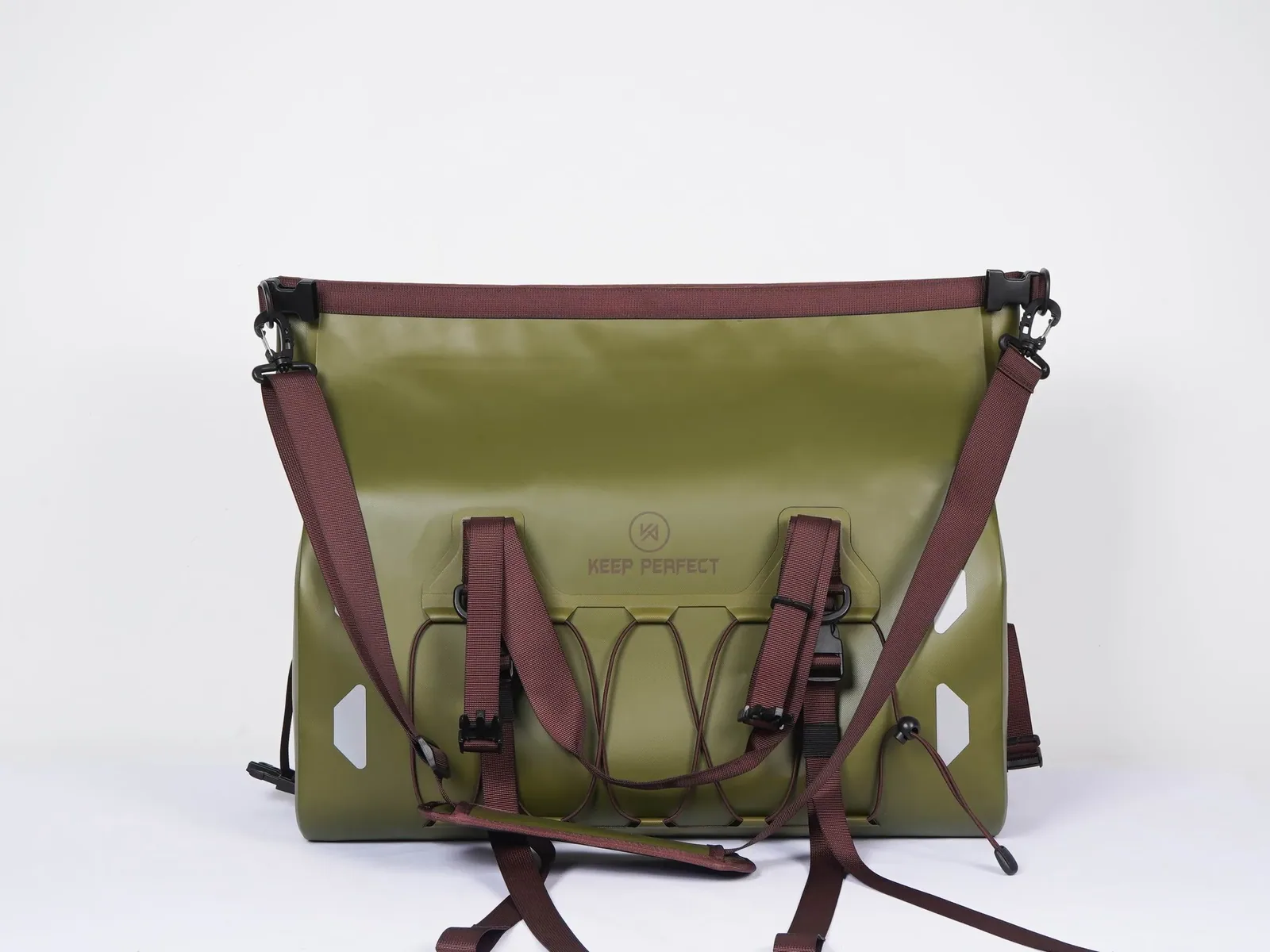
Four shell materials carry most wine bag programmes and they answer four different jobs. Jute is a woven natural fibre with a rough face that takes a screen print and sheds water badly. Cotton canvas is the volume choice: it takes dye, it sews cleanly and it is heavy when wet. Faux leather is a coated face that wipes clean and carries a phthalate question. Neoprene is a closed-cell sheet that cushions, insulates and takes a sublimation print.
The shell is chosen first on a wine bag and it is the decision that constrains the next four: which print method works, whether a lining is needed at all, how the bag behaves when it is wet, and what the compliance file has to hold. Programmes pick it on appearance and then discover the print will not adhere, or that the bag holds water, or that the finish is on a restricted-substance list in the market the bag is sold into.
This piece compares the four on the properties that can be tested rather than on how they look. The bottle fit, the divider and the drop test are in the wine bag programme hub and are the same whichever shell is chosen; what follows is what the shell itself decides.
What Does Jute Actually Give a Wine Bag?
A rough natural face, a strong craft signal and very little else. Jute is a bast fibre, woven open, with a characteristic slub and a handle that reads as natural. It takes a screen print well on a flat panel, it takes a woven label well, and it does not take fine detail at all, because the weave is too open for a small element to hold an edge. It frays at a cut edge, so every raw edge has to be bound or turned.
The two things that constrain it are water and abrasion. Jute is hydrophilic: it takes up water, it dries slowly and it can develop odour if it is stored damp, which is a real risk on a bag that carries a chilled bottle out of a cold room. And it abrades poorly at the base and the corners, which are exactly the places a wine bag wears. A jute wine bag is a presentation object with a reinforcement plan, not a transit bag.
Where jute is used, the specification that makes it work is a lining and a reinforcement. A coated lining keeps condensation off the fibre and stops the base going soft, and a bound or turned edge at the mouth and at every seam keeps the fraying inside the bag. Those two additions cost more than the difference between jute and canvas.
How Does Cotton Canvas Compare on Weight and Abrasion?
Canvas is the volume answer and it is the one everything else is measured against. It is a plain or basket weave in cotton or a cotton-rich blend, sold by weight, and on a wine bag the working range is about 280 to 420 grams per square metre. Below that the bag does not hold a shape around a boarded base; above it the bag is heavy before the bottles go in.
It wins on three counts. It takes dye and print well, so a brand colour is achievable at a reasonable quantity. It sews cleanly and holds a bar-tack, which matters here because the handle attachment is a load path. And it abrades well at the base and the corners without a coating. It loses on one: it takes up water and it is heavy when wet, so a canvas bag that meets condensation needs a lining and needs to be able to dry.
| Shell | Typical weight | Abrasion at the base | Behaviour when wet | Print that works | Lining needed |
|---|---|---|---|---|---|
| Jute, woven | 300-450 gsm | poor | takes up water, slow to dry | screen print, woven label | yes, coated |
| Cotton canvas | 280-420 gsm | good | takes up water, heavy when wet | screen, transfer, embroidery | yes on chilled lanes |
| Faux leather, PU face | 0.6-1.0 mm sheet | very good | unaffected, wipes clean | foil, emboss, screen | optional |
| Faux leather, PVC face | 0.6-1.0 mm sheet | very good | unaffected, wipes clean | foil, emboss, screen | restriction check first |
| Neoprene sheet | 3-5 mm | moderate | closed cell, unaffected | sublimation, transfer | no |
Where Does Faux Leather Fit on a Bottle Carrier?
On a rigid presentation bag and on the base and corner panels of a bag that is set down rather than dropped. A coated face — polyurethane or PVC on a woven or a non-woven backing — gives a surface that wipes clean, takes a foil or an emboss, holds a crease and resists abrasion at the base far better than a fabric does. On a presentation wine bag that stands on a shelf, that surface is most of the product.
The restriction question is the reason to be specific about which polymer the face is. A PVC face needs a plasticiser package to be flexible, and phthalate plasticisers appear on the REACH candidate list in the European Union and on the Proposition 65 list in California. A polyurethane face avoids the question. Where a programme sells into more than one market, the strictest list sets the face, and polyurethane usually wins by default.
There is a second and quieter problem with a coated face on a wine bag: it does not breathe. A bag with a coated face and a coated lining holds any condensation that gets inside it, and the divider sits in it. Where the bag will carry a chilled bottle, either vent the construction or use a closed-cell divider, because a paperboard divider in a sealed coated bag will soften from its own condensation.
When Is Neoprene the Right Substrate for a Wine Bag?
When the job is cushioning and insulation in one layer, and when the format is a single or double bottle sleeve rather than a structured carrier. Neoprene is a closed-cell synthetic rubber sheet, usually 3 to 5 mm on a wine sleeve, laminated to a jersey face on one or both sides. It cushions a knock, it slows a temperature change and it takes a full-colour sublimation print across its whole surface, which no other shell on this list does.
It is not a structural material. A neoprene sleeve does not hold a boarded base, it does not carry a handle in tension without a reinforcement, and it does not hold a shape around a grid divider for six bottles. It is the answer for one bottle, occasionally two, where the bag is a sleeve with a strap. The moment the count goes to four, a woven shell with a divider is the answer and neoprene stops being relevant.
Two specification points on neoprene. Ask for the thickness with a tolerance and for the lamination method, because a poorly bonded face will peel after a season of flexing. And ask which cell structure it is, because a closed cell insulates and an open cell does not, and the difference is invisible until the bag is tested with a chilled bottle in it.
Which Shell Takes Which Print Method?
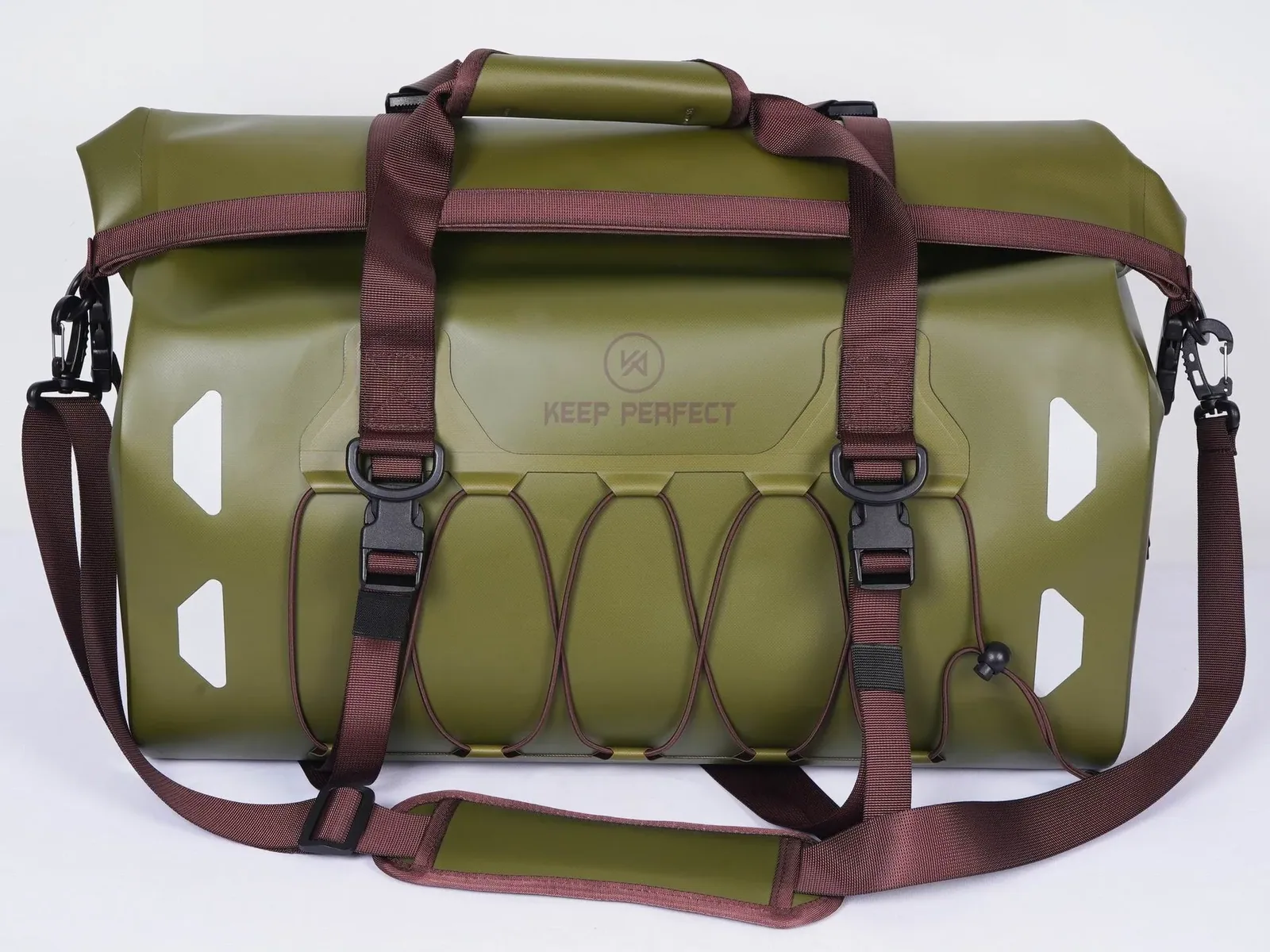
The shell decides the print and not the other way round, and getting it backwards is the most common cause of a brand panel that fails in the field. An open weave such as jute takes a screen print with a soft hand and it will not hold a fine line. Cotton canvas takes screen, heat transfer, embroidery and a woven label. A coated face takes a foil, an emboss and a screen print, and it will not take a sublimation print at all because the dye has nowhere to go. Neoprene takes sublimation across the whole panel.
The second half is adhesion, and it is where a coated shell causes trouble. A water-repellent finish that improves the bag reduces the adhesion of a print, and a low-surface-energy face such as a polyurethane coating needs a primer or an ink system matched to it. Where a brand panel matters, approve a printed swatch cut from the bulk material rather than from a sample-room offcut, and approve it after the finish has been applied rather than before.
| Shell | Screen | Heat transfer | Embroidery | Woven label | Sublimation | Foil or emboss |
|---|---|---|---|---|---|---|
| Jute | good | poor, the weave is too open | possible with a backing | good | no | no |
| Cotton canvas | good | good | good | good | no | poor |
| Faux leather, PU | good with a matched ink | poor | possible, it punctures the face | good | no | good |
| Neoprene | poor | good | poor | good | good, full panel | no |
How Do the Four Materials Behave When Wet?
Two of them take up water and two do not, and that is the cleanest line in the table. Jute and cotton canvas are hydrophilic: they take up condensation, they get heavy, they dry slowly and they can develop odour in storage. Faux leather and neoprene are unaffected by water on the face, and neoprene does not care at all because the cell is closed.
For a wine bag the consequence is specific rather than general, because the water comes from inside. A chilled bottle carried into a warm room produces condensation on the glass, and that water ends up at the bottom of the cell and on the base of the bag. A canvas bag with no lining will be damp at the base by the end of a summer day, and the base board sitting in it will soften. A coated or closed-cell shell keeps the water inside the cavity where a closed-cell divider can ignore it.
That is the practical rule: a woven shell on a chilled lane needs a lining and a drainage path, and a closed-cell shell does not. Where a woven shell is wanted for the look, the specification that makes it work is a coated lining, a bound seam at the base rather than a turned one, and eyelets or a vent at the low point if the bag will be used repeatedly with a cold bottle.
Choosing a wine bag shell
- Choose on the print, the lining and the wet-duty, in that order — not on the appearance.
- Jute and canvas take up water; a coated or closed-cell face does not.
- A PVC face brings a plasticiser question that a polyurethane face avoids.
- Neoprene is a sleeve material: it cushions and insulates and it does not hold a structure.
- A water-repellent finish can reduce print adhesion; approve a swatch from the bulk material.
What Lining Does Each Shell Need?
A woven shell needs one on any lane that meets condensation, and the lining is specified by what it has to stop: water reaching the base board and water reaching the outside of the bag. A coated polyester or a thermoplastic polyurethane film lining at a light gauge does both, and on a wine bag it is usually lighter than the shell it sits inside. A coated face and neoprene need no lining at all, which is one of the two reasons a neoprene sleeve assembles in fewer operations.
The seam is the part that decides whether the lining works. A welded seam in a thermoplastic film is airtight at the seam line; a sewn seam is perforated by every needle hole and it wicks. On a bag that will carry a chilled bottle the difference is visible in month three rather than on day one, and it is the reason a welded lining is specified on a chilled programme even where a sewn one passes the leak test at sampling.
One caution that is specific to this category: a wine bag holding a sealed bottle is generally not a food-contact article, because the food is inside a closed container that the bag never touches. Where a bag is intended to carry an open bottle or a glass, or where a market applies its own rule, the lining position changes and a declaration under Regulation (EC) No 1935/2004 becomes part of the file. Confirm which case applies before the material is ordered.
How Does Shell Choice Move Cube and Freight?
Through thickness and through whether the bag folds, and both are larger than the material weight suggests. A 420 gsm canvas shell with a lining and a boarded base does not fold; a 3 mm neoprene sleeve rolls and packs flat; a faux leather rigid bag ships erected and is charged on volume. On a six-bottle rigid carrier the freight line can exceed the difference in material cost between the least costly and the most costly shell on this list.
That is why the comparison has to be made per delivered unit rather than per unit. Ask for units per carton, cartons per container and the freight charge for the same programme in two shells, and the answer usually surprises the person who picked on material price. the landed cost calculator exists for exactly this: the material is one line in the number.
There is a second effect that is easy to miss. A heavier shell moves the bag into a higher weight band in a parcel network, and the band changes the charge per consignment for the life of the programme. On a direct-to-consumer wine programme that recurring charge dwarfs the one-off difference in material cost.
- Shell material
- Named by fibre or polymer, with the weight or the gauge
- Finish
- Coating or repellent, with the coating weight and the effect on print adhesion
- Lining
- Material, gauge and seam method — welded or sewn — chosen for the wet-duty
- Print method
- Matched to the face, approved on a swatch from the bulk material
- Reinforcement
- Base and corner panels named where the shell abrades poorly
- Restricted substances
- REACH declaration and a Proposition 65 statement where the market needs one
- Colour fastness
- AATCC 16 grade where the bag stands in a shop window
- Tensile
- ISO 13934-1 for the shell fabric where a load path depends on it
- Pack-out
- Folded, nested or erected, and units per carton for each
- Reference
- A sealed swatch and a sealed approved sample, held by both sides
Which Compliance Documents Follow Each Material?
The shell sets most of the file. A REACH declaration against the current candidate list is the baseline for any of the four and it is the one a retailer asks for first. A Proposition 65 statement is needed where the bag is sold into California, and it is a coated face with a plasticiser package that usually triggers the question. A colourfastness-to-light report under AATCC 16 is needed where the bag stands in a window, and it is jute and canvas that move most in shade.
Where the shell carries a recycled-content claim, the claim has to be supported by transaction evidence rather than by a statement on the quotation: a scope certificate for the material and a transaction certificate for the lot. The mechanics are set out in the GRS transaction certificate, and the practical point for a wine bag programme is that a recycled polyester shell and a natural jute shell answer the same marketing question with two completely different evidence files.
The last document is the one that costs nothing and prevents the most arguments: a material declaration that names every component in the bag, including the lining, the board, the foam and the thread. It is assembled at sampling and it is expensive after a customer asks for it.
Choose the shell on the print and the wet-duty
Send the format, the count, the lane and the artwork. You get a shell, a lining and a print method with the compliance file behind them, within one business day.
Frequently Asked Questions
What is the best material for a wine bag?
It depends on the print and the water. Cotton canvas is the volume choice; jute is a presentation face that needs a lining and reinforcement; faux leather wipes clean and carries a plasticiser question; neoprene cushions and insulates a single bottle.
Is jute suitable for a wine bag that is reused?
It can be, with a coated lining and bound edges. Jute takes up water, dries slowly and abrades poorly at the base, so it is a presentation material with a reinforcement plan.
What weight of canvas should a wine bag use?
About 280 to 420 grams per square metre. Below 280 the bag does not hold a shape around a boarded base; above 420 it is heavy before the bottles go in.
Is faux leather a problem for compliance?
A PVC face can be, because it needs a plasticiser package and some phthalates appear on the REACH candidate list and on Proposition 65. A polyurethane face avoids the question.
When should a wine bag use neoprene?
For a one or two bottle sleeve where cushioning and insulation are wanted in one layer. It is not structural and it does not hold a boarded base or a grid divider.
Which shell is best for a chilled bottle?
A closed cell. Neoprene and coated faces are unaffected by condensation; jute and canvas take up water and need a coated lining and a way to dry.
Can any of the four be printed in full colour?
Neoprene, by sublimation, across the whole panel. Canvas takes screen and transfer, a coated face takes foil and emboss, and jute takes a screen print with no fine detail.
Does a water-repellent finish affect printing?
It can reduce adhesion. Approve a printed swatch cut from the bulk material after the finish has been applied, not before.
Does a wine bag liner need a food-contact declaration?
A bag holding a sealed bottle is generally not a food-contact article, because the food is inside a closed container. Where a bag is intended to carry an open bottle, or where a market applies its own rule, a declaration under Regulation (EC) No 1935/2004 belongs in the file.
How does the shell change the freight cost?
Through thickness and through whether the bag folds. A rigid faux leather bag ships erected and is charged on volume, and on a six-bottle carrier that line can exceed the material difference.
Which standards verify a shell fabric?
Tensile to ISO 13934-1, colourfastness to light under AATCC 16, abrasion to a stated cycle count, and REACH declarations against the current candidate list.
What is the MOQ for a custom wine bag shell?
MOQ is 500 pcs per style and colourway, and 300 pcs can be discussed on a repeat. A dyed-to-order shade or a non-stock shell moves sampling toward 12-15 working days.
Does the shell change the sampling window?
Yes, when it is not a stock item. A stock canvas in a stock shade sits inside 6-10 working days; a dyed-to-order shade or a laminated face moves toward 12-15.
What should be held as a reference for the shell?
A sealed swatch of the bulk material with the finish applied, plus a sealed approved sample, both held by both sides and referenced on the tech pack.
People Also Ask
What material is best for a wine bag?
Cotton canvas for volume, jute for a natural presentation face, faux leather for a rigid wipe-clean bag, and neoprene for a single-bottle insulating sleeve.
Is jute waterproof?
No. It takes up water and dries slowly, so a jute wine bag needs a coated lining and bound edges on any lane that meets condensation.
What is faux leather on a bag?
A polyurethane or PVC face on a woven or non-woven backing. It wipes clean and takes a foil or an emboss, and a PVC face carries a plasticiser question.
Does neoprene insulate a wine bottle?
Yes, as a closed cell in a 3 to 5 mm sleeve. It slows a temperature change and cushions a knock, and it does not hold a structure above two bottles.
Which wine bag material lasts longest?
A coated 600 denier polyester or a polyurethane face at the base and corners, with canvas or jute on the panels that are seen rather than worn.
Sources and further reading
Every figure on this page is either our own programme data or attributed below. Open the originals before you write them into a specification.
- ECHA — REACH restricted substances and obligationsEuropean Chemicals Agency
- AATCC 16 — colorfastness to lightAmerican Association of Textile Chemists and Colorists
- ISO 13934-1 — textiles: tensile properties of fabricsInternational Organization for Standardization