Bag Hardware Inspection: Buckles, D-rings and Sliders
Hardware is small, heavily loaded and inspected last, which is why it generates a disproportionate share of returns. Check it three ways: what it looks like, whether it engages and releases cleanly, and whether it holds at the load it was specified for.
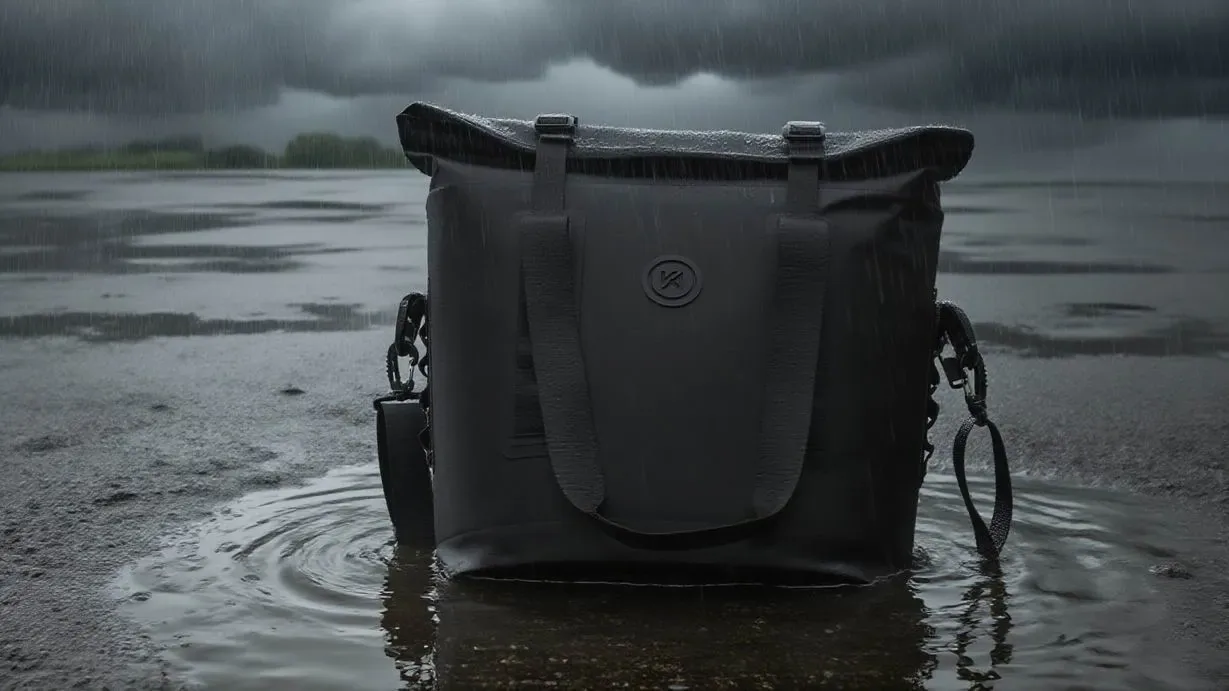
Name the component, the finish, the cycle count, the load and the class per failure mode. Hardware is the one part of a bag where a written specification is genuinely inexpensive and genuinely decisive.
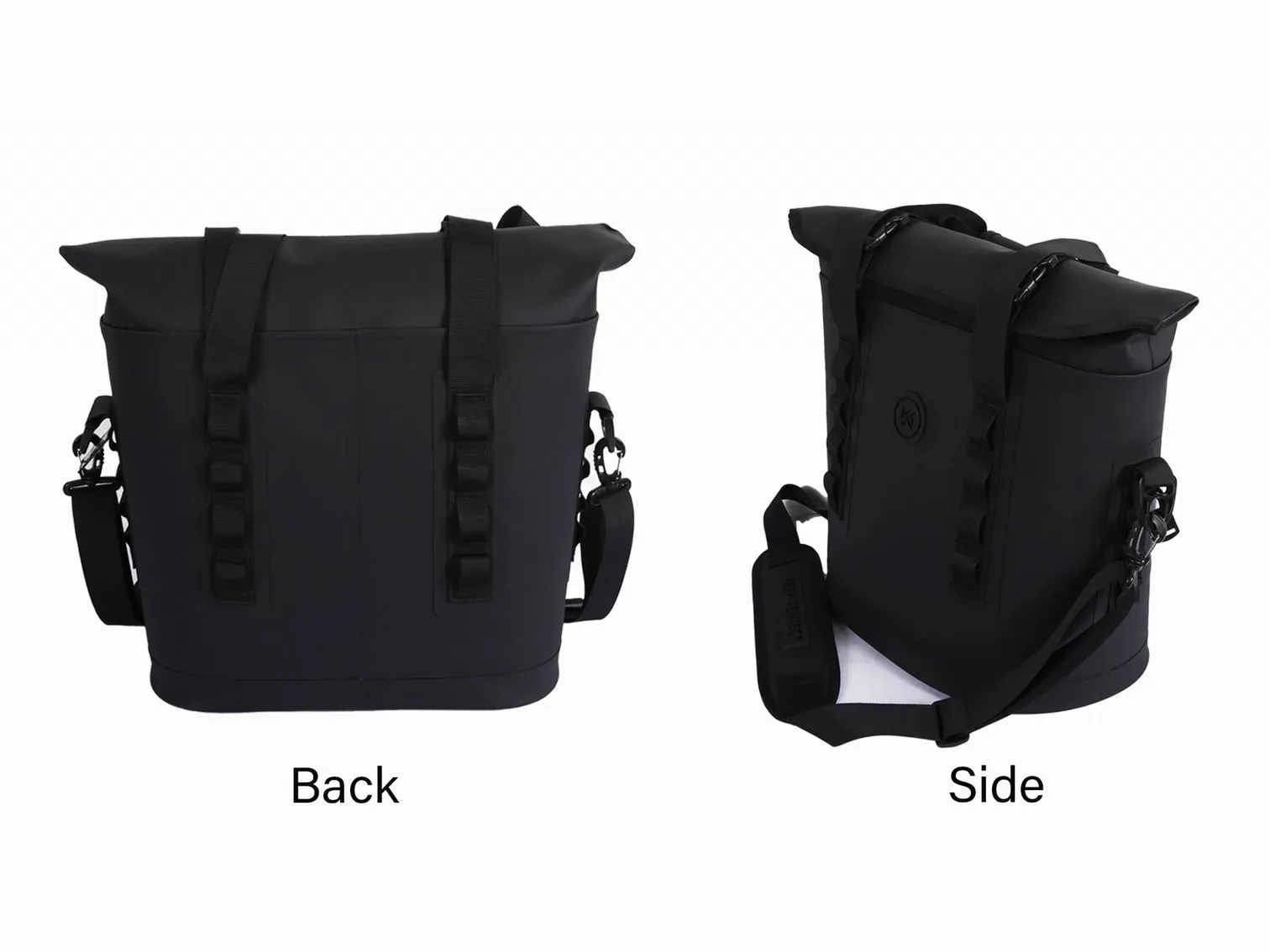
Hardware punches above its size. A side-release buckle costing very little carries the full load of whatever is in the compartment; a D-ring the size of a thumbnail transfers the entire weight of a strap onto a webbing attachment; a foot stud protects the base of a bag whose replacement cost is many hundreds of times its own. When one of them fails, the product fails.
It is also the category most often inspected as an afterthought. The inspector has spent two hours on construction and colour, reaches the last section of the checklist, and records that hardware is present and matches the reference. Nothing in that line would have found any of the four failures that actually produce returns.
What Counts as Hardware on a Bag?
More than buyers expect. A structured bag may carry a dozen distinct fittings, several of them with moving parts, and all of them purchasable at quite different quality levels for an almost identical appearance. The list matters because each item needs its own line on the checklist rather than one shared "hardware" tick.
| Component | What it does | Failure seen most often | Class a failure usually takes |
|---|---|---|---|
| Side-release buckle | Joins and releases a strap under load | One side releasing under tension, or the tongues wearing so the engagement feels loose | Major — the bag comes undone |
| Ladder lock or tri-glide | Adjusts webbing length and holds position | Slipping under load, or cracking at the bar after repeated adjustment | Major when it slips, minor for light surface marks |
| D-ring or rectangular ring | Transfers strap load onto webbing | Distorting open under load, or plating wearing through at the contact point | Major if distorted, minor for finish wear alone |
| Swivel hook or snap hook | Attaches a strap to a ring | The gate opening under side load, or failing to close fully | Major — the attachment releases |
| Strap adjuster and cord lock | Holds a drawcord or webbing position | Slipping progressively, or biting through the cord | Major where it releases, minor where grip merely degrades |
| Magnetic closure | Holds a flap closed without mechanical engagement | Weak holding force, or the magnet working loose from its housing | Major where the flap will not stay shut |
| Foot stud | Keeps the base off the ground | Working loose, or a sharp burr left on the rear face | Minor when cosmetic, critical where a sharp edge is exposed |
| Rivet or cap | Reinforces a stress point | Spinning in the material, or cracking the surrounding fabric | Major where the attachment is compromised |
| Eyelet | Reinforces a hole in the fabric | Tearing out, or leaving a rough edge inside the unit | Major where it fails, critical where a sharp edge results |
Why Does Hardware Fail More Than Expected?
Three reasons stack up. Specification drift is the first: an engineering drawing names a component, a quotation is substituted for one that looks the same, and nobody re-tests. Duty misjudgement is the second — the load in service is often several times what anybody had in mind when selecting the fitting. Attachment weakness is the third and least discussed: plenty of hardware failures are really webbing and stitch failures wearing the fitting out of position.
The third deserves attention because it changes who fixes it. A buckle whose tongues wear because the strap sits at an angle is not a buckle problem. Ask to see the webbing routing on a loaded unit before concluding the component is at fault.
A fourth cause operates quietly over time: the component was right for the original design and the design grew heavier. Capacity is added, panels gain reinforcement, the strap gets wider — and the original fitting stays in the specification because nobody reviewed it. Revisit the hardware clause whenever the construction changes rather than treating it as settled.
Should Hardware Be Checked Separately From Webbing?
No, and this is where many programmes quietly lose information. A buckle does not exist in isolation; it exists at the end of a strap, sewn to something, loaded at some angle. Inspecting the fitting alone and inspecting the webbing separately both miss the joint, and the joint is where a surprising share of failures begin.
Check the assembly loaded. Hang the stated load from the strap, look at how the webbing seats in the fitting, whether it twists, whether a bar digs in, and whether the fitting is being pulled off its intended axis. A component that passes every individual check can be assembled in a way that will fail in service, and only the assembled check reveals it.
Temperature belongs in this discussion too. Metal fittings behave consistently across most temperatures a bag will see; injection-moulded ones do not, and some become markedly more brittle in the cold. Where a programme ships into a cold market, ask about the low-temperature behaviour of the moulded components at approval rather than learning it from returns.
What Does a Good Hardware Record Look Like?
One that lets somebody a year later identify exactly what was fitted. That means the component reference from the mill's purchase record, its finish, its supplier, the test that was run and the result, all attached to the lot number of the order it went into. Most programmes keep the first two and discard the rest, which is why substitution is so hard to detect after the fact.
It also means keeping a retained component sample from the approved reference alongside the retained reference fabric. When a question arrives about whether the fitting was changed, a physical comparison settles it in seconds and a description never does.
What Should Be Checked Visually?
Match to the approved reference first — type, size, colour, finish and markings, because a substituted fitting usually differs in some small respect even when it looks similar in a photograph. Then look for flash or burrs left from moulding, visible parting lines on load-bearing surfaces, plating faults including dull patches and exposed base metal, and any distortion suggesting the fitting was moulded under-filled.
Look at how it is attached rather than only at what it is. Reinforcement behind the fitting, stitching close and even around the load point, no loose threads where the component was set, and no fabric pulled out of shape by the setting operation. A good fitting badly attached fails just as thoroughly as the reverse.
Watch for mixed batches within one order. Components of the same nominal reference arrive from more than one production run more often than buyers assume, and the visible difference between two runs of the "same" fitting can be enough for a customer to notice. Lay several units side by side and look across them for differences in shade, gloss or marking rather than examining one unit in isolation.
What Should Be Checked Functionally?
Operation, engagement and load. Every moving fitting on every unit in the sample gets operated; the ones carrying real duty get an agreed cycle count and then a pull to the stated load. Nothing about this needs a laboratory — it needs patience and a written method.
| Check | How it is run | What it establishes | Note |
|---|---|---|---|
| Engagement and release cycles | Component engaged and released a stated number of times, at a normal pace | The mechanism survives repeated use without loosening | Fast operations pass over faults a customer would notice |
| Load holding | Strap or webbing pulled to the stated load with the fitting engaged | The fitting holds the duty it was specified for | The stated load must come from somewhere — agree it in writing |
| Slip test on adjusters | Adjuster set, then loaded to see whether position holds | The strap stays where the user put it | Test both directions; some fittings behave differently |
| Sharp edge check | Run along every edge the hand can reach, with the unit both empty and loaded | No edge that could cut or graze | The hazard belongs in the zero-tolerance list |
| Small-part check | Any component small enough to detach is pulled and twisted to the stated force | Nothing detaches that could become a hazard | Where young children are users, the rule is stricter |
| Finish adhesion | A stated tape or rub test where the clause calls for one | Plating or coating stays on the substrate | Early wear is a specification problem, not bad luck |

How Is a Buckle Test Actually Run?
Engage the fitting, load it to the stated value, hold briefly, release and repeat. Then engage it again and try to release it while under load, because that is what actually happens in service — a strap catches on something and the user pulls sideways rather than squeezing cleanly.
Note the angle. Most buckles are strong along their axis and much weaker when loaded across it, and real bags are loaded across it constantly. Where the strap geometry puts a fitting off-axis, test it that way or accept that the test does not represent service.
Record which unit and which fitting failed, at what cycle or load, and at what angle. Three of fifty buckles releasing on the second cycle at load is a specification problem needing immediate attention; one of fifty releasing on the twenty-fifth at an extreme angle is a different discussion entirely.
What Standard Applies to Hardware Testing?
There are published test methods covering strength, cycle durability and finish performance for fittings, and a laboratory working to ISO/IEC 17025 can run them and produce a report that will hold up in a dispute. What matters more day to day is that your clause names a method and a pass criterion, so that a table test and a supplier test are measuring the same thing.
Be careful about quoting standard numbers. A clause citing a specific published method that does not actually cover the component is worse than none, because it gives everyone false confidence. Cite the standard where it genuinely applies and write your own method where it does not.
The other thing worth settling in advance is which party's test governs when two results disagree. It happens routinely: the supplier's laboratory reports a pass and yours reports a failure, both on instruments competent for the work. Naming the method, the laboratory and — where it matters — who pays for a third determination avoids losing weeks to an argument about process rather than product.
How Does Plating Failure Get Detected?
By looking, mostly, and by knowing where to look. Load-bearing contact points wear first: the inside of a ring where a strap passes through, the shoulders of a hook, the visible face of a buckle that rubs against a jacket. Check those places deliberately rather than admiring the component in the hand.
Accelerated finish tests exist and are useful at approval stage, when nobody has a service history. Once a fitting has run three orders without complaints, the accumulated evidence is generally better than any accelerated result — so keep the record and refer to it rather than retesting everything every time.
What Are the Sharp-Edge and Small-Part Concerns?
A burr left from moulding or cutting creates a hazard, and hazards are different in kind from quality faults. Anything presenting a sharp edge reachable by a user belongs in the zero-tolerance class regardless of how many units are affected, because a single one is enough to generate the claim.
Small components that can detach — a cosmetic cap, a decorative tag, a cover — carry the same concern where the product is intended for children. Ask the laboratory for the relevant small-parts assessment for the market you are shipping into, and write the result into the specification rather than keeping it in a compliance folder nobody opens.
Substance content in finishes and coatings is a separate issue that runs alongside both. Restricted substance testing is a laboratory matter, its report should come from an accredited laboratory, and an expired report is worth exactly nothing.
How Should Hardware Findings Be Classed?
Function decides it. Anything that releases, opens, or stops performing its duty is a major — the customer returns it or cannot use it. Anything purely cosmetic within tolerance is a minor. Anything that creates a hazard is critical, whatever the count.
One boundary case deserves its own line in the classification: a fitting that still works but has degraded noticeably — loose engagement, visible distortion, plating worn through at a load point. Decide before the visit whether that is minor or major, because an inspector deciding alone will not consult you and both parties will be bound by it.
What Belongs in the Hardware Clause?
Ten things the hardware clause has to name
- Each component separately, with size, type and material.
- The finish, with its approved reference.
- The load each load-bearing fitting must hold.
- The number of engagement and release cycles to be run.
- The test angle, where the strap geometry loads it off-axis.
- How each fitting is attached, with reinforcement where needed.
- The finish performance method, if one is required.
- The substance and small-parts requirements for the destination market.
- The class assigned to each named failure mode.
- How a failure is recorded — unit, component, cycle, load, angle, photograph.
Ten lines of specification, written once, that serve every order in the programme. It also makes quotations genuinely comparable, which matters because two suppliers quoting "hardware" frequently are not quoting the same components, and the difference shows up in the return rate rather than in the price.
Put cycle counts and loads into the hardware clause
Share the fittings and the duty each one carries — the test method and the class per failure mode come back written into the checklist.
Frequently Asked Questions
Should every piece of hardware be operated, or only the main ones?
Every moving fitting on every unit drawn. Load testing to the stated value can be limited to the ones carrying real duty, but operation should not be.
How many engagement cycles are reasonable?
Whatever the clause states. Ten to thirty is common and enough to expose a marginal fitting without wearing out a sound one.
How is the load figure chosen?
From the duty the bag will actually see, with reserve. Do not invent a number to cite a standard; agree one in writing and test to it consistently.
Is plating wear a minor defect?
Usually, where it is within tolerance and appears late. Wear at a load-bearing contact point early in life suggests the finish was under-specified.
Who usually causes a buckle failure, the component or the attachment?
More often than buyers expect, the attachment or the webbing routing. Look at a loaded unit before concluding the fitting itself is at fault.
Should hardware be tested at an angle?
Where the strap geometry loads it off-axis, yes. Axial testing alone does not represent how most bags are loaded in service.
Can a supplier substitute an equivalent fitting?
Only with written approval. Components that look identical in a photograph routinely differ in material, wall thickness and finish.
What laboratory report should accompany hardware?
An accredited laboratory report on any strength, finish or substance test you rely on, valid for the date it is relied on.
How do you check for sharp edges?
Run a hand along every reachable edge with the unit both empty and loaded, paying attention to rear faces and cut ends. It takes seconds per unit.
Are magnetic closures treated differently?
Yes — there is no mechanical engagement, so holding force and retention in the housing are what matter, and both need stated values.
Does a loose rivet count as a major?
Where the attachment is compromised, yes. A spinning rivet will work free and the failure it precedes is structural.
What should be photographed for a hardware finding?
The fitting in place, the failure close up, and the reference beside it where the failure is one of match rather than function.
Can hardware findings be critical?
Yes. A sharp reachable edge, a detachable small part in a children's product, or a substance exceedance all sit in the zero-tolerance class.
People Also Ask
How do you inspect hardware on a bag?
Visually against the approved reference, then functionally — engagement and release cycles, load holding where the fitting carries duty, plus sharp-edge and finish checks.
What are the most common bag hardware failures?
Buckles releasing under load, adjusters slipping, rings distorting open, hooks opening side-ways, and plating wearing through at contact points.
How many cycles should a buckle survive?
The number stated in your clause — commonly ten to thirty at final inspection, which exposes a marginal fitting without destroying a sound one.
Is a scratched buckle a major defect?
Normally a minor where function is unaffected. A scratch that comes with distortion or a weakened load path is a different matter.
What load should a D-ring hold?
The load actually placed on it in service, with reserve, agreed in writing. Test it at the angle the strap applies rather than axially.
Sources and further reading
Every figure on this page is either our own programme data or attributed below. Open the originals before you write them into a specification.
- ASTM International — standards indexASTM International
- Consumer Product Safety Improvement Act (CPSIA)U.S. Consumer Product Safety Commission
- REACH Regulation (EC) 1907/2006European Chemicals Agency