How to Inspect Zipper Function: Cycle Testing and Common Failures
A zipper is checked by working it — a stated number of open and close cycles per unit, plus a lateral load test on the closed chain. Almost every field failure announces itself at the inspection table if somebody actually runs the slider. Most reports only note whether the zipper is present.

Write the test method down: how many cycles, at what speed, with what load on the closed chain, against which failure modes, and what each one is classed as. A zipper is a mechanism, and mechanisms are judged by what they do.
The zipper carries more functional risk per square centimetre than any other component on a bag. It is the part the customer operates every single time they use the product, it is the part most likely to be blamed if the bag is returned, and it is unique among bag components in having a genuine moving assembly with several distinct ways of failing.
It is also inspected badly. In a great many reports the zipper appears as a single line — present, correct colour, functioning — and that line is usually ticked on one unit at one moment. Nothing about that check would have found the three most common field failures, none of which require laboratory equipment to detect.
A single bag usually carries several closures, and they do not have equal duty. The main compartment zipper is long, loaded sideways by whatever is inside, and operated constantly. A front pocket closure is shorter and carries much less load. An internal pocket closure is operated occasionally and may never see tension at all. A closure sewn into a lining for access to a pad may be worked rarely but is difficult to repair if it fails.
Treating them identically wastes time at one end and leaves exposure at the other. Name each closure on the drawing, assign each a duty, and let the duty set the chain gauge and cycle count. The main compartment and anything the customer relies on gets the full test; a lightly used internal pocket gets the same visual check and the same cycle count, but not necessarily the same lateral load.
Should Every Closure Be Tested, or Only the Main One?
Every closure gets cycled, because the cost of doing so is small and the cost of missing a bad one is not. What differs is what happens next. Give the full battery — cycles, lateral load, top stop, tape attachment — to the closures that carry real duty, and cycle plus visual examination for the rest.
There is one exception worth naming: a closure that cannot be repaired without destroying part of the bag deserves full duty treatment whatever its apparent importance. A lining access zipper that fails after three months means the bag is finished, not merely inconvenient, and warranties tend to recognise that even where checklists do not.
How Does the Closure Duty Change What You Specify?
Duty drives three choices: chain gauge, chain type and attachment. Heavier duty argues for a larger gauge and, often, for a moulded rather than a coil chain — the elements are chunkier and tolerate tape distortion better. Lighter duty can accept a finer gauge with a better appearance and lower bulk, which matters on a packable or soft product.
Think also about what happens when the bag is over-filled, because that is what customers do. A chain selected for a comfortable fill has no reserve for the day somebody forces it. Wherever the closure is the thing standing between contents and the pavement, specify one gauge above what the nominal duty suggests and let the requirement be recorded rather than assumed.
What Actually Fails on a Zipper?
Six failure modes account for the overwhelming share of returns, and they are remarkably consistent across chain types. The slider stops gripping and climbs without closing. The chain splits under lateral load — the customer calls it "bursting". The slider comes off the end because the top stop is missing or poorly crimped. The puller tab breaks away. The tape tears at the stitch line. And the finish wears off the slider or the teeth within weeks.
| Failure | What you see | Usual cause | Class |
|---|---|---|---|
| Slider climbs without closing | The chain passes through but the two sides do not interlock | Worn slider throat, wrong slider for the chain gauge, or contamination in the chain | Major — function is lost |
| Chain splits under side load | Teeth separate behind the slider when the closed bag is pulled sideways | Light chain for the load, a missed tooth, or stitch spacing pulling the tape out of line | Major |
| Slider off the top | Slider and puller at the end of the tape, unit open | Missing or badly set top stop | Major |
| Puller tab detached | Tab in hand, nothing to grip | Weak attachment between tab and slider body | Major |
| Tape torn at the stitch line | Tape pulling away from the shell along the seam | Stitch too close to the chain, or no reinforcement behind the tape | Major |
| Plating or coating worn | Base metal showing where the hand touches | Finish specification too light for the duty | Minor, unless it is early |
| Stiff travel needing effort | Works, but catches repeatedly | Chain misalignment, tape distortion, or a burr inside the slider | Minor to major by severity |
Note what none of these require: no laboratory, no instrument, no special lighting. They require somebody to run each unit's slider the full length several times and then pull sideways on the closed chain. The reason they are missed is not detection difficulty. It is that nobody put them on the checklist.
Chain type shifts which failure dominates. A coil chain tends to fail by the slider climbing or by a single element being damaged, and it recovers poorly once distorted. A moulded-tooth chain resists distortion better and more often fails at the top stop or by the elements shearing under load. A metal-tooth chain behaves differently again, because the elements are discrete and sensitive to tape alignment. Knowing which chain is specified tells the inspector where to look first.
Concealed and reverse-coil constructions add their own problem: the fault is hidden. A chain that has partly split behind the slider cannot be seen on a closed unit at all, which is precisely why the open-cycle check matters. A unit that looks immaculate closed can have had its chain separate twice during testing, and nobody would know without working it.
How Many Cycles, and How Is a Cycle Counted?
A cycle is one full open and one full close, worked along the whole chain at a controlled speed. Most programmes settle somewhere between ten and thirty cycles per unit at final inspection, which is enough to provoke a marginal assembly without wearing out a good one. Whatever number is chosen, it must be stated, because "open and close the zipper" is not a test.
Speed matters more than people expect. A slider dragged at speed will frequently pass over a defect that a slower pass catches, and a customer unfastening a bag does so slowly. Ask for the test to be run at a deliberate, even pace, particularly across the joins where the chain meets the sewn construction.
How many units? Every unit in the sample, because a zipper is a per-unit mechanism. On a 500-piece lot drawing 50 units at General Inspection Level II, that is 50 sliders worked the stated number of times — which takes some minutes and is one of the highest-value minutes in the entire visit.
Where a unit shows a fault, do not stop at the first cycle that reveals it. Run the remainder and record how many of the stated cycles were completed before the fault appeared. A slider that fails at the third cycle and one that fails at the twenty-ninth are not the same problem, and the difference is exactly what the line supervisor needs to know.

Is a Pull Test Better Than a Cycle Test?
They test different things and neither replaces the other. A pull test — loading the closed chain sideways and holding it — reveals whether the teeth interlock well enough to resist bursting. A cycle test reveals whether the mechanism survives use. A zipper can pass one and fail the other, and both failure modes generate returns.
| Check | How it is run | What it proves | Its limit |
|---|---|---|---|
| Full travel | Slider worked end to end, in both directions, at a controlled pace | The chain is aligned and the slider grips | A weak-chain split under load may still not appear |
| Cycle count | A stated number of full open and close cycles | The mechanism tolerates repeated use | A definite lifetime figure needs a laboratory test, not a table test |
| Lateral load on the closed chain | Opposed sides pulled apart with the bag loaded or by hand to the stated load | The teeth resist splitting in service | Sensitive to how the load is applied, so the method must be written |
| Top stop check | Slider drawn firmly against the top stop | The stop holds and the slider cannot leave the chain | A poorly crimped stop sometimes survives one pull and not five |
| Auto-lock check | With the slider at rest, the chain is pulled apart | The lock engages and holds position | Results depend heavily on slider type — know which one is specified |
| Tape attachment | Pulling the tape away from the shell along the seam | The stitch line and any reinforcement hold | Destructive if taken too far; use a stated load |
Why Do Auto-Lock Sliders Behave Inconsistently?
Because "auto-lock" describes several different mechanisms and buyers rarely name which one they specified. Some lock on any upward pull of the puller; some require the puller to rest flat; some are pin-lock types that need a positive engagement. An inspector testing one type the way they would test another will record failures on perfectly serviceable zippers, or vice versa.
Name the slider type in the specification along with the chain gauge and the finish. That single line removes one of the most common sources of inspection disagreement on any hardware item, not just zippers.
Does the Tape Matter as Much as the Chain?
Very often more. Field failures blamed on the chain frequently turn out to be attachment failures — the tape tearing at the stitch line, the stitches sitting too close to the teeth, or the tape having been strained during closing so that the chain cannot run true. A perfectly good slider on a distorted tape will feel rough and will eventually destroy itself.
Check the stitch line consciously. How far is it from the chain, how many stitches per unit length, is there reinforcement behind the tape at the stressed ends, and does the tape lie flat without being pulled out of line? Those observations belong on the same checklist as everything else about stitching, and they should be read together rather than separately.
How Should a Zipper Finding Be Photographed?
Photograph the state, not the object. A picture of a bag with a zipper on it is useless. A picture showing precisely where the chain split, where the tape lifted, or where the finish rubbed is what lets the mill find the cause. Add a short clip where a moving fault is involved — the slider climbing over the chain communicates in seconds what three paragraphs of description cannot.
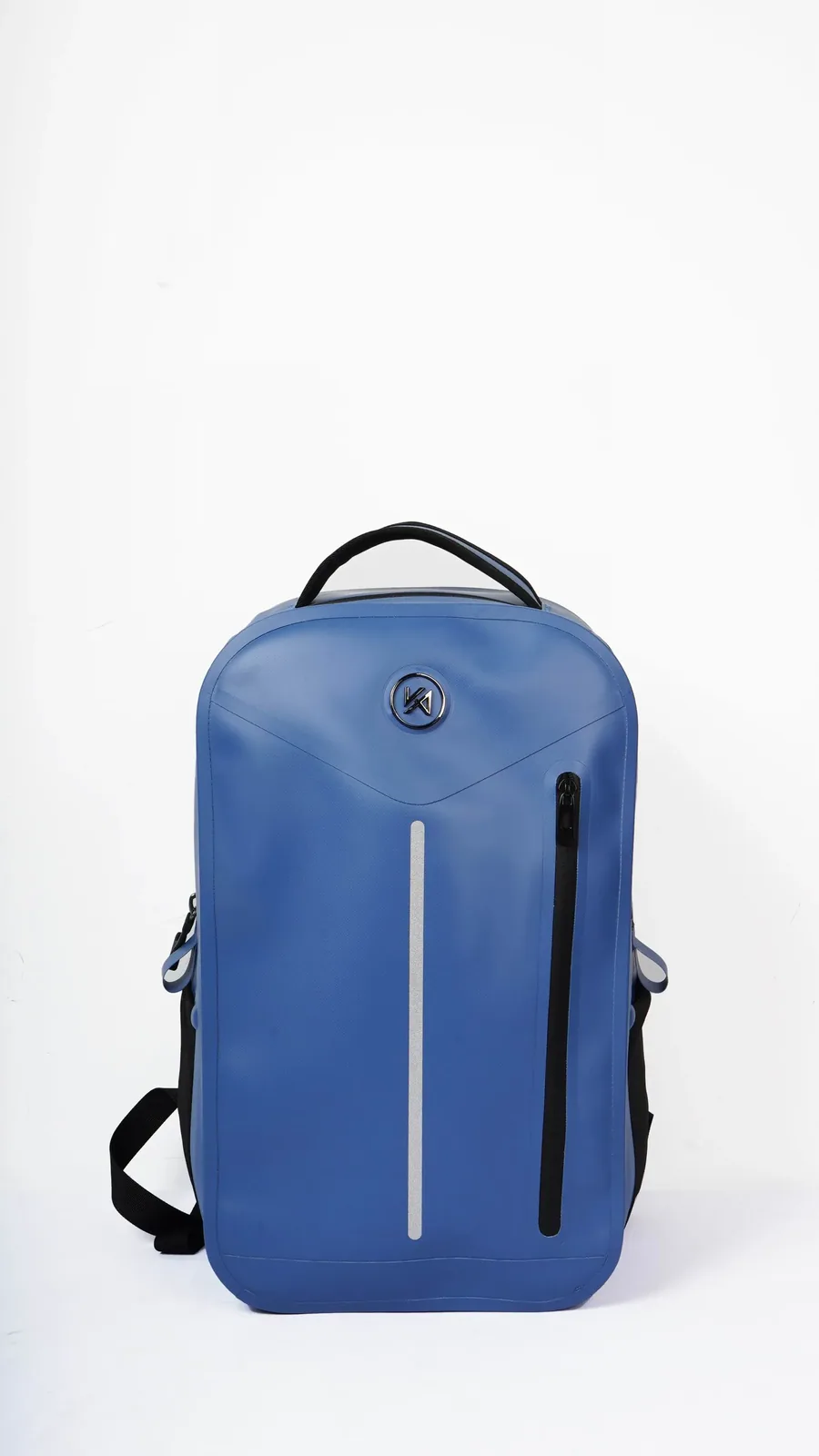
Record which unit failed and where. "Three of fifty units split at the lateral load test, two of them within 4 cm of the bottom stop" tells the line supervisor exactly where to look. "Zipper quality issue" tells nobody anything and guarantees the correction will be guesswork.
Which Failures Are Major and Which Are Minor?
The dividing line is function. Anything that stops the bag closing or opening, anything that lets contents out, and anything that comes away in the hand is a major, because the customer returns it. Finish wear is usually minor, provided it is within the agreed tolerance and appears late rather than early in use.
Stiffness deserves a specific note. A zipper that works but catches on every pass sits on the boundary: some programmes class it minor, others major. Decide before the visit which side your programme takes, because an inspector facing an unclassed finding will make the call alone and both sides will live with it.
Nothing about a zipper normally belongs in the critical class unless the component carries one of the exposures that put anything there — a sharp edge after plating failure, a small part that detaches and creates a hazard for a young child, or a substance exceedance in the finish. Keep those in the critical list explicitly.
What Belongs in the Zipper Clause?
Eight things the zipper clause has to name
- The chain type and gauge, not merely "zipper".
- The slider type, including how its lock behaves.
- The finish on slider, puller and teeth, with the approved reference.
- The cycle count to be run per unit, and the pace.
- The lateral load to be applied to the closed chain, and how it is applied.
- The stitch distance from the chain and any reinforcement required at the loaded ends.
- The class assigned to each named failure mode.
- How the finding is recorded: unit number, position, cycles and photograph.
Write it once and it serves every order in the programme. The clause is also what makes a quotation comparable — two suppliers quoting "a zipper" are not quoting the same component, and the difference shows up in the return rate rather than in the price.
Put the cycle count and the load into the checklist
Share the closure specification and the duty the bag has to take — the test method, class per failure mode and recording format come back written into the checklist.
Frequently Asked Questions
How many open and close cycles should an inspector run?
Whatever the clause says, typically between ten and thirty full cycles per unit at a controlled pace. State the number, because "check the zipper" is not a test.
Should every unit in the sample have its zipper worked?
Yes. A zipper is a per-unit mechanism, so a partial check by definition misses units. Every unit drawn should be cycled.
What causes a zipper chain to split when the bag is loaded?
Light chain for the duty, a damaged tooth, or stitch placement pulling the tape out of line so the teeth cannot interlock cleanly.
Why does the slider come off the end of the tape?
Usually a top stop that is missing, misplaced or poorly crimped. Properly set, the stop should hold the slider against repeated firm pulls.
Is a lateral load test destructive?
Run to a stated load it should not damage a sound chain. Run without a stated load it becomes a strength contest, which is why the method has to be written.
Do all auto-lock sliders behave the same way?
No. Several distinct mechanisms are sold under that description, and testing one type the way you would test another produces false results.
How do you judge plating wear on a slider?
Against the approved reference and after a stated number of cycles. Wear that appears early is a finish specification problem rather than a cosmetic one.
Should the stitch line be inspected along the zipper tape?
Yes, and it is often the real cause. Distance from the chain, stitch density and reinforcement at the loaded ends all determine whether the tape survives.
Can a stiff-travel zipper be accepted?
Only if your classification says so. Decide in advance, because it sits on the boundary between minor and major.
Is a broken zipper always a major defect?
Where it stops the bag being opened or closed, yes — the customer returns it. Purely cosmetic finish wear assessed within tolerance is normally minor.
Does a cycle test tell you how long the zipper will last?
No. It finds units that would fail early. Establishing a lifetime figure is laboratory work with a different method and a much larger sample.
Why do metal-tooth chains fail differently from coil chains?
The teeth are discrete rather than continuous, so damage to one element affects performance immediately, and the chain is more sensitive to tape distortion.
Where exactly should failures be recorded in the report?
By unit number and position along the chain. A general statement about zipper quality cannot be acted on by anybody.
People Also Ask
How do you test a zipper on a bag?
Run the slider the full length several times at a controlled pace, check the top stop holds, then apply a stated lateral load to the closed chain and see whether the teeth hold.
What are the most common zipper failures?
Slider climbing without closing, the chain splitting under side load, the slider leaving the top of the tape, puller tabs detaching and the tape tearing at the stitch line.
How many cycles should a zipper survive?
A table check of ten to thirty cycles finds units that would fail early. A durability figure proper comes from a laboratory method with a stated load and its own acceptance criterion.
What is a top stop on a zipper?
The fitting above the last tooth that stops the slider leaving the chain. A missing or badly crimped one puts the slider on the floor and the bag open.
Is a broken zipper a major defect?
Yes where function is lost. Finish wear within tolerance that nobody would return a bag for is normally a minor.
Sources and further reading
Every figure on this page is either our own programme data or attributed below. Open the originals before you write them into a specification.
- ASTM International — standards indexASTM International
- ASTM D6193 — Standard Practice for Stitches and SeamsASTM International
- ISO 2859-1:1999 Sampling procedures for inspection by attributesInternational Organization for Standardization