What Does Bag Sourcing for the EU Require Beyond REACH?
Three obligations sit on top of the ordinary programme: a chemical compliance file under REACH with reports on the production article, a tariff position taken from the Combined Nomenclature and the origin, and an importer able to make the entry and hold the technical file. The product file and the customs file are separate and both are required.
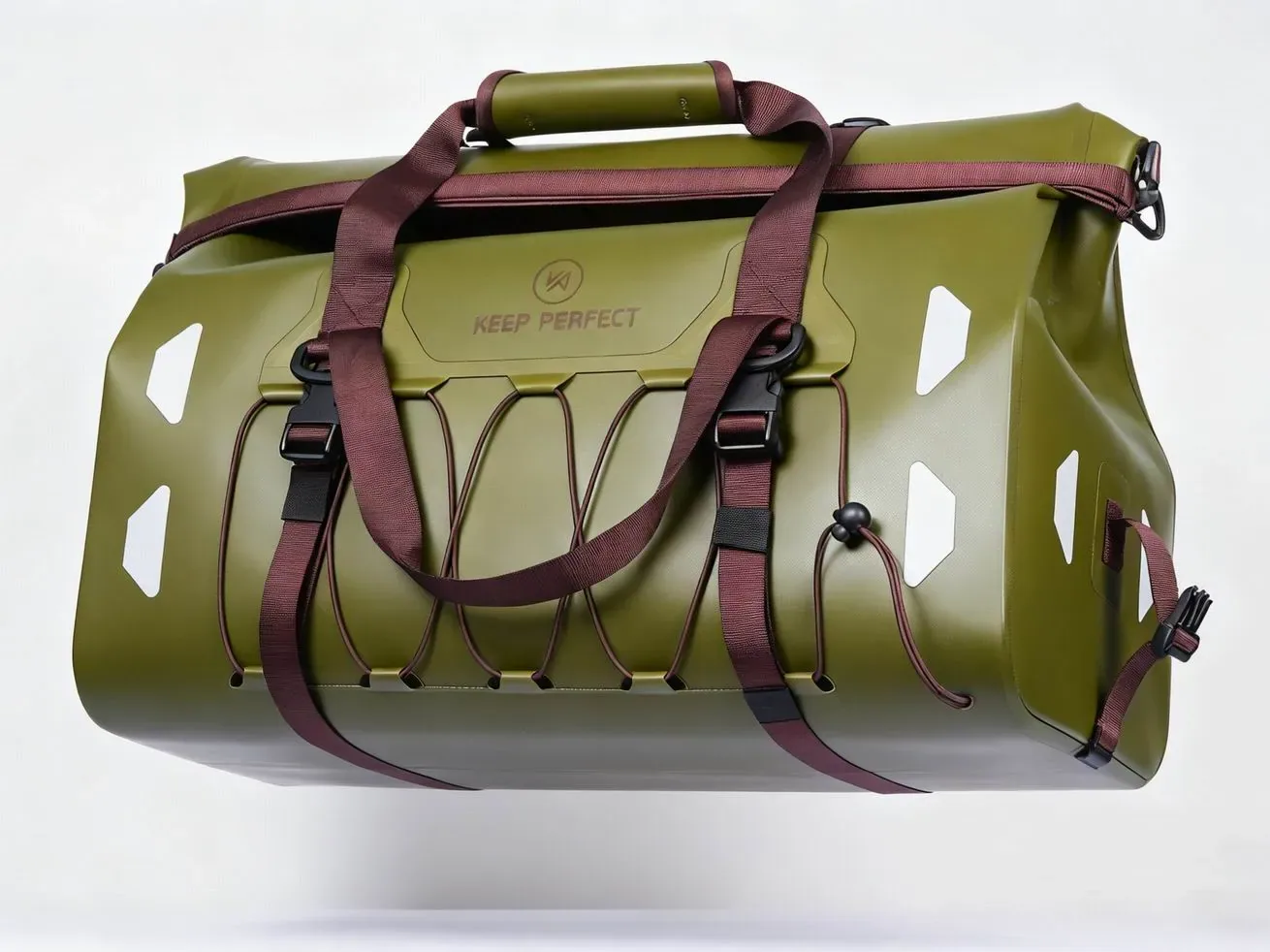
Bag sourcing for the European Union adds three obligations to the ordinary programme: chemical compliance under REACH and, where relevant, food-contact or toy-safety rules; a tariff position taken from the Combined Nomenclature and the origin of the goods; and an importer with an EORI number who can make the entry and hold the technical file. The product file and the customs file are separate and both are required.
The European Union is a single customs territory with a single tariff, and that is the part importers understand. What catches buyers out is that it is not a single product-regulation regime: the chemical rules are European, the market-surveillance practice is national, and in some categories the member state adds its own layer. A bag can pass at the border and still be unsellable in a member state if the chemical file is thin.
The third thing to understand is that the Union buyer is usually the one who has to prove compliance, not the vendor. A declaration held in a factory file in another country does not answer a market-surveillance request made in a member state, and a request can arrive months after the goods have been sold. The buyer who asks for the file at sampling and holds it locally is the buyer who can answer that request in a day.
This piece sets out the three obligations in the order a buyer meets them, and where they interact with the ordinary programme calendar. It does not print duty rates: the applicable figure is the one in the official tariff for the subheading and origin on the day of entry, and the EU Common Customs Tariff notes note explains how to read it.
Who Can Import Into the EU and What Is an EORI Number?
An importer established in the Union needs an Economic Operators Registration and Identification number to make a customs entry, and it is the same identifier used across member states. A buyer without an establishment in the Union has to appoint one, either as a direct representative or through an indirect representation arrangement, and the choice affects who carries the liability for the declaration. That is a commercial decision, not a formality, and it should be taken before the first quotation is accepted.
The second question is who holds the technical file. Under the Union product rules the economic operator placing the goods on the market has to be able to produce the compliance documentation on request, and in practice that is the importer rather than the overseas vendor. A buyer who has never asked for the file will discover the requirement at the moment a market-surveillance authority asks for it.
What Does REACH Actually Require for a Bag?
REACH, Regulation (EC) No 1907/2006, restricts substances in articles placed on the Union market. For a bag the practical obligations are the restricted-substance list in Annex XVII — which covers azo dyes, certain phthalates, nickel release and others — and the candidate list of substances of very high concern, where a communication duty arises above a threshold. The list is updated regularly, which is why a declaration has to be dated and re-issued rather than filed once.
| Regime | What it covers for a bag | What the importer has to hold |
|---|---|---|
| REACH Annex XVII | Restricted substances in the article: azo dyes, phthalates, nickel, chromium VI | A dated supplier declaration plus test reports on the actual article |
| REACH SVHC list | Substances of very high concern above 0.1 per cent by weight | Communication up and down the chain on request |
| CLP | Classification and labelling of substances and mixtures | Relevant to chemical inputs rather than finished bags |
| Food contact | A liner or panel that touches food | A declaration under Regulation (EC) No 1935/2004 with migration data |
| Toy safety | A bag marketed to children | EN 71 testing and the associated documentation |
| General product safety | Every consumer product | A technical file and traceability on the article |
How Is the Tariff Position Taken?
Through the Combined Nomenclature at eight digits, of which the first six are the Harmonized System subheading shared with every other customs territory and the last two are the Union subdivision. Bags sit in Chapter 42, and the subheading turns on the outer surface material and the construction in the same way it does elsewhere: moulded or not, textile or sheeting of plastics, leather or not. The HS 4202 subheading guide covers the choice, and the country-of-origin rules note covers the origin question that follows.
Origin decides which column of the tariff applies. Non-preferential origin is determined by the last substantial transformation; preferential origin under a free trade agreement has to be earned by the manufacturing process and evidenced by a statement or a certificate at the time of entry. A buyer who wants a preferential rate has to ask for the evidence at quotation stage, because it cannot be manufactured after the goods have shipped.
What Is in the Product File for an EU Sale?
- Technical description
- Construction, materials, dimensions and intended use
- REACH declaration
- Dated, against the current Annex XVII and SVHC lists
- Test reports
- On the production article, naming the standard and the sample
- Material declarations
- Fabric, coating, foam, hardware, trim
- Traceability
- Batch or lot identification linking the article to the file
- Labelling
- Fibre composition where required, and the operator identity
- Food-contact declaration
- Where any part of the bag can touch food
- Instructions and warnings
- In the language of the market of sale
- Retention
- How long the file is kept and by whom
- Change control
- Notice before any material substitution
Two items on that list cause the most trouble. Traceability is the ability to link a specific article to a specific file, and it fails when the buyer holds a declaration for a material rather than for a production lot. Labelling is the other: the requirement is the language of the market of sale, so a bag sold in three member states needs three language versions rather than one English one.
How Does the Customs Entry Differ From Other Markets?
The entry is a declaration to a national customs administration acting for the Union, and it is made against the customs value, which is normally the transaction value adjusted to the place of introduction into the Union. That means freight and insurance to the frontier are generally inside the customs value rather than outside it, which is one of the practical differences from a US entry and one that catches buyers who reuse a US landed-cost model unchanged.
Import VAT is then due at the rate of the member state of importation, and it is recoverable by a registered business in the normal way. That is a cash-flow matter rather than a cost, but it has to be funded at entry, and a buyer who models landed cost without it will find the number short by the VAT rate of the destination. The FOB, CIF and landed cost compared note sets out where each term leaves the value.
What Does Packaging Waste Regulation Add?
Packaging placed on the Union market is subject to its own regime, and for an importer that means the carton, the polybag, the hangtag and any filler are within scope and not only the bag. Obligations run to material composition, marking and, in most member states, registration and reporting through a national scheme. This is unglamorous and it is increasingly enforced, and it is the obligation most often discovered late.
The practical step is to ask what the pack-out consists of in writing — every component, by material and weight — and to register where the market requires it before the first shipment rather than after. A pack-out that arrives with a composite laminate label on a polybag can create an obligation nobody has budgeted for.
How Do EU Buyers Plan the Calendar?
The same way as any other market, backwards from the selling date, with one addition: the compliance file takes time to assemble and it sits outside the production window. A REACH declaration against the current list, test reports on the production article and language-version labelling are all buyer-critical-path items that can be started during the 6-10 day sampling window and must not be left until the goods are ready to ship.
| Work item | When it can start | Who does it | Cost of leaving it late |
|---|---|---|---|
| Classification and origin | At quotation | Buyer with the vendor | A wrong rate in the model |
| REACH declaration, dated | At sampling | Vendor, held by the buyer | A held entry or a withdrawal |
| Test reports on production units | At sample approval | Laboratory, commissioned by the buyer | A file with no evidence |
| Language-version labelling | At sampling | Buyer | A relabelling exercise at the DC |
| Packaging registration | Before first shipment | Buyer in the member state | A penalty and a blocked sale |
Which Member State Should the Goods Be Imported Into?
The rate of duty is Union-wide, so the tariff does not decide it; import VAT, administrative practice and the onward logistics do. Goods entered in one member state can move in free circulation to another, so a buyer selling into three markets can enter everything in one and distribute, provided the VAT and the reporting are handled in the state of entry. In practice the choice is made on the quality and speed of the national customs administration, the language the buyer team works in, and where the distribution centre sits.
The second consideration is market surveillance. Enforcement of product rules is national even though the rules are European, and the practical strictness of enforcement varies. A buyer whose file is thin will feel that difference; a buyer whose file is complete will not. Pick the entry state on logistics and administration, and then make the file good enough that the surveillance question does not matter.
What Should an EU Buyer Require on the Commercial Invoice?
More than most vendors put on one by default. The entry needs the buyer and seller named, the description of the goods in terms that match the classification, the quantity, the unit and total price, the currency, the terms of sale, the country of origin, and the weight and carton count matching the packing list. It also helps to have the adjustment items shown separately — any mould or tooling charge, any sample charge, any commission — because undeclared additions to value are a standard source of a query at entry.
Ask for a draft invoice during the production window rather than at shipment. A draft that is checked by the broker before the goods sail removes the most common cause of a held entry, which is an invoice that does not agree with the packing list or with the declaration that will be made against it.
How Do EU Buyers Handle a Failed Inspection?
The same way as anywhere: against a written class list. What is Union-specific is the interaction with the product file. A lot that fails on a compliance-related defect — a restricted substance found in a trim, a label in the wrong language, a marking that is missing — is not a re-work problem, it is a file problem, and re-working the goods does not cure it. The distinction has to be in the inspection plan so that the two are routed differently.
The practical step is to put compliance defects in a class of their own, at zero acceptance, and to require a documentary re-check before any reworked lot is released. A re-work that fixes the visible defect and leaves the documentation wrong produces goods that pass inspection and cannot be sold, which is the worst of the possible outcomes.
The third element of a Union programme is the one buyers overlook until it bites: the economic operator named on the article. Traceability obligations run through a named entity with an address in the Union, and that name has to be on the goods or in the accompanying documentation. Decide whose name it is at the sampling stage, because it is printed or sewn into the article and cannot be added at the distribution centre.
Finally, the reorder arithmetic is worth stating plainly. A Union programme that runs two drops a year on the same specification needs the file refreshed once, not twice: the REACH declaration re-dated, the classification confirmed, the reference sample held against the new run, and the pack-out declaration updated if anything changed. That is an hour of work done in parallel with sampling and it removes a category of surprise entirely.
What Is Different About an EU Reorder?
Four things to carry across a Union programme
- A REACH declaration re-dated against the current list, not carried forward.
- The classification and origin reasoning, recorded once and reused.
- A retained reference sample, held against the reorder.
- The pack-out declaration, updated if any packaging component changes.
The list updates are the recurring one. A declaration issued in one year does not answer a question asked in the next, because the restricted-substance list and the candidate list both move. Build a re-issue into the reorder conversation and the file stays current without anyone having to be reminded.
Build the EU file while the sample is being made
Send the market, the construction and the quantity. You get a quotation, a compliance checklist for that market and a production calendar within one business day.
Frequently Asked Questions
What is an EORI number and do I need one?
It is the Union identifier used to make a customs entry. An importer established in the Union needs one; a buyer without an establishment has to appoint an importer or a representative.
Does REACH apply to bags?
Yes. The Annex XVII restrictions cover substances in the article, and the candidate list carries a communication duty above a threshold. The declaration has to be dated against the current lists.
Do I need a declaration or a test report?
Both. The declaration states the position; the test report on the production article is the evidence. A declaration with no test report behind it is the most common gap in an EU file.
How is the customs value calculated in the EU?
Normally the transaction value adjusted to the place of introduction into the Union, which brings freight and insurance to the frontier into the value. Do not reuse a US model unchanged.
Is import VAT a cost or a cash-flow item?
Cash flow, for a registered business that can recover it. It is still funded at entry, so it has to be in the landed-cost model even though it is recoverable.
How do I find the EU duty rate for a bag?
Classify by outer surface and construction under the Combined Nomenclature, then read the rate for that subheading and origin in the official tariff. Confirm it on the day of entry.
What is non-preferential origin?
The origin determined by the last substantial transformation, used where no free trade agreement applies. Preferential origin has to be earned and evidenced separately.
Do I need labelling in the local language?
Yes, in the language of the market of sale. A bag sold in three member states needs three language versions.
Does packaging regulation apply to the carton?
Yes. The carton, polybag, hangtag and filler are all within scope, with marking and, in most member states, registration and reporting obligations.
What is the MOQ for an EU order?
500 pcs per style and colourway, with repeat programmes open to discussion at 300 pcs.
Which member state should I import into?
The one with the administration your broker works with most easily and the distribution centre the goods will move from. Duty is Union-wide, so the tariff does not decide it; VAT practice, language and logistics do.
What should the commercial invoice show?
The parties, a description matching the classification, quantity, prices, currency, terms of sale, origin, and weights and carton counts matching the packing list, with tooling and sample charges shown separately.
Can I move goods between member states after entry?
Yes, once they are in free circulation. The VAT and the reporting are handled in the state of entry, and the onward movement is then internal.
How long does sampling take for an EU programme?
6-10 working days from a signed-off tech pack, 12-15 for a complex build. The compliance file can be assembled in parallel with that window.
Who holds the technical file?
The economic operator placing the goods on the market, which in practice is the importer. Ask for it at sampling rather than after the goods land.
People Also Ask
What does an EU importer need before bags arrive?
An EORI number or an appointed importer, a classification and origin position, a dated REACH declaration with test reports, and language-version labelling.
Does REACH apply to imported bags?
Yes: Annex XVII restrictions on substances in the article, plus a communication duty for substances of very high concern above the threshold.
How is EU import duty calculated?
On the customs value — normally the transaction value adjusted to the place of introduction — at the rate for the Combined Nomenclature subheading and the origin.
Is packaging in scope for EU rules?
Yes. Cartons, polybags, hangtags and fillers are all packaging, with composition, marking and registration obligations in most member states.
Can I reuse last year REACH declaration?
No. The restricted-substance list and the candidate list both move, so a declaration has to be re-dated and re-issued for the current position.
Sources and further reading
Every figure on this page is either our own programme data or attributed below. Open the originals before you write them into a specification.
- EU Taxation and Customs Union — tariff, origin and customs rulesEuropean Commission
- ECHA — REACH restricted substances and obligationsEuropean Chemicals Agency
- WCO — Harmonized System nomenclature and customs procedureWorld Customs Organization